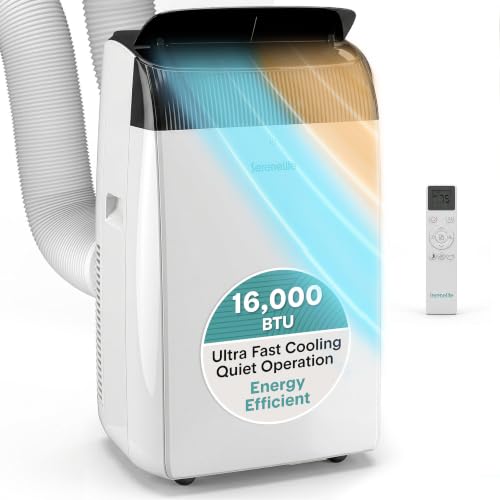
Portable AC Unit for Side Opening Windows
A complete guide to cooling rooms with casement or side opening windows. Learn how vent kits work, how to install them step by step, and which portable AC features matter most before you buy.
View Recommended UnitsWhat You Will Learn
Why Side Opening Windows Need a Different Approach
Side opening windows — also called casement windows — swing outward on a vertical hinge. Unlike a double hung window that slides up and down, a casement window leaves a tall, narrow vertical gap when opened. That shape is exactly why a standard portable AC window kit, which is designed for a horizontal sash opening, will not seal properly on a casement window.
Without a proper seal, the exhaust hose cannot do its job. A portable air conditioner works by pulling heat out of the room and pushing it through the exhaust hose to the outside. If the window gap is not sealed around the hose, hot outdoor air flows straight back in. The unit runs longer, the room stays warm, and energy use climbs. A dedicated casement window kit solves this by filling the vertical opening with a rigid or flexible panel and routing the hose through a fitted connector.
If you are still deciding between unit types, our guide to portable AC units explains how these appliances compare with window and mini split systems. For casement specific hardware, the portable AC window kit for casement windows page covers panel types and sizing in more detail.
How Casement Window Vent Kits Work
A casement window kit is a sealing system that bridges the gap between the open window frame and the exhaust hose. Most kits include three core parts:
- A sealing panel or fabric sheet — rigid acrylic or PVC panels are common, but flexible fabric seals with zippered hose openings are also popular because they fit a wider range of window heights.
- A hose connector or adapter — a round collar sized to match the exhaust hose diameter, usually 5 to 6 inches depending on the unit.
- Weatherstripping or foam tape — used to close small gaps along the frame so the seal is airtight.
Installation follows the same logic in every case. The window opens a few inches. The panel or fabric seal is fitted into that vertical opening and locked in place. The exhaust hose connects to the panel and runs to the back of the portable AC unit. The window is then closed against the kit, compressing the seal so outdoor air cannot slip past.
Rigid Panels vs Flexible Fabric Seals
| Feature | Rigid Panel Kit | Flexible Fabric Seal Kit |
|---|---|---|
| Fit range | Best for windows with a known, consistent opening height | Adapts to a wider range of window heights and frame shapes |
| Durability | Heavy-duty, reusable season after season | Lighter build, needs careful handling when stored |
| Seal quality | Excellent when properly sized | Good, provided the zipper and edges are sealed tightly |
| Installation | May require screws or tension brackets | Usually tension-mounted or adhesive, no drilling needed |
| Best for | Permanent or seasonal setups | Renters and rooms where the window changes often |
Choosing the Right Kit for Your Window
Before you buy anything, measure the window opening carefully. Two numbers matter most: the height of the vertical gap when the window is open, and the thickness of the window frame where the kit will rest. Kit manufacturers list supported ranges, and choosing a kit that matches your opening is the single most important step.
- Measure the maximum and minimum opening height of the window sash
- Check the frame depth so the panel sits flush and the window can close against it
- Confirm the exhaust hose diameter of your AC unit matches the kit adapter
- Decide whether you need a no-drill kit for a rental or a screw-mounted kit for a permanent setup
- Look for kits that include weatherstripping and a hose collar in the box
Some casement windows open outward at an angle rather than straight out. In that case, a flexible fabric seal often works better because it conforms to the angled sash. For crank style windows, a dedicated crank out window kit is the correct match and avoids improvised sealing that leaks air.
Step-by-Step Installation Guide
Installing a portable AC for a side opening window is a manageable project. Most people finish in under an hour with basic tools and no specialist skills. Follow these steps in order.
- Prepare the unit. Place the portable AC on a level surface near the window. Leave at least 12 to 18 inches of clearance behind and around the exhaust outlet so hot air can escape freely. Avoid extension cords where possible, and plug directly into a grounded outlet.
- Open the window slightly. Open the casement window enough to fit the panel or fabric seal. Too much opening makes sealing harder; too little prevents the hose from passing through.
- Fit the sealing panel. Slide the rigid panel into the vertical opening or attach the fabric seal to the frame. If the kit uses tension brackets, tighten them until the panel is stable. For screw-mounted kits, fix the panel to the frame at the marked points.
- Connect the exhaust hose. Attach one end of the hose to the back of the AC unit and the other end to the hose collar on the panel. Twist until it locks. Confirm the hose is not kinked or bent sharply, because a crushed hose chokes airflow.
- Close and seal the window. Close the window sash against the kit so the seal compresses. Fill remaining gaps along the frame with weatherstripping or foam tape. Run a hand along the edges to feel for drafts.
- Test the airflow. Turn the unit on in fan mode first. Check that air leaves the hose outside and that no warm air leaks back around the panel. Then switch to cooling mode and confirm the room temperature begins to drop.
Choosing the Right Portable AC Unit
Once the window kit is sorted, the next decision is the AC unit itself. Capacity, venting method, and drainage system are the three factors that most affect satisfaction.
Match Capacity to Room Size
Portable AC capacity is measured in BTU. Undersizing leaves the room warm on hot days; oversizing cools too fast and cycles on and off, which removes humidity less effectively. As a starting point, a 100 square foot room generally needs around 8,000 BTU, while a 300 square foot room needs roughly 12,000 BTU. South facing rooms with large windows may need more. Our guides to a portable AC for a 100 sq ft room and a portable AC for 300 square feet break down the sizing math in detail.
Single Hose vs Dual Hose
Single hose units pull air from the room and exhaust it outside, which creates a slight negative pressure that draws warm outside air back in through gaps. Dual hose units take in outside air for the condenser and exhaust it separately, avoiding that pressure imbalance. Dual hose models are generally more efficient in sealed rooms, though they are often larger. If your room is well sealed and you can find a dual hose model that fits your window kit, it is usually the stronger choice for long cooling sessions.
Drainage and Condensate Handling
Portable AC units remove moisture from the air, and that water has to go somewhere. Many units use auto-evaporation, which uses the condenser heat to evaporate most condensate. Others require periodic manual draining. If you plan to run the unit overnight or for long stretches, look for a unit with auto-evaporation or a built-in drain pump. Our article on a portable AC that does not need to be drained explains how these systems work.
| Tier | Typical Features | Best For |
|---|---|---|
| Entry-level | Single hose, basic controls, manual drain | Occasional use in small bedrooms |
| Mid-range | Single or dual hose, digital controls, auto-evaporation | Daily use in living rooms and home offices |
| Premium | Dual hose, inverter compressor, smart controls, low noise | Long daily runtimes and quiet spaces like bedrooms |
| Professional-grade | High capacity, robust build, commercial components | Larger rooms and light commercial spaces |
If quiet operation matters, our guide to a quiet portable unit and the broader portable air conditioner for bedroom article cover noise levels and placement. For combination appliances, a portable AC dehumidifier combo can be useful in humid climates where moisture control is as important as cooling.
Getting the Best Performance and Efficiency
Even a well-chosen unit and kit will underperform if the room fights back against the cooling. A few simple habits make a large difference.
- Seal the room. Close doors, block gaps under doors, and keep the window seal tight. A portable AC is a localized cooling solution, not a whole home system.
- Shade the window. Direct sun on the glass heats the room faster than the AC can remove it. Curtains or blinds during peak hours help considerably.
- Use the timer and thermostat. Set the unit to turn on shortly before you use the room and off when you leave. Avoid running it in an empty room.
- Clean the filter regularly. A clogged filter restricts airflow and reduces cooling. Rinse or vacuum the filter every two to four weeks during heavy use.
- Check the ENERGY STAR label. An ENERGY STAR certified portable air conditioner meets efficiency standards that lower long-term energy use.
If you are cooling a space without windows at all, or exploring alternatives, the pages on a portable AC for a room without windows and off-grid cooling solutions cover specialized setups. For apartment dwellers, a portable air conditioner for an apartment discusses space constraints and rental-friendly installation.
Common Mistakes to Avoid
- Using a sliding window kit on a casement window. The panel will not seal and hot air will pour in. Use a dedicated casement kit.
- Leaving the hose unsealed at the window. Even a small gap around the hose undermines the entire cooling cycle.
- Buying too small a unit for the room. Check the BTU requirement against the actual square footage, not the manufacturer's optimistic maximum.
- Ignoring drainage. A full water tank shuts the unit down. Understand whether your model auto-evaporates or needs manual draining.
- Placing the unit in a corner. Restricted airflow on the intake and exhaust sides reduces performance and can overheat the compressor.
Frequently Asked Questions
Can a portable AC unit be used with side opening windows?
What is a casement window kit for a portable AC?
Do I need a special exhaust hose for a side opening window?
How do I seal the gap around the exhaust hose on a side opening window?
Can I install a portable AC casement kit without drilling?
Is a portable AC with a casement kit as effective as a window AC?
Ready to Choose Your Portable AC?
Match the unit to your room size, confirm the casement kit fits your window, and check the exhaust hose diameter before ordering. The recommended units below are filtered for side opening window compatibility.
See Recommended Units