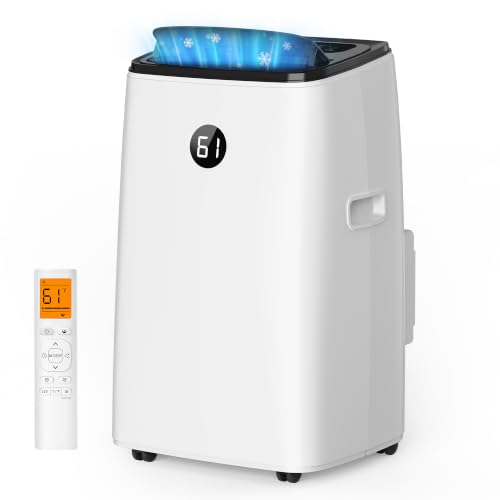
Portable Air Conditioner for a Room Without Windows
Windowless rooms trap heat and stale air, making cooling a real challenge. This guide explains how portable AC units can work without a window, which venting methods actually perform, and how to size a unit so a basement, interior office, or converted storage room stays comfortable.
Explore Venting OptionsQuick answer: A compressor-based portable air conditioner can cool a room without windows, but it cannot run truly ventless. The exhaust hose must route hot air somewhere — through a wall opening, ceiling vent, chimney, drop ceiling, or door gap. If none of those are possible, an evaporative cooler works only in dry climates, and a mini-split or ducted system becomes the more reliable long-term path.
Why Windowless Rooms Overheat
A room without windows is not just missing a view — it is missing the primary escape route for heat. Interior rooms, basements, converted garages, and storage areas absorb heat from surrounding walls, ceilings, and equipment. Without cross-ventilation, warm air has nowhere to go, and humidity builds up alongside it. This is why a standard window unit is off the table from the start, and why buyers often search for alternatives such as a portable AC unit that does not need a window.
The core problem is physics: an air conditioner does not destroy heat, it moves it. A compressor-based portable AC pulls heat from the room air and pushes it out through the exhaust hose. In a windowed room, that hose goes out the window. In a windowless room, you need a different exit path — and that is the single decision that shapes everything else.
How a Portable AC Moves Heat Without a Window
Inside a portable air conditioner, refrigerant circulates through an evaporator and a condenser. The evaporator absorbs heat and moisture from the room air, and the condenser releases that heat into a separate airstream. That hot airstream is forced out through a flexible exhaust hose, typically 5 to 6 inches in diameter. Meanwhile, the unit draws replacement air from the room through its intake grilles.
This two-stream design is why portable units are sometimes called non-window vented portable air conditioners — the unit itself does not sit in a window, but the hose still needs to terminate outside the conditioned space. In a windowless room, the goal is to find a legitimate termination point that does not let hot outdoor air flood back in.
Venting Options for a Windowless Room
Every option below has trade-offs in installation effort, cooling efficiency, and whether it is suitable for renters or permanent installations. Ranked roughly from most effective to most improvised:
1. Wall Sleeve or Wall Vent Kit
A professional installs a wall sleeve or a louvered wall vent through an exterior wall, and the exhaust hose connects to it. This is the closest equivalent to a window installation and delivers the best cooling efficiency because the hot air exits directly outside with minimal backflow. It requires drilling through the wall and is not suitable for renters unless the landlord approves. It is the go-to solution for basements and interior rooms with at least one exterior wall.
2. Ceiling or Roof Vent
For top-floor rooms, attics, and spaces with roof access, routing the exhaust through a ceiling vent or roof jack works well. Hot air rises, so the exhaust path is naturally favorable. The installation is more involved and should be handled by an HVAC professional to avoid roof leaks and to confirm the vent terminates safely.
3. Drop Ceiling Plenum
In offices, basements with drop ceilings, and commercial spaces, the exhaust hose can terminate above the drop ceiling into a plenum that vents to the outside. This is common in commercial-grade installations. Verify that the plenum actually vents outdoors and is not a sealed cavity, or the heat will simply accumulate above the ceiling and radiate back down.
4. Chimney or Fireplace Flue
An unused chimney provides a ready-made vertical exhaust path. A hose adapter or a custom plenum can connect the portable AC exhaust to the flue. This works well in older homes, but the flue must be clean and not shared with an active combustion appliance. Never vent into a flue used by a gas furnace or water heater.
5. Door Gap with a Sealing Panel
For renters and temporary setups, the exhaust hose can route through a slightly open door into an adjacent room that has a window, with a fabric or foam sealing panel filling the gap. This is the least efficient method because some cooled air escapes and some warm air enters, but it requires no permanent modification. A portable AC unit that does not require venting does not exist in compressor form, so this workaround is the practical compromise.
6. Through-the-Wall AC as an Alternative
If the room has an exterior wall and the installation can be permanent, a through-the-wall unit or a non-window air conditioning unit may outperform a portable AC in efficiency and noise. It occupies wall space but eliminates the hose and the drainage guesswork.
| Venting Method | Best For | Efficiency | Installation Effort | Tier of Setup |
|---|---|---|---|---|
| Wall sleeve / wall vent kit | Basements, interior rooms with exterior wall | High | Professional | Permanent |
| Ceiling or roof vent | Top-floor rooms, attics | High | Professional | Permanent |
| Drop ceiling plenum | Offices, commercial basements | Medium to High | Moderate | Semi-permanent |
| Chimney / flue | Older homes with unused chimney | Medium to High | Moderate | Semi-permanent |
| Door gap + sealing panel | Renters, temporary setups | Low to Medium | Minimal | Temporary |
Sizing a Portable AC for a Windowless Room
The standard starting point is 20 BTU per square foot of floor area. Windowless rooms need adjustments because they trap heat rather than release it. Use this sequence:
- Base load: 20 BTU × room square footage.
- Poor ventilation penalty: add 10 percent because heat and humidity have no natural escape.
- Direct sun or west-facing exposure: add 4,000 BTU if the room absorbs strong afternoon sun.
- Occupants: add 600 BTU per person beyond the first two.
- Heat-generating equipment: add 4,000 BTU for servers, printers, or kitchen appliances sharing the space.
A 150 square foot interior office with two people and a printer typically lands in the 6,000 to 8,000 BTU range. A 300 square foot basement room with poor ventilation often needs 8,000 to 10,000 BTU. Oversizing is a real risk in windowless rooms because a unit that cools too quickly will not run long enough to remove humidity, leaving the room clammy. If you want a deeper walkthrough, the AC sizing guide covers the full calculation method.
Managing Condensate Without a Window
Portable AC units pull moisture from the air, and that water has to go somewhere. In a windowed setup, gravity drain through the window is easy. In a windowless room, drainage becomes a design constraint:
- Self-evaporating models recycle condensate to cool the condenser, reducing how often you empty the tank. They still need manual draining in high humidity.
- Condensate pumps lift water upward and out through the exhaust route or a small tube, enabling unattended operation. This is the best match for wall-sleeve and ceiling-vent installations.
- Manual tank emptying is workable for short cooling sessions but impractical for all-day use.
If drainage is your main concern, there are models marketed as a portable AC that doesn't need to be drained, but read the fine print — most still require draining in humid conditions.
Pros and Cons of Portable AC in Windowless Rooms
Advantages
- No window required — the unit stands on the floor.
- Renter-friendly when paired with a door-gap sealing panel.
- Movable between rooms as cooling needs change.
- Installation is far simpler than a mini-split or central system.
- Works in basements, interior offices, and converted garages.
Limitations
- Exhaust hose must terminate somewhere — true ventless operation is not possible.
- Single-hose units create negative pressure that pulls warm air back in.
- Condensate drainage is inconvenient without a gravity route.
- Noisier than window or mini-split units at similar capacity.
- Efficiency drops if the exhaust route is improvised.
Alternatives When Venting Is Impossible
If the room truly has no route for exhaust — no exterior wall, no ceiling access, no chimney, and no adjacent room with a window — a compressor portable AC is not the right tool. Consider these instead:
- Evaporative cooler: adds moisture and cools through evaporation. Effective in dry climates, counterproductive in humid ones. See portable air conditioner evaporative cooler options.
- Ductless mini-split: the indoor head mounts on a wall and connects to an outdoor condenser through a small hole. This is the most efficient permanent solution for a windowless room with an exterior wall.
- Ducted system tie-in: if the room is part of a larger home, extending ductwork from an existing system may be the cleanest path. Review cooling options for older homes without ducts for context.
- Personal cooling devices: spot coolers and personal air conditioner units cool the occupant rather than the room, which is useful for desk work but not for whole-room comfort.
Features That Matter in a Windowless Room
Not every portable AC is equally suited to a windowless setting. These features deserve priority:
- Dual-hose design: pulls outdoor air for the condenser and exhausts it separately, avoiding negative pressure. Significantly better for enclosed rooms.
- Built-in condensate pump: removes the manual draining burden when no gravity drain exists.
- Adjustable exhaust hose length: longer hoses reach wall sleeves, ceiling vents, and adjacent rooms. Insulated hoses reduce heat bleed. See exhaust hose insulation sleeves.
- ENERGY STAR certification: a portable air conditioner that is ENERGY STAR certified uses less electricity for the same cooling output.
- Dehumidification mode: useful in basements and interior rooms where humidity is as uncomfortable as heat.
- Programmable timer and remote: lets the unit run during off-peak hours and shut off automatically.
Maintenance Checklist for Windowless Installations
A windowless setup is less forgiving of neglect because airflow is already constrained. Keep to this routine:
- Weekly: rinse or vacuum the intake filter. Dust buildup chokes airflow faster in enclosed rooms.
- Monthly: inspect the exhaust hose for kinks, tears, and loose connections. A leaking hose dumps heat back into the room.
- Monthly in humid seasons: empty the condensate tank or verify the pump is working.
- Seasonally: clean the evaporator and condenser coils. In dusty basement environments, coil cleaning matters more than in living spaces.
- Annually: check the wall vent or ceiling termination for debris, bird nests, and insect intrusion.
For a broader routine, the AC maintenance guide covers coil cleaning and filter replacement in detail.
Frequently Asked Questions
Can a portable air conditioner work in a room without windows?
Yes, but it requires an alternative exhaust route. Since portable AC units need to expel hot air, you must vent the exhaust hose through a wall opening, ceiling vent, drop ceiling, chimney, or a door gap. True ventless operation is not possible for compressor-based units, but evaporative coolers offer an alternative for dry climates.
What is the best way to vent a portable AC in a windowless room?
The most effective methods are through a wall sleeve installed by a professional, a ceiling or roof vent, or a drop ceiling plenum. For temporary solutions, routing the hose through a door gap with a sealing panel or into an adjacent room with a window works. Each method affects cooling efficiency differently, and wall sleeves consistently perform best.
How many BTU do I need for a windowless room?
Use the standard rule of 20 BTU per square foot, then add adjustments. Windowless rooms often trap heat, so add 10 percent for poor ventilation. Add 4,000 BTU if the room is in direct sun, and 600 BTU per occupant beyond two people. A 150 square foot windowless room typically needs 5,000 to 6,000 BTU, while a 300 square foot basement room often needs 8,000 to 10,000 BTU.
Do portable air conditioners need to be drained in windowless rooms?
Most units collect condensate and require manual draining or a condensate pump. In windowless rooms, gravity drain is difficult because you cannot route water outside. Self-evaporating models reduce drainage frequency, but in humid conditions you may still need to empty the tank. A condensate pump is the best solution for unattended operation.
Is a single-hose or dual-hose portable AC better for an enclosed room?
A dual-hose unit is better. Single-hose models exhaust room air to cool the condenser, creating negative pressure that pulls warm outdoor air in through gaps and cracks. In an enclosed windowless room, that backflow undermines cooling. Dual-hose units draw outdoor air for the condenser and exhaust it separately, so the room stays at neutral pressure.
Can I use a portable AC in a basement with no windows?
Yes, if the basement has an exterior wall for a wall sleeve, a chimney flue, or a drop ceiling that vents outdoors. Basements also tend to be humid, so prioritize a unit with strong dehumidification and a condensate pump. If no exhaust route exists, a dehumidifier plus a fan is a more realistic partial solution than a portable AC.
Choose the Right Setup, Not Just the Right Unit
In a windowless room, the venting method matters as much as the portable AC itself. Pick the exhaust route first, then size the unit to the adjusted BTU load, then prioritize a condensate pump and a dual-hose design. That sequence turns an impossible cooling problem into a workable one.
View Recommended Units