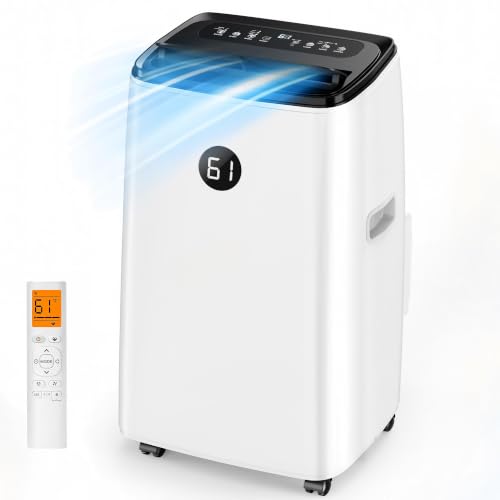
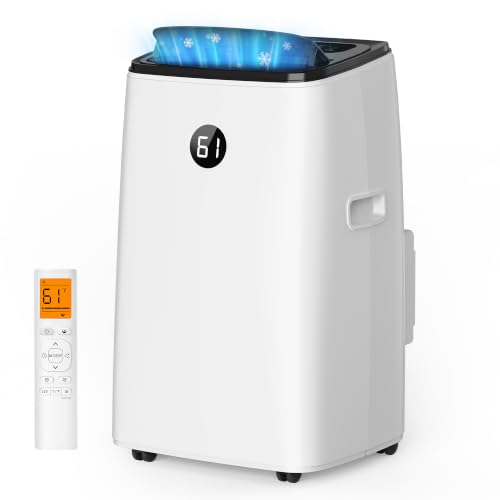
Portable AC Unit That Does Not Need a Window: Complete Guide
Understand your real options for windowless cooling: ventless evaporative coolers, low-venting portable AC units, and the space, climate, and venting factors that decide which one works for you.
START LEARNINGWhat "Does Not Need a Window" Really Means
When people search for a portable AC unit that does not need a window, they usually mean one of two things: a cooling device with no exhaust at all, or a refrigeration-based portable AC that can exhaust somewhere other than a traditional window. Both exist, but they work very differently and suit different spaces. Understanding the distinction before you buy is the single most important step.
Evaporative portable coolers—sometimes called swamp coolers—add no exhaust duct and need no window vent. They cool by moving air across water-saturated media, which lowers the air temperature in dry climates. Compressor-based portable AC units, by contrast, move heat from the room to the outside air. They must exhaust that hot air somewhere, but that somewhere does not have to be a window. Options include sliding doors, drop-ceiling plenums, through-wall sleeves, and dedicated vent openings.
Quick summary: If you truly want no vent at all, an evaporative cooler is the category to look at, and it works best in dry climates. If you want actual refrigerant-based cooling, expect some exhaust path—but it can be through a door, ceiling, or wall rather than a window. Choose based on climate and space, not on a single marketing phrase.
The Main Windowless Cooling Options
There are four practical approaches for cooling a space without a standard window. Each has a different comfort profile and installation footprint.
For a closer look at ventless evaporative cooling, our guide to a ventless evaporative portable air conditioner covers how these units perform in different climates. If you are considering a permanent ductless installation instead, our overview of ductless mini split air conditioning systems explains the trade-offs.
How Evaporative Windowless Coolers Work
Evaporative coolers draw warm, dry air through a water-saturated pad or media. As water evaporates, it absorbs heat from the air, lowering the air temperature before the blower pushes it into the room. The process is entirely different from refrigerant-based cooling, which is why evaporative coolers can operate without any exhaust.
The catch is humidity. Evaporative cooling adds moisture to the room, and it works best when the incoming air is dry. In humid climates, the cooling effect drops sharply and the added moisture can make the space feel clammy. This is why evaporative cooling is strongly climate-dependent and why manufacturer guidance on climate suitability matters.
To understand how humidity affects indoor comfort, see our articles on what humidity level is good for a house and what the humidity is supposed to be in your house. In dry regions, evaporative cooling can be an effective and low-power option for spot cooling.
How Low-Venting Portable AC Units Work
Compressor-based portable AC units cool the room using a refrigerant cycle. They draw in room air, cool it across an evaporator coil, and exhaust the collected heat through a hose. That hose has to go somewhere, but it does not have to go through a window. Common windowless venting approaches include:
- Sliding door vent panels: A fabric or rigid panel seals a sliding door opening and holds the exhaust hose. Common for patio doors and sliding glass doors.
- Drop-ceiling plenum venting: The exhaust hose terminates above a suspended ceiling, where hot air mixes with the return air space. Works in some commercial and open-plan spaces.
- Through-wall sleeves: A dedicated wall opening with a sleeve and outdoor grille allows the hose to vent directly outside.
- Dedicated vent openings: Some spaces already have vent openings or louvers that can accept the hose with an adapter.
For more on the exhaust side of portable cooling, our guide to window exhaust for portable air conditioner explains how exhaust setups work, and our overview of window vents for portable air conditioners covers the hardware side. If you are looking at the highest-efficiency options in this category, see our article on the most efficient portable air conditioner.
Windowless Cooling Options Compared
| Option | Best For | Key Considerations |
|---|---|---|
| Evaporative Cooler (Ventless) | Dry climates, garages, workshops, open living areas | No exhaust needed; adds humidity; performance depends heavily on climate |
| Portable AC + Sliding Door Vent | Apartments with patio or sliding doors and no usable window | Real refrigerant cooling; requires a sealing panel and door access |
| Portable AC + Wall or Ceiling Vent | Rooms with drop ceilings or available wall openings | More installation work; can be a clean solution in offices and studios |
| Ductless Mini Split | Permanent cooling for rooms with no window | Professional installation; strongest long-term comfort and efficiency |
Advantages and Limitations
✔ Advantages
- No standard window required, useful for basement rooms and interior spaces
- Options exist for both true ventless cooling and refrigerant-based cooling
- Portable units can be moved between rooms as needed
- Evaporative coolers use very little electricity compared to compressor units
- Low-venting solutions can be adapted to doors, walls, and ceilings
✖ Limitations
- Evaporative coolers perform poorly in humid climates
- Compressor portable AC units still need an exhaust path
- Vent kits and panels must match your door or wall opening
- Portable units are generally noisier than ductless systems
- Spot cooling capacity is limited compared to whole-room systems
Sizing and Selection Guidance
Sizing a windowless portable AC follows the same logic as sizing any other room air conditioner: roughly 20 BTU per square foot of floor area, adjusted for ceiling height, sun exposure, insulation, occupancy, and the presence of heat-generating equipment. A room with large unshaded windows or a server rack will need more capacity than a shaded bedroom of the same size.
For evaporative coolers, capacity is usually expressed in cubic feet per minute (CFM) of airflow rather than BTU, because the cooling effect depends on air exchange. In both categories, the correct approach is to match the unit to the room and to the venting path available. Our guide on how to size an air conditioner covers the sizing process in detail, and our article on air conditioning units for small spaces explains room-by-room trade-offs.
Five Practical Selection Steps
Confirm the Climate
Dry climates favor evaporative coolers. Humid climates favor refrigerant-based options, even if the exhaust path is less convenient.
Map the Exhaust Path
Identify whether a door, ceiling, or wall opening can accept the exhaust hose. Measure the opening before choosing a vent kit.
Size to the Room
Use BTU or CFM sizing appropriate to the category, and account for heat sources and sun exposure.
Check Noise and Controls
For bedrooms and home offices, prioritize quieter models and programmable or remote controls.
Plan Maintenance Access
Evaporative coolers need water refills and pad cleaning. Portable AC units need filter cleaning and drain management.
If your space has no window and no convenient exhaust route, a ductless mini split may be the more practical long-term answer. Our guide to ductless mini split systems explains installation and trade-offs, and our overview of 24000 BTU mini splits covers capacity for larger rooms.
When a Truly Ventless Unit Makes Sense
A truly ventless unit—an evaporative cooler—is a good fit when three conditions line up: the climate is dry, the room has some airflow, and the goal is spot cooling rather than whole-room refrigeration-grade comfort. Garages, workshops, covered patios, and dry-climate living rooms are typical fits.
If the climate is humid, ventless evaporative cooling tends to disappoint. In that case, the better path is to find a venting route for a refrigerant-based unit, or to consider a permanent ductless system. Our article on an air conditioning unit without external unit covers the practical options for spaces that cannot accommodate standard outdoor equipment.
Maintenance for Windowless Portable Cooling
Maintenance depends on the category. Evaporative coolers need regular water changes, pad or media cleaning, and occasional descaling depending on water hardness. Refrigerant-based portable AC units need filter cleaning, condensate drain management, and periodic inspection of the exhaust hose and vent panel.
- Clean filters every few weeks during heavy use to maintain airflow and efficiency.
- Empty or drain condensate regularly, especially in humid conditions.
- Inspect the exhaust hose and panel for leaks or disconnections.
- Clean evaporative pads and replace them when they show scale or damage.
- Store the unit properly during the off-season to protect internal components.
Our AC maintenance guide covers routine care in more depth, and our article on AC leaking water explains common condensate issues. If you notice weak cooling, our guide to things to check when AC is not cooling is a practical starting point.
Windowless Portable Cooling Tiers
Windowless portable cooling products span several market tiers. The right tier depends on how often you will use the unit, how much you value quiet operation and controls, and whether the unit will be used as a primary or occasional cooling solution.
| Tier | Best For | Typical Characteristics |
|---|---|---|
| Entry-level | Occasional spot cooling, workshops, garages | Basic controls, standard blower, straightforward vent kit, simpler construction |
| Mid-range | Bedrooms, home offices, primary living spaces | Quieter operation, better airflow control, improved vent kits, digital controls, timers |
| Premium | Frequent use, design-sensitive spaces, larger rooms | Higher airflow and cooling capacity, quieter fans, smart controls, premium materials, better sealing panels |
| Commercial-grade | Restaurants, retail floors, server rooms, larger open spaces | Heavy-duty construction, higher airflow, service-friendly design, reinforced venting hardware |
Higher tiers generally provide quieter operation, better controls, and more durable components. Mid-range models are often the balanced choice for homes where the unit will be used frequently, while premium models are a stronger long-term investment when the unit serves as a primary cooling solution.
Common Situations and Related Solutions
Windowless cooling needs often overlap with other space constraints. Here are common situations and the direction that tends to work best:
- Basement room with no window: An evaporative cooler works well in dry basements; in humid basements, venting a portable AC through a wall sleeve or a dehumidifier-first approach is usually more effective. See our guide to a basement AC.
- Bedroom with a blocked window: A portable AC vented through a sliding door panel or a wall vent is a common fix. Our guide to a bedroom air conditioner covers noise and sizing considerations.
- Garage or workshop: Evaporative cooling is often a practical option where airflow is good and humidity is low.
- Rental unit with restrictions: Portable units remain the most flexible option. Our guide to portable air conditioners covers the category broadly.
- Space with no exterior wall access: Consider a ductless mini split with a remote condenser, or the options covered in our article on an air conditioning unit without external unit.
If your window opening is awkward rather than absent, our guides to a window air conditioner for sideways windows, sliding windows, and sliding glass doors cover those variations. For portable units with standard window venting, our overview of the universal adjustable window sealing plate explains the hardware.
Frequently Asked Questions
Yes, but with a distinction. Evaporative portable coolers need no exhaust vent at all, though they work best in dry climates and add humidity to the air. Compressor-based portable AC units require some form of exhaust, but there are low-venting options such as windowless vent kits, drop-ceiling venting, and through-wall venting that do not require a standard window.
Ventless units are evaporative coolers, not refrigeration-based air conditioners. They lower air temperature by evaporating water and work well in dry climates with low humidity. In humid climates, they add moisture and provide limited cooling comfort.
Yes. Compressor-based portable AC units can vent through a sliding door, a drop ceiling, a through-wall sleeve, or a dedicated vent opening. These configurations remove the hot exhaust air without needing a standard window.
Use the same sizing approach as a standard portable AC: roughly 20 BTU per square foot, adjusted for ceiling height, sun exposure, insulation, and occupancy. Confirm the unit's venting configuration matches your space before finalizing the choice.
They can be, especially when a window is unavailable or blocked. Choose a unit with a low noise rating, a proper venting path, and a capacity matched to the room. Evaporative coolers are better suited to dry climates and well-ventilated spaces.
Ready to Choose a Windowless Portable Cooling Unit?
Use the climate, venting, and sizing guidance above to narrow your options, then explore recommended portable cooling units below.
VIEW RECOMMENDED UNITS