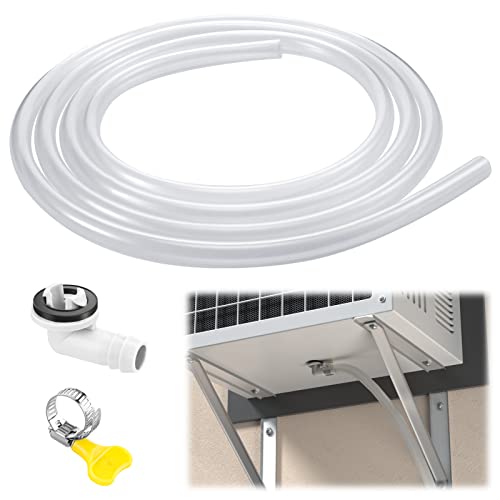
Portable Air Conditioner You Don't Have to Drain
Say goodbye to manual draining. Learn how self-evaporative portable air conditioners work, what to look for, and how to choose the right model for effortless, maintenance-light cooling.
START LEARNINGWhy No-Drain Portable ACs Matter: Traditional portable air conditioners collect condensate water in an internal tank that must be emptied manually — sometimes multiple times a day in humid weather. If you forget, the unit shuts off automatically. Self-evaporative models eliminate this chore by using the collected moisture to cool the condenser coil, evaporating it back into the air through the exhaust. For renters, apartment dwellers, and anyone who values convenience, this technology transforms portable cooling from a constant maintenance task into a truly set-and-forget solution.
How Self-Evaporative Portable ACs Work
All portable air conditioners remove moisture from the air as they cool it. In a standard unit, this condensate drips into a collection tank or drain pan. Once the tank fills, a float switch shuts the unit down until you empty it. Self-evaporative technology changes this by recycling the condensate instead of storing it.
Here is the process in simple terms:
- Moisture collection — As warm indoor air passes over the evaporator coil, moisture condenses and drips into a small internal reservoir.
- Water sling or pump system — A slinger ring on the condenser fan or a small pump draws this water and sprays it onto the hot condenser coil.
- Evaporation and exhaust — The heat of the condenser coil evaporates the water, and the moisture is expelled outdoors through the exhaust hose along with the hot air.
- Reduced or eliminated draining — In moderate humidity, the unit evaporates all the condensate it produces. In very humid conditions, some models still require occasional draining, but far less frequently than standard units.
This is the same principle used in many energy-efficient portable air conditioners, and it is why self-evaporative models are increasingly popular in apartments and small homes where running a drain hose to a sink or window is impractical.
Types of No-Drain Portable AC Systems
Not all "no-drain" claims are equal. Understanding the differences helps you set realistic expectations and choose the right model for your climate.
| System Type | How It Handles Water | Best For |
|---|---|---|
| Self-Evaporative (Slinger Fan) | Fan ring slings condensate onto hot coil; evaporates most water | Moderate humidity, entry-level and mid-range models |
| Self-Evaporative with Pump | Small pump sprays water onto coil for more complete evaporation | Mid-range to premium models, slightly higher humidity |
| Dual-Hose Self-Evaporative | Better airflow and heat exchange; most efficient evaporation | High-end tier, larger rooms, continuous operation |
| Hybrid (Tank + Evaporative) | Evaporates most water but retains a small backup tank for peak humidity | Very humid climates, users who want a safety margin |
If you live in a very humid region, a hybrid model with a backup tank is a safer choice than a pure self-evaporative unit. For dry to moderately humid climates, a slinger-fan or pump-assisted model will typically run all season without manual draining.
Key Features to Look For
BTU Capacity and Room Size
Match the unit's cooling capacity to your room. A 10,000 BTU portable AC generally cools 250–300 square feet, while 12,000–14,000 BTU models handle 400–500 square feet. Oversizing wastes energy and causes short cycling; undersizing leaves the room uncomfortable. For sizing guidance, see our overview of how to size an air conditioner.
Exhaust Hose and Window Kit
Every portable AC needs to exhaust hot air outdoors. Check that the unit includes a window kit that fits your window type. Sliding windows and casement windows may require special adapters. For more on this, see our guide to window vents for portable air conditioners.
Noise Level
Portable ACs are generally louder than window or mini-split units. Look for models rated under 55 dB for bedroom use. Premium models with inverter compressors run quieter and more efficiently than entry-level units.
Smart Controls and Scheduling
Many mid-range and high-end tier portable ACs include Wi-Fi, app control, and programmable timers. These features pair well with the "set and forget" appeal of a no-drain unit — you can schedule cooling without worrying about tank overflow.
Advantages and Limitations
Advantages
- No daily or weekly manual draining in most conditions
- Set-and-forget operation for renters and busy households
- No need to route a drain hose to a sink or floor drain
- Less risk of water damage from forgotten tanks
- Ideal for apartments, bedrooms, and home offices
Limitations
- In very humid climates, some models still need occasional draining
- Evaporation efficiency depends on ambient humidity
- Some units require a backup tank for peak summer conditions
- Single-hose models can create negative pressure that pulls in warm air
- Generally less efficient than window or mini-split systems
If your room has no suitable window for a vent kit, explore alternatives like portable AC units that don't require venting or non-window vented portable air conditioners. For rooms where a permanent installation is possible, a ductless mini-split AC may offer better long-term efficiency.
Maintenance Tips for No-Drain Units
Even self-evaporative units need some care to stay efficient. Follow these practices to keep your portable AC running smoothly:
- Clean or replace the air filter every two weeks — A clogged filter reduces airflow and evaporation efficiency. Our guide to cleaning air conditioner filters covers the process.
- Inspect the drain port seasonally — Even no-drain units have a drain port for emergencies or end-of-season flushing. Check that it is clear and capped.
- Empty and dry the unit before storage — At the end of the season, drain any residual water, run the unit in fan-only mode for an hour, and store it upright in a dry place.
- Keep the exhaust hose short and straight — Long or kinked hoses reduce efficiency and increase condensation. Use an insulated exhaust hose if the hose runs through a hot space.
- Monitor performance in peak humidity — If the unit starts shutting off more often during humid weather, the internal reservoir may be filling faster than it can evaporate. Check the water level indicator if your model has one.
For broader seasonal care, our HVAC maintenance guide covers best practices that apply to all cooling systems.
Frequently Asked Questions
Do self-evaporative portable air conditioners really never need draining?
In moderate humidity, most self-evaporative units run all season without manual draining because they evaporate the condensate they produce. However, in very humid climates or during extended rainy periods, some models may still accumulate water faster than they can evaporate. Many units include a small backup tank and an auto-shutoff feature for this scenario.
How do I know if a portable AC is truly self-evaporative?
Check the product specifications for terms like "self-evaporative," "auto-evaporation," or "no-drain technology." Look for a slinger ring or pump mentioned in the features. Be cautious of vague marketing claims — a reputable unit will clearly explain how it handles condensate and whether a backup tank exists.
Can a no-drain portable AC handle a very humid room?
It depends on the model and the humidity level. A single-hose self-evaporative unit may struggle in a very humid basement or coastal room. In those cases, a dual-hose model or a hybrid unit with a backup tank is a better choice. If humidity is a persistent problem, consider whether a dehumidifier is also needed.
Why does my no-drain portable AC still have a drain port?
The drain port serves two purposes: it allows you to empty residual water at the end of the season, and it provides a backup option if the internal reservoir fills during an unusually humid period. It does not mean the unit requires routine draining.
Are no-drain portable ACs more efficient than standard models?
Self-evaporative technology does not directly increase cooling efficiency, but it improves the user experience by eliminating the chore of draining. The evaporation process does use some of the unit's cooling capacity, but the difference is small. Overall efficiency depends more on BTU rating, hose configuration, and room insulation.
What should I do if my portable AC stops cooling?
Start with the basics: check the filter, confirm the exhaust hose is connected and not blocked, and verify the window kit is sealed. If the unit runs but does not cool, our guide to AC running but not cooling covers common causes. For portable-specific issues, review the manufacturer's troubleshooting section.
Ready to Choose a No-Drain Portable AC?
You now understand how self-evaporative technology works and what to look for. Explore our recommended models below, or compare features to find the best fit for your room and climate.
EXPLORE OPTIONS