
Window Vents for Portable Air Conditioners
A portable air conditioner is only as good as its exhaust setup. Window vents carry hot air outside and keep the cooled air in. This guide explains how vent kits work, which kit fits your window type, how to seal the installation, and what to look for across market tiers.
How Vent Kits WorkQuick answer: Most portable air conditioners need a window vent kit to exhaust hot air outside. The kit should match your window type (sliding, casement, or awning), the exhaust hose diameter, and the window track depth. A well-sealed vent keeps hot outdoor air from leaking back in, which is essential for efficient cooling. If you are still choosing a portable unit, review the portable air conditioner guide and the portable AC units that do not require venting explainer.
What This Guide Covers
How Portable AC Window Vents Work
A portable air conditioner takes in room air, cools it, and exhausts the heat through an exhaust hose. That hose must vent outside, and the window vent kit is what makes the connection. A typical kit includes an adjustable panel that fits into the window opening, a hose adapter, and a foam or fabric seal that closes the remaining gap.
Single-hose units pull room air into the unit and expel hot air outside. This creates a slight negative pressure in the room, which can pull outdoor air in through gaps around doors and windows. Dual-hose units draw outdoor air for the condenser and exhaust it back outside, which reduces negative pressure and is generally more efficient. In both cases, a well-sealed window vent is essential to keep the hot exhaust from finding its way back inside.
Key Components of a Vent Kit
A complete vent kit usually includes an adjustable window panel, a hose connector, a foam seal, and sometimes weatherstripping. The panel slides to match the window opening. The hose connector attaches the exhaust hose to the panel. The foam seal closes the gap above and below the panel. Kits designed for sliding windows tend to be the most common, but casement and awning kits are available for other window types.
Hose Length and Routing
The exhaust hose should be as short and straight as possible. Long or sharply bent hoses restrict airflow, which reduces efficiency and can cause the unit to overheat. If the window is far from the unit, consider a longer hose with a smooth interior rather than a flexed one with many bends. For reference, see the guide on insulated exhaust hoses for portable air conditioners.
Matching Vents to Window Types
Window type is the single most important factor in choosing a vent kit. A kit that does not match the window will not seal, and an unsealed vent defeats the purpose of the installation.
| Window Type | Recommended Vent Type | Best For | Notes |
|---|---|---|---|
| Double-hung | Vertical sliding panel kit | Most homes with traditional windows | Panel slides up and down; foam seal closes the gap above the sash |
| Sliding (horizontal) | Horizontal sliding panel kit | Modern homes with horizontal sliders | Panel slides left and right; verify track depth before buying |
| Casement | Casement-specific fabric or panel kit | Homes with hinged windows | Standard kits do not fit; fabric seals or custom plexiglass are common |
| Awning | Awning-specific fabric kit | Homes with top-hinged windows | Similar approach to casement; seal must accommodate the crank |
| Bay or bow | Custom panel or fabric seal | Homes with angled window arrays | Often requires a custom solution or a professional install |
If your window type is unusual or you are unsure about fit, measure the window opening and the track depth before ordering. Most kits list a range of window widths they accommodate. Choosing a kit at the upper end of the range for your window leaves room for a proper seal. For homes where a portable AC is not ideal, a room air conditioner that does not need venting or a non-window-vented portable air conditioner may be a better fit.
Features to Compare Across Tiers
Vent kits are available across several market tiers. The table below summarizes what each tier typically delivers so you can compare options on features rather than on fluctuating retail figures.
| Tier | Best For | Typical Characteristics |
|---|---|---|
| Essential tier | Basic installs on standard double-hung or sliding windows | Simple adjustable panel, foam seal, universal hose adapter, adequate for single-season use |
| Balanced tier | Most homes that want a reliable, well-sealed installation | Thicker panels, better foam seals, snug hose connector, fits a wider range of track depths |
| High-end tier | Casement windows, long-term installs, and homes where appearance matters | Custom-fit panels, weather-resistant seals, insulated components, clean finish |
For most homes, the balanced tier is the sweet spot. It costs more than the essential tier but delivers a tighter seal and better durability. The high-end tier is worthwhile for casement windows, long-term installations, or homes where the vent will be visible from the street. If you are comparing portable units rather than kits, the guide on the most efficient portable air conditioner and the guide on the most energy-efficient portable air conditioner provide useful context.
Sealing the Vent for Efficiency
Sealing is where many installations fall short. Even a kit that fits well can leak around the edges if the foam is compressed unevenly or the panel does not sit flush against the track. A leaky vent lets hot outdoor air back into the room and lets cooled indoor air escape, which undermines the entire cooling effort.
Sealing Checklist
- Measure the window opening and the track depth before installing the panel.
- Trim the foam seal to fit snugly without compressing it beyond its recovery range.
- Insert the panel so it sits flush against the window frame and the track.
- Fill any gap above or below the panel with foam or weatherstripping.
- Seal the hose connector with the supplied gasket or tape if the fit is not airtight.
- Check the outside of the installation for gaps and seal them from the exterior if possible.
- Test the seal by running the unit and feeling for drafts around the panel edges.
Common Installation Mistakes
What to Avoid
- Using the wrong kit for the window type: A sliding-window kit will not seal on a casement window.
- Skipping the foam seal: The panel alone does not create an airtight seal.
- Bending the exhaust hose sharply: Kinks restrict airflow and reduce efficiency.
- Routing the hose through a doorway: This defeats the purpose because the door cannot close.
- Ignoring the hose diameter: A mismatched adapter leaves a gap at the panel.
- Leaving the window screen in place: Screens trap heat and block airflow; remove them before installing the vent.
- Forgetting to insulate the hose: Uninsulated hoses radiate heat back into the room; see insulated exhaust hose.
If the portable AC is not cooling well despite a proper vent setup, the issue may be unit capacity, refrigerant, or airflow. The guide on my AC is running but not cooling and the guide on portable air conditioners you do not have to drain cover related troubleshooting topics.
Frequently Asked Questions
Do all portable air conditioners need a window vent?
Most single-hose and dual-hose portable air conditioners need a window vent because they exhaust hot air outside. Evaporative coolers and ventless dehumidifier-style units do not. Always check the manufacturer's installation requirements before buying.
Which window vent kit works with sliding windows?
Sliding windows typically use a horizontal or vertical sliding vent kit with adjustable panels and a foam seal. The kit should match the window track depth and the exhaust hose diameter. Many kits include a universal adapter that fits common hose sizes.
Can I use a portable AC window kit on a casement window?
Standard sliding window kits do not fit casement windows because casement windows swing open on a hinge. Casement-specific vent kits use a fabric seal or a custom panel that attaches to the frame and accommodates the exhaust hose. Some homeowners choose a plexiglass insert instead.
How important is sealing the window vent?
Sealing the vent is critical. A loose seal lets hot outdoor air back into the room and lets cooled indoor air escape, which reduces efficiency and can cause the unit to work harder than necessary. Foam seals, weatherstripping, and insulated panels all improve performance.
Can I leave the window vent installed year-round?
It is possible but not ideal. Leaving the vent installed year-round can invite drafts, pests, and heat loss. Many homeowners remove the panel at the end of the cooling season and reinstall it in the spring. If you leave it in place, seal it thoroughly during the off-season.
Ready to Set Up Your Portable AC Vent?
A properly fitted window vent kit is essential for efficient portable cooling. If you are unsure which kit fits your window, a licensed HVAC contractor or a knowledgeable retailer can help you match the kit to your window type and hose diameter.
Find HVAC ProfessionalsBest Window Vent Kits for Portable Air Conditioners
⚠️ AFFILIATE DISCLOSURE: This website contains affiliate links. As an Amazon Associate, we earn from qualifying purchases. If you make a purchase through these links, we may receive a small commission at no additional cost to you. Read our full affiliate policy.
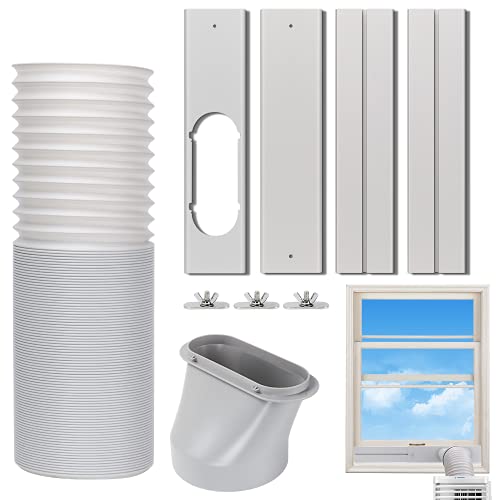
Portable AC Window Vent Kit, Sliding Window AC Seal Kit 5.9" Exhaust Hose | No Coupler, Exhaust Hose Length 59", Plates 17-64", Universal Air Conditioner Window Seal Kit for Horizontal/Vertical Window
Check price on Amazon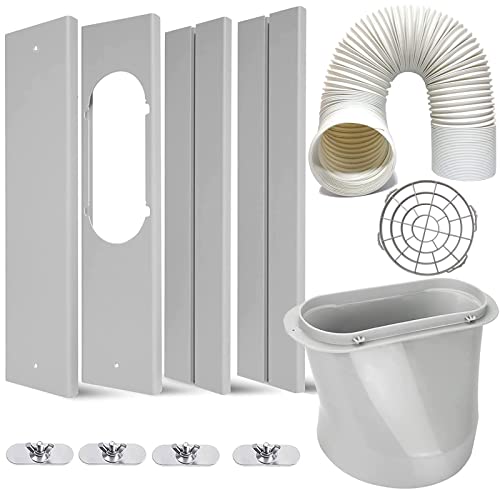
LEZIFU Portable Air Conditioner Kit with Hose, Adjustable Window Seal with 5.9 Inch Diameter 59" Length Hose for Vertical/Horizontal Window
Check price on Amazon
VIVOSUN Window Vent Kit for Portable AC, Fits 4"/6" Duct & 5.9" Hose | Portable AC Window Seal Kit, Adjustable AC Vent Kit for Duct Fans, Air Conditioner, Dryer
Check price on Amazon
MQIDLFE Portable Air Conditioner Window Vent Kit with 5.1” Exhaust Hose 6 Piece Window Seal for Portable Air Conditioner A/C Unit Universal for Sliding Horizontal or Vertical Windows
Check price on Amazon