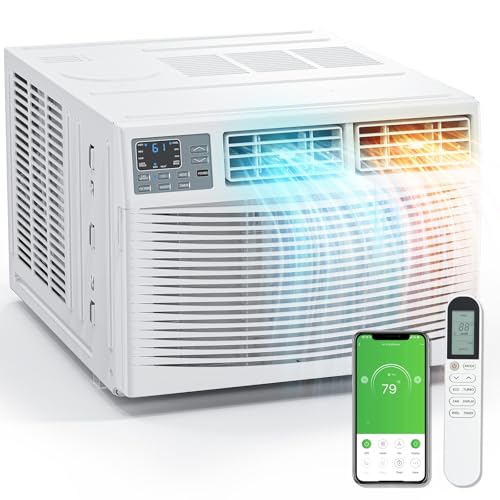
Room AC Unit That Doesn't Need a Window: The Complete Guide
Explore windowless cooling options for rooms without traditional windows, compare portable, mini-split, and wall-mounted systems, and choose the right solution for your space.
Not every room has a window that can accommodate a traditional window air conditioner. Basements, interior bedrooms, converted garages, attic offices, and rooms with casement or unusually shaped windows often leave homeowners searching for a room AC unit that doesn't need a window. Fortunately, several cooling technologies can deliver comfortable temperatures without relying on a standard double-hung window opening.
This guide compares the most practical windowless cooling options, explains how each system works, outlines installation considerations, and helps you decide which approach best fits your room, your home, and your comfort priorities.
Why Choose a Room AC Unit That Doesn't Need a Window?
Homeowners seek windowless cooling solutions for several reasons:
- No suitable window: Basements, interior rooms, and converted spaces often lack an operable window.
- Casement or specialty windows: Standard window AC units cannot be safely installed in casement, awning, or fixed windows.
- Security and aesthetics: Some homeowners prefer to avoid window-mounted units that block views or create security concerns.
- Landlord restrictions: Renters may be prohibited from installing window units that alter the exterior appearance.
- Year-round usability: Windowless systems can often remain installed without seasonal removal.
Whatever the reason, the right windowless cooling solution depends on the room's layout, your budget for the project, and how permanent you want the installation to be.
Types of Room AC Units That Don't Need a Window
Several cooling technologies operate without a traditional window opening. Each has distinct advantages and limitations.
| Type | How It Works | Installation | Best For | Considerations |
|---|---|---|---|---|
| Portable AC with Hose Kit | Draws in room air, cools it, and exhausts hot air through a flexible hose | Minimal—hose routed through a small opening, sliding door, or wall vent | Renters and rooms with flexible venting options | Requires some exhaust path; performance varies by model tier |
| Ductless Mini-Split | Indoor air handler connected to outdoor condenser via refrigerant lines | Professional installation—small wall or ceiling penetration | Permanent cooling for rooms without windows | Highest efficiency and quietest operation; higher upfront investment |
| Wall-Mounted AC | Through-wall or high-wall unit that vents directly outside | Professional installation—requires wall opening | Rooms with an exterior wall available | Permanent installation; needs exterior wall access |
| Evaporative Cooler | Uses water evaporation to cool incoming air | Portable or windowless wall-mounted options available | Dry climates with low humidity | Not effective in humid climates; requires water supply |
| Ceiling Cassette Mini-Split | Recessed ceiling unit connected to outdoor condenser | Professional installation—ceiling mount and refrigerant lines | Rooms where wall space is limited | Premium tier; excellent air distribution |
Portable Air Conditioners: Flexible Windowless Cooling
Portable air conditioners are the most accessible windowless option. Most units sit on the floor and use a flexible hose to exhaust hot air. While they do not require a traditional window, they do need a path for the exhaust hose—typically through a window opening with a sealing kit, a sliding glass door, or a wall vent.
Some models are marketed as fully windowless, but in practice, all portable AC units need to expel heat somewhere. If your room has no window at all, consider routing the exhaust through a small wall opening, a dryer vent, or a dedicated vent kit. Our guide on portable room air conditioners without exhaust hose explains the limitations and alternatives in more detail.
Portable units vary in performance. Entry-level models typically cool a single room and may be louder, while mid-range and premium units offer better airflow, quieter operation, and more efficient compressors. For a deeper comparison, see portable vs window AC.
Ductless Mini-Split Systems: The Premium Windowless Solution
Ductless mini-split systems are the most effective windowless cooling option for permanent installations. An indoor air handler mounts on a wall or ceiling, connected to an outdoor condenser through a small conduit that carries refrigerant lines, power, and condensate drainage.
Because the connection requires only a small hole in the wall—typically two to three inches in diameter—mini-splits can cool rooms that lack any traditional window. They offer excellent efficiency, quiet operation, and precise temperature control. The trade-off is a higher upfront investment and the need for professional installation.
Mini-splits come in several configurations, including wall-mounted, ceiling cassette, and floor-mounted units. For rooms with limited wall space, ceiling cassettes distribute air evenly from above. Explore our overview of pros and cons of ductless air conditioning to weigh the benefits against the installation requirements.
If you are considering a mini-split, our guide on portable mini-splits covers the growing category of portable and semi-permanent mini-split options.
Wall-Mounted and Through-the-Wall AC Units
Wall-mounted air conditioners, also known as through-the-wall units, install directly into an exterior wall. They vent hot air outside and do not require a window. These units are common in hotels, apartments, and rooms where a permanent installation is acceptable.
Installation requires cutting an opening in the wall and may require electrical work, depending on the unit's power requirements. Because the unit becomes a permanent part of the wall, it is best suited to rooms where the installation will remain for years.
For a closer look at wall-mounted options, see our guide on portable wall-mounted air conditioners.
Other Windowless Cooling Options
Depending on your climate and room layout, additional options may be worth considering:
- Evaporative coolers: Effective in dry climates but not suitable for humid regions.
- Room-to-room transfer fans: Can move cool air from a conditioned space to an adjacent room, though they are not a standalone cooling solution.
- Portable indoor units with alternative venting: Some models allow venting through a dryer vent or dedicated wall opening.
- Ceiling-mounted self-contained units: Often used in commercial spaces and large rooms.
Our guides on portable indoor air conditioning units and room-to-room transfer fans with thermostat explore these options in more detail.
Key Considerations Before Buying a Windowless Room AC
Choosing the right unit requires balancing several factors. Consider the following before making a decision:
- Room size and cooling capacity: Match the unit's BTU rating to your room's square footage and heat load. Undersized units struggle to cool; oversized units cycle inefficiently.
- Venting or installation path: Confirm how the unit will exhaust heat or route refrigerant lines. This is the most common obstacle for windowless rooms.
- Noise level: Mini-splits and premium portable units are generally quieter than entry-level models. Check decibel ratings if noise is a concern.
- Installation permanence: Portable units offer flexibility; mini-splits and wall units are permanent installations.
- Electrical requirements: Larger units may require dedicated circuits. Verify your electrical panel capacity before installation.
- Maintenance needs: All systems require filter cleaning and periodic servicing. Mini-splits need professional maintenance less frequently than portable units.
- Climate suitability: Evaporative coolers work well in dry climates but underperform in humid regions. Refrigerant-based systems work in all climates.
Our seasonal AC checklist and preventive maintenance of air conditioning units guides can help you plan ongoing care regardless of which system you choose.
Which Windowless Room AC Is Right for You?
The best choice depends on your priorities:
- For renters or temporary needs: A portable AC with a hose kit offers flexibility and easy setup, provided you have a venting path.
- For permanent, efficient cooling: A ductless mini-split delivers the best performance and quietest operation, though it requires professional installation.
- For rooms with an exterior wall: A wall-mounted unit provides a permanent solution without consuming floor space.
- For dry climates: An evaporative cooler can be an efficient alternative, though it will not work well in humid conditions.
Frequently Asked Questions
What is a room AC unit that doesn't need a window?
A room AC unit that doesn't need a window is a cooling system that operates without a traditional window opening. Common types include portable air conditioners with hose kits, ductless mini-split systems, wall-mounted units, and evaporative coolers, each offering different installation and performance characteristics.
Can a portable AC work without a window?
Most portable AC units require some form of exhaust path for hot air. While they do not need a traditional window, they typically need a hose routed through a window opening, wall vent, or sliding door. Some models marketed as windowless still require venting through a small opening.
Is a mini-split AC better than a portable AC?
Mini-split systems generally offer better cooling performance, quieter operation, and higher efficiency than portable units. However, they require professional installation and a permanent wall or ceiling mount, while portable units offer flexibility and easier setup.
What size room AC unit do I need without a window?
Sizing depends on room square footage, ceiling height, insulation, and sun exposure. A common guideline is 20 BTU per square foot, but consulting a BTU calculator or HVAC professional ensures the most accurate capacity for your space.
Ready to compare windowless cooling options for your room?
Explore Options