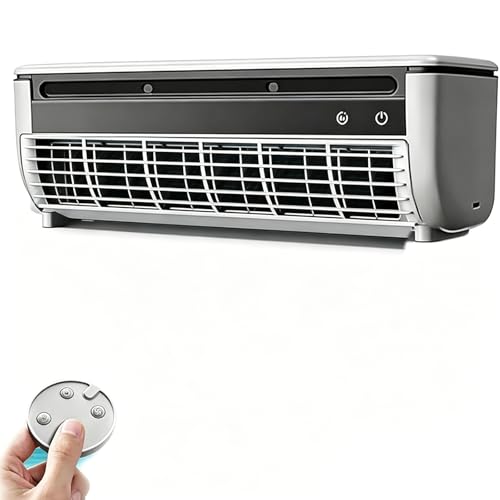
Portable Mini Splits: Flexible Cooling Without Ductwork
Understand how portable mini split systems work, who they suit best, how to size them correctly, and which features matter most before you commit to a ductless cooling setup.
Explore the Buying PathWho this guide is for: homeowners, renters, and small-space dwellers who want efficient room-by-room cooling but cannot or prefer not to install ductwork. This page walks you through the technology, the trade-offs, and the practical steps that lead to a confident purchase decision.
What Is a Portable Mini Split?
A portable mini split is a ductless air conditioning system made of two main parts: a compact outdoor condenser and one or more indoor air handlers. The two sections are linked by a small refrigerant line set that passes through a modest wall opening or a window kit. Because the compressor lives outdoors, the indoor unit stays quiet and does not dump heat back into the room.
This design sits between two familiar categories. It is more efficient and quieter than a traditional hose-based portable AC, and it is more flexible than a window unit because it does not occupy a window or require a load-bearing sash. If you are comparing form factors, the broader portable indoor air conditioning units overview helps you see where each style fits.
The term “portable” here is relative. These systems are easier to relocate than central air, but they are not designed to be carried from room to room like a wheeled hose unit. The key benefit is installation flexibility: you can add targeted cooling to a bedroom, attic conversion, garage office, or add-on room without extending ductwork through the rest of the house.
How Portable Mini Splits Work
The system moves heat rather than generating cold. Refrigerant circulates between the outdoor condenser and the indoor evaporator coil. Inside, the air handler draws in warm room air, passes it over the cold coil, and returns cooled air to the space. Outside, the condenser releases the absorbed heat. In heat pump models, a reversing valve flips the cycle so the indoor unit can deliver warmth in cooler seasons.
- Outdoor condenser: contains the compressor and condenser coil; must sit on a stable, well-ventilated surface.
- Indoor air handler: wall-mounted, floor-mounted, or ceiling cassette depending on the model; distributes conditioned air.
- Line set: insulated copper tubing that carries refrigerant between the two sections; length affects performance and must match the manufacturer’s specification.
- Drain line: removes condensate; gravity or a small pump moves water away from the indoor unit.
- Controls: remote, wall thermostat, or smart app integration depending on the tier.
Because there is no duct network, there is no duct leakage to worry about. That is one reason ductless systems can be efficient in the right application. The trade-off is that each indoor unit conditions its own zone, so multi-room coverage requires multiple air handlers or a different system type entirely.
Types and Configurations
Portable mini splits are not a single product. They vary by indoor unit style, capacity, and whether they are single-zone or multi-zone. Understanding the configuration options helps you match the system to the room rather than forcing one format everywhere.
One Room, One Unit
The most common entry point. A single outdoor condenser pairs with one indoor air handler. Ideal for a bedroom, home office, or converted attic where cooling needs are concentrated.
Several Rooms, One Condenser
A single outdoor unit supports two to four indoor air handlers. Useful when you want independent temperature control in adjacent rooms without installing multiple outdoor units.
Cooling and Heating
Reversible models provide both cooling and heating. A solid choice for mild climates or for rooms that need shoulder-season warmth without a separate heater.
Indoor unit style also matters. Wall-mounted handlers are the most common and easiest to place high on a wall. Floor-mounted units suit rooms with limited upper wall space. Ceiling cassettes distribute air more evenly but require ceiling clearance and more invasive installation. If your space is unusually small, the portable miniature air conditioner category covers compact options that bridge the gap between personal cooling and room cooling.
Portable Mini Split vs Other Cooling Options
Buyers often arrive at this page after comparing several formats. The table below summarizes the practical differences without getting lost in marketing language.
| System | Best For | Installation Effort | Noise Level | Efficiency Profile |
|---|---|---|---|---|
| Portable mini split | Room-by-room cooling, no ducts, flexible placement | Moderate; refrigerant work usually needs a pro | Quiet indoors; condenser noise outdoors | High; inverter models are especially efficient |
| Hose-based portable AC | Temporary or rental cooling | Low; plug and vent through a window | Moderate to loud indoors | Lower; exhaust heat and hose losses reduce efficiency |
| Window AC | Single rooms with a compatible window | Low to moderate; unit is heavy | Moderate | Moderate to high depending on model |
| Central AC | Whole-home cooling with existing ducts | High; ductwork and electrical work | Quiet at registers; equipment noise elsewhere | High when ducts are sealed and sized correctly |
For a deeper head-to-head, the portable vs window AC comparison is useful if you are deciding between a ductless mini split and a conventional window unit. The short version: mini splits win on noise and placement flexibility, while window units win on installation simplicity.
Sizing a Portable Mini Split
Correct sizing is the single most important decision after choosing the format. An undersized unit runs continuously and struggles on hot days. An oversized unit cools quickly but short-cycles, which hurts dehumidification and can make the room feel clammy. Neither outcome is desirable.
A common starting point is 20 BTU per square foot, then adjust for real-world conditions. The table below offers a practical range rather than a rigid rule.
| Room Size | Typical Capacity Range | Notes |
|---|---|---|
| Up to 150 sq ft | 5,000 – 6,000 BTU | Small bedroom, studio nook, dorm room |
| 150 – 250 sq ft | 8,000 – 10,000 BTU | Standard bedroom or home office |
| 250 – 400 sq ft | 12,000 – 14,000 BTU | Primary bedroom, living area, small studio |
| 400 – 600 sq ft | 15,000 – 18,000 BTU | Open-plan room or combined living/dining |
| 600 – 900 sq ft | 20,000 – 24,000 BTU | Large open space; consider multi-zone or two units |
Adjust upward for south- or west-facing windows, vaulted ceilings, poor insulation, or a room above a garage. Adjust downward for heavy shade, basement placement, or a well-insulated new build. For a more detailed method, see the guidance on how to size an air conditioner. If you want a room-by-room breakdown, the BTU calculator by room size is a practical companion.
Not sure which capacity fits your room?
Use the sizing guide to translate square footage and room conditions into a realistic BTU target before comparing models.
Review the Sizing GuideEfficiency Ratings That Matter
Ductless systems are available across a wide efficiency spectrum. The rating you should focus on depends on whether you are cooling only or using the system as a heat pump year-round.
- SEER2: the current cooling efficiency metric under DOE standards. Higher numbers indicate more efficient cooling. The SEER vs SEER2 explainer covers the transition in plain language.
- EER2: measures efficiency at a specific peak-load condition. Useful for buyers in consistently hot climates.
- HSPF2: heating efficiency for heat pump models. Relevant if the system will carry you through cooler months.
- Inverter compressor: varies speed to match load instead of cycling on and off. Inverter models tend to hold temperature more steadily and run more efficiently in part-load conditions.
Efficiency is not only about the rating label. Installation quality, line-set length, refrigerant charge, and outdoor unit placement all influence real-world performance. A high-end tier unit installed poorly can underperform a mid-tier unit installed correctly.
Features Worth Prioritizing
Inverter Technology
Provides smoother temperature control and quieter operation. Widely available from mid-range upward and worth prioritizing for bedrooms and home offices.
Heat Pump Function
Adds heating capability. Valuable in mild climates and for rooms that are uncomfortable in shoulder seasons. Check HSPF2 if heating matters.
Smart Controls
App-based scheduling and remote access. Convenient for second homes, rentals, or rooms used on inconsistent schedules.
Low Ambient Operation
Allows cooling or heating in lower outdoor temperatures. Relevant for server closets, laundry rooms, and year-round equipment spaces.
Filtration and Air Quality
Washable filters are standard. Some models add multi-stage filtration or ionizers. Prioritize easy filter access for maintenance.
Quiet Operation
Indoor sound levels vary by fan speed and model tier. If the unit is in a bedroom, check the low-speed decibel rating rather than the headline number.
Installation Realities
Portable mini splits are less invasive than central air, but they are not always a simple DIY project. The refrigerant circuit must be sealed, evacuated, and charged correctly. Mistakes here reduce performance and can void the warranty.
- Confirm the outdoor unit location has stable support, drainage, and adequate airflow clearance.
- Plan the line-set route before drilling. Keep bends gentle and length within the manufacturer’s range.
- Verify the electrical circuit can handle the unit’s requirements. Some models need a dedicated circuit.
- Check local permit rules; many jurisdictions require a permit for refrigerant line connections.
- Confirm the indoor unit location allows condensate to drain properly.
- Keep the remote or thermostat away from direct sunlight and heat sources.
If you are weighing a ductless system against a window-based alternative, the portable windowless air conditioners guide covers options that avoid window mounting entirely. For rooms where a hose is unavoidable, the portable room air conditioner without exhaust hose overview explains which designs reduce hose dependence and which still need venting.
Maintenance and Longevity
Ductless systems are relatively low-maintenance, but they are not maintenance-free. A simple routine protects efficiency and extends service life.
- Clean or rinse indoor filters every two to four weeks during heavy use. Clogged filters reduce airflow and can freeze the coil.
- Inspect the outdoor coil seasonally. Clear leaves, pollen, and debris from around the cabinet.
- Check the condensate drain. A slow drain can cause water to back up into the indoor unit.
- Schedule professional service annually. A technician can check refrigerant charge, electrical connections, and coil condition.
- Keep the outdoor unit shaded if possible. The guidance on shading an AC unit explains how to do this without blocking airflow.
For a broader seasonal routine, the seasonal AC checklist is a practical reference. Preventive care is generally more straightforward than reactive repair, and it helps the system hold its rated efficiency over time.
A Practical Buying Path
Buyers who research first tend to be happier with the result. The sequence below keeps the decision grounded in your room and your habits rather than in marketing claims.
- Define the space. Measure square footage, ceiling height, window orientation, and insulation quality.
- Set a capacity target. Use the sizing table and adjust for real conditions.
- Choose single-zone or multi-zone. Decide whether one room or several rooms need coverage.
- Decide on heat pump capability. If you need shoulder-season heating, prioritize HSPF2.
- Confirm installation constraints. Identify where the outdoor unit can sit and how the line set will route.
- Compare features within a tier. Focus on inverter operation, noise, controls, and filtration rather than headline specs alone.
- Verify warranty and service support. Check the warranty terms and whether local technicians service the brand.
If your space cannot accommodate an outdoor unit at all, explore portable room air conditioners without a hose and the room air conditioner without venting options. These are different technologies with different trade-offs, and they are worth understanding before you commit.
Frequently Asked Questions
What is a portable mini split air conditioner?
A ductless system with a compact outdoor condenser and one or more indoor air handlers connected by a refrigerant line set. It cools a targeted zone without ductwork and without a window-mounted compressor.
Does a portable mini split require professional installation?
Most models do, because refrigerant lines must be evacuated and charged correctly. Some plug-and-play designs simplify setup, but professional installation is still the safer path for warranty and performance.
How many BTU do I need for a portable mini split?
Start with 20 BTU per square foot, then adjust for sun exposure, ceiling height, and insulation. A 300-square-foot room usually falls in the 7,000 to 8,000 BTU range.
Can a portable mini split heat as well as cool?
Heat pump models can. They reverse the refrigerant cycle to provide heating. Check the HSPF2 rating if heating performance is important in your climate.
Is a portable mini split better than a window AC?
It is quieter and more flexible in placement, and it does not block a window. A window unit is simpler to install. The better choice depends on your room, your installation constraints, and the tier you are shopping in.
Ready to compare specific models?
The recommendation section below highlights portable mini split options across tiers so you can match features to your room and your priorities.
View Recommended Models