Portable vs Window AC: Which Cooling Option Fits You?
Both bring cool air into a room without a central system, but they solve the problem in very different ways. This guide compares installation, cooling reach, efficiency, noise, and long-term practicality so you can choose with confidence.
Start ComparingThe Core Difference in One Paragraph
A window AC sits in the window opening itself. The unit draws in room air, cools it, and rejects heat directly outdoors through the same chassis — there is no exhaust hose and no second component. A portable AC is a freestanding floor unit that cools air inside the room but must dump its heat somewhere, usually through a flexible hose routed to a window slider kit. That single structural difference — heat leaves through the chassis or through a hose — drives nearly every other trade-off on this page.
Understanding that split makes the rest of the comparison intuitive. Window units are simpler and more direct. Portable units are more flexible in placement but pay for that flexibility in a few specific ways.
How Each Unit Cools a Room
Window AC: The compressor, condenser coil, and evaporator coil all live in one chassis mounted in the window. The outdoor half dumps heat outside; the indoor half blows cooled air into the room. Because the heat path is short and direct, window units tend to be efficient at converting electrical input into cooling output.
Portable AC: The entire refrigeration cycle lives inside the floor unit. Heat must be carried out through an exhaust hose. Most portable units are single-hose designs: they pull room air into the unit, use it to cool the condenser, and exhaust that warmed air outside. That creates a slight negative pressure in the room, which draws warm outside air back in through gaps — a known efficiency penalty. Dual-hose portable models address this by pulling in outdoor air for the condenser and exhausting it separately, but they are less common and generally sit in a higher tier.
For a deeper look at portable designs specifically, see our guide to portable indoor air conditioning units and the portable small air conditioning unit overview.
Side-by-Side Comparison
The table below summarizes the practical differences most buyers care about. Tier labels are used instead of numeric figures so the comparison stays useful over time.
| Factor | Window AC | Portable AC |
|---|---|---|
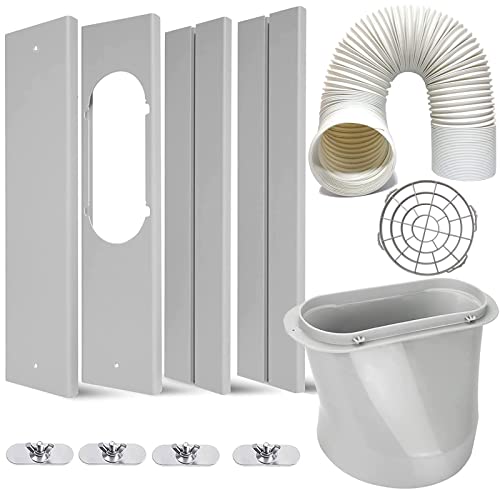
| Installation | Requires a compatible window; unit is secured in the opening, often with a support bracket | Freestanding; requires a window or vent path for the exhaust hose and slider kit |
| Placement flexibility | Fixed to one window; cooling is centered on that room | Can be moved between rooms; cooling follows the unit |
| Cooling efficiency | Generally higher for the same cooling class because heat exits directly | Generally lower, especially single-hose models, due to the hose heat path and negative pressure |
| Noise | Compressor and fan noise partly radiate outdoors; indoor noise is often moderate | All noise sources are indoors; compressor and fan are closer to the listener |
| Security & appearance | Visible from outside; may need a bracket and locking kit | Unit stays inside; only a small vent panel shows in the window |
| Window compatibility | Needs a double-hung or sliding window of sufficient width and a stable sill | Works with most window types via a slider kit; casement windows may need a special panel |
| Renters | Often restricted by lease terms; installation may require landlord approval | Usually easier to justify since no structural change is made |
| Maintenance access | Filter access is straightforward; coil cleaning may require removing the unit | Filter access is easy; condensate tank must be drained regularly |
| Typical tier | Entry-level to mid-range for standard rooms; premium for high-efficiency inverter models | Entry-level for personal coolers; mid-range to premium for true compressor room units |
Installation and Window Compatibility
Installation is where the two options diverge most sharply, and it is often the deciding factor.
Window AC installation requires a window that opens and closes securely around the unit. Double-hung windows are the classic fit; sliding windows work with the right kit. The unit is heavy, so a support bracket is strongly recommended — many modern units ship with one, and building codes in some areas require it. Once installed, the unit stays put. If you want to cool a different room, you install a second unit.
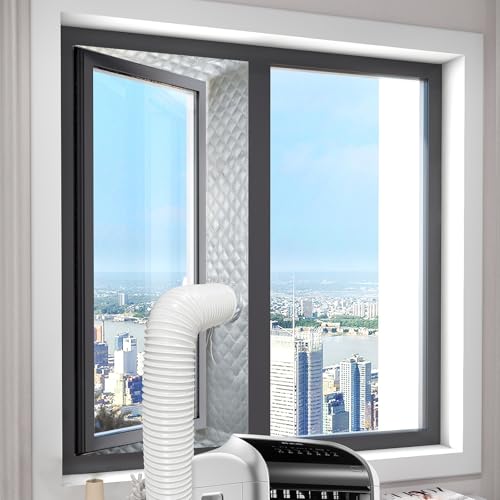
Portable AC installation is lighter: place the unit, connect the hose, and fit the window slider panel. The trade-off is that the hose and panel must be positioned so the hose runs short and straight. A long, kinked hose reduces airflow and cooling performance. Casement and awning windows usually need a specialized panel, and some very small windows cannot accommodate the slider at all.
If your window situation is unusual, our guides on room air conditioners for casement windows and room AC units that do not need a window cover the alternatives in more detail.
Cooling Reach and Room Fit
Window units are designed to cool the room they are mounted in. Because cool air is discharged directly into the space and heat leaves through the chassis, a window unit in the correct cooling class handles a standard bedroom or living room well. The main limitation is that the cooling is anchored to one wall — a long or L-shaped room may end up with uneven temperatures.
Portable units are more adaptable in placement but less efficient at moving cool air across a room. A single-hose unit in a closed room works against itself slightly because of the negative pressure effect. In practice, portable units perform best in small, enclosed rooms where the unit can sit near the center of the cooling zone and the hose run is short.
For very small spaces, a portable miniature air conditioner can be a good fit as a personal or spot-cooling device, while a full-size portable unit in the same room may be overkill. Matching capacity to room size matters for both types — our 8,000–10,000 BTU category is a useful reference for small-to-medium rooms.
Efficiency and Running Behavior
For the same cooling class, a window unit is generally more efficient than a portable unit. The reason is structural: the window unit rejects heat directly outdoors, while the portable unit moves heat through a hose and, in single-hose designs, pulls replacement air into the room from outside. That replacement air is warm, so the unit has to work against it.
Dual-hose portable models narrow the gap but are less common and typically sit in a higher tier. Inverter-driven compressors improve efficiency in both formats by modulating output instead of cycling fully on and off — our explainer on inverter AC covers how that works.
Beyond the hardware, habits matter more than most buyers expect. Shading the window, sealing gaps around doors, and running the unit only when the room is occupied all compound over a season. A programmable thermostat for heating and cooling or a smart plug can automate the scheduling side inexpensively. Our seasonal AC checklist and preventive maintenance guide are worth bookmarking whichever format you choose.
Noise: What to Expect
Noise is a common reason buyers regret a choice, so it deserves its own section.
A window unit places the compressor in the window frame, so part of the sound radiates outdoors. The indoor portion is usually a mix of fan noise and compressor hum. Well-designed models in the mid-range and premium tiers are noticeably quieter than entry-level units.
A portable unit places every noise source inside the room. The compressor, the fan, and the airflow through the hose all contribute. Even a well-built portable unit tends to be more audible in the room than a comparable window unit, simply because nothing is outside. If quiet operation is a priority, browse our roundups of the quietest air conditioners, the quietest small-room window air conditioners, and the quietest small-room portable air conditioners before deciding.
Strengths and Weaknesses at a Glance
Window AC
- Higher efficiency for the same cooling class
- Part of the noise radiates outdoors
- No condensate tank to drain
- No exhaust hose to manage
- Fixed to one window
- Visible from outside; may need a bracket
- Lease restrictions can apply for renters
Portable AC
- Can be moved between rooms
- Usually easier for renters to justify
- Small vent panel instead of a full window unit
- Lower efficiency, especially single-hose models
- All noise sources are indoors
- Condensate tank needs regular draining
- Hose routing must be planned carefully
Which One Should You Choose?
The decision usually comes down to four questions. Answer them honestly and the choice becomes clear.
- Do you need to cool more than one room with one unit? If yes, a portable unit is the only option that moves. If no, a window unit is the stronger default.
- Is the window suitable for a window unit? A double-hung or sliding window with a stable sill favors a window unit. Casement, awning, or very small windows push you toward a portable unit with a specialized panel.
- Do you rent, or is the window visible from the street? Portable units are generally easier to justify for renters and less visible from outside.
- How much does noise matter? If quiet operation is critical, a well-built window unit in a higher tier usually beats a portable unit of the same class.
If your room has no usable window at all, neither format is a clean fit — explore room air conditioners that do not need venting or portable windowless air conditioners and be realistic about their performance ceiling.
Quick Verdict
Choose a window AC if you have a compatible window, will keep the unit in one room, and want the most efficient and quietest option for that room. A mid-range window unit is a solid long-term investment for a dedicated bedroom or living room.
Choose a portable AC if you need to move cooling between rooms, rent a space where a window unit is impractical, or your window type does not accept a window unit. Prefer a dual-hose or inverter model in the mid-range tier or above to offset the efficiency gap.
Consider both if your home has one difficult room. A window unit for the primary room plus a portable unit for the odd room is often the most practical combination.
Maintenance Differences
Both formats need the same basics — clean filters, clear airflow, and occasional coil care — but the routines differ.
Window units have no condensate tank; moisture drains outside. Filter access is straightforward, and the unit can usually be cleaned in place. Coil cleaning may require removing the unit from the window, which is a two-person job for larger models.
Portable units require the condensate tank to be drained regularly. Some models offer self-evaporation, but in humid conditions the tank still fills. Filter access is easy, and the hose and vent panel should be checked for kinks and seal gaps each season. For deeper cleaning, our power vac and residential air duct cleaning references cover the tools and methods involved.
Renters, Shared Spaces, and Lease Constraints
Many leases restrict window-mounted equipment but are silent on freestanding appliances, which makes portable units the practical choice for renters who cannot get approval. Even where window units are allowed, a portable unit avoids the bracket installation and the security question of leaving a unit visible from the street.
In shared spaces — a home office in a shared apartment, a dorm room, a guest room — the portability of a floor unit is a real advantage. You can move it to wherever the heat is worst on a given day. For the smallest spaces, a portable miniature air conditioner may be the right scope, and a portable room-to-room air conditioner is worth considering if you plan to move the unit often.
Complementary Setups Worth Knowing
Neither format is the only cooling solution. A few adjacent options are worth knowing before you commit:
- A portable mini-split offers better efficiency than a standard portable unit and does not need a window slider in the same way — worth reviewing if efficiency is a priority.
- A portable wall-mounted air conditioner can be a middle ground where a window unit is not permitted but a floor unit would take up space.
- For a whole-home view, our guide to residential air conditioning frames how spot coolers and room units fit into a larger system.
If your situation leans toward no-duct solutions more broadly, our comparison of the pros and cons of ductless air conditioning is a useful next read.
Frequently Asked Questions
Is a portable AC or a window AC better for cooling a bedroom?
For a single bedroom with a compatible window, a window AC is generally the better choice: it is more efficient and usually quieter indoors. A portable AC is the better choice if the window cannot accept a window unit or if you need to move the unit between rooms.
Why are portable ACs less efficient than window units?
Because heat must travel through an exhaust hose instead of exiting directly through the chassis. Single-hose portable units also pull replacement air into the room, which is warm, so the unit works against itself. Dual-hose models narrow the gap but are less common.
Do portable ACs need a window?
Most compressor-based portable units need a window or vent path for the exhaust hose. Evaporative and thermoelectric personal coolers do not, but they deliver personal comfort rather than room cooling. If no window is available, choose a design that matches that constraint.
Can I install a window AC in a sliding window?
Yes, with the right kit. Many window units ship with or support a sliding-window adapter. Casement and awning windows are the difficult cases and often require a specialized panel or a different format.
Which is quieter: a portable AC or a window AC?
Generally a window AC, because part of the noise radiates outdoors. A portable unit places all noise sources indoors. That said, a premium window unit and an entry-level portable unit can be closer than the general rule suggests — check model-specific noise data if quiet operation matters.
Can I move a portable AC between rooms?
Yes, that is one of its main advantages. Plan the hose routing for each room in advance and keep the hose run short and straight. If you expect to move the unit often, a portable room-to-room air conditioner is worth reviewing.
Which option is better for renters?
Portable units are usually easier to justify because no structural change is made and nothing is visible from outside. Window units are often restricted by lease terms and may require landlord approval and a support bracket.
Do both formats need regular maintenance?
Yes. Both need filter cleaning and clear airflow. Window units have no condensate tank but may need the unit removed for coil cleaning. Portable units require regular tank draining and hose inspection. Our preventive maintenance guide covers both routines.