
RV Portable Air Conditioner: Complete Buying & Setup Guide
Everything you need to choose, install, and maintain a portable air conditioner for your motorhome, travel trailer, or camper van — from BTU sizing to venting solutions and power requirements.
EXPLORE RECOMMENDED MODELSWhy a Portable AC for Your RV? Factory-installed RV air conditioners are effective but limited — they cool only when you have sufficient shore power or a generator, and they may not reach every corner of a large rig. A portable air conditioner gives you flexible, targeted cooling for the living area, bedroom, or any zone that needs extra comfort. It is also a practical backup when your roof unit fails mid-trip. This guide walks you through the key decisions so you can pick the right unit with confidence.
What Is an RV Portable Air Conditioner?
A portable air conditioner is a self-contained cooling unit on casters that you can move from room to room. Unlike a roof-mounted or window unit, it sits on the floor and exhausts hot air through a flexible hose that must be routed outside. In an RV, this typically means venting through a window using a window kit, through a custom hatch, or through a sliding door panel. Portable units for RVs are available in capacities from roughly 8,000 BTU to 14,000 BTU, covering the cooling needs of most travel trailers and motorhomes.
The key advantage is flexibility: you are not locked into a permanent installation, and you can move the unit to whichever zone needs cooling most. The trade-off is that portable units require proper venting and typically draw more power than a comparably sized window unit. For a broader look at how portable ACs compare with other RV cooling options, see our guide on RV air conditioners and the dedicated RV portable air conditioner overview.
Portable AC vs Other RV Cooling Options
Before committing to a portable unit, it helps to understand how it stacks up against the alternatives. Each option has a distinct set of trade-offs in installation effort, cooling performance, and power draw.
| Cooling Option | Best For | Installation Effort | Key Consideration |
|---|---|---|---|
| Portable AC | Flexible zone cooling, backup cooling, renters | Low — vent hose through window or hatch | Needs proper venting; higher power draw |
| Roof-Mounted RV AC | Whole-rig cooling, permanent installation | High — roof cutout and wiring | Requires 120V shore power or generator |
| RV Window AC | Budget-conscious cooling for smaller rigs | Moderate — window or wall opening | Blocked window; less flexible placement |
| RV Mini-Split | Quiet, efficient whole-rig cooling | High — professional install recommended | Higher upfront investment; best efficiency |
For a deeper comparison of window-style units, our RV window air conditioner guide covers fitment and installation. If you are considering a ductless system, the RV mini-split page explains the efficiency benefits in detail.
How to Size a Portable AC for Your RV
Getting the BTU rating right is the single most important decision. An undersized unit will run continuously and never fully cool the space; an oversized unit will short-cycle, leaving the RV humid and uncomfortable. Use the table below as a starting point, then adjust for insulation, window area, and climate.
| RV Length | Approx. Interior Area | Recommended BTU | Typical Use Case |
|---|---|---|---|
| Up to 20 ft (camper van, small trailer) | Up to 150 sq ft | 8,000 – 10,000 BTU | Bedroom or main living zone |
| 20 – 30 ft (travel trailer, Class C) | 150 – 250 sq ft | 10,000 – 12,000 BTU | Main living area, targeted cooling |
| 30 – 40 ft (Class A, large fifth wheel) | 250 – 400 sq ft | 12,000 – 14,000 BTU | Whole-rig supplemental cooling |
Adjustment factors: Add roughly 10% capacity for a rig with large, unshaded windows; add 10–15% for poor insulation or a dark-colored exterior; subtract 10% if you camp primarily in mild, dry climates. If your rig has a slide-out, treat the slide-out area as additional square footage. For a more detailed walkthrough of load calculation, see our AC sizing guide — the principles apply to RVs as well as homes.
Venting Options for an RV Portable AC
Every portable AC produces hot exhaust air that must leave the RV. How you route that exhaust determines both cooling efficiency and how much of your window space you sacrifice. Here are the three most common approaches.
Window Kit (Most Common)
Most portable ACs ship with a sliding window panel kit. You extend the panel to fit your RV window opening, then route the exhaust hose through the panel's port. Works well with sliding windows common in travel trailers. See our sliding window kit guide for fitment tips.
Custom Hatch or Vent
A more permanent solution: install a dedicated hatch or vent port in the RV wall or floor through which the exhaust hose passes. This frees up window space and can improve efficiency, but requires cutting and sealing the RV shell — a job best done by a qualified technician.
Sliding Door Panel Kit
For RVs with a sliding glass door, a door panel kit lets you vent the hose through the door opening while keeping the door mostly closed. This is a good option for campers who want to keep windows unobstructed. Our sliding glass door kit page covers sizing.
Pro tip: Keep the exhaust hose as short and straight as possible. Every bend reduces airflow and forces the compressor to work harder. If the hose must run a long distance, insulate it with a hose cover to prevent heat from radiating back into the RV.
Power Requirements and Electrical Considerations
Portable AC units are power-hungry relative to other RV appliances. A typical 10,000 BTU portable unit draws around 8–10 amps at 120V during normal operation, with a higher surge draw at compressor startup. Here is what that means for your setup:
- Shore power (30A or 50A): The most reliable way to run a portable AC. A 30A pedestal connection can usually handle one portable unit alongside your other appliances; a 50A connection gives more headroom.
- Generator: A generator rated at 3,000W continuous or higher is typically needed to start and run a portable AC reliably. Inverter generators provide cleaner power and are quieter.
- Battery and inverter: Running a portable AC from batteries is possible only with a large lithium bank and a high-capacity inverter (3,000W+), and even then runtime is limited. A soft-start kit can reduce the startup surge.
- Circuit sharing: Never run the portable AC on the same circuit as a microwave or coffee maker if you can avoid it. Check your RV's breaker panel and distribute loads sensibly.
For a broader treatment of voltage and amperage planning, see our 110V vs 240V AC explainer and the amps and breaker size reference.
Key Features to Look For
Dual-Hose vs Single-Hose
Dual-hose units draw in outside air for cooling the condenser, which improves efficiency and avoids pulling cooled indoor air out of the RV. They are generally the better choice for RV use, though they cost more than single-hose models.
Dehumidification Mode
RVs are prone to humidity buildup, especially in humid climates. A dedicated dehumidify mode lets you remove moisture without overcooling — a valuable feature for comfortable nights.
Programmable Timer & Thermostat
Being able to set a schedule or a precise target temperature means the unit runs only when needed. Look for a digital thermostat with a clear display and remote control.
Noise Level
Portable ACs are louder than mini-splits. If you plan to sleep near the unit, look for models rated below 55 dB on low fan speed. Higher-end units often include sound-dampening insulation.
Self-Evaporating System
Some units evaporate condensate automatically, reducing how often you need to empty the drain tank. In humid climates, you may still need to drain manually — check the tank capacity.
Castors and Footprint
RV floor space is tight. Measure the unit's footprint and make sure it fits your intended spot. Locking castors prevent the unit from rolling while you travel or while in use.
Market Tiers: How RV Portable ACs Compare
RV portable air conditioners generally fall into three broad tiers. Use this framework to match a unit to your priorities — there is no single "best" tier, only the right fit for your rig and habits.
| Tier | Typical Characteristics | Best For |
|---|---|---|
| Entry-Level | Single-hose design, basic mechanical controls, higher noise, smaller tanks | Occasional weekend trips, budget-conscious campers, backup cooling |
| Mid-Range | Dual-hose or improved single-hose, digital thermostat, timer, quieter operation | Regular RV use, full-time travelers wanting reliable zone cooling |
| Premium | Dual-hose, self-evaporating, low-noise design, smart controls, robust build | Full-timers, large motorhomes, buyers prioritizing comfort and efficiency |
Relative comparison: A mid-range unit typically offers a noticeably smoother experience than an entry-level model — quieter fans, more precise temperature control, and better exhaust handling. Premium models add smart-home integration and more durable components. For most RVers, the mid-range tier represents the sweet spot of capability and simplicity.
Pros and Cons of Portable AC in an RV
Advantages
- Flexible placement — move it to the zone that needs cooling
- No permanent installation required
- Works as a backup when the roof unit fails
- Easy to remove and store when not in use
- Available in a wide range of capacities
Limitations
- Requires venting through a window, hatch, or door
- Higher power draw than comparably sized window units
- Occupies floor space in a tight interior
- Noisier than mini-splits and roof units
- Condensate tank may need frequent emptying in humid climates
Maintenance Tips for RV Portable ACs
- Clean the filter every two weeks during active use. A clogged filter reduces airflow and strains the compressor. Most filters are removable and washable.
- Drain the condensate tank regularly. In humid conditions, check daily. Some units offer continuous drain via a hose — use it if you have a suitable drain point.
- Inspect the exhaust hose for kinks and tears. A damaged hose leaks hot air back into the RV and undermines cooling performance.
- Store the unit upright and dry during the off-season. Clean the filter, drain the tank, and run the fan-only mode for an hour to dry internal components before storage.
- Check the power cord and plug for wear. RV vibrations can loosen connections over time. Replace damaged cords before use.
For a season-by-season checklist that covers roof units and portable units alike, see our seasonal AC checklist.
Best RV Portable Air Conditioners Reviewed
⚠️ AFFILIATE DISCLOSURE: This website contains affiliate links. As an Amazon Associate, we earn from qualifying purchases. If you make a purchase through these links, we may receive a small commission at no additional cost to you. Read our full affiliate policy.
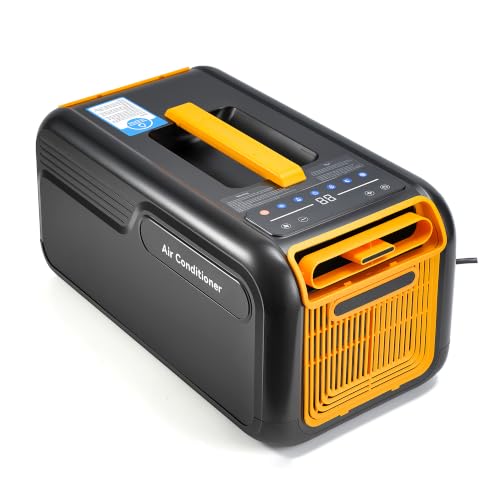
Portable Camping Air Conditioner, 5000 BTU 110V Tent AC Unit | 490W Low Power 6-in-1 Portable AC – Cooling & Heating Dual Mode, Fast Cooling for Tent Camping RV, Truck, Small Warehouse
Check price on Amazon
FO-KOKO Dual Hose 6800 BTU Portable Camping Tent Air Conditioner & Heating | 5-in-1 Quiet Small AC Unit with 550W, Windowless AC for Tent, RV, Van, Car, Garage, Indoor & Outdoor Use
Check price on Amazon
BLACK+DECKER Portable Air Conditioner, 9,000 BTU, BPACT08WT, White | 5,300 BTU SACC for Rooms up to 400 Sq. Ft., 3-in-1 Portable AC, Fan and Dehum with Follow Me Remote Control
Check price on Amazon
Portable Camping Air Conditioner 5200 BTU Tent AC Unit | 400W Low power 4-in-1 portable AC for indoor & outdoor,fast cooling for RV, truck,van,car,small warehouse and pet house
Check price on Amazon
GETUHAND Portable Tent Air Conditioner for Camping, 5200BTU Fast Cooling Quiet Small Light Air conditoning 400W Low Power for RV, Truck, Van
Check price on Amazon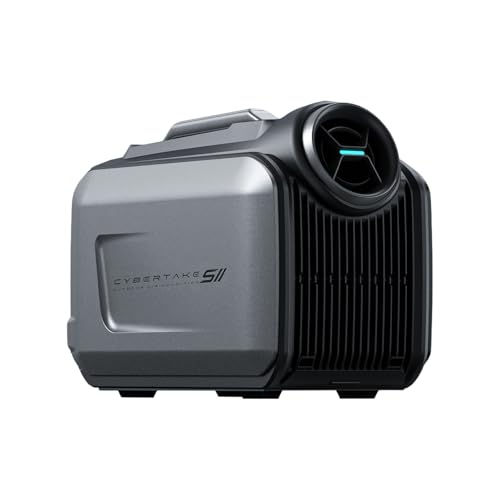
Cybertake S2 Pro Portable Camping Air Conditioner, Tent AC with 5100 BTU Cooling and 6100 BTU Heating, 8 Hours on 1kWh, 3-Way Power(48V DC, 12-24V Vehicle, 100V-240V Wall), Ideal for Tent, Camping, RV
Check price on Amazon
feneihe Small Portable RV Air Conditioner, Quiet 4-in-1 Compressor | Small Room Cooling System, Indoor Climate Control, 24H Timer, Wireless Remote, Easy Travel Companions, Fast Setup US Plug
Check price on AmazonFrequently Asked Questions
Ready to Choose Your RV Portable Air Conditioner?
Use the sizing table and feature guide above to narrow your options, then check current availability on the recommended models.
VIEW RECOMMENDED MODELSRelated Reading
Explore these related guides to complete your RV cooling research: our RV AC unit overview covers roof-mounted systems and maintenance, the RV air conditioner repair guide helps with troubleshooting, and the RV low-profile air conditioner page is useful if height clearance is a concern. For campers considering a window-style unit instead, see the RV window air conditioner comparison.