Sliding Window Portable Air Conditioner Kit: Complete Guide
Everything you need to know about sliding window portable AC kits — how they work, what fits your window, installation steps, sealing tips, and how to choose the right kit for efficient cooling.
START READINGQuick Answer: A sliding window portable air conditioner kit is an adapter system that lets you vent a portable AC's exhaust hose through a horizontal sliding window. It replaces the standard window panel with a sliding insert sized to fit your window track, creating a secure, sealed opening for the hose while keeping the window partially closed.
What Is a Sliding Window Portable AC Kit?
Portable air conditioners remove heat from a room and release it outdoors through an exhaust hose. To do that, the hose must be vented through an opening — usually a window. Standard window kits are designed for vertical double-hung windows, where the sash moves up and down. Horizontal sliding windows open side to side, so a standard vertical kit will not seal properly.
A sliding window portable air conditioner kit solves this problem. It is a purpose-built adapter that fits into the horizontal track of a sliding window, holds the exhaust hose connector in place, and seals the remaining gap so warm outdoor air cannot leak back in. Without a proper kit, you would have to leave the window wide open, which defeats the purpose of cooling.
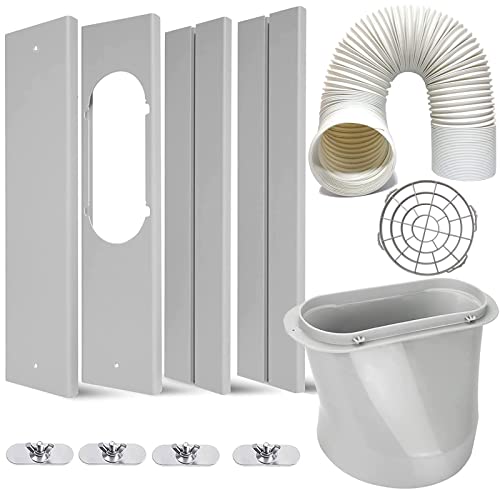
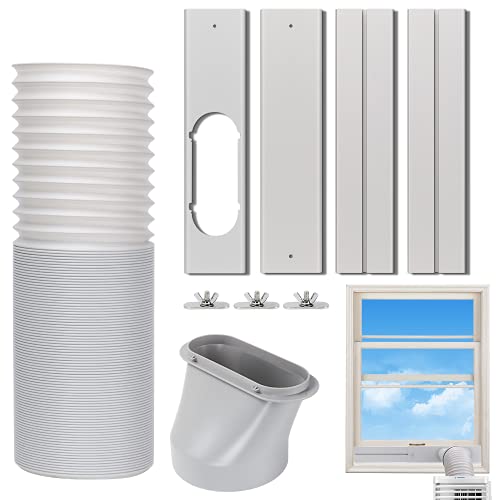
Most kits include adjustable panels that extend to match your window width, a hose connector plate, and sealing material. Some kits are universal, while others are designed for specific portable AC brands. If your window is a side-to-side slider, the sliding window kit for portable air conditioner guide covers the core principles in more depth.
Why the Right Kit Matters for Cooling Performance
A portable AC is only as effective as its exhaust setup. If the window opening is not properly sealed, three things happen:
- Warm air leaks back in. The unit has to work harder to maintain the set temperature.
- Cooling capacity is wasted. Some of the cooled air escapes through the same opening the hose vents through.
- Energy use increases. The compressor runs longer, which raises electricity consumption over time.
A well-fitted sliding window kit creates a tight seal around the hose and the window frame. This keeps the cooled air inside and the hot exhaust air outside. The difference in comfort and efficiency is significant, especially in small rooms where the unit's capacity is closely matched to the space.
Tip: If your window has an unusual shape or track, or if you cannot use a window at all, consider a single room AC unit without a window as an alternative cooling path.
Types of Sliding Window Kits
Not all kits are built the same. The right choice depends on your window dimensions, your portable AC model, and how permanent you want the setup to be.
Universal Adjustable Kits
These kits use telescoping or interlocking panels that slide to fit a range of window widths. They are the most common type and work with most portable AC hoses up to 5–6 inches in diameter. Universal kits are a good starting point if you are unsure of your exact window size, but fit quality can vary.
Brand-Specific Kits
Some manufacturers sell kits designed specifically for their portable AC models. These offer a precise fit for the hose connector and often include custom sealing pieces. If you already own a portable AC, check whether the manufacturer offers a sliding window kit before buying a universal one.
Seal-and-Insulate Kits
These kits add foam or fabric sealing panels around the window opening, reducing air leaks further. They are a step up in performance and are worth considering for rooms that face direct sun or experience high outdoor temperatures.
| Kit Type | Tier | Best For |
|---|---|---|
| Universal adjustable panel | Entry-Level | Basic venting, renters, temporary setups |
| Brand-specific kit | Mid-Range | Owners of a specific portable AC brand seeking a precise fit |
| Seal-and-insulate kit | Premium | Hot climates, sunny rooms, maximum efficiency |
How to Measure Your Sliding Window for a Kit
Accurate measurements are the difference between a tight seal and a frustrating gap. Before buying a kit, measure the following:
- Window width: Measure the full width of the window opening from frame to frame, and also the width of the track where the kit will sit.
- Window height: Measure the height of the opening, since the kit panel must cover the vertical gap left when the window is partially open.
- Track depth: Measure how deep the window track is. The kit panel needs to sit securely in the track without wobbling.
- Hose diameter: Measure the outer diameter of your portable AC's exhaust hose connector. Most kits support 5-inch or 6-inch hoses, but confirm before buying.
If your window is a side-sliding type with limited track space, a small air conditioner for side sliding window guide may help you understand whether a portable setup or a window unit is the better fit. For very narrow openings, a slim window air conditioning unit is another option worth exploring.
Step-by-Step Installation
Installing a sliding window portable AC kit is a straightforward DIY task. Follow these steps for a secure, sealed setup:
- Slide the window open just enough to fit the kit panel and hose connector.
- Assemble the adjustable panels to match your measured window width. Most kits use interlocking pieces that slide and lock into place.
- Insert the panel into the window track. Ensure it sits flush and does not tilt.
- Attach the hose connector plate to the panel opening. Twist or snap the exhaust hose onto the connector until it is secure.
- Close the window until it presses against the kit panel, holding it in place.
- Seal any gaps with the included foam strips, weatherstripping, or fabric seal. Pay attention to the top and sides of the panel.
- Check the hose routing. Keep the hose as short and straight as possible, and avoid sharp bends that restrict airflow.
For a sliding glass door instead of a window, a dedicated sliding glass door air conditioner kit is the correct solution — window kits are not designed for door-height openings.
Key Features to Look For in a Kit
The best kit for your setup balances fit, sealing quality, and durability. Prioritize these features:
- Adjustable width range: Confirm the kit's minimum and maximum width match your window.
- Hose diameter compatibility: Most portable AC hoses are 5 or 6 inches; confirm the connector fits.
- Durable construction: Look for reinforced plastic or metal panels that will not crack under window pressure.
- Sealing material included: Foam strips, weatherstripping, or fabric seals make a measurable difference in efficiency.
- Locking mechanism: Some kits include a way to secure the window so it cannot be opened from outside.
- Tool-free assembly: Simpler kits install in minutes and are easier to remove at the end of the season.
- Weather-resistant coating: Useful if the kit stays installed through changing seasons.
If you are still deciding between a portable unit and other single-room options, the single room free standing air conditioner guide compares portable and floor-standing designs in detail.
Common Problems and Fixes
Even a good kit can run into issues. Here are the most common problems and how to address them:
The Kit Does Not Fit the Window Track
Check the track depth and width again. Some kits include adapters for different track profiles. If the panel is too tall, it may need to be trimmed; if it is too short, a foam filler strip can close the gap.
Warm Air Is Leaking Around the Panel
This is almost always a sealing issue. Add weatherstripping along the top and sides, and use foam tape around the hose connector. A fabric seal draped over the opening can also help in temporary setups.
The Hose Keeps Falling Out
Confirm the hose is fully twisted onto the connector. Some kits use a locking ring; make sure it is tightened. If the hose sags, support it with a bracket or a small stand so its weight does not pull it loose.
The Unit Cools Poorly Despite a Sealed Window
The kit may be fine, but the unit itself could be undersized for the room, or the hose may be too long or kinked. Check the hose routing first, then revisit sizing. For a single-room portable setup, the small portable air conditioner for one room guide covers capacity matching. If the unit has stopped cooling entirely, work through the AC not cooling troubleshooting guide.
Maintenance and Seasonal Care
A sliding window kit is simple hardware, but a little care extends its life and keeps performance consistent:
- Inspect the seal seasonally. Foam strips compress over time; replace them when they no longer fill gaps.
- Clean the panel before storage. Dust and debris can accumulate in the track and on the panel.
- Store panels flat. Bending or stacking heavy items on them can warp the plastic.
- Check the hose connector for wear. A loose connection leaks warm air; replace worn rings or connectors.
- Remove the kit when not in use if you want to open the window fully during cooler months.
Who Should Use a Sliding Window Kit?
A sliding window portable AC kit is the right choice if:
- Your room has a horizontal sliding window rather than a double-hung window.
- You use a portable air conditioner and need to vent it without leaving the window wide open.
- You rent and cannot install a permanent window unit or split system.
- You want a removable, seasonal setup that can be taken down and stored.
- You need cooling in a single room — bedroom, home office, or guest room — where a portable unit is the practical option.
If you are cooling a small room and weighing portable against window units, the small air conditioners for small rooms guide and the small room size portable air conditioner guide both cover the trade-offs. For rooms that also need heating, a small portable air conditioner with heater combines both functions and still uses the same window kit.
Frequently Asked Questions
Ready to Set Up Your Sliding Window Kit?
You now understand how sliding window kits work, how to measure your window, and what to look for. Browse our recommended kits and portable ACs below to complete your setup.
VIEW RECOMMENDED KITS