Single Zone Mini Split: The Complete Guide to One-Room Ductless Cooling
A single zone mini split delivers targeted heating and cooling to one room or a defined open area without ductwork. This guide explains how one-zone ductless systems work, how to size them, what efficiency ratings mean, and what to check before you buy.
Explore Recommended UnitsWhat Is a Single Zone Mini Split?
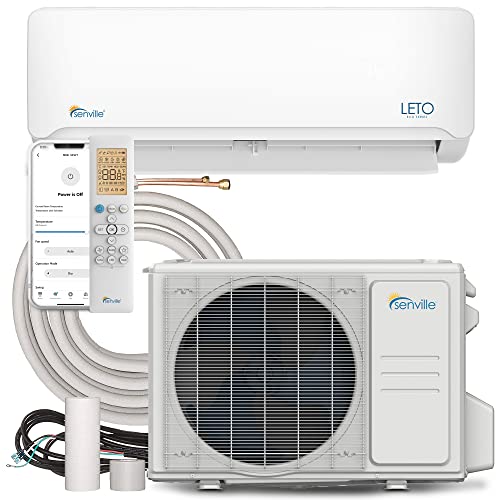
A single zone mini split is a ductless air conditioning and heating system built around one outdoor condenser and one indoor air handler. The two units are connected by refrigerant lines and a control cable, and the indoor unit blows conditioned air directly into the room. There is no ductwork, which makes this format a strong fit for additions, converted rooms, garages, and homes without existing ducts.
The phrase "single zone" simply means there is one conditioning point. If you need to cool two bedrooms plus a living room, that is a multi-zone setup. A single zone system is best when one space has a clear, dominant need. If your situation involves a room where a conventional window unit will not work, the guide on a small AC unit that doesn't need a window covers the broader category of ductless options.
Most single zone systems are heat pumps, so they both cool and heat. That makes them attractive in climates with moderate winters, and cold-climate variants exist for harsher conditions. The smallest configurations in the category are covered in our smallest mini split overview, which is useful for tight spaces and modest cooling loads.
How a Single Zone Mini Split Works
The outdoor condenser contains the compressor and the outdoor coil. The indoor air handler contains the evaporator coil and the blower. Refrigerant circulates between them, absorbing heat indoors and rejecting it outdoors during cooling, and reversing the flow during heating.
What sets mini splits apart from conventional systems is the inverter compressor. Instead of running at full power or off, the compressor varies its speed to match the load. That modulation produces steadier temperatures, quieter operation, and better efficiency in part-load conditions. It also reduces the on/off cycling that drives up humidity and wear in older single-stage equipment.
Installation requires a small hole in the wall for the line set and drain, plus a mounting bracket or pad for the outdoor unit. Because there are no ducts, there are no duct losses, but that also means the indoor unit must be positioned well for air distribution. Placement decisions are covered later in this guide.
Strengths and Trade-offs of a Single Zone System
Strengths
- No ductwork required: Well suited to older homes, additions, and rooms without duct access.
- High efficiency: Inverter operation and ductless delivery often deliver strong efficiency in real conditions.
- Room-by-room control: You condition only the space that needs it.
- Heating and cooling: Heat pump versions cover both seasons.
- Quiet operation: The noisiest component sits outdoors, and indoor units are generally quiet on low settings.
Trade-offs
- One room at a time: A single zone cannot serve multiple rooms unless the space is genuinely open.
- Visible indoor unit: Wall-mounted air handlers are prominent; ceiling cassettes and floor consoles exist but limit placement options.
- Installation complexity: Refrigerant work and electrical connections call for a professional.
- Outdoor unit placement: Needs clearance, drainage, and a stable surface; sometimes that limits where the indoor unit can go.
Sizing a Single Zone Mini Split
Sizing is the most consequential decision. An undersized system runs hard and never fully satisfies the room, while an oversized system short-cycles, which hurts dehumidification and comfort. Capacity is expressed in BTU per hour, and inverter systems modulate below their rated maximum, so the rated figure is a ceiling rather than a constant draw.
| Approximate Room Area | Typical Capacity Range | Best For |
|---|---|---|
| Up to 250 sq ft | 9,000 BTU class | Bedrooms, offices, small studios |
| 250 – 450 sq ft | 12,000 BTU class | Living rooms, larger bedrooms, guest suites |
| 450 – 700 sq ft | 18,000 BTU class | Open living areas, finished basements |
| 700 – 1,000 sq ft | 24,000 BTU class | Large open-plan spaces, additions |
| 1,000 sq ft and above | 30,000 BTU class and higher | Very large open areas; consider multi-zone or central |
Treat these figures as starting points. Adjust upward for high ceilings, large windows, direct sun, poor insulation, and kitchens. Adjust downward for shaded, well-insulated, and low-occupancy rooms. A professional load calculation is the most reliable method and is worth the effort for a permanent installation.
If the room is small, the small air conditioners for small rooms overview can help frame the alternatives. If the space is a bedroom, see the small air conditioners for bedrooms guide for noise and placement considerations that also apply to ductless indoor units.
Efficiency Ratings and Features
Mini splits are rated on two main metrics. SEER2 covers cooling efficiency, and HSPF2 covers heating efficiency. Higher numbers indicate better efficiency, and regional standards set minimums that vary by location. An ENERGY STAR listing signals performance above the baseline. Our what is SEER rating explainer covers the underlying logic, and the SEER vs SEER2 standards guide explains the newer metric.
Features that matter
- Inverter compressor: The defining efficiency advantage of modern mini splits; it modulates output to match load.
- Variable-speed indoor fan: Quieter and better at holding temperature on low settings.
- Programmable and smart controls: Scheduling and app control help avoid wasteful runtime. Our smart thermostat for mini split overview covers compatibility questions.
- Dehumidification modes: Useful in humid climates where sensible cooling alone does not solve comfort.
- Cold-climate heating: Some models are rated for much lower outdoor temperatures; check the published operating range.
- Washable filters and easy service access: Simpler maintenance over the life of the system.
Installation Essentials
A single zone mini split is simpler to install than a central system but still requires refrigerant and electrical work. The quality of the installation directly affects efficiency, noise, and longevity.
Placement
- Indoor unit: Mount high on a wall with a clear path for air distribution across the room. Avoid directing air onto seating or beds, and avoid locations near heat sources or in direct sun.
- Outdoor unit: Needs stable footing, adequate clearance for airflow, drainage for condensate, and a location that keeps the line set run reasonable.
- Line set: Keep the run as short and direct as practical; longer runs need additional refrigerant charge and careful routing.
What a proper installation includes
- Wall penetration sleeved and sealed against weather and pests.
- Line set flared, torqued, and pressure-tested.
- System evacuated with a vacuum pump and held to confirm no leaks.
- Electrical connection on a dedicated circuit with proper breaker and disconnect.
- Condensate drain sloped correctly, with a trap where needed.
- Commissioning check of pressures, temperatures, and controls.
Refrigerant handling is regulated in many jurisdictions, and many manufacturers require professional installation for warranty coverage. If you are comparing options across formats, the single room free standing air conditioner overview covers a portable alternative that needs no wall work.
Pre-Purchase Checklist
- Room dimensions and heat load estimated
- Indoor and outdoor unit locations chosen
- Line set path and wall penetration planned
- Dedicated electrical circuit confirmed
- Heating needs and climate range checked
- Warranty terms and installer credentials reviewed
Single Zone vs Multi Zone: Which Fits Your Home?
The choice is mostly about scope. A single zone system is the right answer when one room has a distinct need and other rooms are handled by a central system, window units, or are simply not used often. It is also common for additions, converted garages, and home offices.
A multi-zone system becomes the better choice when several rooms need independent control at the same time. Multi-zone systems use one outdoor unit connected to several indoor air handlers, which can share the outdoor footprint but complicates the installation and cost structure. The trade-off is complexity versus coverage.
If the space is larger than one room but still unified, a single zone may still work if the area is open and air can circulate. That is the case for many living and dining combinations. If there are doorways and walls between zones, a multi-zone design is usually more comfortable.
For related reading, the single room air conditioning and heating units overview compares several one-room formats, and the small air conditioning system guide covers compact whole-space options.
Frequently Asked Questions
What is a single zone mini split?
It is a ductless system with one outdoor condenser paired to one indoor air handler. It conditions a single room or a defined open area, using refrigerant lines and a control cable instead of ductwork.
How many square feet can a single zone mini split cool?
Capacity varies by model. Small systems often suit rooms of roughly 150 to 400 square feet, mid-range units cover about 400 to 700 square feet, and larger systems can serve open areas up to around 1,000 square feet or more. Ceiling height, insulation, sun exposure, and climate affect the final sizing.
Is a single zone mini split efficient?
Many are highly efficient because inverter compressors modulate to match the load. Look at SEER2 for cooling and HSPF2 for heating, plus an ENERGY STAR listing. Correct sizing and a clean installation matter as much as the rating.
Can a single zone mini split heat as well as cool?
Most are heat pumps and provide both. Heating output declines in extreme cold, and cold-climate models are rated for lower outdoor temperatures. Check the published operating range before relying on one as a primary heat source.
Do I need a professional to install a single zone mini split?
For most installations, yes. The work involves refrigerant lines, vacuuming, electrical connections, and mounting. Refrigerant handling is regulated in many regions, and improper installation can void the warranty and reduce efficiency.
How often should a mini split be maintained?
Clean or replace the indoor filter every few weeks during heavy use, keep the outdoor coil clear, and schedule a professional service check once a year. Regular maintenance preserves efficiency and catches small issues before they become failures.