
Single Zone Mini Split for Multiple Rooms: What You Need to Know
Can one ductless head cool more than one room? Explore configurations, airflow strategies, sizing rules, and expert guidance to decide whether a single zone system suits your layout.
Quick answer: A single zone mini split can cool multiple rooms when those spaces are connected, doors stay open, and the unit is correctly sized for the combined load. But it cannot deliver independent temperature control to each room — that requires a multi-zone system.
This guide explains when a single zone approach works well, when it falls short, and how to plan an installation that keeps every room comfortable without wasting energy.
Single Zone vs Multi Zone: The Core Difference
A single zone mini split pairs one outdoor compressor with one indoor air handler. The system cools the area where that indoor head is mounted, plus any adjacent space that shares open airflow. A multi-zone mini split also uses one outdoor unit, but it connects to two or more indoor heads — each with its own thermostat and refrigerant line. That distinction shapes every practical decision that follows.
If you are still weighing ductless options in general, our overview of air conditioner types explains how mini splits compare with window, portable, and central systems. For a deeper look at the technology itself, see the different types of air conditioning systems guide.
| Feature | Single Zone Mini Split | Multi Zone Mini Split |
|---|---|---|
| Indoor heads | One | Two to five (or more) |
| Independent temperature control | No — one setpoint for the whole served area | Yes — each room has its own setpoint |
| Best for | Open-plan spaces, studio apartments, one primary room plus an open hallway | Separate bedrooms, closed offices, zoned living areas |
| Installation complexity | Lower — one line set, one drain | Higher — multiple line sets, drains, and electrical runs |
| Efficiency in open layouts | Strong — one inverter compressor modulates to the combined load | Strong, but may cycle more when only one zone runs |
| Typical use case | Living room that flows into a dining area or kitchen | Three bedrooms with doors that close |
Key insight: The question is not whether one indoor head can reach multiple rooms — it usually can, physically. The real question is whether the resulting temperature distribution and energy use meet your expectations. Closed doors, long hallways, and sharp corners are the enemies of single zone coverage.
When a Single Zone System Works Well for Multiple Rooms
A single zone mini split performs best when the cooled area behaves like one thermal envelope. That usually means open doorways, shared ceiling heights, and no physical barriers between the indoor head and the furthest corner.
Layouts that suit a single zone
- Open-plan living and dining: A wall-mounted head in the living area can push conditioned air into an adjacent dining space if the opening is wide and unobstructed.
- Studio apartments: One indoor head covers the sleeping, living, and kitchen zones because there are no dividing walls.
- Loft or converted attic: A single open volume with a central mounting point distributes air naturally.
- Master suite with open bathroom: A head in the bedroom can keep a connected, door-open bathroom comfortable.
- Basement rec room: An open stairwell and lack of partitions allow one head to serve the whole finished area.
Design factors that improve coverage
- Central head placement: Mount the indoor unit where its throw pattern reaches the doorway of the second room.
- High ceilings and ceiling fans: A ceiling fan on low speed helps mix air and push cooled air toward adjacent spaces.
- Short, wide openings: A 6-foot-wide cased opening distributes air far better than a standard 3-foot door.
- Matched load: Size the system for the combined square footage, not just the room with the head.
When a Single Zone System Falls Short
A single zone mini split is not a substitute for true zoning. Several common scenarios expose its limits, and recognizing them early prevents an expensive disappointment.
- Closed doors: A bedroom door left shut becomes its own thermal box. The mini split head in the hallway has no way to force air through a solid barrier.
- Long or winding hallways: Air loses momentum and mixes with warmer air before it reaches distant rooms.
- Different sun exposure: A west-facing room gains far more heat in the afternoon than an interior room, creating uneven comfort that one setpoint cannot fix.
- Multi-story layouts: Cool air is heavy and tends to settle on the lower level, leaving upper rooms warmer.
- Occupancy differences: If one room is used all day and another only at night, a single setpoint wastes energy on the empty space.
If your layout matches several of these conditions, a multi-zone system or a ducted solution is the more sensible path. The ductless mini split air conditioner overview covers system configurations in more depth, and our guide to installing a two-zone mini split explains what changes when you add a second head.
Sizing a Single Zone Mini Split for Multiple Rooms
Sizing is the most common failure point. Homeowners often size for the room where the head is mounted and then wonder why the far room stays warm. The correct approach is to calculate the load for every room the system is expected to cool, then add a modest margin for distribution losses through doorways.
A practical sizing sequence
- Measure each room in square feet and note ceiling height.
- Sum the square footage of all rooms that will share open airflow.
- Apply a base guideline of roughly 20 BTU per square foot for average conditions, then adjust upward for high ceilings, poor insulation, large windows, or hot climates.
- Add 10–20% for distribution losses when cooling through doorways.
- Confirm with a Manual J load calculation performed by a qualified contractor for the most accurate result.
Avoid the temptation to oversize. A unit that is too large cools the primary room quickly, shuts off before removing humidity, and leaves the far room still warm. For a detailed walkthrough, see highest efficiency mini split models and how their inverter compressors handle partial loads.
Rule of thumb: If the combined area of the rooms you want to cool exceeds roughly 500–700 square feet, or if more than two doorways separate the spaces, pause and consider a multi-zone design. The single zone approach becomes a compromise rather than a solution.
Airflow Strategies to Improve Multi-Room Coverage
Even in a marginal layout, a few practical adjustments can noticeably improve how well a single zone system reaches secondary rooms.
Placement and positioning
- Mount the indoor head on the wall that faces the doorway to the second room, so the throw pattern aims toward the opening.
- Use the louver settings to direct airflow slightly downward and toward the passage — cool air travels farther when it is not fighting a ceiling layer.
- Keep furniture, curtains, and tall cabinets out of the direct path between the head and the doorway.
Supporting equipment
- Run a ceiling fan on low speed in the secondary room to pull air through the doorway and mix it.
- Consider a small floor or desk fan near the doorway to gently push conditioned air into the adjacent space.
- Keep interior doors open during cooling hours whenever privacy and safety allow.
- Use a smart AC thermostat or the manufacturer app to schedule cooling around occupancy patterns.
Building-level improvements
- Weather-strip and seal exterior doors to reduce the load the single head must overcome.
- Close blinds on sun-facing windows during peak afternoon heat.
- Seal gaps around interior door frames if you plan to leave doors open but want to limit cross-drafts.
Pros and Cons of Using One Zone for Multiple Rooms
✓ Advantages
- Lower equipment and installation complexity than multi-zone
- Single line set and drain simplify maintenance
- Inverter compressor modulates efficiently for open layouts
- Fewer wall penetrations and less visual clutter
- Straightforward permit and inspection process in most jurisdictions
- Quiet operation with only one indoor head running
− Limitations
- No independent temperature control per room
- Closed doors block conditioned air
- Uneven cooling in long or winding layouts
- Far rooms may need supplemental fans
- Oversizing risk when sized for combined load
- Not suitable for multi-story distribution
Decision Guide: Single Zone or Multi Zone?
Use the two profiles below to match your situation to the right system. Most homeowners recognize themselves in one of them immediately.
Choose Single Zone If…
Your rooms share wide, open doorways; the total cooled area is under roughly 600 square feet; occupants are comfortable with one temperature setting; the layout is single-story; and the secondary space is used at the same time as the primary room.
Choose Multi Zone If…
Rooms have doors that close regularly; occupants want different temperatures; the layout includes a hallway or multiple turns; you need to cool three or more separate spaces; or the home has two or more stories.
For homes with existing ductwork, a central system may still be the better fit. Our guide to energy-efficient HVAC systems compares ducted and ductless approaches, and the central air conditioner for a 1600 sq ft home article shows how sizing works at the whole-house scale.
System Tiers: Matching the Unit to Your Needs
Mini splits are commonly grouped into three broad market tiers. The descriptors below are relative and help you compare capability without relying on numeric figures that change over time.
| Tier | Best For | What to Expect |
|---|---|---|
| Entry-level | Single room, light use, seasonal cooling | Basic inverter control, standard filtration, manual louvers, straightforward installation |
| Mid-range | Open-plan living areas, daily use | Better SEER performance, Wi-Fi control, quieter operation, improved louver automation |
| Premium | Whole-home comfort, harsh climates, high usage | Top-tier efficiency, advanced filtration, whisper-quiet fans, robust low-temperature heating |
Higher tiers generally deliver more consistent performance at partial load, which matters when one head is trying to condition several connected spaces. If you plan to rely on a single zone for a large open area, a mid-range or premium unit with a wide modulation range will hold temperatures more steadily than an entry-level model.
Installation and Practical Considerations
- Outdoor unit placement: Keep the condenser clear of debris, direct sun, and snow accumulation. Good airflow improves efficiency in every season.
- Line set length: Mini splits tolerate long line sets, but each additional foot slightly reduces capacity. Confirm the maximum run in the installation manual.
- Condensate drainage: The indoor head produces water. Plan a gravity drain or a condensate pump so moisture does not pool near the wall.
- Electrical requirements: Most single zone systems need a dedicated circuit. Verify voltage and breaker requirements before purchase.
- Professional commissioning: Proper evacuation and refrigerant charge verification are essential. A licensed contractor protects both performance and warranty coverage.
For more on comparing ductless and ducted approaches, explore the highest rated heating and air conditioning systems overview and the ENERGY STAR certified AC guide for efficiency benchmarks.
Frequently Asked Questions
Top Single Zone Mini Split Systems for Multi-Room Coverage
⚠️ AFFILIATE DISCLOSURE: This website contains affiliate links. As an Amazon Associate, we earn from qualifying purchases. If you make a purchase through these links, we may receive a small commission at no additional cost to you. Read our full affiliate policy.

YITAHOME 48000 BTU Mini Split AC/Heating System, 4×12000 Single-Zone Sets | 4 Separate Outdoor Condensers, 20 SEER2 WiFi Enabled 115V Ductless AC, Each Unit Independent Temperature & Mode Control
Check price on Amazon
MRCOOL DIY Select 24K BTU Mini Split Heat Pump and Air Conditioner, White | Ductless Wall Mounted Unit, Heater for Bedroom, Garage or Shop, Pre-Charged Line Set, 230V Inverter, Heating System, AC Unit
Check price on Amazon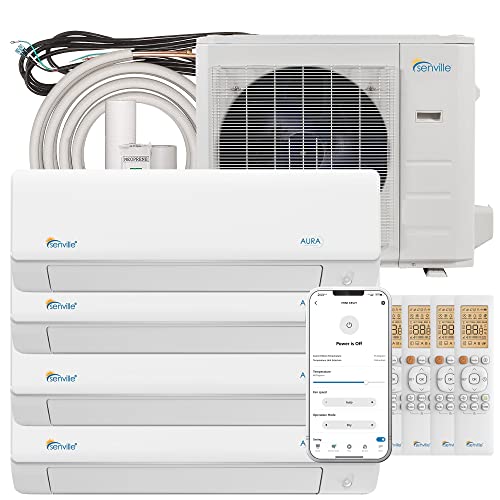
Senville AURA Mini Split AC/Heating System, 4 Zone, White, 36000 BTU | Energy Star Certified, Works with Alexa, Ductless Inverter, 3 Ton, AHRI Certified
Check price on Amazon
MRCOOL DIY Select 18K BTU Mini Split Heat Pump and Air Conditioner, White | Ductless Wall Mounted Unit, Heater for Bedroom, Garage or Shop, Pre-Charged Line Set, 230V Inverter, Heating System, AC Unit
Check price on Amazon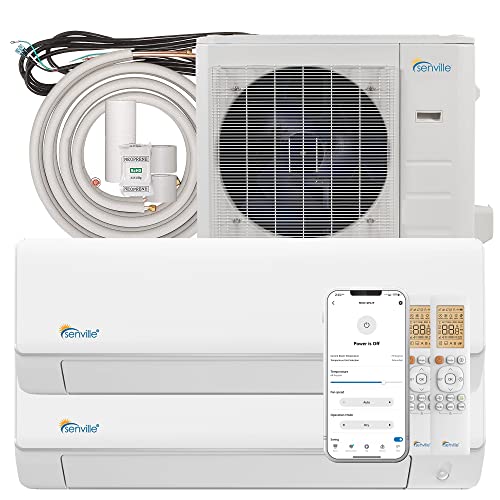
Senville AURA Mini Split AC/Heating System, 2 Zone, 18000 BTU | Energy Star Certified, Works with Alexa, Ductless Inverter, 1.5 Ton, AHRI Certified
Check price on Amazon
Cozeware Energy Star 28000 BTU 3 Zone Mini Split AC/Heating System | 12K+9K+9K MultiCoze Pro 22 SEER2 208-230V Pre-charged Inverter Tri Zone Mini Split AC, Compatible with Wi-Fi & App
Check price on Amazon
MRCOOL DIY Select 12000 BTU Mini Split AC/Heating System, 115V Heat Pump | No-Vacuum DIY Install With Pre-Charged Line Set, Up to 17.5 SEER2 Efficiency, and Whisper-Quiet 17.5 dB(A) Silent Mode
Check price on Amazon
ROVSUN 20000 BTU Dual Zone WIFI Mini Split AC/Heating System, 23 SEER2 2 Zone 9000 + 12000 BTU Ductless Split Air Conditioner with Pre-Charged Condenser, Heat Pump & 25Ft Copper Line Set, 208-230V
Check price on AmazonDisclaimer
Some of the content on this site uses AI assistance. Information is provided for educational purposes only. We are not responsible for any losses resulting from the use of this information. By using this site, you waive any right to bring legal claims against us arising from your use of the information provided. If you do not agree, please do not use this site. Read the full disclaimer.