
Smallest Through the Wall Air Conditioner: The Complete Compact Cooling Guide
When wall space is limited but you still want permanent, ductless cooling, a compact through the wall air conditioner is often the smartest solution. This guide walks you through chassis dimensions, BTU requirements, installation considerations, and the features that matter most when choosing the smallest through the wall AC for your room.
Explore Compact ModelsQuick Answer: The smallest through the wall air conditioners generally start at 5,000 to 6,000 BTU and measure roughly 20–24 inches wide, 12–15 inches tall, and 15–20 inches deep. They are ideal for rooms up to 150 square feet, including bedrooms, home offices, and studio apartments.
What This Guide Covers
- What Is a Through the Wall Air Conditioner?
- How Small Can a Through the Wall AC Get?
- Matching BTU to Your Room Size
- Why Choose a Compact Through the Wall Unit?
- Installation Requirements and Tips
- Key Features to Look For
- Compact Through the Wall vs. Other AC Types
- Maintenance for Long-Term Performance
- Frequently Asked Questions
What Is a Through the Wall Air Conditioner?
A through the wall air conditioner is a self-contained cooling unit installed permanently into an exterior wall. Unlike a window unit that hangs out of a window frame, a through the wall AC sits inside a wall sleeve, with the condenser section facing outdoors and the evaporator section blowing cool air indoors. This design frees up window space, improves security, and often reduces indoor noise because the compressor is positioned outside the living area.
Compact through the wall units are specifically engineered for smaller rooms and tighter wall cavities. They combine a reduced chassis with sufficient cooling capacity for spaces like bedrooms, home offices, and studio apartments. If you are exploring broader options for wall-mounted cooling, our guide to in-wall air conditioning and heating units covers combination systems that provide both cooling and warmth.
One of the main advantages of a through the wall unit is that it does not obstruct a window, which matters in rooms where natural light or emergency egress is important. It also tends to be more weather-tight than a window unit because the wall sleeve creates a sealed boundary between indoors and outdoors.
How Small Can a Through the Wall Air Conditioner Get?
The smallest through the wall air conditioners are designed around compact chassis dimensions while still delivering adequate cooling for small rooms. While exact measurements vary by brand and model, the table below summarizes the typical size ranges you can expect across capacity tiers.
| Capacity Tier | Typical Width | Typical Height | Typical Depth | Best For |
|---|---|---|---|---|
| 5,000–6,000 BTU | 20–24 in | 12–15 in | 15–20 in | Rooms up to 150 sq ft |
| 8,000–10,000 BTU | 24–26 in | 14–16 in | 18–22 in | Rooms 150–250 sq ft |
| 12,000–14,000 BTU | 26–28 in | 16–18 in | 20–24 in | Rooms 250–400 sq ft |
When shopping for the smallest through the wall air conditioner, pay close attention to the chassis dimensions rather than just the BTU rating. A unit with a slightly higher BTU rating but a slimmer chassis may fit your wall cavity better than a lower-capacity model with a bulky frame. Also check whether the unit requires a specific wall sleeve, as sleeve dimensions can add several inches to the overall footprint.
If you are comparing installation approaches, our article on mounting a window AC unit in the wall explains how wall sleeves and framing differ between window and through the wall installations.
Matching BTU to Your Room Size
Choosing the right cooling capacity is just as important as choosing the right physical size. An undersized unit will run continuously without reaching the set temperature, while an oversized unit will cycle on and off too quickly, leaving the room feeling clammy and wasting energy. The general rule of thumb is 20 BTU per square foot of living space, but several factors can shift that number.
| Room Size | Recommended BTU | Typical Room Type |
|---|---|---|
| Up to 150 sq ft | 5,000–6,000 BTU | Bedroom, study, studio |
| 150–250 sq ft | 8,000–10,000 BTU | Living room, large bedroom |
| 250–400 sq ft | 12,000–14,000 BTU | Open-plan space, master suite |
Adjust upward for rooms with high ceilings, large sun-facing windows, or heavy occupancy. Adjust downward for well-shaded rooms or spaces with strong insulation. For a deeper dive into capacity calculations, see our guide to how to size an air conditioner. If you are also considering a window-mounted alternative for a small room, our overview of the most efficient small window air conditioner offers useful comparisons.
Why Choose a Compact Through the Wall Unit?
A small through the wall air conditioner offers several practical advantages over other cooling options, especially in rooms where space is at a premium.
- Frees up window space: Unlike a window unit, a through the wall AC does not block natural light or views, and it does not interfere with window operation.
- Permanent installation: Once installed, the unit stays in place year-round, eliminating the seasonal hassle of lifting heavy window units in and out.
- Improved security: There is no open window to secure, which is a meaningful benefit for ground-floor rooms and rental properties.
- Quieter operation: Because the compressor sits outside the living space, indoor noise levels are often lower than comparable window units.
- Cleaner aesthetic: A flush-mounted through the wall unit looks more integrated than a window unit protruding into the room.
- Better weather sealing: A properly installed wall sleeve creates a tight boundary that reduces drafts and heat transfer.
For renters or homeowners who cannot modify an exterior wall, a through the wall portable air conditioner can be a practical workaround, though it typically requires venting through a window or existing opening.
Installation Requirements and Tips
Installing a through the wall air conditioner is more involved than setting up a window unit. It requires cutting an opening in an exterior wall, framing the cavity, and installing a wall sleeve. In many jurisdictions, this work requires a permit. Our guide on how to get an AC permit explains the steps and why permits matter for safety and resale value.
Before installation, confirm the following:
- Wall type and structure: Masonry, brick veneer, and wood-frame walls each require different framing and flashing approaches.
- Electrical capacity: Smaller units often run on 115V dedicated circuits, while larger models may need 230V. Verify your panel can support the load.
- Clearance: The outdoor side of the unit needs adequate airflow clearance. Avoid recessed locations that trap heat.
- Drainage: Ensure condensate drains away from the wall and foundation.
- Professional help: Unless you have carpentry and electrical experience, hiring a qualified installer is the safer choice. Our installation guide covers what to expect during the process.
If your home is older and you are weighing whether a through the wall unit makes sense, our article on installing air conditioning in an old house addresses common structural and electrical challenges.
Key Features to Look For
Not all compact through the wall units are created equal. The following features have the biggest impact on comfort, efficiency, and long-term reliability.
Energy Efficiency Ratio
A higher EER rating means more cooling per unit of electricity. For small units, look for models that meet or exceed ENERGY STAR thresholds. Our guide to EER ratings explains how to compare models.
Inverter Technology
Inverter compressors modulate speed instead of cycling on and off, which improves efficiency and temperature stability. Learn more in our inverter AC guide.
Noise Level
Look for sound ratings in the low 50s decibels for bedroom use. Quieter models often use insulated chassis and vibration-dampening mounts.
Remote and Programmable Controls
A remote thermostat or programmable schedule improves convenience and energy management. See our overview of AC thermostats with remote control.
Self-Cleaning Function
Some units run a drying cycle after shutdown to inhibit mold and odors. Our article on AC with self-cleaning explains how this feature works.
Heating Option
If you need year-round comfort, consider a model with a heat pump or electric heater. Our guide to air conditioners and heaters combination units covers the trade-offs.
Compact Through the Wall vs. Other AC Types
Understanding how a small through the wall unit compares to alternatives helps you make a confident decision. The table below summarizes the trade-offs.
| AC Type | Window Space | Installation Effort | Noise Level | Best For |
|---|---|---|---|---|
| Through the Wall (compact) | Preserved | High (wall modification) | Low to moderate | Permanent cooling in small rooms |
| Window AC | Blocked | Low | Moderate | Renters and temporary setups |
| Portable AC | Partially used for venting | Low | Moderate to high | Flexible placement |
| Ductless Mini-Split | Preserved | High (professional install) | Very low | Whole-room comfort and efficiency |
If you have a window that cannot accommodate a window unit, a room air conditioner that doesn’t need a window may be worth exploring. For very small spaces, a personal space air conditioner can supplement a through the wall unit during heat waves.
Maintenance for Long-Term Performance
Regular maintenance keeps a compact through the wall unit running efficiently and extends its service life. The most important tasks are straightforward:
- Clean or replace the air filter every 2–4 weeks during peak season. Our guide on how to clean an AC filter walks through the process.
- Clean the condenser coils annually. Dust and debris on outdoor coils reduce efficiency. See clean AC condenser coils for step-by-step instructions.
- Check the wall sleeve and flashing for leaks or gaps. Reseal as needed to prevent drafts and water intrusion.
- Schedule professional service every 1–2 years. A technician can check refrigerant levels, electrical connections, and drainage.
If you notice reduced cooling, unusual noises, or water leaks, address them promptly. Our troubleshooting resources, including my air conditioner is not blowing out cold air, can help you diagnose common issues before calling a professional.
Recommended Smallest Through the Wall Air Conditioners
⚠️ AFFILIATE DISCLOSURE: This website contains affiliate links. As an Amazon Associate, we earn from qualifying purchases. If you make a purchase through these links, we may receive a small commission at no additional cost to you. Read our full affiliate policy.

Durastar 8,000 BTU Through the Wall 115V Air Conditioner and Remote | Coverage area 700 square feet
Check price on Amazon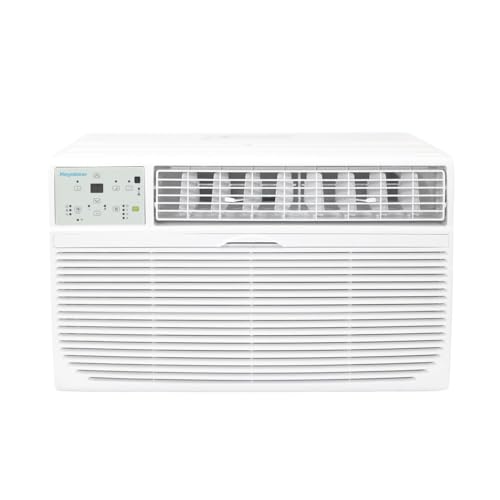
Keystone 10,000 BTU Wall Air Conditioner and Dehumidifier, 115V | 115V, Quiet, High Efficiency, for Bedroom, Bathroom, Nursery, Small-Medium Sized Rooms up to 450 Sq.Ft.
Check price on Amazon
Keystone 10,000 BTU Wall Mounted Air Conditioner with Supplemental Heat and Dehumidifier, 230V, Wall AC with Remote Control for Small and Medium Sized Rooms up to 450 Sq.Ft., Quiet, High Efficiency AC
Check price on Amazon
LG 10,000 BTU Through the Wall Air Conditioner, 115V, Cools up to 440 Sq. Ft. for Bedroom, Living Room, Apartment, with Remote, 3 Cool & Fan Speeds, Wall AC Unit, White
Check price on Amazon
Midea 8,000 BTU Smart Inverter Air Conditioner Window Unit with Heat and Dehumidifier – Cools up to 350 Sq. Ft., Energy Star Rated, Quiet Operation, Electronic Controls, Remote Control, White
Check price on Amazon
BPTCUE Dual Use Compact Portable Wall Mounted Air Conditioner Hot Cold for Bedroom, 2 in 1 Air Conditioner Heater
Check price on Amazon
Windowless Air Conditioner & Heater Combo Unit 2000W White,55cm | Ductless Wall Mount AC for Garage & Apartment, No Hose Needed, Portable Heating Fan with Touch & 2-8H Timer
Check price on Amazon
OLMO 8,000 BTU 115V Through-the-Wall AC, Cooling Only, with Wall Sleeve | Air Conditioner, Built-In Smart Kit, R-32 Eco-Friendly Refrigerant, Remote Included, 0.67 Ton
Check price on AmazonFrequently Asked Questions
What is the smallest through the wall air conditioner size available?
The smallest through the wall air conditioners typically start at 5,000 to 6,000 BTU and are designed for rooms up to 150 square feet. Their chassis dimensions are usually around 20 to 24 inches wide, 12 to 15 inches tall, and 15 to 20 inches deep, making them suitable for compact spaces like studios, bedrooms, and small offices.
Can a through the wall air conditioner fit in a standard wall sleeve?
Most through the wall units are designed to fit standard wall sleeves, often 26 inches wide. However, compact models may require a specific sleeve size. Always verify the chassis dimensions and sleeve requirements before installation to ensure a proper fit.
Do small through the wall AC units need special electrical wiring?
Smaller through the wall units, especially those under 8,000 BTU, often run on standard 115V household current with a dedicated circuit. Larger models may require 230V wiring. Check the unit’s specifications and consult a licensed electrician if you are unsure about your home’s electrical capacity.
How many BTU do I need for a small room?
As a general rule, you need about 20 BTU per square foot of living space. For a room up to 150 square feet, a 5,000 to 6,000 BTU unit is usually sufficient. Consider factors like ceiling height, sun exposure, and occupancy to fine-tune your choice. Our AC sizing guide provides a more detailed calculation method.
Are through the wall air conditioners quieter than window units?
Through the wall units are often perceived as quieter because the compressor is mounted outside the living space, reducing indoor noise. However, noise levels vary by model. Look for units with sound ratings around 50 to 55 decibels for quieter operation.
Final Thoughts
The smallest through the wall air conditioner is an excellent choice for homeowners who want permanent, space-saving cooling without sacrificing window access. By matching BTU capacity to your room size, verifying chassis dimensions, and planning a proper installation, you can enjoy quiet, efficient comfort for years to come. Use the product recommendations above to explore compact models, and refer back to the sizing and maintenance sections whenever you need a refresher.
For related reading, explore our guide to smart window air conditioners if you are comparing connected features, or our overview of top-rated energy-efficient air conditioners for broader efficiency comparisons.