
Tent AC Units: How to Cool a Tent Reliably
Tents trap heat fast, and a hot night can ruin a trip. This guide explains how tent AC units work, how to size one for your shelter, how to route exhaust safely, and which types suit campsites, glamping setups, and event shelters.
Start ReadingWhy tent cooling is different: A tent is not a house. Walls are thin, seams leak air, and the sun hits the fabric directly. That means a tent AC unit does not need to cool a large volume of air so much as it needs to overcome heat gain and humidity inside a small, poorly insulated space. Understanding that difference is the key to choosing equipment that actually works instead of fighting the conditions.
What Are Tent AC Units?
Tent AC units are compact cooling devices designed or adapted to lower the temperature inside a tent, cabin tent, canopy shelter, or similar fabric structure. They fall into a few practical categories, each with a different approach to moving heat out of the enclosure.
- Portable air conditioners adapted for tents. These are standard floor-standing portable units with an exhaust hose. In a tent, the hose is routed outside through a zippered window, a custom fabric vent sleeve, or a rigid window panel insert.
- Spot cooling units. Often used in commercial and event settings, spot coolers direct a focused stream of cold air at people rather than conditioning an entire space. They can be effective in larger tents and temporary structures.
- Evaporative and swamp-style coolers. These add moisture to the air while cooling it, which works well in dry climates but performs poorly in humid regions. They are not true air conditioners and should be chosen with climate in mind.
- Battery-powered and 12V cooling devices. These are niche products aimed at off-grid campers. They are typically smaller, quieter, and lower in cooling output, but they avoid the need for a generator.
If you are exploring broader portable options beyond tents, the stand-alone air conditioner units overview is a useful next step, and spot coolers explains the focused-cooling approach in more depth.
How Tent AC Units Actually Work
A tent air conditioner follows the same refrigeration cycle as any other AC: it absorbs heat from inside air, moves that heat outdoors through a refrigerant loop, and releases it through the exhaust. The difference in a tent is where the heat goes and how easily outside air sneaks back in.
Single-hose portable units pull air from the room to cool the condenser and blow it out the exhaust. In a sealed house, that creates mild negative pressure. In a tent, the effect is much stronger: the unit can pull hot outside air straight through the fabric and seams, reducing cooling efficiency. Dual-hose units separate intake and exhaust, which is why they are generally the better match for tent use.
The practical takeaway is straightforward. Match the unit to the space, seal the exhaust path as well as the tent allows, and avoid expecting a small unit to cool a large cabin tent in full afternoon sun. For background on how the cooling cycle works, see how an air conditioner works.
Sizing a Tent AC Unit: BTU and Real-World Adjustments
The common rule of thumb for room air conditioning is about 20 BTU per square foot. Tents need adjustment because their heat gain is unusually high. Direct sun on dark fabric, thin walls, and limited insulation all push the required capacity upward.
| Tent Floor Area | Typical Occupancy | Suggested Capacity Range | Notes |
|---|---|---|---|
| Up to 40 sq ft | 1–2 people | 5,000–6,000 BTU | Small dome or backpacking tents; shade is critical |
| 40–80 sq ft | 2–4 people | 6,000–8,000 BTU | Mid-size dome or cabin tents |
| 80–150 sq ft | 4–6 people | 8,000–12,000 BTU | Family cabin tents; consider dual-hose design |
| 150–250 sq ft | 6+ people or event use | 12,000–14,000 BTU or spot cooling | Large cabin tents, canopies, glamping structures |
| 250+ sq ft | Group or commercial | Spot cooling or multiple units | Consider temporary commercial air conditioning units |
Adjust upward for full-day sun exposure, dark-colored fabric, and humid climates. Adjust downward if the tent sits under deep shade or is used only at night. For a broader calculation method, the air conditioner sizing guide and the BTU calculator by room size are helpful references.
How to Route Exhaust and Set Up a Tent AC Unit
Exhaust routing is where most tent cooling setups succeed or fail. The unit must reject heat outdoors, and the connection point must be sealed well enough that hot air does not loop back in.
Zippered Window Sleeve
Many tents have a zippered window or vent panel. A fabric sleeve or custom insert holds the exhaust hose securely and limits air leakage around the hose.
Rigid Window Panel Insert
A rigid panel sized to the tent window opening, with a cutout for the hose, creates a more stable connection than fabric alone.
Dedicated Port
Some tents designed for camping comfort include a pre-made AC port or cord port that simplifies hose routing and improves sealing.
Dual-Hose Advantage
Dual-hose units take in outside air for condenser cooling, which reduces negative pressure inside the tent and improves overall performance.
Place the unit on a level, stable surface and keep it clear of sleeping bags and fabric. Route the hose with a slight downward slope so condensation drains away from the tent rather than pooling inside. If the tent has no suitable opening, a temporary duct panel or a purpose-made vent sleeve is a better solution than leaving a door partly open.
Power Requirements and Generator Safety
Tent AC units are high-draw appliances compared with lights and phone chargers. Before choosing a unit, confirm what power is available at your site.
- Electrical hookup campsites. Most plug-in tent AC units run on standard 110V–120V household current. Check the amperage draw and confirm the pedestal can support it alongside other devices.
- Generator use. A generator must be sized for continuous running wattage, not just surge. Never place a fuel-burning generator inside a tent or immediately beside the sleeping area.
- Battery power stations. Large lithium power stations can run small AC units for a limited time, but the high continuous draw drains capacity quickly. Match the unit's running watts to the station's continuous output rating.
- Cord safety. Use outdoor-rated extension cords with adequate gauge, keep connections dry, and avoid daisy-chaining cords.
For related electrical guidance, the amps and breaker size guide and the 110V vs 240V comparison explain the underlying principles in more detail.
Comparing Cooling Options for Tents
| Option | Best For | Strengths | Limitations |
|---|---|---|---|
| Single-hose portable AC | Entry-level tent cooling | Widely available, simple setup | Negative pressure pulls in hot air |
| Dual-hose portable AC | Mid-range tent setups | Better efficiency, balanced airflow | Bulkier, fewer compact models |
| Spot cooler | Large tents and event shelters | Focused cooling, high output | Less suited to small sleeping tents |
| Evaporative cooler | Dry climates | Low power draw, adds humidity | Ineffective in humid conditions |
| Battery-powered cooler | Off-grid camping | No generator needed, quiet | Lower cooling output, limited runtime |
For a deeper look at compact standalone options, the stand-alone air conditioner without window vent guide covers units that do not require a traditional window installation.
Practical Tips for Better Tent Cooling
- Shade the tent first. A shade tarp or canopy over the tent reduces solar heat gain before the AC has to remove it.
- Pre-cool before peak heat. Start the unit in the early afternoon rather than waiting for the tent to become an oven.
- Seal the obvious gaps. Close unused vents and doors, and use the smallest practical opening for the exhaust hose.
- Keep airflow unobstructed. Do not block the intake or exhaust with gear, bedding, or fabric.
- Manage humidity. In humid climates, a true AC unit that dehumidifies is more comfortable than an evaporative cooler.
- Plan for condensation. Use a drain hose or a unit with a condensate management system to keep the tent floor dry.
Safety first: Never run a generator inside a tent or in an enclosed space. Route all exhaust hoses away from sleeping areas, and make sure the tent has some ventilation even when the AC is running. If you use a fuel-burning device anywhere near the tent, install a battery-powered carbon monoxide alarm.
How to Choose the Right Tent AC Unit
Work through the decision in a logical order. First, measure the tent floor area and note how many people will sleep inside. Second, assess sun exposure and climate humidity. Third, confirm the available power source. Fourth, decide between a portable AC, a spot cooler, or a low-power alternative based on those constraints.
Starter Tier
Small single-hose portable units suit occasional use in compact tents where shade and night-time cooling are the main goals.
Balanced Tier
Dual-hose portable units offer better efficiency and more consistent comfort for family cabin tents and multi-night trips.
High-End Tier
Spot coolers and high-output portable units serve large tents, glamping setups, and event shelters where cooling demand is significant.
If you are weighing portable options more broadly, the stand-alone portable air conditioning units guide and the most efficient portable air conditioner comparison are useful references. For larger temporary structures, temporary commercial air conditioning units covers higher-capacity equipment.
Frequently Asked Questions
Can a regular portable air conditioner be used in a tent?
Yes, with caveats. The exhaust hose must be routed outside through a sealed opening. Single-hose units create negative pressure that draws warm outside air back into the tent, so dual-hose or spot cooling designs generally perform better in fabric structures.
How many BTU do I need to cool a tent?
Start with roughly 20 BTU per square foot of floor area, then add capacity for direct sun, thin walls, and occupancy. Small tents may need 5,000–6,000 BTU, while large cabin tents can require 10,000–14,000 BTU or more.
What power source do tent AC units need?
Most plug-in units require a 110V–120V outlet and draw roughly 5–12 amps depending on capacity. Off-grid users need a generator or a large battery power station rated for continuous high-draw loads.
Are tent AC units safe to run overnight?
Yes, if the unit is designed for enclosed-space use and the tent has ventilation. Never run a fuel-burning generator inside or immediately beside a tent, and route exhaust hoses securely away from sleeping areas.
Do tent AC units work in humid climates?
A true refrigerant-based AC unit dehumidifies as it cools, which helps in humid conditions. Evaporative coolers add moisture and are better suited to dry climates.
Can I use a window AC unit in a tent?
Window units are not designed for fabric structures and are difficult to mount safely. Portable and spot cooling units are the practical choice for tents. For information on window units in general, see the window air conditioner guide.
Cool Your Tent with Confidence
Choose the unit that matches your tent size, power source, and climate, then route the exhaust carefully and shade the shelter before the heat builds. That combination delivers the most reliable comfort in fabric structures.
Recommended Tent AC Units and Portable Cooling Options
⚠️ AFFILIATE DISCLOSURE: This website contains affiliate links. As an Amazon Associate, we earn from qualifying purchases. If you make a purchase through these links, we may receive a small commission at no additional cost to you. Read our full affiliate policy.

Portable Camping Air Conditioner 5200 BTU Tent AC Unit | 400W Low power 4-in-1 portable AC for indoor & outdoor,fast cooling for RV, truck,van,car,small warehouse and pet house
Check price on Amazon
FO-KOKO Dual Hose 6800 BTU Portable Camping Tent Air Conditioner & Heating | 5-in-1 Quiet Small AC Unit with 550W, Windowless AC for Tent, RV, Van, Car, Garage, Indoor & Outdoor Use
Check price on Amazon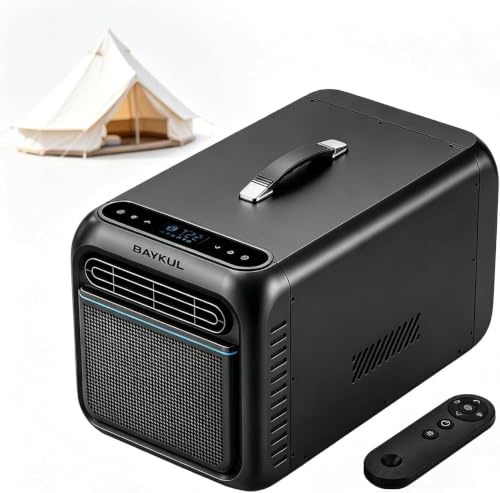
BAYKUL 5000 BTU Portable Camping Air Conditioner, Compact Tent AC Unit | Ideal For Tents,RVs,Vans,Trucks,Pet Houses&Off‑Grid Boondocking Adventures, Instant-Cooling,Camping AC for Outdoor Activities
Check price on Amazon
pofluany Compact Mini AC Unit, Quiet 4000 BTU Tent Air Conditioner | Small Room Cooling System, Indoor Climate Control, 24H Timer, Wireless Remote, Easy Travel Companions, Fast Setup US Plug
Check price on Amazon
Portable Camping Air Conditioner 5000 BTU, Compact Tent AC Unit | Fast-Cooling, Ideal For Tents,RVs,Vans,Trucks,Pet Houses&Off‑Grid Boondocking Adventures, Camping AC for Outdoor Activities
Check price on Amazon
GETUHAND Portable Tent Air Conditioner for Camping, 5200BTU Fast Cooling Quiet Small Light Air conditoning 400W Low Power for RV, Truck, Van
Check price on Amazon
8000 BTU Portable Camping Air Conditioner & Heater, Tent Air Conditioner 5-in-1 AC Unit, with Cooling, Heating, Fan, Dehumidifier, Sleep Mode, Dual Hose, for Tent, RV, Fishing, with Remote Contro
Check price on Amazon
GETUHAND Portable Tent Air Conditioner for Camping 5200BTU 400W No Hot Air Discharge Drain-Free, for Tent Yacht/Truck/Bedroom/RVs
Check price on AmazonDisclaimer
Some of the content on this site uses AI assistance. Information is provided for educational purposes only. We are not responsible for any losses resulting from the use of this information. By using this site, you waive any right to bring legal claims against us arising from your use of the information provided. If you do not agree, please do not use this site. Read the full disclaimer.