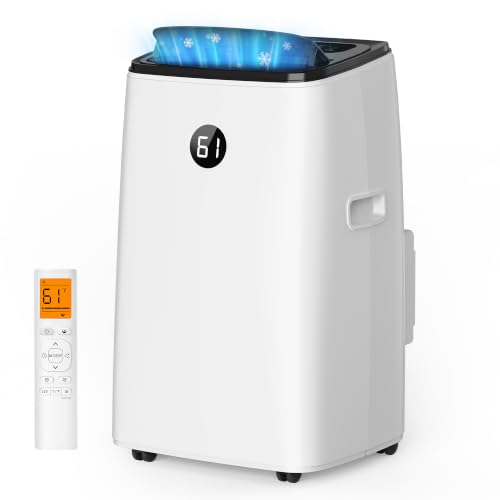
The Most Efficient Portable Air Conditioner: A Complete Buyer's Guide
Learn how to identify the most efficient portable air conditioner for your space. This guide covers BTU sizing, CEER ratings, dual-hose design, inverter compressors, and the features that separate truly efficient units from the rest.
Explore Top PicksWhy efficiency matters: A portable air conditioner that runs inefficiently wastes energy, struggles to cool the room evenly, and adds unnecessary load to your electricity usage. Choosing the most efficient portable air conditioner means matching the right capacity to your space, selecting the right compressor technology, and understanding how hose design and installation affect real-world performance.
What Makes a Portable Air Conditioner Efficient?
Efficiency in a portable air conditioner is not determined by a single specification. It is the result of several design and engineering factors working together. Before comparing models, it helps to understand what each factor contributes to overall performance.
Cooling Capacity Matched to Room Size
The most efficient portable air conditioner is the one sized correctly for the room it serves. An oversized unit cools too quickly and cycles on and off frequently, which wastes energy and leaves the room feeling clammy. An undersized unit runs continuously and never reaches the target temperature. Both scenarios reduce efficiency.
As a general starting point, use the following capacity ranges:
| Room Size | Suggested BTU Range | Typical Use Case |
|---|---|---|
| Up to 150 sq ft | 5,000 – 6,000 BTU | Bedroom, small office, studio nook |
| 150 – 250 sq ft | 8,000 – 10,000 BTU | Medium bedroom, living area, home office |
| 250 – 400 sq ft | 12,000 – 14,000 BTU | Large living room, open-plan space |
These ranges assume standard ceiling heights and average insulation. Rooms with large windows, direct sun exposure, or poor insulation may need a slight capacity increase. For a deeper walkthrough of sizing, see our guide on how to size an air conditioner.
Dual-Hose Design vs. Single-Hose Design
Hose configuration is one of the most overlooked efficiency factors in portable air conditioners. A single-hose unit pulls air from inside the room to cool its condenser and exhausts that air outside. This creates negative pressure, which causes hot outdoor air to leak back into the room through gaps and cracks. The unit then has to work harder to cool that replacement air.
A dual-hose portable air conditioner draws outdoor air through one hose to cool the condenser and sends it back out through the second hose. This balanced airflow avoids negative pressure and keeps conditioned indoor air where it belongs. In practice, dual-hose models deliver more consistent cooling and waste less energy. If you are comparing options, our overview of top-rated dual-hose portable air conditioners explains the design in more detail.
Compressor Technology: Inverter vs. Fixed-Speed
Fixed-speed compressors switch fully on and fully off. Every restart draws a surge of electricity and causes temperature swings. Inverter compressors adjust their speed continuously to match the cooling demand. This modulation avoids the energy waste of repeated startup cycles and holds the room temperature within a narrow, comfortable band.
An inverter portable air conditioner is generally more efficient in the long run, especially in rooms where the cooling load changes throughout the day. It also tends to run more quietly. For a broader explanation of the technology, read our article on inverter AC systems.
CEER Rating: The Efficiency Score to Watch
Portable air conditioners are rated using the Combined Energy Efficiency Ratio (CEER). This metric expresses cooling output relative to electricity consumed, including standby power. A higher CEER indicates a more efficient unit. When comparing models, look for units that meet or exceed the current DOE minimum for portable ACs, and favor models with higher CEER values within the category.
It is worth noting that CEER is calculated under standardized test conditions. Real-world efficiency also depends on installation quality, hose insulation, and how well the room is sealed.
Airflow and Fan Efficiency
Efficient cooling depends on moving air through the room effectively. Adjustable louvers, multiple fan speeds, and a strong but quiet fan motor help distribute cool air evenly. A unit with poor airflow may run longer than necessary because the thermostat never registers the true room temperature. Look for models with auto-swing louvers and a dedicated dehumidification mode, which can reduce the cooling load in humid climates.
How to Compare Portable Air Conditioners for Efficiency
Once you understand the underlying factors, comparing models becomes a structured process. Use the following checklist to evaluate any portable air conditioner you are considering.
- Confirm the BTU rating matches your room size. Use the sizing table above as a starting point and adjust for sun exposure and insulation.
- Check the hose configuration. Prefer dual-hose models for efficiency, especially in larger rooms or spaces with limited ventilation.
- Look for an inverter compressor. Inverter-driven units modulate speed for steadier temperatures and lower energy waste.
- Compare CEER values. Higher CEER means more cooling per unit of electricity under standardized conditions.
- Review noise specifications. Quieter operation often correlates with better-engineered fan and compressor components.
- Check filter accessibility. Washable, easy-to-remove filters support regular maintenance, which preserves efficiency over time.
- Look for programmable timers and smart controls. Scheduling cooling to match occupancy reduces wasted runtime.
- Verify window kit quality. A well-sealed window kit prevents hot air infiltration and keeps the unit operating efficiently.
If you are early in your research, our overview of stand-alone portable air conditioning units can help you understand the broader product category before narrowing down to specific efficiency criteria.
Installation and Maintenance Habits That Preserve Efficiency
Even the most efficient portable air conditioner can underperform if it is installed or maintained poorly. The following practices help ensure the unit operates near its rated efficiency.
Seal the Window Kit Properly
Gaps around the exhaust hose and window panel allow hot outdoor air to enter the room. Use weatherstripping, foam tape, or the included sealing panels to close every gap. A tight seal is especially important for single-hose units, where negative pressure already encourages air infiltration.
Insulate the Exhaust Hose
The exhaust hose carries hot air and can radiate heat back into the room. Wrapping the hose with an insulating sleeve reduces this heat gain and improves overall cooling efficiency. This is a simple, low-effort improvement that many users overlook.
Clean or Replace Filters Regularly
Dust and debris restrict airflow, forcing the unit to work harder. Washable filters should be cleaned every two to four weeks during heavy use. Refer to the manufacturer's instructions for the specific cleaning interval of your model.
Keep Doors and Windows Closed
Portable air conditioners cool a defined space. Leaving doors or windows open allows cooled air to escape and warm air to enter, which undermines efficiency regardless of the unit's rating.
Shade the Unit and the Room
Direct sunlight on the unit or the room increases the cooling load. Closing blinds during the hottest part of the day and positioning the unit away from direct sun helps it maintain efficiency.
Use Timers and Smart Features
Programmable timers and smart controls allow you to run the unit only when needed. Scheduling cooling around occupancy patterns reduces total runtime and energy consumption without sacrificing comfort.
Common Mistakes That Reduce Portable AC Efficiency
Many efficiency complaints trace back to avoidable mistakes rather than the unit itself. Being aware of these pitfalls helps you get the most from any portable air conditioner.
- Buying by BTU alone. A higher BTU rating does not guarantee better efficiency if the unit is oversized for the room or uses a single-hose design.
- Ignoring hose configuration. Single-hose units are convenient but inherently less efficient in real-world conditions due to negative pressure.
- Poor window sealing. An unsealed window kit can undo much of the efficiency gained from a well-designed unit.
- Skipping filter maintenance. Clogged filters restrict airflow and increase energy use over time.
- Running the unit in an open space. Portable ACs are designed for enclosed rooms; cooling a hallway or open-plan area wastes energy.
- Placing the unit in direct sun. Heat gain from sunlight forces the compressor to work harder.
For related guidance on troubleshooting performance issues, see our article on troubleshooting air conditioning problems.
Who Should Choose a Portable Air Conditioner?
Portable air conditioners are a practical cooling solution in several situations. They are particularly well suited to:
- Renters who cannot install window or through-the-wall units permanently.
- Rooms without ductwork where central air or mini-split installation is not feasible.
- Supplemental cooling for spaces that central air does not reach adequately.
- Temporary or seasonal cooling in home offices, guest rooms, or converted spaces.
- Spaces with restricted window access where a window AC is not an option.
If your situation involves a window that can accommodate a traditional unit, comparing portable and window options is worthwhile. Our guide on the most efficient window air conditioner provides a useful point of comparison. For setups where venting through a window is not possible, see stand-alone air conditioner units without a window vent.
Key Takeaways: Choosing the Most Efficient Portable Air Conditioner
The most efficient portable air conditioner is not simply the one with the highest BTU number or the longest feature list. It is the unit that matches your room size, uses a dual-hose design to avoid negative pressure, employs an inverter compressor for steady modulation, and carries a strong CEER rating for its class.
Pair those specifications with careful installation and routine maintenance, and you will get the best real-world efficiency from your portable air conditioner. Use the checklist and sizing table above as your reference when comparing models, and prioritize dual-hose, inverter-driven designs for the strongest efficiency profile.
Frequently Asked Questions
What makes a portable air conditioner the most efficient?
The most efficient portable air conditioners combine a dual-hose design, inverter compressor technology, a high CEER rating, and precise BTU sizing for the room. Dual-hose models avoid negative pressure and re-cooling, while inverter compressors modulate speed instead of cycling on and off.
Is a dual-hose portable AC more efficient than a single-hose model?
Yes. A dual-hose portable AC draws outdoor air for condenser cooling and exhausts hot air separately, which prevents negative pressure and stops conditioned indoor air from being pulled out. This makes dual-hose models significantly more efficient in real-world use.
What CEER rating should I look for in a portable air conditioner?
Look for a CEER rating at or above the current DOE minimum for portable ACs. Higher CEER values indicate greater cooling efficiency per unit of electricity. Top-tier units in the category typically achieve the highest CEER scores available.
Does an inverter compressor improve portable AC efficiency?
Yes. An inverter compressor continuously adjusts its speed to match the cooling load instead of switching fully on and off. This reduces energy waste from cycling, maintains steadier temperatures, and lowers operating noise.
How do I size a portable AC for maximum efficiency?
Match BTU capacity to room size: roughly 5,000–6,000 BTU for up to 150 sq ft, 8,000–10,000 BTU for 150–250 sq ft, and 12,000–14,000 BTU for 250–400 sq ft. Oversizing wastes energy, while undersizing forces the unit to run continuously.
Can I improve the efficiency of an existing portable air conditioner?
Yes. Seal window gaps around the exhaust kit, insulate the hose, clean filters regularly, shade the unit from direct sun, and use the timer or programmable settings. Keeping doors and windows closed while running the unit is essential.