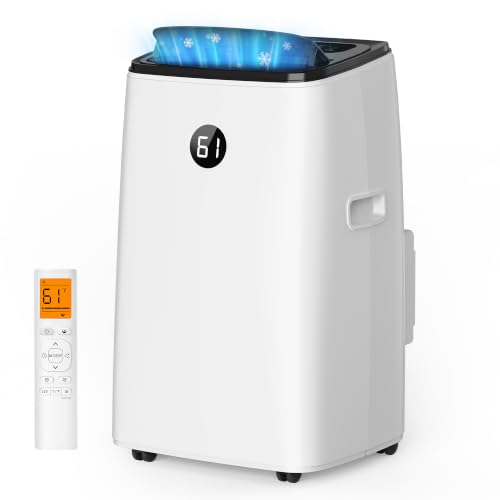
Stand Alone Air Conditioner Units: Complete Buyer's Guide
A stand alone air conditioner gives you flexible, targeted cooling without permanent installation. This guide breaks down the types, sizing logic, efficiency factors, and setup considerations so you can choose the right unit for your space with confidence.
Explore the GuideWho this guide is for: If you rent, live in an older home without ductwork, need cooling for a specific room, or want a backup cooling solution, a stand alone air conditioner is often the most practical answer. Below we explain how these units work, where they fit best, and how to avoid the most common buying mistakes.
What Is a Stand Alone Air Conditioner Unit?
A stand alone air conditioner is a self-contained cooling system that operates independently of a home's central HVAC infrastructure. Unlike a split system or central air conditioner, it does not rely on permanent ductwork or a wall-mounted condenser. Everything needed to cool a space—compressor, condenser, evaporator, and controls—is housed within a single unit.
The most common examples are portable air conditioners and freestanding floor units. These models can be moved from room to room, stored seasonally, and set up without professional installation. For a deeper look at the broader category of non-permanent cooling solutions, see our overview of stand alone portable air conditioning units.
Stand alone units are distinct from window units and through-the-wall units, which require a permanent opening in the building envelope. They are also distinct from mini-splits, which use a separate outdoor condenser connected by refrigerant lines. The defining feature is that a stand alone unit is a complete, movable package.
Types of Stand Alone Air Conditioner Units
Not all stand alone units are built the same. The category includes several distinct technologies, each with its own strengths and trade-offs.
1. Single-Hose Portable Air Conditioners
These are the most widely available entry-level portable models. A single exhaust hose routes hot air out through a window kit. Because the unit pulls replacement air from the room it is cooling, single-hose systems create negative pressure that can draw warm outdoor air back in through gaps. They are simple to set up and generally the most portable option, but they are less efficient than dual-hose designs.
2. Dual-Hose Portable Air Conditioners
Dual-hose units use one hose to draw in outside air for the condenser and a second hose to exhaust hot air. This balanced airflow reduces the negative-pressure problem and generally delivers better cooling performance for the same energy input. Dual-hose models are considered the mid-range and high-end tier of portable cooling and are the better choice for larger rooms or extended daily use. Browse options in our guide to top-rated dual-hose portable air conditioners.
3. Evaporative Coolers (Swamp Coolers)
Evaporative coolers use water evaporation to lower air temperature. They do not use a compressor and do not require a window vent, but they only work effectively in dry climates. In humid regions they can make a room feel worse. If you are considering this route, read our explanation of swamp cooler air conditioner technology and how it differs from refrigerant-based cooling.
4. Thermoelectric Air Conditioners
Thermoelectric units use the Peltier effect to create a temperature differential. They are compact, have no moving refrigerant parts, and are quiet, but their cooling capacity is limited to small personal spaces. They are best treated as a niche option for spot cooling rather than whole-room comfort. Our article on thermoelectric air conditioner models explains where they make sense.
5. Tower and Floor-Standing Air Conditioners
Tower and floor-standing units are freestanding appliances that cool a room without window mounting. Some are portable refrigerant units, while others are evaporative or hybrid designs. They blend into living spaces more easily than boxy portable units and often include oscillating airflow and smart features. See our tower air conditioners overview for a closer comparison.
6. Spot Coolers
Spot coolers are heavy-duty portable units designed to direct cool air at a specific area rather than cool an entire room. They are common in commercial and industrial settings, but smaller versions are used in homes for targeted comfort. Our spot coolers guide covers how they differ from consumer portable ACs.
Type Comparison at a Glance
The table below summarizes the main stand alone air conditioner categories. Tier labels reflect relative market positioning and capability within the category, not absolute value.
| Type | Tier | Best For | Venting | Efficiency Profile |
|---|---|---|---|---|
| Single-Hose Portable | Entry-Level | Small rooms, occasional use, renters | Window kit required | Moderate; negative pressure reduces effective efficiency |
| Dual-Hose Portable | Mid-Range to High-End | Larger rooms, daily use, longer cooling sessions | Dual window kit required | Good; balanced airflow improves performance |
| Evaporative Cooler | Entry-Level | Dry climates, open living spaces | No vent required | Low energy draw but climate-dependent |
| Thermoelectric | Starter Tier | Personal spot cooling, small enclosed spaces | Often vent-free | Limited output; best for very small areas |
| Tower / Floor-Standing | Mid-Range | Living rooms, bedrooms, design-conscious spaces | Varies by model | Depends on compressor type; inverter models perform best |
| Spot Cooler | Professional-Grade | Commercial, industrial, targeted cooling | Ducted or directional exhaust | Heavy-duty; designed for continuous operation |
Pros and Cons of Stand Alone Air Conditioners
Advantages
- No permanent installation or structural modification
- Movable between rooms and storable off-season
- Renter-friendly and apartment-compatible
- Works in homes without ductwork
- Targeted cooling reduces energy waste in unused rooms
- Setup typically requires only a window kit and a standard outlet
Limitations
- Single-hose models can create negative pressure and reduce efficiency
- Requires window access for exhaust on most refrigerant models
- Floor footprint and hose routing can be inconvenient
- Noise levels are often higher than split systems
- Cooling capacity is limited compared to central air
- Condensate management may require manual draining on some models
How to Size a Stand Alone Air Conditioner
Sizing is the single most important decision when buying a stand alone air conditioner. An undersized unit runs continuously and never fully cools the room. An oversized unit cools too quickly, cycles on and off, and struggles to remove humidity. Both scenarios waste energy and reduce comfort.
The standard starting point is approximately 20 BTU per square foot of floor area. However, this baseline must be adjusted for real-world conditions.
| Room Size | Baseline BTU | Typical Use Case |
|---|---|---|
| Up to 150 sq ft | 5,000 – 6,000 BTU | Bedroom, small office, studio nook |
| 150 – 250 sq ft | 8,000 – 10,000 BTU | Medium bedroom, home office, den |
| 250 – 400 sq ft | 12,000 – 14,000 BTU | Large bedroom, living room, open-plan area |
| 400 – 600 sq ft | 14,000 – 18,000 BTU | Studio apartment, large living space |
| 600+ sq ft | 18,000+ BTU | Open-plan living, multi-room use (consider multiple units) |
Adjustment factors: Add roughly 10 percent for rooms with high ceilings (over 8 feet), add 10 percent for rooms with direct sun exposure through large windows, and add BTU for each additional occupant beyond two. Kitchens and rooms with heat-generating appliances also require a bump. If you want a more precise estimate, our guide on how to size an air conditioner walks through the full calculation.
Efficiency Ratings and What They Mean
Efficiency is a major differentiator among stand alone air conditioner units, and it directly affects long-term operating performance. Here is what to look for.
- CEER (Combined Energy Efficiency Ratio): The standard efficiency metric for portable air conditioners. Higher CEER means more cooling output per unit of electricity. Dual-hose and inverter models typically score better than single-hose units.
- SACC (Seasonally Adjusted Cooling Capacity): A more realistic BTU rating that accounts for real-world operating conditions. When comparing units, SACC is more meaningful than the headline BTU number.
- Inverter compressors: Inverter technology allows the compressor to modulate speed instead of cycling on and off at full power. This improves temperature stability and efficiency, especially during long cooling sessions. If energy performance matters to you, prioritize inverter-equipped models.
For a broader discussion of efficiency standards, see our guide to what is SEER rating and how it applies to different cooling systems. If you are specifically interested in the most efficient portable options, our article on the most efficient portable air conditioner models is a useful next step.
Installation and Setup Considerations
One of the main advantages of stand alone units is that installation is minimal. That said, a few practical factors determine whether a unit will work well in your space.
Window Venting
Most refrigerant-based portable units require a window kit to exhaust hot air. The kit typically includes a sliding panel and hose connector. You will need a window that opens and closes securely with the panel in place. Casement windows and unusually shaped windows can complicate setup. If window venting is not possible in your space, explore stand alone air conditioner without window vent options, which include evaporative and thermoelectric designs.
Electrical Requirements
Portable air conditioners generally run on standard household voltage, but larger units may draw significant amperage. Check the unit's electrical rating and confirm that the circuit can handle the load. Avoid sharing a circuit with other high-draw appliances. If you are unsure, our guide on 110V vs 240V air conditioner units explains the differences.
Condensate Management
Air conditioners remove moisture from the air. Some portable units evaporate condensate automatically through the exhaust, while others require manual draining or a gravity drain hose. For extended daily use, a self-evaporating design reduces maintenance effort.
Placement and Airflow
Place the unit near the window it will vent to, keep the exhaust hose as short and straight as possible, and avoid blocking the intake and outlet grilles. Keep the unit away from direct sunlight and heat sources to improve cooling performance.
Buying Checklist
Before you choose a stand alone air conditioner, confirm the following:
- Room size and BTU: Match the unit's SACC rating to your room area and adjustment factors.
- Venting method: Confirm that your window type is compatible with the included window kit.
- Hose configuration: Prefer dual-hose designs for larger rooms and longer use; single-hose for occasional cooling in small spaces.
- Efficiency rating: Compare CEER values and prioritize inverter compressors for better long-term performance.
- Noise level: Check decibel ratings if the unit will run in a bedroom or home office.
- Condensate handling: Choose self-evaporating or easily drained models for daily use.
- Smart features: Wi-Fi control, programmable timers, and remote operation add convenience.
- Footprint and mobility: Verify caster quality and unit dimensions for your space.
- Warranty and support: Review compressor and parts warranty terms.
- Filter accessibility: Easy-to-remove filters make routine maintenance simpler.
Maintenance Tips for Stand Alone Units
Stand alone air conditioners are low-maintenance compared to central systems, but regular care extends lifespan and preserves cooling performance.
- Clean or rinse the air filter every two to four weeks during active use.
- Empty or drain the condensate reservoir as recommended by the manufacturer.
- Inspect and clean the exhaust hose and window panel for dust and obstructions.
- Store the unit upright in a dry space during the off-season.
- Check the power cord and plug for wear before each cooling season.
- Clean the exterior grilles and vents with a soft brush or vacuum.
For a broader maintenance routine that applies across cooling systems, see our AC maintenance guide.
Common Buying Mistakes to Avoid
- Ignoring SACC: Headline BTU numbers can overstate real-world cooling capacity. Always compare SACC ratings.
- Buying single-hose for a large room: Single-hose units struggle in larger spaces and during extended use. Choose dual-hose for serious cooling.
- Overlooking window compatibility: Measure your window and confirm the vent kit will fit before purchasing.
- Skipping the electrical check: Confirm circuit capacity, especially for larger units.
- Underestimating noise: Portable units are louder than split systems. Check decibel ratings if noise matters.
- Forgetting about drainage: Manual-drain models require regular attention. Self-evaporating designs are more convenient.
Frequently Asked Questions
What is a stand alone air conditioner unit?
A stand alone air conditioner unit is a self-contained cooling system that does not require permanent installation in a wall or window. Portable and freestanding models are the most common examples. They house the compressor, condenser, evaporator, and controls in a single movable unit.
Do stand alone air conditioner units need a window vent?
Most refrigerant-based portable units require a window vent kit to exhaust hot air. However, some models—such as evaporative coolers and thermoelectric units—can operate without exterior venting, though their cooling capacity and efficiency are typically more limited. See our guide to stand alone air conditioner without window vent options for alternatives.
How many BTU does a stand alone air conditioner need?
As a general rule, you need about 20 BTU per square foot of living space. A 300 square foot room typically requires around 6,000 to 8,000 BTU, while a 500 square foot space may need 10,000 to 12,000 BTU. Adjust upward for high ceilings, direct sun exposure, and additional occupants. Our article on how to size an air conditioner provides a more detailed calculation.
Are stand alone air conditioners energy efficient?
Efficiency varies significantly by model. Dual-hose inverter portable units are generally the most efficient stand alone options, while single-hose and thermoelectric models tend to consume more energy for the same cooling output. Compare CEER and SACC ratings rather than relying on headline BTU alone. For more on efficiency metrics, see our guide to what is SEER rating.
Can a stand alone air conditioner cool multiple rooms?
Stand alone units are designed to cool a single room or targeted area. Cooling multiple rooms usually requires multiple units or a central system. For spot cooling specific areas, spot coolers are an option; for a single open-plan space, a properly sized dual-hose or tower unit may work.
How loud are stand alone air conditioners?
Noise levels vary by model and fan speed. Most portable units produce around 50 to 60 decibels on higher settings, which is comparable to a normal conversation. Inverter models and units with quiet-mode settings tend to be quieter. If noise is a priority, check the decibel rating before choosing a model.
Related Guides
- Stand Alone Portable Air Conditioning Units — broader overview of the portable category
- Stand Alone Air Conditioner Without Window Vent — vent-free and alternative options
- Standing Air Conditioners — floor-standing and tower styles
- Stand Up Air Conditioners — upright and freestanding models
- The Most Efficient Portable Air Conditioner — efficiency-focused recommendations
- Top-Rated Dual-Hose Portable Air Conditioner — best dual-hose picks
- Spot Coolers — targeted cooling for specific areas
- Tower Air Conditioners — slim freestanding designs
- Thermoelectric Air Conditioner — compact, vent-free cooling technology
- Swamp Cooler Air Conditioner — evaporative cooling explained