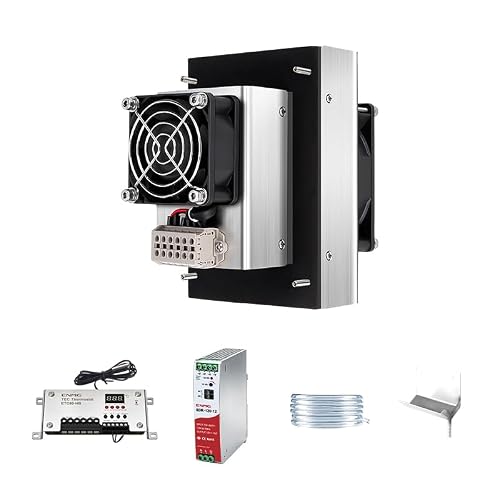
Thermoelectric Cooling Unit: The Complete Guide to Peltier Air Conditioning
Understand how solid-state thermoelectric cooling works, where it excels, where it falls short, and how to decide whether a Peltier cooling unit fits your cooling needs.
Quick summary: A thermoelectric cooling unit uses semiconductor Peltier modules to move heat from one side of the device to the other, creating a cool zone without a compressor or refrigerant. These units are compact, quiet, and vibration-free, but they are designed for spot cooling and small enclosed spaces rather than whole-room comfort cooling. This guide explains the technology, real-world performance, ideal use cases, and what to look for before you choose one.
What Is a Thermoelectric Cooling Unit?
A thermoelectric cooling unit is a solid-state cooling device built around one or more Peltier modules. When electrical current passes through the module, one side absorbs heat and becomes cold while the other side releases heat. A fan then circulates air across the cold side to deliver cooled air to the target area, while a second fan or heatsink dissipates the extracted heat away from the cold zone.
Because there is no compressor, no expansion valve, and no refrigerant circuit, a thermoelectric air conditioner has far fewer mechanical components than a conventional AC. This is why these units are often described as thermoelectric AC systems or solid-state coolers. If you are comparing this technology with traditional portable units, it helps to first understand how a stand-alone air conditioner unit operates, because the two approaches serve very different cooling roles.
How Thermoelectric Cooling Works
The core principle is the Peltier effect, discovered in the 19th century. A Peltier module consists of two ceramic plates sandwiching a matrix of semiconductor pellets. When direct current flows through the pellets, electrons move from a low-energy state to a high-energy state on one side, absorbing heat in the process. The opposite side releases that heat. Reversing the current direction reverses the effect, which is why many thermoelectric units can also function as gentle heaters.
In a practical cooling unit, the cold-side heatsink and fan pull warm air from the room, pass it over the chilled fins, and return cooler air to the space. The hot-side heatsink and fan expel the collected heat, often through a vent or duct. The efficiency of this process depends on the temperature difference between the two sides, the quality of the module, and the airflow design. For a broader comparison of how this fits among alternatives, see the overview of thermoelectric air conditioner technology.
Key Components of a Thermoelectric Cooling Unit
Peltier Module
The semiconductor heart of the unit. Multiple modules may be stacked or arrayed to increase cooling capacity. Module quality directly affects cooling performance and long-term reliability.
Cold-Side Heatsink & Fan
Absorbs heat from the target space and distributes cooled air. Fin density and fan airflow determine how effectively the cold side performs.
Hot-Side Heatsink & Fan
Dissipates extracted heat away from the cooling zone. Proper ventilation on the exhaust side is essential, especially in enclosed installations.
Power Supply & Controller
Provides regulated direct current to the modules. Many units include variable speed control or thermostat logic to balance cooling output and energy use.
Performance Characteristics and Realistic Expectations
Thermoelectric cooling is best understood as targeted cooling rather than space conditioning. A compact Peltier unit typically produces a modest cooling effect and works best when the heat load is small and the cooled area is enclosed or directly in the air stream. It will not match the cooling capacity of a compressor-based system for an open living room, but it can be highly effective for personal cooling at a desk, cooling a small electronics cabinet, or keeping a compact enclosed space comfortable.
The table below summarizes how the technology compares across practical dimensions. For a deeper dive into home-oriented configurations, see the guide on a thermoelectric air conditioner for home use.
| Characteristic | Thermoelectric Cooling Unit | Compressor-Based AC |
|---|---|---|
| Cooling mechanism | Solid-state Peltier modules | Vapor-compression refrigerant cycle |
| Moving parts | Fans only (no compressor) | Compressor, fans, valves |
| Refrigerant | None | Required |
| Noise & vibration | Low; fan noise only | Higher; compressor vibration |
| Best cooling scope | Spot cooling and small enclosed spaces | Rooms and whole-home cooling |
| Form factor | Compact and modular | Bulkier; requires ducting or window mounting |
| Maintenance profile | Simple; clean fans and vents | Requires refrigerant and coil service |
Advantages and Limitations
Advantages
- No compressor, no refrigerant, and no refrigerant leak risk
- Compact, lightweight, and easy to integrate into small enclosures
- Quiet operation with minimal vibration
- Can switch between cooling and gentle heating by reversing current
- Fewer mechanical parts means a simpler maintenance routine
- Useful for spot cooling and personal comfort in tight spaces
Limitations
- Lower cooling capacity than compressor systems for the same footprint
- Performance drops as the temperature difference between sides increases
- Not suitable for cooling large or open rooms
- Hot-side ventilation must be planned carefully
- Efficiency is best when the cooling load is small and targeted
Best Use Cases for Thermoelectric Cooling
The strongest applications are those where the cooling target is small, localized, or enclosed. In these scenarios, a thermoelectric cooling unit is a well-specified choice within its category. Consider these common uses:
- Personal desk cooling Directional cool air for a home office or study area.
- Electronics cabinets Keeping control panels and network enclosures within safe operating temperatures.
- Wine and beverage storage Stable cooling for small enclosed cabinets.
- Pet enclosures Gentle spot cooling for small, well-ventilated animal spaces.
- Small server and equipment rooms Supplemental cooling where a full HVAC retrofit is impractical.
- RV, camping, and vehicle use Compact solid-state cooling where space and vibration matter.
- Spot cooling workstations Targeted comfort in workshops and garages.
- Enclosed display cases Keeping sensitive items cool in retail or museum settings.
If your goal is cooling a larger living area, it is worth comparing this approach with other compact options. A spot cooler or a stand-alone portable air conditioning unit may be more appropriate for room-level cooling, while a thermoelectric cooling unit remains the better fit for targeted, enclosure-based cooling.
What to Look For When Choosing a Thermoelectric Cooling Unit
Because thermoelectric units vary widely in build quality and design, a few practical criteria matter more than marketing claims. Use the following checklist as a buying framework:
| Criterion | What to Evaluate | Why It Matters |
|---|---|---|
| Cooling capacity | Match the rated cooling output to the size and heat load of your target space | Prevents overpromising and ensures realistic performance |
| Module quality | Look for well-known Peltier module grades and solid thermal bonding | Affects cooling consistency and service life |
| Heatsink and airflow design | Dense fins, dual fans, and clear intake and exhaust paths | Determines how efficiently heat is moved and expelled |
| Noise level | Fan quality and speed control | Important for desk, bedroom, and office use |
| Build and finish | Durable construction and rust-proof finish on exposed parts | Supports long-term reliability in varied environments |
| Control features | Thermostat, variable speed, or directional airflow | Improves usability and energy management |
| Installation requirements | Vent clearance and mounting options | Ensures the unit can exhaust heat properly |
Maintenance and Long-Term Care
Thermoelectric cooling units are relatively simple to maintain because they lack a compressor and refrigerant circuit. The main tasks are keeping both heatsinks and fans free of dust, ensuring unobstructed airflow on the exhaust side, and checking that the power supply and controller remain well ventilated. In dusty environments, cleaning the fins every few weeks preserves cooling performance. Because there is no refrigerant to recharge or coil to clean internally, the long-term maintenance profile is straightforward compared with conventional systems.
If you are comparing maintenance routines across cooling categories, the principles of spot cooling equipment care apply closely here: clean airflow paths, stable power, and sensible placement do most of the work.
Frequently Asked Questions
What is a thermoelectric cooling unit?
A thermoelectric cooling unit is a solid-state cooling device that uses the Peltier effect to create a temperature difference between two sides of a semiconductor module. It has no compressor, no refrigerant, and no moving parts in the cooling path, making it compact and quiet.
Can a thermoelectric cooling unit cool an entire room?
No. Thermoelectric cooling units are designed for spot cooling, personal cooling, and small enclosed spaces such as a desk area, a pet house, a wine cabinet, or a small server enclosure. They cannot replace a compressor-based air conditioner for whole-room cooling.
Is a thermoelectric AC energy efficient?
Compared with compressor-based systems, thermoelectric cooling is generally less efficient for large cooling loads. However, for small, targeted cooling tasks where the cooling load is low, a thermoelectric unit can be a practical and well-specified choice within its category.
Do thermoelectric cooling units need refrigerant?
No. Thermoelectric cooling units do not use refrigerant, compressors, or evaporator coils. They rely on semiconductor Peltier modules, which means there is no refrigerant leak risk and no EPA refrigerant handling requirement for the cooling circuit.
What are the best uses for a thermoelectric cooling unit?
Best uses include personal desk cooling, spot cooling in small enclosed spaces, cooling electronics cabinets, wine storage, pet enclosures, and small server rooms. They are also used in vehicles, RVs, and camping setups where a compact solid-state cooler is preferred.
Ready to Explore Thermoelectric Cooling Options?
If your cooling need is targeted, compact, and enclosure-based, a thermoelectric cooling unit can be a smart fit. Review the recommended options below to compare features, build quality, and intended use cases.
View Recommended Units