Thermoelectric Air Conditioner: Complete Guide
Learn how Peltier-based thermoelectric cooling works, where it excels, and how to choose the right spot cooling unit for your space
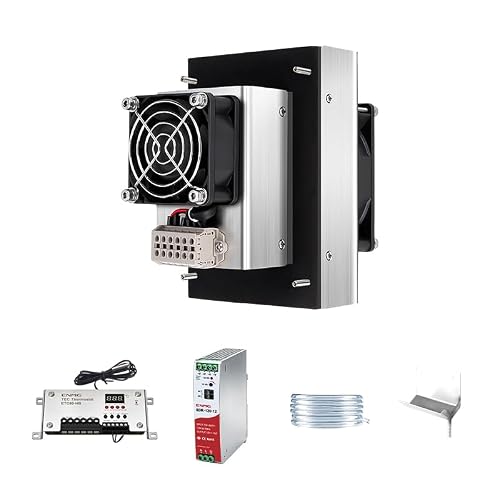
What is a thermoelectric air conditioner? Unlike traditional air conditioners that rely on a compressor and refrigerant, a thermoelectric AC uses the Peltier effect — passing direct current through a semiconductor module to create a hot side and a cold side. The cold side absorbs heat from the air, while the hot side releases it, delivering quiet, targeted spot cooling.
If you are researching thermoelectric cooling for a small room, desk area, or an enclosed space without window access, this guide will help you understand exactly what these units can and cannot do — so you can decide whether this technology fits your needs before exploring your options.
What This Guide Covers
How Thermoelectric Cooling Works
A thermoelectric air conditioner — also known as a Peltier air conditioner — operates on a principle called the Peltier effect. When an electric current flows through two dissimilar conductors joined at a junction, heat is absorbed at one junction and released at the other. In practical terms, this means:
- No compressor and no refrigerant: The cooling module is solid-state, with no moving parts and no chemical refrigerants.
- Dual-sided operation: One side of the module becomes cold (absorbing heat from the air), while the opposite side becomes hot (releasing heat into the surrounding environment).
- Fan-assisted airflow: Small fans move air across both sides — the cold side delivers chilled air, and the hot side exhausts warmth.
- Instant on/off: There is no compressor cycling, so cooling begins almost immediately after power is applied.
Because the cooling capacity of a single Peltier module is modest, most consumer thermoelectric air conditioners are designed for spot cooling rather than whole-room comfort. They are ideal for personal cooling — directing a stream of cool air toward a person, a pet, or a small enclosed area. For a broader overview of cooling technologies, you may want to explore thermoelectric AC fundamentals and how they compare to other compact cooling solutions.
One of the key practical benefits of this design is that many models can operate without a window vent, making them suitable for spaces where traditional exhaust hoses are impractical. If that is an important factor for your setup, see our guide on stand-alone air conditioners without a window vent.
Pros and Cons of Thermoelectric AC Units
Before deciding whether a thermoelectric air conditioner is right for you, it helps to understand its strengths and limitations clearly. This technology is not a direct replacement for a conventional AC — it excels in specific scenarios and falls short in others.
✔ Advantages
- Quiet operation — no compressor hum or vibration
- No refrigerant — no chemical leakage concerns
- Few moving parts — only small fans, which means less wear
- Compact and lightweight — easy to move between spaces
- No window vent required in many designs
- Instant cooling — no compressor start-up delay
- Simple maintenance — clean filters and keep vents clear
- Solid-state reliability — suitable for continuous low-load use
✘ Limitations
- Lower cooling capacity — best for spot cooling only
- Less efficient than compressor-based units for room cooling
- Not designed for large rooms or whole-home cooling
- Cooling output drops with ambient temperature rise
- Hot-side heat must be managed — units work best in ventilated areas
- May struggle in high-humidity environments
- Limited airflow throw compared to ducted systems
For a deeper look at compact cooling alternatives, our guide to spot coolers explains how personal cooling devices differ in airflow, coverage, and placement.
Thermoelectric vs. Compressor-Based AC
The table below compares thermoelectric air conditioners with conventional compressor-based portable units across key categories. This is not about which is "better" in absolute terms — it is about matching the technology to the right application.
| Category | Thermoelectric AC | Compressor-Based Portable AC |
|---|---|---|
| Tier / Market Position | Entry-Level — spot cooling | Mid-Range to Premium — room cooling |
| Cooling Capacity | Low — personal spot cooling | High — designed for room-scale cooling |
| Best For | Desks, small cubicles, pet areas, enclosed nooks | Bedrooms, living rooms, open-plan spaces |
| Venting Requirement | Minimal or none in many models | Requires window exhaust hose |
| Noise Level | Very quiet — fans only | Moderate — compressor and fan noise |
| Refrigerant | None | Uses refrigerant (e.g., R32, R410A) |
| Maintenance | Filter cleaning, vent clearance | Filter cleaning, coil care, refrigerant checks |
| Long-Term Investment | Good value for its tier — low complexity | Higher upfront, efficient in the long run for room cooling |
If you need genuine room cooling and have window access, a compressor-based unit is the more effective choice. Our stand-alone air conditioner units guide covers those options in detail. If portability is your priority and you want to avoid venting, explore ventless stand-alone options as well.
Best Use Cases for Thermoelectric Cooling
Thermoelectric air conditioners shine in targeted, small-scale applications. Here are the scenarios where they make the most sense:
Personal Desk Cooling
Direct cool airflow toward a workstation in a home office or cubicle. Ideal for personal comfort without cooling an entire room.
Small Enclosed Spaces
Pet enclosures, small server cabinets, or storage nooks where a compact, ventless cooling unit is practical.
Rentals & Dorms
Spaces where window modifications are not permitted. A thermoelectric unit offers cooling without installation changes.
Nightstand & Bedside
Quiet operation makes these units suitable for bedside use, delivering a gentle stream of cool air overnight.
Camping & RV Nooks
Compact models can run on 12V or via adapters, providing localized cooling in tight spaces where conventional AC is impractical.
Supplemental Spot Cooling
Use alongside a central system to cool a specific hotspot — like a kitchen corner or a sun-exposed desk — without lowering the whole-home thermostat.
For a broader range of portable cooling form factors, our spot cooling overview and stand-up air conditioners guide provide additional context on upright and compact designs.
How to Choose the Right Thermoelectric Unit
When evaluating thermoelectric air conditioners, focus on these practical factors rather than raw specifications alone:
- Intended space size: Match the unit to a small, enclosed area. Most thermoelectric models are designed for personal or spot cooling, not room-scale comfort.
- Airflow direction: Adjustable louvers or oscillation help direct cool air precisely where you need it.
- Noise level: Fan quality matters. Look for models described as quiet or whisper-rated for bedroom or office use.
- Power source: Some units run on standard AC power, while others support 12V DC for vehicle or off-grid use.
- Hot-side ventilation: Ensure the unit has adequate clearance to exhaust warm air. In tight spaces, consider a model with a dedicated exhaust path.
- Humidity handling: Thermoelectric cooling can produce condensation. A built-in drip tray or auto-shutoff for water collection is a useful feature.
- Build quality: Solid construction and a well-designed housing reduce vibration and improve longevity. Mid-range models often offer more refined fan mechanisms than entry-level ones.
If you are comparing against other compact cooling categories, our guides to tower air conditioners and thermoelectric cooling units provide additional decision context. For home-specific thermoelectric options, see thermoelectric air conditioners for home use.
Related Guides and Resources
Explore more cooling topics to make a well-informed decision:
Thermoelectric AC Overview · Thermoelectric Cooling Unit Guide · Thermoelectric AC for Home
Spot Coolers · Spot Cooling Guide · Ventless Stand-Alone AC
Stand-Alone Portable AC Units · Stand-Up AC Unit Guide · Standing Air Conditioners
Frequently Asked Questions
What is a thermoelectric air conditioner?
A thermoelectric air conditioner uses the Peltier effect to create a temperature difference between two sides of a semiconductor module. When direct current passes through the module, one side absorbs heat while the other releases it, providing spot cooling without a compressor or refrigerant.
How efficient is a thermoelectric air conditioner?
Thermoelectric air conditioners are generally less efficient than compressor-based units. They are best suited for spot cooling in very small, enclosed spaces rather than whole-room cooling. Their efficiency is lower, but they offer quiet operation, no moving parts, and zero refrigerant use.
Can a thermoelectric air conditioner cool a bedroom?
A thermoelectric air conditioner is not designed to cool a full bedroom. It provides localized spot cooling and works best in spaces under 100 square feet, such as a desk area, a small office cubicle, or a pet enclosure. For larger rooms, a compressor-based portable or window unit is more effective.
Do thermoelectric air conditioners need a window vent?
Most thermoelectric air conditioners are ventless or require only minimal ventilation. They do not need a large window exhaust hose like traditional portable AC units, making them convenient for spaces where window access is limited or not permitted.
How long do thermoelectric air conditioners last?
With proper care, a thermoelectric air conditioner can last several years. Since they have no compressor or refrigerant lines, there are fewer components to fail. Regular cleaning of filters and keeping vents unobstructed will help extend the lifespan of the unit.
Final thought: A thermoelectric air conditioner is a specialized tool — not a universal cooling solution. If you need targeted, quiet, ventless spot cooling for a small space, it is a solid choice for its tier. If you need to cool a room, compare options in our stand-alone air conditioner units guide or explore standing air conditioning units for more capable room-cooling designs.