
Very Small Air Conditioner Window: Compact Cooling Guide
Everything you need to know about very small window air conditioners — sizing, installation, efficiency features, and how to choose the right compact unit for tight spaces.
EXPLORE COMPACT OPTIONSQuick summary: A very small window air conditioner is a compact unit typically rated between 5,000 and 6,000 BTU. It is designed for rooms up to roughly 150 square feet and fits narrower window openings than standard window units. These units are a practical solution for bedrooms, home offices, dorm rooms, and small apartments where space and window clearance are limited.
What Is a Very Small Window Air Conditioner?
A very small window air conditioner is a self-contained cooling unit that mounts directly into a window frame. Compared with standard window units, compact models have a narrower cabinet, lighter weight, and lower cooling capacity. They are engineered for single-room cooling rather than whole-home comfort.
These units are popular in urban apartments, older homes with small window openings, and rental spaces where permanent installation is not permitted. Because the compressor and evaporator are housed in one chassis, installation is straightforward and does not require ductwork or refrigerant line sets.
If you are comparing this category against broader options, our guide to types of air conditioning units explains how window models fit alongside portable, mini-split, and central systems.
Key Characteristics of Compact Window Units
- Cooling capacity: Usually 5,000 to 6,000 BTU, occasionally up to 8,000 BTU in a slim chassis.
- Physical size: Narrower cabinet width, often around 15 to 19 inches, and lighter weight for easier handling.
- Window compatibility: Designed for double-hung windows, with vertical sliding window kits available for certain models.
- Power draw: Typically operates on a standard 110V household circuit.
- Features: Mechanical or digital controls, remote control, sleep mode, timer, and washable filters.
Who Should Choose a Very Small Window AC?
Compact window units are best suited for specific use cases. Understanding whether your situation matches these scenarios will save you time and help you avoid an undersized or oversized purchase.
Small Bedrooms
Rooms under 150 square feet cool quickly with a 5,000 BTU unit, and the compact footprint leaves window space usable.
Home Offices
Concentrated cooling for a single workstation without over-cooling the rest of the house.
Dorm Rooms
Lightweight and easy to remove at the end of the semester, with simple plug-in operation.
Studio Apartments
Targeted cooling for a compact living area where a larger system would be excessive.
Rental Properties
No permanent modification required, making it a practical choice for tenants.
Small Windows
Narrow cabinet designs fit window openings that cannot accommodate standard-width units.
For a broader look at room-specific recommendations, see our guide on air conditioning for small rooms.
BTU Sizing for Very Small Window AC Units
Cooling capacity is measured in British Thermal Units (BTU). Choosing the right BTU rating is the single most important decision when buying a compact window air conditioner. An undersized unit runs continuously without reaching the set temperature, while an oversized unit cools too quickly and cycles on and off, which reduces dehumidification and increases wear on the compressor.
| Room Size | Recommended BTU | Typical Use Case |
|---|---|---|
| Up to 150 sq ft | 5,000 - 6,000 BTU | Very small window AC — bedroom, office, dorm |
| 150 - 250 sq ft | 6,000 - 8,000 BTU | Standard small window AC |
| 250 - 350 sq ft | 8,000 - 10,000 BTU | Medium room window AC |
| 350 - 450 sq ft | 10,000 - 12,000 BTU | Large room or open-plan area |
Several factors can shift the recommended BTU upward: high ceilings, direct sunlight on the window, poor insulation, or a kitchen area within the room. If your space falls at the upper edge of a capacity band, it is generally better to size up slightly rather than down.
Adjustment Factors
- Sun exposure: Add roughly 10% capacity for a south- or west-facing window with direct sun.
- Occupancy: Add about 600 BTU per additional regular occupant beyond two people.
- Kitchen adjacency: Add around 4,000 BTU if the unit cools an area connected to a cooking zone.
- Ceiling height: Rooms with ceilings above 8 feet may need a modest capacity increase.
For a deeper calculation walkthrough, use our BTU calculator by room size. If you are weighing compact window units against small split systems, the comparison in residential air conditioning systems may help clarify trade-offs.
Installation Considerations for Compact Window ACs
Installation of a very small window air conditioner is generally a straightforward DIY project, but a few details determine whether the unit performs well and lasts.
Window Compatibility
Most compact units are designed for double-hung windows. Vertical sliding windows require a specific installation kit. Before purchasing, confirm the following measurements:
- Minimum window width: The narrowest opening the unit's cabinet and side panels can fit.
- Minimum window height: The vertical clearance needed for the chassis and top rail.
- Window sill depth: Enough flat surface for the unit to rest securely or for a bracket to attach.
If you have a vertical slider, review our guidance on vertical window air conditioner installation kits.
Support and Safety
Window units should be supported from below to prevent sagging and to reduce strain on the window frame. A universal window AC support bracket is a practical accessory that distributes weight safely. Always follow the manufacturer's tilt recommendation — typically a slight outward slope so condensate drains outside.
Sealing the Window Gap
Air leaks around the installed unit reduce efficiency and let humid outdoor air inside. Use the included side panels and add weather stripping or foam insulation where gaps remain. For portable units that need window sealing, see our note on universal window seals — the same sealing principle applies to window units.
Installation tip: Have a second person help lift the unit into place. Even compact window ACs are awkward to position alone, and a secure fit is essential for safety and performance.
Electrical Requirements
Very small window units typically run on 110V and draw a modest current, often within the capacity of a standard 15-amp circuit. Avoid sharing the circuit with high-draw appliances. If the circuit breaker trips repeatedly, have an electrician inspect the circuit before continuing use.
Features That Matter in a Compact Window AC
Not all small units are built to the same standard. The following features separate entry-level models from mid-range and premium options within the compact category.
Efficiency Rating
Look for a strong CEER or EER rating. Higher-efficiency models consume less electricity for the same cooling output.
Inverter or Variable-Speed
These compressors modulate speed instead of cycling on and off, improving comfort and efficiency in the long run.
Digital Controls & Remote
Precise temperature setting, timers, and sleep mode add convenience and support energy-conscious operation.
Washable Filter
A removable, washable filter is essential for maintaining airflow and indoor air quality over time.
Quiet Operation
Sound levels matter in bedrooms and offices. Check the decibel rating, especially for sleep mode.
Auto-Restart
After a power interruption, auto-restart returns the unit to its previous settings without manual input.
When comparing compressor technologies, our breakdown of two-stage AC systems explains how staged operation differs from single-speed and variable-speed designs. If you are also considering wall-mounted alternatives, the guide on wall-mounted air conditioners for apartments is a useful companion read.
Efficiency and Day-to-Day Operation
A compact unit's long-term performance depends as much on how it is used as on its specifications. The following practices help you get consistent cooling and efficient operation.
- Set a realistic temperature: Aim for a comfortable setting rather than the lowest possible number. Each degree closer to the outdoor temperature reduces runtime.
- Clean the filter regularly: A clogged filter restricts airflow and forces the compressor to work harder. Rinse it every two to four weeks during heavy use.
- Shade the window: Curtains or blinds reduce solar heat gain and lighten the cooling load.
- Use a fan alongside the unit: A ceiling fan or circulating fan distributes cool air more evenly. Our article on using a ceiling fan with AC explains the approach.
- Seal the installation: Gaps around the unit let hot air in and cool air out.
For a wider set of habits that reduce energy use, see our energy-saving guidance on reducing AC electricity consumption. If the unit ever stops cooling properly, the troubleshooting steps in our AC not cooling guide cover the most common causes.
Very Small Window AC vs Other Compact Cooling Options
If you are exploring compact cooling, window units are one option among several. The table below compares the main alternatives for small spaces.
| Option | Best For | Key Consideration |
|---|---|---|
| Very small window AC | Rooms up to 150 sq ft with a compatible window | Requires window installation; efficient for single rooms |
| Portable AC | Rooms without a suitable window for a window unit | Needs venting; generally heavier and noisier |
| Mini-split system | Rooms needing quiet, zoned cooling | Professional installation; higher upfront investment |
| Through-the-wall AC | Permanent installations in a wall sleeve | Requires wall modification and a dedicated sleeve |
For wall-sleeve installations, our guide on wall sleeves for through-the-wall units explains the compatibility requirements. If you are considering a ductless system instead, the overview of wall-mounted mini-split systems covers the strengths and limitations.
Buying Checklist for a Very Small Window Air Conditioner
Before finalizing a purchase, confirm each of the following points. This checklist helps prevent fit, capacity, and efficiency mistakes.
- Measure the window opening: Width, height, and sill depth must match the unit's requirements.
- Calculate BTU: Match capacity to room size and adjustment factors.
- Check the efficiency rating: Compare CEER or EER values within the compact category.
- Review the noise rating: Especially important for bedrooms and home offices.
- Confirm power requirements: Verify the plug type and circuit capacity.
- Plan support: A mounting bracket or support bracket adds safety and stability.
- Check the warranty: Sealed-system and compressor coverage vary by tier.
- Read the installation manual: Confirm the included window kit fits your window type.
For a general framework that applies across all AC categories, see our how to size an air conditioner guide.
Recommended Very Small Window Air Conditioners
⚠️ AFFILIATE DISCLOSURE: This website contains affiliate links. As an Amazon Associate, we earn from qualifying purchases. If you make a purchase through these links, we may receive a small commission at no additional cost to you. Read our full affiliate policy.

GE Window Air Conditioner 5,000 BTU AC Unit for Small Spaces up to 150 sq ft with Manual Controls & 2 Cooling Modes, Easy Install Kit, White
Check price on Amazon
Midea 5,000 BTU EasyCool Small Window Air Conditioner - Cool up to 150 Sq. Ft. with Easy-to-Use Mechanical Controls and Reusable Filter, Perfect for Small Bedroom, Living Room, Home Office
Check price on Amazon
Frigidaire 5,000 BTU Window-Mounted Air Conditioner, Cools Up to 150 Sq. Ft., Quiet Operation, Effortless Temperature Control, 2 Fan Speeds, Auto Restart, White
Check price on Amazon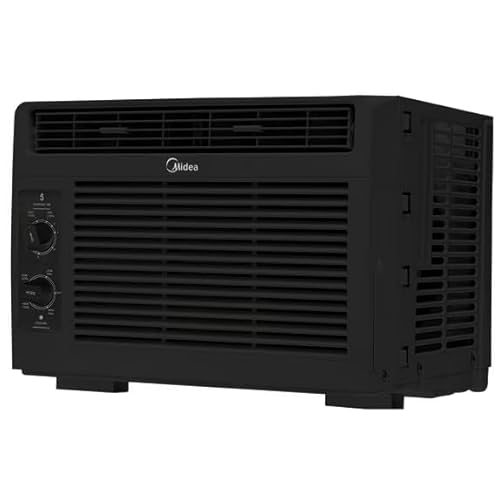
Midea 5,000 BTU 150 Sq ft Mechanical Window Air Conditioner, Black (Renewed)
Check price on Amazon
Midea 6,000 BTU U Shaped Window Air Conditioner, Cools up to 250 Sq Ft | Ultra Quiet U-Shaped Design, Inverter Control, Open Window Flexibility, Alexa/Google Assistant, 37% Energy Savings, 2026 New
Check price on Amazon
Amazon Basics 5000-BTU Window Air Conditioner with Quiet Operation, Up to 150 Sqf, Cool and Fan Functions, Washable Filter, Adjustable Window Kit, Intuitive Mechanical Controls, for Small Room, White
Check price on Amazon
Midea 10,000 BTU U Shaped Window Air Conditioner, Cools up to 450 Sq Ft | Ultra Quiet U-Shaped Design, Inverter Control, Open Window Flexibility, Alexa/Google Assistant, 37% Energy Savings, 2026 New
Check price on Amazon
Midea 8,000 BTU Smart Inverter Air Conditioner Window Unit with Heat and Dehumidifier – Cools up to 350 Sq. Ft., Energy Star Rated, Quiet Operation, Electronic Controls, Remote Control, White
Check price on AmazonFrequently Asked Questions
What BTU rating is best for a very small window air conditioner?
Most very small window air conditioners are rated between 5,000 and 6,000 BTU. This range suits rooms up to roughly 150 square feet. Choose the lower end for shaded rooms and the higher end for sunny rooms or rooms with more than two occupants.
Can a very small window AC fit in a sliding window?
Standard compact units are designed for double-hung windows. For vertical sliding windows, you need a specific vertical window kit. Confirm the unit's compatibility before purchasing, and check the minimum window width and height stated by the manufacturer.
Do very small window air conditioners use a lot of electricity?
Compact units draw less power than larger systems because they cool smaller spaces. Look for a high CEER or EER rating, and consider inverter or variable-speed models if efficiency in the long run is a priority.
How do I install a very small window air conditioner?
Most compact units install with the included window kit and a support bracket. Follow the manufacturer's instructions, maintain a slight outward tilt for drainage, and seal any remaining gaps with weather stripping. A two-person lift is recommended for safe placement.
How often should I clean the filter?
Rinse or vacuum the washable filter every two to four weeks during heavy cooling season. A clean filter maintains airflow and keeps the unit operating efficiently.
Is a very small window AC suitable for a bedroom?
Yes. Compact window units are well suited to bedrooms, provided the capacity matches the room size. Check the decibel rating and look for sleep mode and auto-restart features for overnight comfort.
Ready to Find the Right Compact Window AC?
Review the recommended models above, confirm your window measurements and BTU requirement, and compare the features that matter most for your room.
VIEW RECOMMENDED OPTIONS