Universal Window Seal for Portable Air Conditioner
Everything you need to know before choosing a window seal kit for your portable AC — compatibility, installation, sealing efficiency, and the features that actually matter for a tight, energy-smart fit.
START WITH COMPATIBILITYWho this guide is for: You already own or are about to own a portable air conditioner and you need a reliable way to vent hot exhaust air outside without letting outside heat, insects, or rain back in. A universal window seal is the simplest path — but "universal" does not mean it fits every window equally well. This guide explains exactly what to check.
Why a Window Seal Matters for Portable AC Performance
A portable air conditioner does not create cold air from nothing — it pulls heat out of your room and dumps it through an exhaust hose. That hose has to exit somewhere, usually a window. If the gap around the hose stays open, the unit fights against itself: it cools a small zone while hot outdoor air pours back in through the same opening.
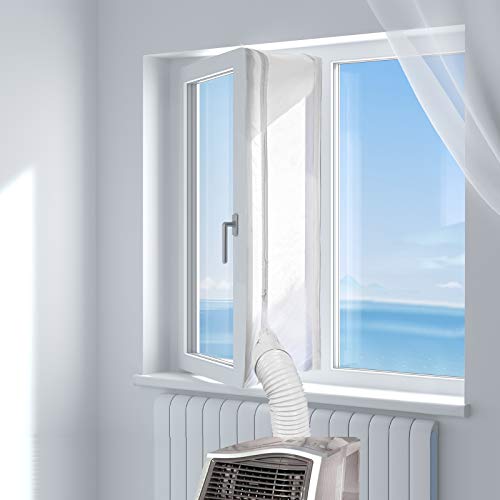
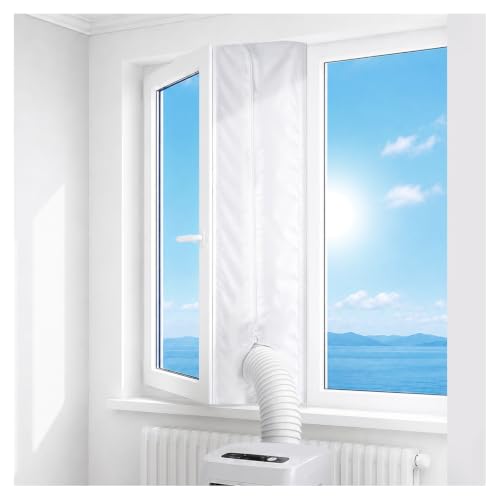
A proper window seal closes that gap with a fabric or panel barrier that wraps around the exhaust hose and seals the window frame. The practical benefits are consistent across every portable AC in any climate:
Keeps Cool Air Indoors
A sealed window prevents the unit's cooled output from escaping and stops hot exterior air from re-entering. The compressor runs shorter cycles, which reduces wear over the cooling season.
Blocks Insects and Debris
An open window gap invites mosquitoes, flies, dust, and pollen. A seal kit with a zippered or hose-grommet opening keeps the window effectively closed while the exhaust route stays clear.
Handles Rain and Wind
Fabric seal kits with water-resistant treatment and a sloped drip path reduce rain intrusion on windy days compared to a bare gap or a loose plastic panel.
Supports Better Humidity Control
Portable ACs dehumidify as they cool. An open gap constantly reintroduces humid outdoor air, forcing the unit to remove the same moisture repeatedly. Sealing stabilizes indoor humidity.
Universal Window Seal Compatibility: What "Universal" Really Means
Most universal seal kits are designed around two measurements: the maximum window opening they can span and the window type they attach to. Before buying, measure the following on your own window:
| Window Measurement | Why It Matters | Typical Seal Requirement |
|---|---|---|
| Window opening width (horizontal or vertical) | Determines whether the seal fabric or panel can fully cover the gap | Match or exceed the kit's stated maximum span |
| Window frame depth | Affects whether the seal tape or Velcro strip sits flush | Flat, clean frame surface preferred |
| Window type (sliding, casement, awning, hung) | Casement and awning windows open outward, which limits where the hose can exit | Choose a kit explicitly labeled for that window type |
| Exhaust hose diameter | The hose opening in the seal must grip the hose without excessive slack | Confirm hose diameter compatibility or adjustable grommet |
| Window sill / interior clearance | Hose routing from the unit to the window needs a clear path | Allow slack in the hose; avoid sharp bends |
Main Types of Universal Window Seals
There are two broad families of seal kits sold for portable AC venting. Each has a different fit philosophy, and the right choice depends on your window type and how permanent you want the installation to be.
Fabric Seal Kits (Velcro-Attached)
A durable fabric sleeve or sheet with a zippered or grommet hose opening. It attaches to the window frame with adhesive-backed Velcro strips, then the window closes against it. These are the most common "universal" design because the fabric conforms to irregular gaps and spans a wide range of widths.
- Best for: double-hung, single-hung, and horizontal sliding windows
- Fits irregular frames better than rigid panels
- Can be removed and reattached seasonally
- Requires a clean, dry frame for the adhesive to hold
Rigid Panel Kits (Sliding Inserts)
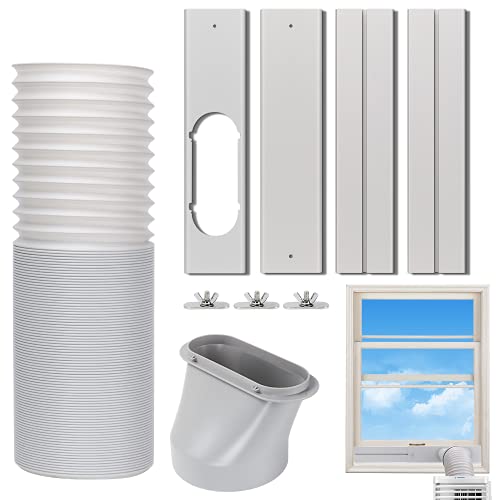
Rigid plastic or aluminum panels that slide or stack to fill the window opening, with a pre-cut or adjustable hose port. They are more structural and create a firmer seal, but they fit a narrower range of window dimensions and often need trimming for a precise match.
- Best for: standard double-hung and slider windows with consistent dimensions
- Firm barrier that resists wind pressure
- Less forgiving of non-standard frame sizes
- Usually requires measuring and cutting for a tight fit
If your window is not a standard vertical or horizontal slider, you may be better served by a specialized approach. For outward-opening windows, dedicated casement solutions are covered in venting portable air conditioner through casement window. For wall-exit setups, see venting a portable air conditioner through a wall. And if you are still deciding whether a window route is even possible in your room, using a portable air conditioner without a window walks through the alternatives.
How to Choose the Right Universal Seal Kit
Rather than shopping by label alone, evaluate these six factors in order. They determine whether a seal will actually perform in your home.
- Match the window type first. Confirm the kit explicitly supports sliding, casement, awning, or hung windows. A universal fabric kit often works for sliding and hung windows but not for outward-opening frames.
- Verify the maximum span. Measure your window opening and compare it to the kit's stated coverage. If you are near the upper limit, choose a kit with extra fabric rather than a rigid panel that barely reaches.
- Check exhaust hose compatibility. Confirm the hose port diameter or look for an adjustable grommet. A loose port leaks hot air; a port that is too tight stresses the hose connector.
- Look at the attachment method. Adhesive Velcro is removable but needs a clean, flat frame. Kits with reinforced stitching and wider Velcro strips hold better through seasonal re-installation.
- Assess durability and weather resistance. Fabric kits with water-resistant coating and reinforced zippers last longer, especially on windows that face wind-driven rain.
- Consider seasonal removal. If you remove the seal each winter, prioritize kits that reattach cleanly and include spare adhesive strips. Permanent panel kits are better for year-round installations.
Universal Seal Kit Comparison by Tier
Seal kits fall into a few clear market tiers. The table below describes what each tier typically delivers so you can match the kit to how heavily you will use it. No absolute figures are needed — the differences are in materials, attachment quality, and fit tolerance.
| Tier | Best For | Typical Characteristics |
|---|---|---|
| Entry-level | Light seasonal use, standard sliding windows | Basic fabric sheet, narrow Velcro strips, simple hose opening; adequate for short cooling seasons |
| Mid-range | Regular daily use, mixed window types | Reinforced stitching, wider adhesive strips, zippered hose access, water-resistant fabric |
| Premium | Frequent use, large openings, exposed windows | Heavy-duty fabric or rigid insert, adjustable hose grommet, weather-resistant coating, reusable adhesive system |
| Professional-grade | Extended cooling seasons, non-standard frames | Custom-fit panel or reinforced multi-layer fabric, structural frame support, designed for repeated installation |
In practice, a mid-range fabric kit is the most balanced choice for most homes because it tolerates frame irregularities and can be reinstalled across seasons. Entry-level kits are fine for a single summer in a standard slider window. Premium and professional-grade kits make sense when the window is large, faces weather, or the AC runs for many hours a day.
Step-by-Step Installation
Installation quality decides whether a seal performs. Follow these steps for a fabric-style universal kit; rigid panel kits follow the same sequence with trimming in place of fabric draping.
- Clean the window frame. Wipe the frame and sash with a damp cloth and let it dry fully. Adhesive Velcro will not bond to dust, oil, or condensation.
- Measure and mark. Mark the frame where the adhesive strips will sit, leaving enough fabric to cover the full opening with slight slack.
- Attach the adhesive strips. Press the Velcro strips firmly along the marks and let them cure for the time stated on the kit before hanging the fabric.
- Mount the fabric seal. Align the fabric to the strips, press it into place, and smooth out wrinkles so the hose opening sits at the correct height.
- Route the exhaust hose. Feed the hose through the zipper or grommet, leaving gentle slack so the hose does not kink. Keep the run as short and straight as the unit allows.
- Close the window against the seal. Lower or slide the window until it presses the fabric evenly. Check that no gap remains at the corners.
- Test the seal. With the unit running, run a hand along the edges to feel for hot air leaking in. Re-seat any section that lifts, and add a strip of seal tape at problem corners if needed.
Common Installation Mistakes to Avoid
Oversized Hose Cutouts
Cutting the hose opening larger than the hose diameter creates a permanent leak. Use the kit's pre-sized opening or grommet and only enlarge if the hose physically cannot pass through.
Kinked Exhaust Hose
A sharp bend restricts airflow and forces the compressor to work harder. Keep the hose path smooth and as short as the window distance allows.
Adhesive on a Dirty Frame
Velcro strips fail quickly on dusty or damp frames. Clean and dry the surface, and avoid installing immediately after cleaning with an oily product.
Ignoring Window Type Limits
Forcing a universal fabric seal onto an outward-opening casement window leaves large gaps. Choose a kit designed for that mechanism instead.
If your setup involves vertical sliding frames, a dedicated kit is usually more reliable than a generic seal. Review vertical sliding window air conditioner kit and vertical window air conditioner installation kit for the specific hardware those windows need. For a related window-sealing accessory, universal exhaust hose for portable air conditioner covers hose replacement and length considerations.
Maintenance and Seasonal Care
A seal kit is a low-maintenance accessory, but a few habits extend its life and keep the seal tight:
- Wipe the fabric with a damp cloth at the start and end of each cooling season to remove dust and pollen buildup.
- Inspect the Velcro strips for lifting before the first hot week; replace worn strips early rather than mid-season.
- Store the fabric flat or loosely rolled, not folded sharply, to avoid permanent creases that create gaps.
- Check the hose grommet for wear each season; a stretched opening leaks hot air and should be reinforced or replaced.
- If the window faces direct sun, consider a UV-resistant kit or a shade solution to slow fabric degradation.
Frequently Asked Questions
Does a universal window seal fit every window?
No. Universal kits typically fit standard double-hung and horizontal sliding windows within a stated span. Casement, awning, and some vertical sliding windows need a seal designed for that opening mechanism. Always check the kit's supported window types and maximum span before buying.
Can I use a universal seal with a casement window?
A standard fabric universal seal is a poor match for an outward-opening casement window because the sash swings away from the frame. A dedicated casement venting solution is more effective; see our guide on venting through casement windows for the right approach.
How do I know the exhaust hose will fit the seal?
Check the kit's stated hose diameter or look for an adjustable grommet. If the opening is too large, hot air leaks around the hose; if too small, the connector is stressed. Measure your hose diameter and match it to the kit specification.
Is a fabric seal or a rigid panel better?
Fabric seals conform to irregular frames and span a wider range of widths, making them more forgiving. Rigid panels create a firmer barrier but fit a narrower range of dimensions and often need trimming. Choose fabric for mixed or non-standard frames and rigid panels for consistent, standard openings.
How often should I replace the window seal?
With seasonal use, a mid-range fabric kit typically lasts several cooling seasons. Replace it when the Velcro no longer holds, the fabric tears, or the hose grommet stretches and leaks. Inspect at the start of each season.
Will a window seal reduce my portable AC's cooling performance?
It improves it. By closing the gap around the exhaust hose, the seal stops hot outdoor air from re-entering and prevents cooled air from escaping, so the unit reaches its target temperature faster and cycles less.
Can I install a universal seal without tools?
Most fabric kits install with scissors for trimming and no power tools. Rigid panel kits may require a saw or utility knife for trimming to the window width. Follow the kit instructions and measure twice before cutting.
Ready to Seal Your Window and Get the Most From Your Portable AC?
Compare the recommended universal window seal kits below, matched to standard sliding and hung windows, and choose the tier that fits how you use your unit.
VIEW RECOMMENDED SEAL KITSFor broader context on portable AC accessories and alternatives, explore universal air conditioner options and ventless portable air conditioning units if your room cannot accommodate a window exhaust route. If you are evaluating a wall-mounted setup instead, universal fit through-the-wall air conditioner covers that path. And for support hardware that keeps window installations stable, universal window AC support bracket explains the bracing options.