
Wall Mount Bracket for Mini Split Systems
Everything you need to know about selecting, sizing, and installing a wall mount bracket for a ductless mini split outdoor unit — so your system stays stable, elevated, and protected for years.
Explore the Buying GuideWhy this matters: The outdoor condenser is the hardest-working part of a mini split system. A properly rated wall mount bracket keeps it off the ground, away from snow and debris, and reduces vibration — extending the life of the unit and protecting your wall. This guide explains bracket types, load ratings, and installation best practices so you can make a confident decision.
What Is a Mini Split Wall Mount Bracket?
A wall mount bracket for mini split systems is a heavy-duty metal frame that attaches to an exterior wall and holds the outdoor condenser unit at a raised height. Instead of sitting on a concrete pad at ground level, the condenser is suspended on two or more L-shaped arms, usually made from galvanized or powder-coated steel.
These brackets are an essential accessory for most ductless installations. They are especially important for homes where ground space is limited, where snow accumulation is common, or where the condenser needs to be positioned close to the indoor air handler to keep refrigerant line runs short. If you are still mapping out the broader installation, our guide to split system air conditioner and installation covers the full process from site survey to commissioning.
Types of Wall Mount Brackets for Mini Splits
Not all brackets are interchangeable. The right choice depends on the weight of your condenser, your wall construction, and the climate. Here are the most common categories you will encounter:
1. Standard Fixed Brackets
The most common design, featuring two rigid arms bolted to the wall with a crossbar for stability. Standard fixed brackets are suitable for single-zone systems in the entry-level to mid-range category. They are simple, durable, and easy to install on masonry or structural framing.
2. Adjustable / Sliding Brackets
These brackets allow the arm spacing to be adjusted to match the mounting feet of different condenser widths. Adjustable models are a solid choice if you expect to replace the outdoor unit later or if you are installing a multi-zone system where condenser sizes vary.
3. Heavy-Duty and Commercial-Grade Brackets
Designed for larger multi-zone condensers and commercial installations. These use thicker steel, reinforced welds, and higher load ratings. If your condenser is on the heavier end of the spectrum — common with multi-zone or heat pump systems — a commercial-grade bracket is the safer choice.
4. Stand-Off / Offset Brackets
These hold the condenser further away from the wall, improving airflow and making service access easier. They are useful when the wall has siding, trim, or obstructions that would otherwise interfere with the unit. Offset brackets are also helpful in regions with heavy snowfall, where extra clearance prevents snow from packing against the coil.
5. Ground Stand Alternatives
If wall mounting is not feasible — for example, on a fragile wall or where code prohibits it — a ground stand or condenser pad is the alternative. Ground stands still elevate the unit but do not require wall penetration. Many installers keep both options in mind when planning a split system air conditioning system layout.
Bracket Tiers at a Glance
To make comparison easier, we use universal quality tiers rather than specific figures. This keeps the guidance relevant regardless of where you shop or which brand you prefer.
| Tier | Typical Construction | Best For | Key Considerations |
|---|---|---|---|
| Entry-Level | Powder-coated steel, basic welds | Single-zone systems in mild climates | Verify the load rating exceeds your condenser weight; suitable for lighter units |
| Mid-Range | Galvanized steel, reinforced crossbars | Most residential single and dual-zone systems | Better corrosion resistance and smoother adjustment mechanisms than entry-level |
| Premium | Heavy-gauge steel, anti-vibration pads | Larger condensers and harsh climates | Higher load margins, weather-resistant coating, and quieter operation |
| Commercial-Grade | Thick steel, professional welds, extended arms | Multi-zone and commercial mini splits | Maximum load capacity and durability; typically requires structural mounting |
Key Factors When Choosing a Bracket
Load Capacity and Safety Margin
This is the single most important specification. The bracket must support the full operating weight of the outdoor unit, plus a safety margin for vibration and environmental loads. Undersized brackets can bend, loosen, or fail over time. Premium and commercial-grade brackets typically offer the highest margins, which is why they are recommended for heavier heat pump condensers.
Wall Construction and Fastening
The bracket is only as strong as its connection to the wall. Masonry, brick, and concrete walls require appropriate anchors or lag bolts. Wood-framed walls with siding may need blocking installed behind the siding to distribute the load. If you are unsure about your wall's structure, consult a qualified installer before drilling. For a broader look at mounting indoor and outdoor components, see our guide on wall mounted mini split systems.
Corrosion Resistance
Outdoor brackets are exposed to rain, humidity, and temperature swings. Galvanized steel and powder-coated finishes resist rust far better than untreated metal. In coastal areas or regions with heavy precipitation, a premium weather-resistant coating is a worthwhile investment in the long run.
Vibration and Noise Control
Compressors vibrate, and that vibration travels through the bracket into the wall. Rubber isolation pads or anti-vibration mounts reduce noise transfer and protect the bracket's fasteners from loosening. Many mid-range and premium brackets include these pads or offer them as an add-on.
Height and Clearance
Most manufacturers recommend keeping the condenser at least 12 inches above ground level for airflow and debris clearance. In snowy climates, 18 inches or more is common. Check your unit's installation manual for the exact minimum clearance, and choose a bracket height that meets or exceeds it.
Service Access
Leave enough space around the unit for future maintenance, including coil cleaning and refrigerant service. Stand-off brackets help here by holding the condenser away from the wall. Regular maintenance is easier when the unit is accessible, and our split system air conditioning maintenance guide covers the routine tasks worth scheduling.
How to Install a Mini Split Wall Bracket
Installation is straightforward for an experienced DIYer, but it involves structural fastening and heavy lifting. If you are not confident working on ladders or drilling into exterior walls, hire a licensed HVAC contractor. The general sequence is:
- Check the manual and local codes. Confirm minimum clearances and any permit requirements before drilling.
- Locate structural framing or solid masonry. Avoid fastening only into siding or drywall. Use a stud finder and, for masonry, appropriate anchors.
- Mark and level the bracket. A spirit level is essential; an uneven bracket stresses the condenser feet and the wall.
- Drill and fasten. Use the hardware specified for your wall type. Do not substitute smaller fasteners.
- Add vibration pads. Place isolation pads between the bracket arms and the condenser feet.
- Lift the condenser into place. This is a two-person job for most units. Secure the feet to the bracket per the manufacturer's instructions.
- Check refrigerant line routing and drainage. Ensure lines are supported and the condensate drain slopes correctly.
If your installation also involves indoor wall-mounted units, our resource on wall mounted air conditioning unit installation walks through the indoor side of the job.
Common Mistakes to Avoid
- Ignoring the load rating. A bracket rated for a lighter unit may sag or fail under a heavier condenser.
- Fastening into siding only. Siding is not structural. Always anchor into framing, blocking, or masonry.
- Skipping vibration pads. Without them, noise transfer and fastener loosening become more likely over time.
- Mounting too low. Insufficient ground clearance invites snow, debris, and water damage.
- Forgetting drainage. The condensate drain must slope away from the unit; a bracket that interferes with drainage causes water pooling.
- Not checking local codes. Some jurisdictions have specific requirements for outdoor unit placement and clearance.
When to Call a Professional
Wall bracket installation is within reach for confident DIYers, but certain situations call for a licensed professional: unstable or unknown wall construction, very heavy multi-zone condensers, second-story mounting, or any installation that requires electrical or refrigerant work. A professional can also confirm that the bracket and mounting method comply with local building codes. If you are planning a full system replacement, our overview of split system air conditioning repairs explains when repair versus replacement makes more sense.
Recommended Wall Mount Brackets for Mini Split Systems
⚠️ AFFILIATE DISCLOSURE: This website contains affiliate links. As an Amazon Associate, we earn from qualifying purchases. If you make a purchase through these links, we may receive a small commission at no additional cost to you. Read our full affiliate policy.

Tikcode Mini Split Wall Mounting Bracket for 9000 Btu to 18000 Btu Air Conditioner AC Heat Pump Systems, Heavy Duty AC Support Bracket for Outside, Holds Up to 400lbs
Check price on Amazon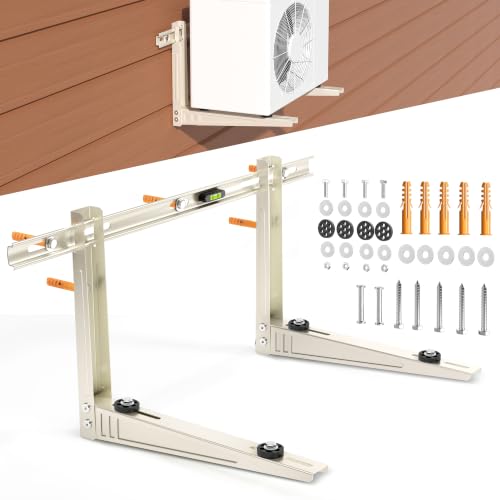
Toutgood Mini Split Wall Mounting Bracket for 7000 BTU to 12000 BTU | Max 400Lb Capacity, Galvanized Steel with Dual Anti-Rust Coating for Outdoor Ductless Air Conditioner Minisplit AC Heat Pump
Check price on Amazon
Heavy Duty Mini Split Wall Mounting Bracket, 396 lb, Fits 7000–12000 BTU AC | Dual Anti-Rust Galvanized Carbon Steel Bracket with Leveling Bar and Anti-Vibration Pads for Outdoor Ductless AC Heat Pumps
Check price on Amazon
Heavy Duty Mini Split Wall Mounting Bracket, 550 lb, Fits 9000–36000 BTU AC | Dual Anti-Rust Galvanized Carbon Steel Bracket with Leveling Bar and Anti-Vibration Pads for Outdoor Ductless AC Heat Pumps
Check price on Amazon
Mini Split Wall Mounting Bracket for 6000-36000 BTU Minisplit/AC/Heat Pump | Mini Split Brackets for Outside, Pre-Drilled 16" Holes Fit U.S. Wall Stud Standard (Max 550 LBS)
Check price on Amazon
Mini Split Wall Mounting Bracket for Air Conditioner Heat Pump System Unit 9000-36000 BTU, Heavy Duty Foldable Support Bracket for for Ductless Mini Split, HVAC, Compressor
Check price on Amazon
Mini Split Bracket for Ductless Air Conditioner Wall Mounting 7000 - 15000 BTU
Check price on Amazon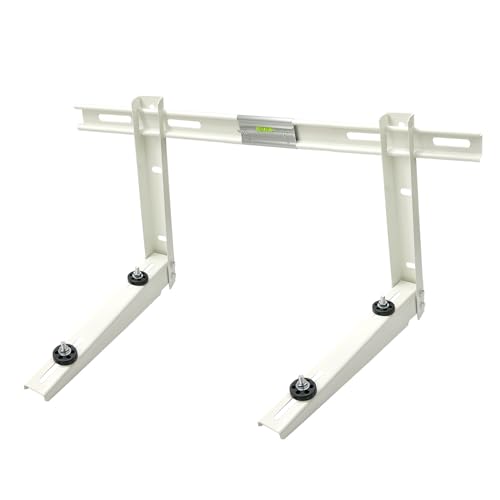
Mini Split Wall Mounting Bracket for Outside Ductless AC Heating System 7000-18000 Btu
Check price on AmazonFrequently Asked Questions
Do I need a wall mount bracket for a mini split outdoor unit?
Yes, in most installations a wall mount bracket is recommended. It lifts the outdoor condenser off the ground, protects it from snow, debris, and moisture, and saves ground space. Ground pads are an alternative when wall mounting is not feasible.
What weight capacity should a mini split wall bracket have?
Choose a bracket rated well above the operating weight of your outdoor unit. As a general rule, the bracket should support at least 1.5 times the unit weight to account for vibration, wind loads, and safety margin. Always check the manufacturer specification for your specific condenser.
Can I install a mini split wall bracket on siding or brick?
Yes, but the fastening method differs. Brick and masonry require appropriate anchors or lag bolts into the structural wall, while vinyl or wood siding may need blocking behind the siding. For heavy units, mounting into structural framing or using a stand-off kit is strongly advised.
How high should a mini split outdoor unit be mounted?
Most manufacturers recommend keeping the outdoor unit at least 12 inches above ground level to allow airflow and prevent snow or debris buildup. In snowy climates, mounting higher — often 18 inches or more — is common. Always follow the installation manual for your specific model.
Can a wall bracket be used for a heat pump condenser?
Yes, provided the bracket's load rating is sufficient. Heat pump condensers are often heavier than cooling-only units because of the reversing valve and additional components. Select a premium or commercial-grade bracket and confirm the rating against the nameplate weight. Our guide to split heat AC unit systems covers the differences between cooling-only and heat pump configurations.
Final Thoughts
A wall mount bracket for mini split systems is a small component with an outsized role in the safety and longevity of your installation. The right bracket keeps the condenser stable, elevated, and protected — while the wrong one can lead to vibration, noise, and premature wear. Focus on load capacity first, then wall compatibility, corrosion resistance, and vibration control. If you match those factors to your unit and climate, you will have a reliable foundation for years of comfortable, efficient cooling.