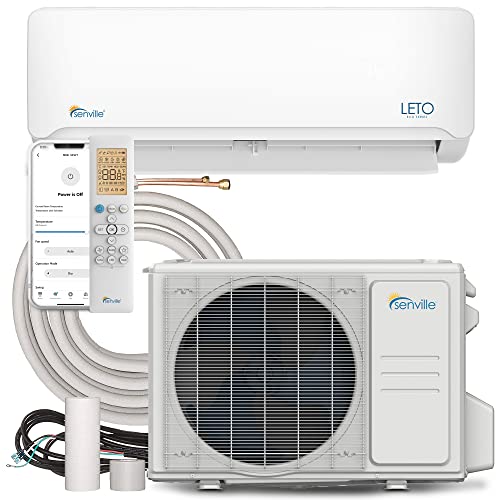
What Is a Split Heat AC Unit?
A split heat AC unit is a two-part system consisting of an indoor air handler and an outdoor condenser, connected by refrigerant lines. Unlike a cooling-only split system, it includes a reversing valve that allows the refrigerant cycle to run in both directions. That single component is what turns a standard split air conditioner unit into a year-round comfort solution.
The concept is often described as a heat pump because it moves heat rather than generating it by combustion. In cooling mode, the indoor coil absorbs heat from your room and rejects it outside. In heating mode, the outdoor coil absorbs heat from the outside air — even cold air contains usable heat — and releases it inside. Because the system is moving heat instead of burning fuel, it can deliver more heating energy than the electrical energy it consumes.
If you are comparing configurations, the broader category of split system heat pumps covers the same technology at different capacity levels and efficiency tiers. The split heat AC unit concept is essentially the residential-scale version of that same architecture.
How the Reversing Valve Changes Everything
The reversing valve is a four-way valve that redirects refrigerant flow. In cooling mode, the indoor coil acts as the evaporator and the outdoor coil as the condenser. In heating mode, their roles swap: the outdoor coil becomes the evaporator and the indoor coil becomes the condenser. The compressor always runs in the same direction, which is why the transition between modes is fast and reliable.
This design has practical consequences. There is no separate furnace, no gas line, and no flue. The indoor unit is typically a wall-mounted air handler, which is why many buyers compare it to a wall mounted air conditioner and heat pump without outdoor unit concept — except a true split system always has an outdoor unit. The wall-mounted format is popular because it fits neatly into bedrooms, living rooms, and additions.
Heating Performance: What to Expect
Heating capacity is the most misunderstood part of the split heat AC unit story. The key point is that performance depends heavily on outdoor temperature and on the compressor technology inside the unit.
Standard vs. Cold-Climate Models
- Standard models: Designed for mild to moderate winters. Heating capacity begins to decline as outdoor temperatures drop toward freezing, and efficiency falls off in colder conditions.
- Cold-climate models: Built with enhanced vapor injection, larger coils, and inverter-driven compressors that maintain useful heating output well below freezing. These are the right choice for regions with long, cold winters.
- Dual-fuel setups: Pair the heat pump with a backup furnace. The heat pump handles the majority of the heating season, and the furnace takes over during extreme cold snaps. This configuration is common in cold climates where reliability matters most.
For a deeper look at how heating and cooling modes interact on the same system, see the guide on split air conditioner heating.
Efficiency Ratings That Matter
Heating efficiency is rated by HSPF (Heating Seasonal Performance Factor), while cooling efficiency uses SEER and EER. Higher numbers indicate better efficiency within the same rating system. When comparing models, look at both ratings together — a unit that is excellent in cooling may be average in heating, and vice versa.
Inverter compressors are standard on quality split heat AC units. They modulate speed continuously instead of cycling on and off, which improves part-load efficiency, reduces temperature swings, and extends compressor life. This is one of the reasons inverter models are consistently more efficient in the long run than fixed-speed designs.
Key Features to Compare
Two units with similar ratings can differ significantly in real-world comfort. The table below summarizes the features that matter most when evaluating a split heat AC unit.
| Feature | Why It Matters | Best For |
|---|---|---|
| Inverter compressor | Continuous modulation improves efficiency and comfort | All climates |
| Cold-climate rating | Maintains heating output in sub-freezing weather | Cold regions |
| Low-ambient heating | Keeps working below the standard operating range | Mild to moderate winters |
| Base pan heater | Prevents ice buildup in the outdoor unit during defrost | Snowy climates |
| Smart thermostat support | Scheduling, remote control, and mode automation | Convenience-focused homes |
| Wi-Fi and app control | Remote adjustments and energy monitoring | Modern homes |
| Multi-zone capability | One outdoor unit serving multiple indoor heads | Whole-home coverage |
| Self-cleaning cycle | Reduces moisture and odor inside the indoor unit | Humid climates |
Tier descriptors are useful for framing trade-offs. An entry-level model typically offers basic inverter control and standard ambient operation. A mid-range model adds better low-temperature performance and more sensor inputs. A premium or top-tier unit includes cold-climate components, advanced defrost logic, and the most refined comfort features. A luxury or flagship-tier unit pairs maximum efficiency with the most complete feature set.
Sizing a Split Heat AC Unit Correctly
Oversizing is a common mistake. A unit that is too large cools or heats too quickly, cycles frequently, and fails to remove humidity effectively in cooling season. Undersizing leaves the system running continuously and unable to reach the setpoint on extreme days.
The right capacity depends on room volume, insulation quality, window area, sun exposure, occupancy, and local climate. A professional load calculation is the most reliable method. For a rough starting point, the general guidance in our split air conditioning overview explains how capacity scales with room size.
For heating specifically, do not assume that a unit sized for cooling will handle winter. Heating load in cold climates can exceed cooling load, especially in homes with poor insulation. Cold-climate models are rated to deliver a specific percentage of their nominal capacity at a reference outdoor temperature, and that figure is more useful than the headline number.
Installation Considerations
Split heat AC units require a licensed installer for refrigerant line work and electrical connections. The main installation factors are:
- Indoor unit placement: High on a wall, with clearance for airflow and access for filter service. Avoid direct sunlight and heat sources.
- Outdoor unit placement: Level surface, adequate clearance, and protection from snow accumulation. In cold climates, a wall bracket or raised pad keeps the unit above snow line.
- Line set length and routing: Longer runs reduce efficiency. Keep the indoor and outdoor units as close as practical.
- Condensate drainage: In heating mode, the outdoor unit produces condensate that must drain freely. A base pan heater helps prevent ice buildup.
- Electrical supply: Most residential split heat AC units run on dedicated 240V circuits. Verify panel capacity before installation.
For a broader view of the process and what to expect, see the guide on split system heating and cooling installation. If your project involves an existing ducted home, compare options in the article on split system air conditioner and installation.
Maintenance for Year-Round Reliability
A split heat AC unit runs in both seasons, so it accumulates more operating hours than a cooling-only system. Maintenance should reflect that.
Monthly and Seasonal Tasks
Clean or replace the indoor filter every two to four weeks during heavy use. Keep the outdoor coil free of leaves and debris. Check that the condensate drain flows freely. In heating season, confirm that the outdoor unit defrosts properly and that no ice is accumulating on the base pan.
Annual Professional Service
Once per year, have a technician verify refrigerant charge, inspect electrical connections, clean coils, test the reversing valve, and check both heating and cooling operation. Catching small issues early is far better than a mid-winter breakdown.
Filter care is the single most impactful task you can do yourself. Our step-by-step guide on split AC filter replacement covers the process in detail. For a complete maintenance routine, see split system air conditioning maintenance.
If something does go wrong, knowing the common symptoms helps you decide whether to troubleshoot or call a professional. The troubleshooting air conditioning guide covers the most frequent issues, and the split system air conditioning repairs article explains what typical service visits involve.
Split Heat AC Unit vs. Other Systems
Understanding the alternatives helps you evaluate whether a split heat AC unit is the right fit.
| System Type | Best For | Trade-offs |
|---|---|---|
| Split heat AC unit (ductless heat pump) | Homes without ducts, additions, single rooms, mild to moderate climates | One indoor head per zone; requires visible wall unit |
| Central heat pump | Homes with existing ductwork and multiple rooms | Requires ducts; duct losses reduce efficiency |
| Cooling-only split AC with separate furnace | Cold climates with existing gas or oil heat | Two systems to maintain; no heat pump benefit |
| Dual-fuel (heat pump plus furnace) | Very cold climates needing reliable backup | Higher equipment count; more complex controls |
For a direct comparison of system architectures, the guide on split type air conditioner and the overview of split ductless air conditioning systems are useful references.
Thermostat and Controls
Modern split heat AC units use a single thermostat that manages both modes. A quality thermostat handles automatic changeover between heating and cooling, which is especially useful in shoulder seasons when temperatures swing between day and night.
If you are choosing a control solution, the overview of a thermostat that controls heat and cool explains the core features. For homes that benefit from automatic seasonal switching, see the guide on a thermostat that automatically switches from AC to heat. And if you want a single controller for a multi-zone setup, review the split unit thermostat options.
Who Should Choose a Split Heat AC Unit?
This system is a strong fit in several common scenarios:
- Homes without ductwork: Older homes, additions, and converted spaces where running ducts is impractical.
- Room-specific comfort: Bedrooms, home offices, and living areas that need independent temperature control.
- Mild to moderate climates: Regions where winter temperatures rarely drop far below freezing, or where a cold-climate model can handle the load.
- Energy-conscious households: Inverter-driven heat pumps are among the most efficient ways to heat and cool a space.
- Renters and temporary setups: Some configurations are easier to install and remove than a full central system.
If your project is a single-room installation, a wall mounted air conditioner for small room format is often the most practical. For apartments, the wall mounted air conditioner for apartment guide covers constraints specific to rented and shared spaces.
Frequently Asked Questions
What is a split heat AC unit?
A split heat AC unit is a ductless split system that includes a reversing valve, allowing the same indoor and outdoor equipment to provide both cooling in summer and heat pump heating in winter. It uses refrigerant to move heat rather than generate it.
How efficient is a split heat AC unit in cold weather?
Modern cold-climate heat pumps maintain strong heating capacity well below freezing. Efficiency drops as outdoor temperatures fall, but inverter-driven compressors and enhanced vapor injection allow many models to operate effectively in sub-zero conditions.
Can a split heat AC unit replace a furnace entirely?
In many mild and moderate climates, yes. In very cold regions, a dual-fuel setup pairing the heat pump with a backup furnace is often the better choice for reliable comfort during extreme cold snaps.
Does a split heat AC unit need a separate thermostat for heating and cooling?
No. A single thermostat controls both modes and typically switches automatically between heating and cooling based on the setpoint. Many models support smart thermostats for scheduling and remote control.
How often does a split heat AC unit need maintenance?
Filter cleaning every two to four weeks during heavy use, plus a professional service once per year. Annual maintenance checks refrigerant charge, coil condition, drain lines, and electrical connections in both heating and cooling modes.
Explore Split Heat AC Unit Options
Compare configurations, features, and efficiency tiers before making a decision.
VIEW RECOMMENDED UNITSThis guide is for educational purposes. Heating and cooling requirements vary by home and climate. Consult a qualified HVAC professional before selecting and installing a system.