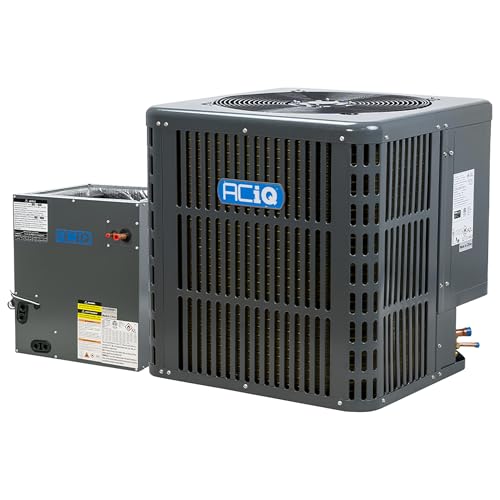
What Is a Split System Air Conditioning System?
A split system air conditioning system is a two-part cooling solution consisting of an indoor air handler and an outdoor condenser connected by refrigerant tubing. The indoor unit draws warm room air across an evaporator coil, absorbing heat in the process. That heat is then carried by refrigerant to the outdoor unit, where it is released into the outside air. Cooled air is blown back into the room.
Because the compressor — the loudest and most vibration-heavy component — is located outside, the indoor unit operates quietly. This is one of the primary reasons split systems are popular in bedrooms, living rooms, and home offices where noise matters. The separation also allows for flexible installation: the indoor unit can be wall-mounted, ceiling-mounted, or floor-mounted, depending on the room layout.
The term "split system" is broad. It covers wall-mounted ductless units, ceiling cassettes, floor consoles, and ducted air handlers that distribute conditioned air through short duct runs. If you are comparing specific formats, the overview of split unit air conditioning systems explains the differences between these configurations in more detail.
How the Split System Works
The cooling cycle follows a predictable path in every split system, regardless of indoor unit format:
- The indoor unit pulls warm room air through a return grille and filter.
- The air passes over the evaporator coil, which contains cold refrigerant. Heat transfers from the air to the refrigerant, cooling the air.
- The cooled air is blown back into the room through the supply louver.
- The refrigerant, now carrying absorbed heat, travels through the line set to the outdoor unit.
- The compressor raises the refrigerant's pressure and temperature.
- The condenser coil releases the heat to the outside air, assisted by the condenser fan.
- The refrigerant returns to the indoor coil, and the cycle repeats.
In a heat pump configuration, a reversing valve allows the cycle to run in the opposite direction, delivering heat indoors during cold weather. That dual-purpose capability is covered in detail in the guide to a split system air conditioner and heat pump.
Key Components of a Split System
-
Indoor Air Handler
Contains the evaporator coil, blower fan, and filter. Mounts on a wall, ceiling, or floor and distributes conditioned air into the room.
-
Outdoor Condenser Unit
Houses the compressor, condenser coil, and condenser fan. Releases heat absorbed from indoors and operates as the system's engine.
-
Refrigerant Line Set
Two copper lines — one liquid, one suction — that carry refrigerant between the indoor and outdoor units.
-
Thermostat / Controller
Sets the target temperature and mode. Modern controllers include scheduling, Wi-Fi, and remote access features.
-
Condensate Drain
Carries moisture removed from the air away from the indoor unit. Proper drainage prevents water damage and mold.
-
Electrical Supply
Dedicated circuit that powers the indoor and outdoor units. Most residential systems run on 240V.
Types of Split System Configurations
Split systems are available in several layouts, each suited to different room types and installation constraints.
| Configuration | Best For | Key Considerations |
|---|---|---|
| Single-zone wall-mounted | One room or open area | Compact indoor unit; visible on the wall |
| Multi-zone wall-mounted | Several rooms with independent control | One outdoor unit; multiple indoor heads |
| Ceiling cassette | Larger rooms and commercial spaces | Even air distribution; requires ceiling space |
| Floor-mounted console | Rooms with limited high wall space | Heating capability at floor level; occupies floor area |
| Ducted air handler | Homes with short duct runs or multiple rooms | Hidden installation; requires duct design |
| Cooling-only split system | Warm climates with separate heating | Simpler design; no reversing valve |
A cooling-only system is a good fit where winters are mild and a separate heat source exists. The guide to a split system air conditioner cooling only configuration explains the trade-offs. For year-round comfort, a heat pump configuration is more versatile.
Sizing a Split System Correctly
Getting the size right is one of the most important decisions you will make. An oversized system cools too quickly, cycles frequently, and fails to remove humidity effectively. An undersized system runs continuously and struggles to reach the setpoint on hot days.
The correct capacity depends on room volume, insulation quality, window area, sun exposure, occupancy, and local climate. A professional load calculation — often called a Manual J calculation — is the most reliable method. For a simpler starting point, the general sizing guidance in our split air conditioning overview explains how capacity scales with room area.
If your installation serves a single room, the wall mounted air conditioner for small room guide covers typical capacity ranges and layout considerations. For apartments with rental constraints, the wall mounted air conditioner for apartment guide discusses installation limitations you may face.
Efficiency Ratings and What They Mean
Efficiency is expressed through several ratings, and understanding them helps you compare models objectively.
- SEER (Seasonal Energy Efficiency Ratio): Measures cooling efficiency over a typical season. Higher is better.
- EER (Energy Efficiency Ratio): Measures efficiency at a specific test condition. Useful for comparing peak-load performance.
- HSPF (Heating Seasonal Performance Factor): Applies to heat pump models and rates heating efficiency across the season.
Inverter compressors are standard on quality split systems. Instead of cycling on and off, they modulate speed continuously, improving part-load efficiency and reducing temperature swings. For a comparison of compressor technologies, see inverter AC and two stage AC overviews. Tier descriptors help frame the trade-offs: entry-level systems typically offer basic inverter control, mid-range systems add better efficiency and features, and premium or top-tier systems include the most advanced controls and the highest efficiency ratings.
Installation Overview
Installing a split system air conditioning system is not a do-it-yourself project. Refrigerant handling is regulated, and mistakes in line-set length, vacuum, or charge lead to inefficiency and premature failure. The main installation steps are:
- Site survey: Confirm indoor and outdoor unit placement, line-set route, and electrical availability.
- Mounting: Secure the indoor unit bracket and outdoor pad or wall bracket.
- Line set and drain: Route copper lines and condensate drain with correct slope and insulation.
- Electrical: Connect the dedicated circuit and verify grounding.
- Vacuum and charge: Evacuate the line set and release refrigerant to the correct charge.
- Commissioning: Test cooling, heating (if applicable), and airflow, and verify drain flow.
For a detailed walkthrough, see split system heating and cooling installation. If you are comparing installation options for an existing ducted home, the split system air conditioner and installation article covers the trade-offs.
Maintenance for Long-Term Performance
A split system air conditioning system is durable, but its performance depends on regular care. The most important task is filter maintenance, which directly affects airflow and coil condition.
- Filter cleaning: Every two to four weeks during heavy use. Our step-by-step split AC filter replacement guide covers the process.
- Coil cleaning: Indoor and outdoor coils should be cleaned periodically to maintain heat transfer efficiency.
- Drain flush: Flush the condensate drain to prevent clogs and water overflow.
- Outdoor unit clearance: Keep the area around the condenser free of leaves, debris, and obstructions.
- Professional service: Once per year, verify refrigerant charge, electrical connections, and overall system operation.
For a complete maintenance routine, see split system air conditioning maintenance. If a problem does occur, the troubleshooting air conditioning guide helps you identify the likely cause and decide whether a service call is needed. The split system air conditioning repairs article explains what typical service visits involve.
Split System vs. Other Air Conditioning Systems
Understanding the alternatives helps you decide whether a split system is the right fit for your home.
| System Type | Best For | Trade-offs |
|---|---|---|
| Ductless split system | Homes without ducts, additions, single rooms | One indoor head per zone; visible wall unit |
| Central air conditioning | Homes with existing ductwork and multiple rooms | Requires ducts; duct losses reduce efficiency |
| Window AC | Single rooms with available window space | Blocks window; limited capacity |
| Portable AC | Temporary or rental situations | Lower efficiency; requires venting |
| VRF / VRV systems | Larger homes and commercial buildings | Complex installation; higher upfront investment |
For a broader comparison, the guides on type of air conditioning systems and types of air conditioning units provide context for each category.
Thermostats and Controls
A split system is only as good as the controls that manage it. Modern systems support programmable and smart thermostats that handle scheduling, remote access, and automatic mode switching. For an overview of controller options, see the guide on thermostat that controls heat and cool. If your system is a heat pump, a thermostat that automatically switches from AC to heat is the most convenient option. Multi-zone systems often use a split unit thermostat that manages individual indoor heads.
When a Split System Is the Right Choice
A split system air conditioning system is a strong fit in several common scenarios:
- Homes without ductwork: Older homes, additions, and converted spaces where running ducts is impractical.
- Room-specific comfort: Bedrooms, home offices, and living areas that need independent temperature control.
- Energy-conscious households: Inverter-driven compressors are among the most efficient ways to cool a space.
- Quiet operation: The compressor is outdoors, so indoor noise is minimal.
- Flexible installation: Wall, ceiling, and floor formats allow the system to fit the room.
If your project involves a single room, a wall-mounted format is often the most practical. For multi-room coverage, a multi-zone system or a two-head mini split is worth considering. For larger properties, the VRF systems overview explains when a commercial-grade solution makes sense.
Frequently Asked Questions
What is a split system air conditioning system?
A split system air conditioning system consists of an indoor air handler and an outdoor condenser unit connected by refrigerant lines. The indoor unit absorbs heat from the room and the outdoor unit releases it, providing cooling without ductwork.
Does a split system air conditioning system require ductwork?
No. A standard split system is ductless. The indoor air handler mounts on a wall, ceiling, or floor and delivers conditioned air directly into the room, making it ideal for homes without existing ducts.
How many rooms can one split system air conditioning system cool?
A single-zone split system serves one room or open area. Multi-zone systems use one outdoor condenser connected to multiple indoor air handlers, allowing independent temperature control in several rooms.
How often should a split system air conditioning system be serviced?
Clean or replace the indoor filter every two to four weeks during heavy use, and schedule a professional service once per year. Annual maintenance checks refrigerant charge, coil condition, drain lines, and electrical connections.
Can a split system air conditioning system provide heating too?
Yes, if it is a heat pump model. A reversing valve allows the system to run in cooling or heating mode. Cooling-only split systems are also available for climates where heating is not required.
Explore Split System Air Conditioning Options
Compare configurations, features, and efficiency tiers before making a decision.
VIEW RECOMMENDED SYSTEMSThis guide is for educational purposes. Cooling requirements vary by home and climate. Consult a qualified HVAC professional before selecting and installing a system.