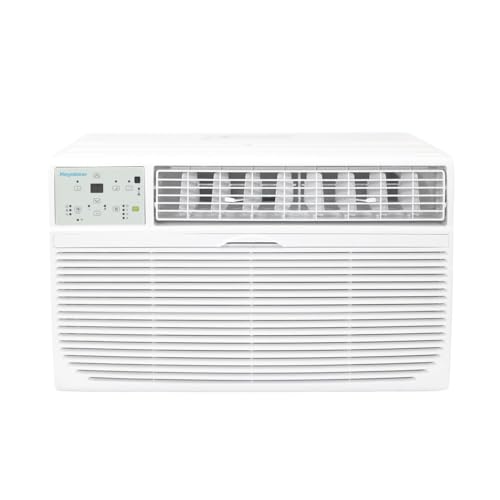
Wall Mounted Self Contained Air Conditioning Unit
A wall mounted self contained air conditioning unit houses every cooling component in one chassis that mounts on or through a wall. This guide explains how it works, where it fits best, how to size it, and what to expect during installation and maintenance.
START WITH THE CHECKLISTQuick Summary: A self contained wall unit combines the compressor, condenser, and evaporator in a single housing. It needs no separate outdoor condenser and no refrigerant line set running through the building, which makes it a practical option for rooms where a split system is difficult to install.
What Is a Wall Mounted Self Contained Air Conditioning Unit?
A wall mounted self contained air conditioning unit is a single-package design. All of the working parts sit inside one housing: the compressor, the condenser coil, the evaporator coil, the blower, and the controls. The unit mounts on a wall and uses a wall opening or sleeve to draw in outdoor air and discharge heat.
This is different from a split system, where an indoor air handler connects to a separate outdoor condenser through refrigerant lines. Because a self contained unit has no line set running to a remote condenser, it avoids the wall penetrations and line routing that complicate split installations. For a broader look at how these compare, see types of air conditioning units.
Self contained wall units are most often found in hotel rooms, dormitories, apartments, offices, and older buildings where a central system is unavailable and a split system is impractical. If you need heating as well, review the wall mounted heating and air conditioning options before committing to a cooling-only model.
How a Self Contained Wall Unit Works
The unit draws room air through a return grille across the evaporator coil. The coil absorbs heat and humidity, and the blower pushes cooled air back into the room. Heat from the room is carried by refrigerant to the condenser coil in the same housing, where it is discharged through the exterior side of the wall opening.
Because the condenser is part of the same chassis, the wall opening must be designed to separate the indoor air stream from the outdoor air stream. A proper wall sleeve or chassis frame maintains this separation and supports the unit's weight. Poor separation or an undersized opening reduces capacity and can cause overheating.
The compressor cycles to hold the setpoint. In most models, the thermostat is built into the unit or handled by a wall control. Filter maintenance is critical because the evaporator coil is close to the return grille and collects dust quickly. For the general cooling cycle, see how an air conditioner works.
Common Configurations
Self contained wall units come in a few configurations. The right one depends on the wall construction, the available depth, and whether the building allows exterior protrusion.
Through-the-Wall Self Contained Unit
This is the most common type. The unit fits into a wall sleeve and the condenser section sits flush with or slightly proud of the exterior wall. It is often used in hotels and apartments where a standardized sleeve already exists. See wall sleeve for through the wall air conditioners for the sleeve requirements.
Wall-Mounted Without an Outdoor Unit
Some units are designed to mount entirely on the interior wall with a compact exterior grille rather than a full condenser box. These are limited in capacity and are best for small rooms. Our guide on the wall air conditioner without outdoor unit explains the tradeoffs.
Cooling-Only Versus Cooling and Heating
Many self contained wall units are cooling only. Some models add electric resistance heating elements or a reversing valve for heat pump operation. If year-round comfort is the goal, compare a cooling-only unit against a wall heater and air conditioner combination before choosing.
Market Tiers: How Self Contained Wall Units Compare
Self contained wall units are sold in distinct market tiers. The tier reflects build quality, efficiency, noise level, controls, and expected service life. The labels below describe relative market position, not absolute ratings.
Essential Tier
Basic cooling with a fixed-speed compressor, mechanical or simple digital controls, and a washable filter. A solid choice for a guest room, rental unit, or seasonal space where advanced features are not a priority.
Balanced Tier
Better efficiency, quieter fan speeds, improved filtration, and remote or programmable controls on many models. This tier usually offers the best balance of comfort and durability for most residential applications.
High-End Tier
High efficiency ratings, low-noise operation, advanced filtration, and durable construction with reinforced chassis. These units are built for demanding commercial or hospitality use where reliability and quiet operation matter most.
Within each tier, the most important comparison is efficiency rating, noise level, and the quality of the wall sleeve and installation. A well-installed mid-range unit will outperform a poorly installed premium unit in almost every case.
Buying Checklist
Use this checklist to narrow the market before comparing individual models. Each item maps to a real decision that affects comfort, efficiency, and installation complexity.
- Confirm the room load. Measure the room, note ceiling height, window area, insulation, and sun exposure. Use a load calculation rather than a single rule of thumb. See how to size an air conditioner and the BTU calculator by room size.
- Check the wall construction. Confirm that the wall can accept a sleeve or opening of the required depth and that the exterior side allows for condenser discharge. A structural or exterior review may be needed in older buildings.
- Verify the electrical supply. Self contained wall units typically run on 115-volt or 230-volt circuits depending on capacity. Confirm the existing circuit or plan a dedicated one. See amps and breaker size.
- Decide cooling only or heating too. If the unit must provide heat, confirm whether the model uses electric resistance heat or a heat pump cycle, and check the heating capacity at your climate's low temperatures.
- Compare efficiency ratings. Higher efficiency reduces energy use over the unit's life. See what is SEER rating and SEER versus SEER2 standards for the current measurement framework.
- Review noise ratings. The compressor and fan are in the same housing as the indoor side, so noise matters more than in a split system. Compare indoor sound levels, especially for bedrooms.
- Check filtration and drainage. Confirm that the filter is easy to remove and that the condensate drain or sling ring is serviceable. Poor drainage causes leaks and water damage.
- Confirm warranty and service support. Check the sealed system and parts warranty, and confirm that local technicians support the brand. See AC warranty explained.
Sizing a Self Contained Wall Unit
Sizing is the most important decision. An undersized unit runs continuously and fails to hold the setpoint. An oversized unit cools too quickly, removes less humidity, and cycles on and off, which wears the compressor. The table below gives a starting range; confirm with a room-by-room load calculation.
| Room Size | Typical Cooling Capacity | Best For |
|---|---|---|
| Up to 150 sq ft | 5,000 – 6,000 BTU | Bedroom, nursery, small office |
| 150 – 250 sq ft | 8,000 – 10,000 BTU | Primary bedroom, studio apartment |
| 250 – 400 sq ft | 12,000 – 14,000 BTU | Living room, hotel guest room |
| 400 – 600 sq ft | 18,000 – 24,000 BTU | Large living area, small commercial space |
Adjust upward for large windows, poor insulation, west-facing walls, and high occupancy. Adjust downward for a well-shaded, well-insulated room. Oversizing is a common mistake that reduces comfort by leaving the room clammy. See what happens if AC is too big or small.
Advantages and Limitations
Every system type has tradeoffs. Here is the honest comparison for a wall mounted self contained air conditioning unit.
Advantages
- Single-package design: no separate outdoor condenser and no refrigerant line set through the building.
- Suits buildings where a split system is impractical or not allowed by the facade rules.
- Standardized sleeve sizes make replacement easier in hotels and apartments.
- Straightforward installation when a wall sleeve already exists.
- Independent zone control for each room.
Limitations
- Compressor noise is inside the room because all components share one housing.
- Capacity is limited compared with split and central systems.
- Requires a wall opening or sleeve, which may not be possible in some buildings.
- Cooling-only models are common; heating capability varies by model.
- Efficiency is generally lower than modern mini-split heat pumps.
Self Contained Wall Unit vs Other Options
This table compares a self contained wall unit with three common alternatives. Use it to decide whether the self contained format fits your building and usage pattern.
| Option | Best For | Key Consideration |
|---|---|---|
| Self contained wall unit | Hotel rooms, apartments, older buildings with wall sleeves | No line set, but compressor noise is indoors and capacity is limited |
| Ductless mini-split | Homes needing quiet, efficient room-by-room comfort | Higher efficiency and quieter, but needs an outdoor condenser and professional install |
| Window air conditioner | Single rooms with a suitable window | Simple setup, but blocks the window and is usually cooling only |
| Central air conditioning | Whole-home comfort with existing ducts | Comfortable and discreet, but requires ductwork and a larger project |
If quiet operation and high efficiency are the priority, a split system is usually the better route. If the building already has sleeves or the facade cannot support an outdoor condenser, a self contained unit is often the practical choice. For a deeper comparison, see ductless vs ducted AC and wall mounted air conditioner without outdoor unit.
Installation Overview
Installation of a self contained wall unit centers on the wall opening, the electrical supply, and sealing. Because the compressor is inside the housing, vibration isolation and drainage also matter.
- Confirm the wall opening. The opening or sleeve must match the unit's dimensions and allow the condenser section to discharge outdoors. Reinforce the framing if needed. See wall sleeve for through the wall air conditioners.
- Check the electrical circuit. Confirm the available voltage and amperage match the unit. Add a dedicated circuit if the existing wiring is insufficient. See do I need an electrician for AC.
- Set the unit in the sleeve. Use the manufacturer's chassis bracket and any required support angles. The unit must sit level for proper drainage and to prevent vibration.
- Seal the perimeter. Seal the gap between the unit and the sleeve or wall to prevent air leakage, water intrusion, and insect entry. Use a weather-resistant sealant rated for exterior use.
- Confirm drainage. Verify that condensate drains to the exterior or to the built-in sling ring. A blocked drain causes water to back up into the room.
- Test operation. Run the unit in cooling mode, check airflow, confirm the thermostat responds, and listen for abnormal vibration. See how to test new AC.
Maintenance That Keeps the Unit Efficient
Self contained wall units are easy to maintain, and consistent maintenance is the main reason some units last well beyond their expected service life. Focus on airflow, drainage, and coil cleanliness.
- Filters: Clean or replace every four to six weeks during heavy use. A clogged filter reduces airflow and can freeze the evaporator coil. See when to replace AC filter.
- Indoor coil and blower: A professional cleaning once per year removes dust and biological growth. See wall mounted air conditioner cleaning service.
- Condensate drain: Flush the drain line seasonally. A blocked drain causes water leaks and can trigger a shutdown. See AC leaking water solution if you notice drips.
- Outdoor coil: Keep the exterior grille and coil clear of leaves and debris. Rinse the coil gently with a hose. See clean condenser coils.
- Professional service: Once per year, have a technician check refrigerant charge, electrical connections, capacitors, and fan operation. See the split system air conditioning maintenance checklist for the general scope.
If the unit stops cooling or makes unusual noises, work through the steps in troubleshooting air conditioning before calling a technician.
Frequently Asked Questions
What is a wall mounted self contained air conditioning unit?
It is a single-package cooling system that houses the compressor, condenser, evaporator, and blower in one wall-mounted chassis. Unlike a split system, it has no separate outdoor condenser or refrigerant line set running through the building.
How is it different from a mini-split?
A mini-split uses an indoor air handler connected to a separate outdoor condenser by refrigerant lines. A self contained unit places every component in one housing and uses a wall opening or sleeve to discharge heat, which simplifies installation but limits capacity and increases indoor noise.
What size do I need?
Match capacity to room load using square footage, ceiling height, insulation, window area, and sun exposure. As a starting point, 20 BTU per square foot is used for cooling, with adjustments for heat gain. Confirm with a load calculation before purchase.
Can a self contained wall unit provide heating?
Some models include electric resistance heating or a heat pump cycle, but many are cooling only. Confirm the heating capability of the specific model before relying on it as a primary heat source.
How is the unit installed?
Installation requires a wall opening or sleeve sized to the unit, proper framing and support, an electrical supply that matches the unit, sealing against air and water intrusion, and a verified condensate drain. Professional installation is recommended.
How often should it be maintained?
Clean the filter every four to six weeks during heavy use, and schedule professional maintenance once per year to inspect coils, refrigerant charge, electrical components, and drainage. Consistent maintenance preserves efficiency and extends compressor life.
Ready to Compare Self Contained Wall Units?
Review the recommended models below and match the tier to your room, wall construction, and installation plan.
VIEW RECOMMENDED MODELS