Windowless Portable Air Conditioner Reviews
If your room has no usable window, a standard portable AC can feel impossible to install. This guide reviews windowless and ventless portable air conditioner options, explains how they actually cool a space, and helps you pick the right tier for your room.
View Recommended ModelsWhy this page exists: Most shoppers searching for a windowless portable air conditioner are in the research phase. They know they need cooling, but their window situation is a problem. This review hub explains the trade-offs clearly so you can decide with confidence before visiting any store.
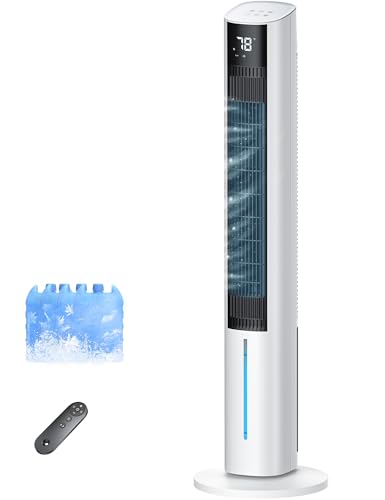
Quick reality check: True "windowless" portable ACs that produce real cooling do exist, but they still need a way to exhaust heat. Units advertised as fully ventless are usually evaporative coolers (swamp coolers), not refrigerated air conditioners. This page separates the two categories so you don't buy the wrong product.
What "Windowless" Really Means for Portable AC
Before reading individual reviews, it helps to understand the terminology. A refrigerated portable air conditioner moves heat from your room to the outside. That heat has to go somewhere. The two common exhaust methods are a hose routed through a window opening or a hose routed through a wall, door, or ceiling vent. That is why most standard portable units are not truly windowless.
Products marketed as windowless portable air conditioners usually fall into one of three groups. First, ventless evaporative coolers that add moisture to the air and work best in dry climates. Second, portable AC units that include specialized exhaust kits for sliding doors, casement windows, or wall vents instead of a traditional double-hung window. Third, compact spot coolers designed for garages, server rooms, or workshops where a short exhaust run is acceptable.
If you need cooling in a room with no window at all, the practical path is a unit with a flexible exhaust solution such as a door kit or wall vent kit. For a deeper explanation of the no-window problem, see our guide on windowless air conditioner options and the broader overview of windowless air conditioners. Readers who want to compare exhaust-free and hose-free designs should also review windowless air conditioner without exhaust hose.
How We Evaluate Windowless Portable AC Units
Cooling Capacity Match
We check whether the rated BTU output is realistic for the room size the manufacturer claims. Oversized units cycle too often, while undersized units run constantly without reaching the set temperature.
Exhaust Flexibility
The best windowless-friendly models include door kits, wall vent adapters, or long hose runs. We look at how practical the exhaust setup is for rooms without a standard window.
Moisture Handling
Portable ACs produce condensate. Self-evaporative systems reduce how often you empty a tank, which matters a lot in bedrooms and home offices.
Noise and Airflow
Compressor noise and fan noise vary widely. For sleeping areas, a quieter mid-range or premium model is usually a better fit than an entry-level unit.
Build Quality
Durable construction, reinforced casters, and a rust-proof finish on the condensate path are signs of a unit that will hold up across multiple seasons.
Smart Controls
Programmable timers, remote controls, and app connectivity make a big difference in how often you actually use the unit during hot months.
Portable AC Tiers at a Glance
To keep comparisons fair, we group windowless-friendly portable air conditioners into three market tiers. Tier describes relative position in the market, not a number.
| Tier | Best For | Typical Strengths | Trade-offs |
|---|---|---|---|
| Entry-level | Small bedrooms, dorms, occasional use | Simple controls, lighter weight, straightforward setup | Louder operation, basic exhaust kit, manual drainage more likely |
| Mid-range | Home offices, living rooms, daily use | Better noise control, self-evaporation, programmable timer, more flexible exhaust accessories | Slightly larger footprint, heavier unit |
| Premium | Primary bedrooms, multi-season use, smart homes | Quiet inverter-style compressors, app control, dual-hose or reinforced exhaust systems, premium materials | Higher upfront position in the market, more complex setup |
Windowless Portable AC Reviews: What to Look For
1. Confirm the Cooling Technology
Check whether the unit uses a refrigerated compressor or evaporative cooling. A true air conditioner will list BTU cooling capacity and a refrigerant type. An evaporative cooler will list airflow in cubic feet per minute and a water tank size. They are not interchangeable, and the wrong choice leads to disappointment in humid climates.
2. Plan the Exhaust Path First
Measure your door gap, wall vent, or ceiling opening before ordering. Many windowless-friendly units ship with a door slider kit or a window seal plate that can be adapted. If your room truly has no opening, a ducted mini-split or a windowless air conditioning unit designed for wall penetration may be the more honest solution.
3. Match BTU to Room Size
As a rule of thumb, portable ACs need roughly 20 BTU per square foot, adjusted upward for sun exposure, kitchen heat, and occupancy. A 150 square foot bedroom generally suits a compact unit, while a 400 square foot living area needs a larger model with a stronger fan. Our air conditioner sizing guide walks through the full calculation.
4. Check Drainage and Maintenance
Self-evaporative systems use the condensate to cool the condenser, which reduces manual draining. In humid regions, even self-evaporative units may need occasional draining during peak summer. Look for a removable, washable filter and a clear drainage port.
5. Read Noise Ratings Carefully
Decibel ratings measured at close range can be misleading. For bedrooms, prioritize units that advertise a quiet sleep mode and a low-speed fan setting. Mid-range and premium models generally offer smoother compressor cycling than entry-level units.
6. Verify the Warranty
Compressor coverage matters most. A solid warranty and accessible service network are signs of a manufacturer that stands behind the product. Our AC warranty guide explains what typical coverage includes.
Room-by-Room Recommendations
Bedroom without a window: Prioritize quiet operation and self-evaporation. A mid-range unit with a sleep timer and low fan speed is usually the best fit. If the room has a sliding door, a door slider exhaust kit solves the venting problem cleanly.
Home office or studio: Daily use rewards a programmable timer and reliable thermostat. Consider a unit with app control so you can pre-cool the room before work begins.
Basement or interior room: These spaces often have the toughest venting situation. A unit with a long exhaust hose routed to a nearby utility room or ceiling vent may work, but confirm the hose length and adapter compatibility first. For related setups, see windowless AC solutions.
Garage or workshop: A compact spot cooler with heavy-duty casters and a rugged housing is a practical choice. Noise matters less here, so an entry-level or mid-range unit can do the job.
Common Mistakes to Avoid
- Buying an evaporative cooler thinking it is a refrigerated air conditioner. They cool differently and suit different climates.
- Ignoring the exhaust requirement. Every compressor-based portable AC needs a heat exhaust path.
- Choosing a unit that is too large for the room. Short cycling wastes energy and removes less humidity.
- Skipping the filter cleaning schedule. A clogged filter reduces cooling and strains the compressor.
- Placing the unit in direct sun or against a wall with no clearance. Airflow around the unit matters.
- Forgetting to check the electrical requirements. Most portable ACs need a dedicated circuit or at least a properly rated outlet.
Frequently Asked Questions
Can a portable air conditioner work without a window?
Yes, but only if you provide an alternative exhaust path. Common solutions include a sliding door kit, a wall vent, a ceiling vent, or a dedicated dryer-style vent. Units sold as windowless typically include these adapters or support them as accessories. Without an exhaust path, a compressor-based unit cannot remove heat effectively.
Are ventless portable air conditioners real air conditioners?
Most products labeled ventless are evaporative coolers, not refrigerated air conditioners. They cool by evaporating water, which works well in dry climates but adds humidity. True refrigerated portable ACs require an exhaust for heat. Check the product specifications for BTU cooling capacity and refrigerant type to confirm.
How many BTU do I need for a room with no window?
Start with roughly 20 BTU per square foot, then adjust for sun exposure, ceiling height, and occupancy. A 200 square foot room typically needs around 4,000 to 5,000 BTU of real cooling capacity, while a 400 square foot space may need 8,000 BTU or more. Use our BTU calculator by room size for a more precise estimate.
Do windowless portable ACs need draining?
Many modern units are self-evaporative, which means they reuse condensate to cool the condenser and rarely need manual draining. In very humid conditions, even self-evaporative models may require occasional draining. Check the tank capacity and drain port design before buying.
Can I use a portable AC in a room with no exterior wall?
Interior rooms are the hardest case. You need a route for the exhaust hose, such as a drop ceiling, a shared utility chase, or a door vent kit. If no route exists, a ducted mini-split or a wall-penetrating system may be the better long-term answer. Our guide on windowless air conditioning units covers these alternatives.
Final Verdict
A windowless portable air conditioner can absolutely cool a room without a standard window, provided you plan the exhaust path and choose the right technology for your climate. For most shoppers, a mid-range refrigerated portable unit with a flexible door or wall vent kit offers the best balance of cooling performance, noise control, and practical setup. If your room is truly sealed, explore the wall-penetrating and ducted alternatives linked throughout this guide before committing. Read the reviews, match the BTU to your room, and confirm the exhaust accessories are included.