
Windowless Air Conditioner Without Exhaust Hose: What to Know Before You Choose
If your room has no window, no exterior wall opening, or no practical place to route a vent hose, this guide explains the real options, how each one works, and which setup fits your space best.
Quick answer: A true air conditioner without any exhaust path is rare. Most “windowless” units either use a small wall or ceiling vent, a condensate-based evaporative design, or a ductless split system. Understanding the difference prevents a disappointing purchase.
Rooms without windows create a specific cooling challenge. Standard portable air conditioners need a hose to expel hot air, and window units need a window frame. When neither is available, buyers often search for a windowless air conditioner without exhaust hose hoping for a simple plug-and-play solution. The reality is more nuanced, but there are workable paths depending on your building type and how much installation you can accept.
This guide walks through the technology behind hose-free and window-free cooling, the trade-offs of each approach, and practical selection criteria. It is written for research-stage buyers who already know they need cooling but want to avoid a purchase that does not fit their room.
Why “No Exhaust Hose” Is a Misleading Search Term
Air conditioners move heat, they do not destroy it. A compressor-based AC absorbs heat from indoor air and releases it somewhere else. That “somewhere else” is the exhaust path. If a unit truly has no exhaust route, the heat stays in the room and the cooling effect cancels out.
So when a product is marketed as a windowless air conditioner without an exhaust hose, it usually falls into one of these categories:
- Evaporative (swamp) coolers — they cool air by evaporation and do not need an exhaust hose, but they add humidity and work best in dry climates.
- Ductless mini-split systems — no window and no hose inside the room, but they require a small wall penetration for refrigerant lines.
- Ceiling or wall-vented portable units — a short duct goes into a ceiling plenum or wall cavity rather than a window.
- Chilled-water or fan-coil units — common in commercial buildings, using building water loops instead of an exhaust hose.
- Personal or spot coolers with heat sinks — very small cooling capacity, suitable only for directed airflow at a desk or bed.
Option 1: Evaporative Coolers for Dry Climates
Evaporative coolers are the closest thing to a true windowless air conditioner without an exhaust hose. They pull room air through a wet pad, and the evaporation lowers the air temperature. No hot air needs to be expelled, so no hose is required.
Best for
- Hot, dry climates with low humidity
- Garages, workshops, and open-plan spaces with cross-ventilation
- Renters who cannot modify walls or windows
Limitations
- Adds moisture to the room, which reduces comfort in humid regions
- Requires frequent water refills or a drain line
- Cooling effect is strongest near the airflow outlet
- Not a substitute for a compressor-based AC in sealed rooms
If your climate is humid, an evaporative unit will likely feel sticky rather than cool. In that case, a ductless split or a vented portable setup is the more realistic path. You can compare broader no-window strategies in this guide to windowless air conditioner options before deciding.
Option 2: Ductless Mini-Split With a Small Wall Penetration
A ductless mini-split is often the best-performing answer for a room without a window. The indoor air handler mounts on a wall or ceiling and connects to an outdoor condenser through a small hole, typically three inches in diameter. There is no exhaust hose inside the room and no window required.
This is not a zero-modification solution, but it is the closest to whole-room comfort for a windowless space. It also avoids the humidity problem of evaporative coolers and the efficiency losses of portable units.
| Approach | Exhaust Hose Needed? | Wall or Window Modification | Best For |
|---|---|---|---|
| Evaporative cooler | No | None | Dry climates, open spaces |
| Ductless mini-split | No | Small wall hole for line set | Bedrooms, offices, year-round use |
| Ceiling-vented portable | Short duct to ceiling | Ceiling plenum access | Rooms with drop ceilings |
| Wall-sleeve AC | No hose inside | Wall opening required | Permanent installations |
| Personal spot cooler | No | None | Desk or bedside directed airflow |
Mini-splits are available across entry-level, mid-range, and premium tiers. Higher-tier models typically add inverter compressors, quieter fans, and better humidity control. If you are weighing this against other no-window designs, the overview of windowless air conditioners covers the trade-offs in more depth.
Option 3: Portable Units With Alternative Venting
Some portable ACs are sold with vent kits designed for ceiling tiles, crawlspaces, or wall cavities instead of windows. These still use an exhaust hose, but the hose does not need a window. For a room with no window but with a suspended ceiling or an accessible wall cavity, this can be a practical middle ground.
Key checks before buying:
- Confirm the vent kit is included and matches your ceiling or wall type
- Verify the hose length against your ceiling height
- Plan for condensate drainage, either a tank or a gravity drain
- Expect some efficiency loss compared with a split system
If a window is completely unavailable and wall modification is not allowed, a portable unit without a window vent is worth understanding in detail. This article on an air conditioner portable without window vent explains the venting alternatives and their limits.
Option 4: Wall-Sleeve and Through-the-Wall Units
A through-the-wall air conditioner does not need a window, and it does not leave an exhaust hose inside the room. The unit sits in a sleeve built into an exterior wall. Heat is rejected directly outside. This is a permanent solution, but it is reliable and efficient for the right room.
This option suits homeowners who can modify an exterior wall and want a fixed installation. It is less suitable for renters or rooms with no exterior wall access. For a comparison of related form factors, see the guide to a window wall AC unit with heat if you also need a heating function.
How to Choose the Right Solution
Work through these questions in order. They narrow the field quickly and prevent a mismatch between the room and the unit.
- Is the room sealed or ventilated? Sealed rooms rule out evaporative cooling. Ventilated spaces can use it.
- Can you make a small wall penetration? If yes, a ductless mini-split is usually the strongest performer.
- Is there a drop ceiling or wall cavity? If yes, a ceiling-vented portable unit may work without a window.
- What is the climate humidity? Humid climates favor compressor-based cooling over evaporative designs.
- How large is the room? Match capacity to square footage rather than choosing the largest unit available.
Getting the capacity right matters as much as the venting method. An oversized unit cools too quickly and leaves humidity behind, while an undersized unit runs constantly. Use a sizing guide such as this one on how to size an air conditioner before finalizing a model.
What to Verify in the Product Listing
Listings often use loose language. Before you commit, confirm these details in the specifications or manual:
- Venting requirement — is a hose, wall sleeve, or ceiling kit required?
- Condensate management — tank capacity or drain option
- Cooling capacity — BTU rating and the square footage it supports
- Noise level — decibel rating, especially for bedrooms
- Electrical requirement — plug type and circuit needs
- Installation footprint — indoor and outdoor component dimensions
For rooms where a window exists but is awkward, smaller units may still fit. A guide to an AC unit for a small room can help you match capacity without overbuying. If you are also considering how the unit will be controlled, a wireless air conditioner thermostat can improve scheduling and comfort in hard-to-reach spaces.
Installation and Safety Notes
Any compressor-based unit needs a heat rejection path, and any unit with a water tank needs a drain plan. Keep these practical points in mind:
- Do not seal a portable unit into a room without venting; it will heat the space.
- Route ceiling ducts away from insulation and combustible materials.
- Use a dedicated circuit if the unit’s amperage requires it.
- Follow local code for wall penetrations and refrigerant handling.
- Keep filters clean to preserve airflow and efficiency.
If you plan to place a mini-split or a fan coil in a ceiling, review the considerations in this guide to an AC unit in ceiling configuration. For humidity comfort targets, this reference on what is a good humidity level for a home helps you evaluate whether a unit is actually dehumidifying well.
Common Mistakes to Avoid
- Assuming “hose-free” means “no venting.” Check the manual for vent kits and drain requirements.
- Buying an evaporative cooler for a humid room. It will add moisture instead of improving comfort.
- Oversizing the unit. Short cycling leaves the room clammy and wastes energy.
- Ignoring condensate. A unit without a drain plan will overflow or shut down.
- Skipping the electrical check. Confirm the outlet and breaker support the unit.
Ready to Compare Real Models?
Once you know whether your room needs an evaporative cooler, a mini-split, or a ceiling-vented portable unit, the product section below shows recommended air conditioners that match the topic. Review the specifications, then choose the tier that fits your room and installation constraints.
Frequently Asked Questions
Is there a real air conditioner that needs no exhaust at all?
Only evaporative coolers and very small spot coolers come close. Any compressor-based air conditioner must reject heat somewhere, either through a hose, a wall sleeve, a ceiling duct, or an outdoor condenser connected by refrigerant lines.
Can I use a portable AC in a room with no window?
Yes, if you can route the exhaust into a ceiling plenum, wall cavity, or another approved vent path. A portable unit without any vent path will not cool the room effectively and may raise indoor temperature.
What is the best option for a bedroom with no window?
A ductless mini-split is usually the best choice for comfort, quiet operation, and humidity control. If wall modification is not possible, a ceiling-vented portable unit or an evaporative cooler in a dry climate are the next options.
Do windowless units need a drain?
Most compressor-based units produce condensate. Some collect it in a tank that you empty, while others support a gravity or pump drain. Confirm the drainage method before installation.
How do I know the capacity I need?
Match BTU to room size, ceiling height, sun exposure, and occupancy. A sizing guide based on square footage is the standard starting point, then adjust upward for hot climates or heavy sun.
Final Takeaway
The phrase windowless air conditioner without exhaust hose describes a real need, but the honest answer is that very few units meet it literally. Evaporative coolers avoid the hose but add humidity. Mini-splits avoid the window and the indoor hose but need a small wall penetration. Ceiling-vented portables avoid the window but still use a duct. Wall-sleeve units avoid both the window and the indoor hose but require a permanent wall opening.
Choose based on your climate, your building constraints, and how much installation you can accept. Then verify the venting, drainage, capacity, and electrical requirements in the product listing. That sequence avoids the most common and costly mistakes in this category.
Recommended Windowless Air Conditioner Without Exhaust Hose Options
⚠️ AFFILIATE DISCLOSURE: This website contains affiliate links. As an Amazon Associate, we earn from qualifying purchases. If you make a purchase through these links, we may receive a small commission at no additional cost to you. Read our full affiliate policy.

Windowless Portable Air Conditioners, 37.2’’ Evaporative Air Cooler w/Remote, Cooling Tower Fan, 2.5L Water Tank & Ice Packs, 12H Auto-off, 70° Oscillating, Ultra-Quiet Standing Fan For HomeOffice
Check price on Amazon
24" Windowless Portable Air Conditioner, 3-IN-1 Portable AC Unit with Remote, 15H Timer & 120°Oscillation, 2-Gal Tank, 3 Modes & 3 Speeds, Ultra-Quiet Ventless Swamp Cooler for Home Office, BeigeWhite
Check price on Amazon
Windowless Portable Air Conditioner, 24.3" Small Evaporative Air Cooler for Room No Window, 3-Speed Settings, 4 Modes, 15H Timer, Remote Control, 4 Ice Packs, Quiet AC Unit for Bedroom, White
Check price on Amazon
BLACK+DECKER Portable Air Conditioner, 10,000 BTU, BPACT10WT, White | 5,500 BTU SACC for Rooms up to 450 Sq. Ft., 3-in-1 Portable AC, Fan and Dehum with Follow Me Remote Control
Check price on Amazon
Windowless Portable Air Conditioners Fan, Swamp Cooler 3 Modes & 3 Speeds, 16FT Remote,12H Timer for Smart Auto-off, No Hose Needed,2-Gal Tank for 20H Cooling 36db Evaporative Air Cooler
Check price on Amazon
BLACK+DECKER Portable Air Conditioner, 9,000 BTU, BPACT08WT, White | 5,300 BTU SACC for Rooms up to 400 Sq. Ft., 3-in-1 Portable AC, Fan and Dehum with Follow Me Remote Control
Check price on Amazon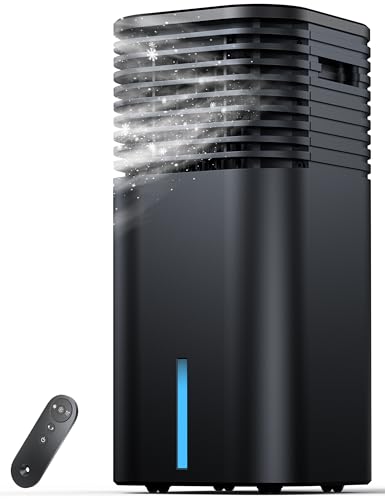
Windowless Portable Air Conditioner, 24.3" Small Evaporative Air Cooler for Room No Window, 3-Speed Settings, 4 Modes, 15H Timer, Remote Control, 4 Ice Packs, Quiet AC Unit for Bedroom, Black
Check price on Amazon