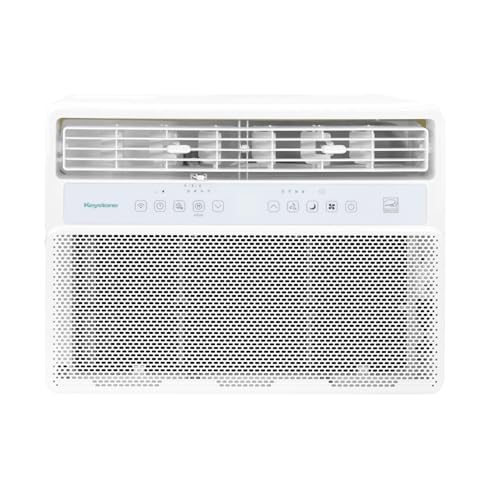
12,000 BTU Inverter Window Air Conditioner
A complete, practical guide for buyers who want powerful cooling with smarter compressor technology — sizing, efficiency, installation, and maintenance explained clearly.
EXPLORE THE GUIDEWhy this guide matters: A 12,000 BTU inverter window air conditioner sits in a sweet spot — strong enough for a large room or open living area, yet compact enough to fit a standard window. This page explains how to tell whether this capacity and technology are the right fit for your space, what features to prioritize, and how to keep the unit running efficiently for years.
What Is a 12,000 BTU Inverter Window Air Conditioner?
A 12,000 BTU inverter window air conditioner is a self-contained cooling unit that mounts directly in a window frame. The "12,000 BTU" rating describes its cooling capacity — how much heat it can remove from a room per hour. The "inverter" label refers to the compressor technology: instead of switching fully on and off, an inverter compressor adjusts its speed continuously to match the cooling demand.
This combination is appealing for several reasons. The capacity is large enough for open-plan living rooms, master bedrooms, and small apartments, while the inverter compressor typically delivers steadier temperatures and more efficient operation than a fixed-speed equivalent. If you are weighing the two compressor designs side by side, the comparison in inverter AC vs non-inverter is a useful starting point, and a deeper technical look is available in inverter vs non-inverter.
What Room Size Does 12,000 BTU Cover?
As a general rule, 12,000 BTU is appropriate for rooms of roughly 400 to 550 square feet. That estimate assumes an 8-foot ceiling, average insulation, and a moderate climate. Real-world sizing depends on several variables that can push the requirement up or down:
- Ceiling height: Higher ceilings increase the volume of air to cool, so a room with 10-foot ceilings may need more capacity than the square footage alone suggests.
- Insulation quality: Poorly insulated rooms lose cool air faster and benefit from additional capacity or a more efficient unit.
- Window exposure: West- and south-facing rooms with large, unshaded windows absorb more solar heat.
- Occupancy and appliances: Kitchens, home offices with multiple devices, and rooms with several occupants generate extra heat.
- Climate: Hotter, more humid regions place greater demand on any cooling system.
For a more detailed breakdown of how capacity maps to floor area, see the guide to 12,000 BTU air conditioner room size. If your room is significantly smaller, stepping down to a 10,000 BTU window air conditioner may be more appropriate and avoid short-cycling.
Quick Sizing Reference
| Room Area (sq ft) | Typical Capacity Range | Notes |
|---|---|---|
| 150 – 250 | 8,000 – 10,000 BTU | Small bedrooms, studios |
| 250 – 400 | 10,000 – 12,000 BTU | Medium bedrooms, home offices |
| 400 – 550 | 12,000 – 14,000 BTU | Large bedrooms, living rooms |
| 550 – 700 | 14,000 – 18,000 BTU | Open-plan spaces, small apartments |
How Inverter Technology Improves Window AC Performance
The compressor is the heart of any air conditioner. In a conventional fixed-speed unit, the compressor runs at full power until the room reaches the set temperature, then shuts off entirely. This on-off cycle creates temperature swings and repeated high-startup loads. An inverter compressor, by contrast, varies its speed smoothly — running slower and longer to hold the target temperature with far less fluctuation.
Inverter Variable-Speed Compressor
Adjusts speed continuously to match demand. Delivers steadier temperatures, quieter steady-state operation, and typically better energy efficiency over long cooling sessions. Well-suited to rooms that are occupied for extended periods.
Fixed-Speed On/Off Compressor
Runs at full power or not at all. Simpler construction and often a lower entry point, but produces wider temperature swings and repeated startup cycles that can wear components faster over time.
For buyers comparing the two approaches in detail, the resource on variable speed air conditioner technology explains how speed modulation affects comfort and durability. Also consider that a well-sealed room amplifies the benefit of an inverter compressor, since the unit does not have to fight constant air leaks.
Efficiency Ratings: What to Look For
Efficiency is expressed through ratings such as SEER (Seasonal Energy Efficiency Ratio) and EER (Energy Efficiency Ratio). Higher ratings indicate that the unit produces more cooling per unit of electricity. Inverter window units frequently achieve higher efficiency than fixed-speed models of the same capacity, which can translate into meaningful energy savings over a long cooling season — particularly in climates with extended summer heat.
When browsing models, look for:
- ENERGY STAR certification — indicates the unit meets or exceeds recognized efficiency thresholds.
- Higher SEER/EER values — more efficient cooling per unit of electricity.
- Eco or energy-saver modes — often pair with inverter compressors to further reduce consumption.
- Programmable timers and smart scheduling — help avoid running the unit when it is not needed.
For a fuller explanation of how these ratings work, see the guide on ENERGY STAR air conditioner criteria, which apply to many 12,000 BTU inverter models as well.
Key Features to Prioritize in a 12,000 BTU Inverter Window AC
Beyond capacity and compressor type, several features materially affect day-to-day satisfaction. The following checklist helps separate genuinely useful options from marketing extras.
Feature Checklist
- Adjustable fan speeds: Multiple speeds let you balance airflow and noise; a quiet low setting is valuable at night.
- Remote control and programmable timer: Convenience for scheduling cooling around your daily routine.
- Dehumidification mode: Useful in humid climates to remove moisture without overcooling.
- Washable filter with easy access: Reduces maintenance friction and supports consistent airflow.
- Sleep mode: Gradually adjusts temperature and fan speed overnight for comfort and energy savings.
- Smart connectivity (Wi-Fi): Optional but convenient for remote control and scheduling via an app.
- Window mounting kit: A proper kit with side panels and insulation improves fit and efficiency.
If you plan to use the unit through transitional seasons, a model with a heat function — covered in the guide to 12,000 BTU heat-cool window air conditioner — can extend usability beyond summer. Those who prefer a different form factor might also compare 12,000 BTU 115-volt window air conditioner options, since electrical requirements vary by model.
Electrical Requirements and Installation Considerations
A 12,000 BTU window unit draws more current than smaller units, so electrical compatibility matters. Many models in this class require a dedicated circuit, and some run on 115-volt power while others use 230-volt. Before purchasing, confirm:
- Voltage and amperage: Match the unit to an available outlet and circuit; see the overview of 110V vs 240V air conditioner requirements for context.
- Window dimensions and weight: Measure the window opening and confirm the unit's weight can be safely supported; a 12,000 BTU unit is heavy enough to warrant two-person installation.
- Window type: Standard double-hung windows are the easiest fit; casement and slider windows may need specialized brackets or a different form factor.
- Outdoor clearance: The rear of the unit needs unobstructed airflow to exhaust heat efficiently.
For installation steps and safety considerations, the resource on HVAC installation provides general guidance. If your window configuration is unusual, explore the 12,000 BTU casement window air conditioner category, which addresses vertical window openings.
Maintenance Tips to Keep Your Inverter Window AC Efficient
Regular maintenance protects cooling performance and extends the life of the compressor — especially important for inverter units, which are designed for long, steady operation. A simple routine covers most needs:
- Clean or replace the air filter every two to four weeks during heavy use; a clogged filter forces the unit to work harder.
- Inspect and clean the outdoor coils at the start of each cooling season to maintain heat exchange efficiency.
- Check the window seal for gaps that let warm air in; proper insulation improves efficiency and reduces strain.
- Clear debris from the exterior grille so exhaust airflow remains unobstructed.
- Schedule professional servicing periodically to check refrigerant levels and electrical connections — see HVAC cleaning and service for what a typical visit covers.
If the unit stops blowing cold air or behaves unexpectedly, troubleshooting guidance such as my air conditioner is running but not blowing air can help you decide whether a simple fix or a technician visit is appropriate.
Who Should Choose a 12,000 BTU Inverter Window AC?
This capacity and technology pairing fits a specific set of buyers particularly well:
- Large-room occupants: A 400–550 sq ft living room, master bedroom, or open studio benefits from the higher capacity.
- Long-duration users: People who run the AC for many hours per day gain the most from inverter efficiency.
- Renters and apartment dwellers: A window unit requires no ductwork and can often be installed without major modifications.
- Comfort-sensitive users: Those bothered by temperature swings appreciate the steadier output of a variable-speed compressor.
- Noise-conscious users: Lower steady-state compressor speeds often translate to quieter operation.
Conversely, if the room is small or cooling is only needed briefly, a smaller fixed-speed unit may be a more proportionate choice. For space-constrained setups, the guide to space-saving air conditioner options covers compact alternatives.
Comparing Tiers Within the 12,000 BTU Inverter Window AC Category
Within this product category, models generally fall into three broad quality tiers. The table below summarizes what each tier typically offers so you can match a model to your priorities.
| Tier | Typical Focus | Best For |
|---|---|---|
| Essential tier | Core inverter cooling, basic fan speeds, washable filter | Straightforward cooling needs with solid energy efficiency |
| Balanced tier | Additional modes (dehumidify, eco, sleep), remote control, quieter operation | Everyday comfort with convenience features |
| Top-tier | Smart connectivity, advanced scheduling, premium build, refined airflow control | Users who want maximum convenience and control |
These tiers are relative positions within the category rather than absolute quality judgments. A well-specified model in the balanced tier often delivers the most complete experience for typical households, while the essential tier remains a solid choice when core cooling is the priority.
Frequently Asked Questions
What room size is suitable for a 12,000 BTU inverter window air conditioner?
A 12,000 BTU inverter window air conditioner is generally suited for rooms between roughly 400 and 550 square feet, depending on ceiling height, insulation, window exposure, and local climate.
Does an inverter compressor really reduce energy use?
Yes. An inverter compressor varies its speed instead of switching fully on and off. This allows it to hold the set temperature more steadily and typically reduces energy consumption compared with a fixed-speed compressor in similar conditions.
Is a 12,000 BTU inverter window AC louder than a standard unit?
Not necessarily. Because the inverter compressor often runs at lower speeds, many users find it quieter during steady operation. Fan speed settings and installation quality also affect perceived noise.
Can I install a 12,000 BTU window air conditioner myself?
Many window units are designed for DIY installation, but a 12,000 BTU model is heavier and may require two people. Check window width, weight limits, and electrical requirements before starting, and consider professional help if unsure.
How often should I clean the filter on an inverter window AC?
During heavy cooling season, clean or replace the filter every two to four weeks. More frequent cleaning may be needed in dusty environments or homes with pets.
Ready to Compare Models?
Use the curated recommendations below to explore 12,000 BTU inverter window air conditioners that match the guidance in this article. Compare features, efficiency ratings, and smart controls to find the right fit for your room.