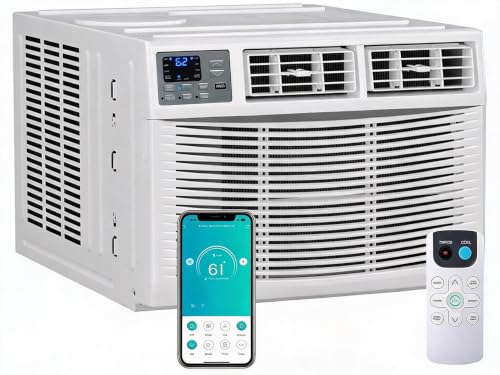
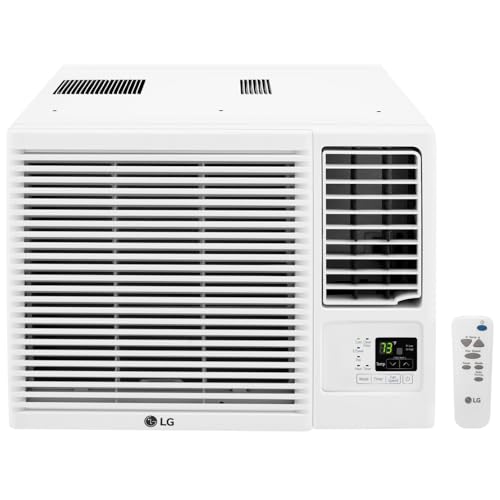
12,000 BTU Heat and Cool Window Air Conditioner: Complete Guide
Everything you need to know before choosing a 12,000 BTU window AC with heating — room sizing, heat pump vs heat strip, efficiency ratings, installation considerations, and maintenance tips for reliable year-round comfort.
START READINGWhat You'll Learn on This Page
- Why a 12,000 BTU Heat & Cool Window AC Fits Many Homes
- Room Sizing and BTU Matching
- Heat Pump vs Heat Strip: Which Heating Mode Fits You?
- Efficiency Ratings Explained (CEER, EER, HSPF)
- Voltage, Circuit, and Installation Basics
- Features That Matter in a Heat & Cool Window AC
- Market Tiers: Entry-Level to Flagship
- Maintenance for Year-Round Operation
- Pros and Cons Summary
- Buying Checklist Before You Purchase
- Frequently Asked Questions
Why a 12,000 BTU Heat & Cool Window AC Fits Many Homes
A 12,000 BTU heat and cool window air conditioner is a versatile comfort solution for households that experience both warm summers and cool shoulder seasons. Unlike a cooling-only window unit, a heat and cool model includes a heating mode, allowing the same appliance to provide comfort across multiple seasons without the need for a separate space heater or a full HVAC replacement.
This capacity range is especially relevant for medium-sized living areas, large bedrooms, home offices, and open-plan spaces where a smaller 8,000 or 10,000 BTU unit would struggle. Because the unit is installed in a window, it avoids the ductwork requirements of central systems and can be a practical choice for older homes, rentals, and additions where running new ducts is not realistic.
If you are still exploring whether a window format is right for your space, our guide to the U-shaped window air conditioner explains how modern window designs improve installation flexibility and reduce vibration. For homes where wall installation is preferred over a window opening, a wall air conditioner with heat may be worth comparing.
Quick orientation: A 12,000 BTU window AC with heat is typically a single-room solution, not a whole-home system. If you need to condition multiple rooms or an entire floor, compare the options in our whole-house AC system guide before committing to a single window unit.
Room Sizing and BTU Matching
Matching capacity to room size is the single most important decision. An undersized unit runs continuously and fails to reach the target temperature; an oversized unit cools too quickly without removing enough humidity, leaving the room feeling clammy. For a 12,000 BTU window AC, the typical cooling range is approximately 400 to 550 square feet, but that range shifts based on real-world conditions.
Typical Cooling Area
400 – 550 sq ft
Typical Heating Area
300 – 450 sq ft
Common Applications
Living rooms, large bedrooms, offices
Voltage Options
115V or 230/240V (model-dependent)
Use these adjustments as a starting point, not a rule:
- Increase capacity if the room has large unshaded windows, poor insulation, a vaulted ceiling, or multiple occupants and heat-generating electronics.
- Decrease capacity if the room is heavily shaded, well insulated, or located on a lower floor.
- Consider ceiling height — a room with 10-foot ceilings has significantly more air volume than one with 8-foot ceilings at the same square footage.
- Account for kitchen heat if the unit serves an open-plan living and cooking area.
For a detailed sizing walkthrough, see our guide on 12,000 BTU air conditioner room size. If your space is closer to 1,000 square feet, a single 12,000 BTU unit will likely be insufficient — review the options in our window air conditioner for 1,000 square feet article for multi-unit or higher-capacity approaches.
Heat Pump vs Heat Strip: Which Heating Mode Fits You?
The heating side of a heat and cool window AC is not universal. Two main technologies appear in this category, and they behave very differently in terms of efficiency and cold-weather performance.
Heat Pump Mode
A reverse-cycle heat pump moves heat from the outdoor air into the room, even when outdoor temperatures are cool. This makes it substantially more energy-efficient in mild to moderate climates. However, heating capacity and efficiency decline as outdoor temperatures drop, and many window heat pumps are designed primarily for shoulder-season heating rather than deep winter conditions.
Heat Strip Mode
A heat strip (electric resistance heating) works like a built-in space heater. It maintains full heating output regardless of outdoor temperature, which is useful in colder regions, but it consumes considerably more electricity per unit of heat delivered. Heat strip models are common in entry-level and mid-range window units.
| Heating Type | Best For | Efficiency | Cold-Climate Suitability |
|---|---|---|---|
| Reverse-cycle heat pump | Mild winters, shoulder seasons, energy-conscious households | High in moderate temperatures | Moderate — output drops in deep cold |
| Electric heat strip | Colder climates, backup heating, simple operation | Lower — resistance heating | High — output independent of outdoor temperature |
If you are comparing inverter-driven cooling with conventional compressor operation, our inverter AC vs non-inverter guide explains how compressor modulation affects comfort and energy use. Some 12,000 BTU window units now offer inverter compressors, which can improve part-load efficiency in both cooling and heat pump modes.
Efficiency Ratings Explained (CEER, EER, HSPF)
Efficiency ratings help you compare models on energy performance without relying on marketing claims. For window ACs, the most relevant figures are:
- CEER (Combined Energy Efficiency Ratio): The standard efficiency metric for window air conditioners in the U.S., combining cooling performance with standby and off-mode power use. Higher is better.
- EER (Energy Efficiency Ratio): Cooling output divided by power input at a specific test condition. Useful for direct comparisons but less comprehensive than CEER.
- HSPF (Heating Seasonal Performance Factor): Relevant for heat pump models; higher values indicate better seasonal heating efficiency.
- ENERGY STAR certification: Indicates the model meets or exceeds efficiency thresholds set by the EPA. A helpful shortcut when comparing many models.
For a deeper explanation of how these ratings are calculated and what they mean in practice, see our guides on SEER rating and ENERGY STAR certified AC. While SEER applies primarily to central and mini-split systems, the underlying principle — higher efficiency reduces long-term energy consumption — is the same.
Practical tip: A higher CEER model often carries a higher upfront position in the market, but the efficiency gain compounds over years of use. If the unit will run daily through summer and be used for heating in shoulder seasons, prioritize efficiency over entry-level positioning.
Voltage, Circuit, and Installation Basics
A 12,000 BTU window AC sits at the boundary between standard household power and dedicated circuits. Many models in this capacity run on 115 volts and can plug into a standard outlet, but some high-efficiency or larger 12,000 BTU units require 230/240 volts with a dedicated circuit. Always confirm the electrical requirement before purchase.
What to Check Before Installation
- Outlet type and circuit capacity: Verify the outlet matches the plug type and that the circuit can handle the running and startup current.
- Window opening dimensions: Measure the width and height of the window and compare with the unit's minimum and maximum window opening specifications.
- Window type: Double-hung windows are the most compatible; casement and slider windows may require a specialized unit or an adapter.
- Support and safety: Use the manufacturer's mounting bracket and follow the installation instructions for proper outdoor support and drainage.
- Local codes and permits: Some jurisdictions require a permit or inspection for window AC installation, especially in multi-family buildings.
If your home's electrical panel is a concern, our guide on 110V vs 240V air conditioner explains the differences in wiring and breaker requirements. For installation cost expectations, see how much is it to install a window AC, and for professional service options, review HVAC installation.
Features That Matter in a Heat & Cool Window AC
Beyond capacity and efficiency, the feature set determines day-to-day usability. The following features are worth prioritizing when comparing 12,000 BTU heat and cool models:
| Feature | Why It Matters | Priority Level |
|---|---|---|
| Programmable thermostat / timer | Allows scheduled operation and reduces wasted runtime | High |
| Remote control or Wi-Fi | Convenient adjustment without reaching the unit | Medium–High |
| Dehumidification mode | Improves comfort in humid climates without over-cooling | High |
| Sleep mode | Gradual temperature adjustment for nighttime comfort | Medium |
| Washable filter with indicator | Simplifies maintenance and preserves airflow | High |
| Auto-restart after power outage | Restores settings automatically | Medium |
| Heat pump vs heat strip | Determines heating efficiency and cold-weather performance | Critical |
| Noise level (dB) | Important for bedrooms, offices, and living areas | Medium–High |
If quiet operation is a top priority, compare models in our quiet air conditioner guide. For smart-home integration, see AC with Wi-Fi and smart control and thermostat guide.
Market Tiers: Entry-Level to Flagship
To compare models without relying on specific figures, it helps to classify 12,000 BTU heat and cool window ACs by market positioning. The tiers below describe relative placement, not absolute value — a well-chosen mid-range model can outperform a poorly implemented premium one for a given room.
| Tier | Typical Characteristics | Best For |
|---|---|---|
| Entry-Level | Mechanical or basic digital controls, heat strip heating, standard efficiency, straightforward installation | Buyers who need reliable cooling and basic heating with minimal complexity |
| Mid-Range | Digital thermostat, remote control, washable filter, better CEER, often available with heat pump mode | Most households seeking a balance of efficiency, features, and long-term dependability |
| Premium | Inverter compressor, higher CEER, quieter operation, Wi-Fi or smart-home integration, enhanced dehumidification | Energy-conscious buyers and rooms where noise and precise temperature control matter |
| Flagship | Top-tier efficiency, advanced heat pump performance, premium build quality, comprehensive smart controls | Long-term whole-season use, demanding installations, and buyers who prioritize maximum efficiency |
Within the window AC category, inverter technology is increasingly available beyond the premium tier. If you are considering an inverter model, review 12,000 BTU dual inverter window AC for a closer look at how dual-inverter designs differ from single-inverter compressors. For a broader comparison of window formats, see 12,000 BTU window air conditioner and 12,000 BTU through-the-wall air conditioner.
Maintenance for Year-Round Operation
A heat and cool window AC operates in two modes and therefore benefits from a maintenance routine that covers both cooling and heating seasons. Neglecting maintenance reduces efficiency, increases noise, and can shorten the unit's service life.
Monthly and Seasonal Tasks
- Clean or replace the air filter every two to four weeks during heavy use, and at least monthly otherwise. A clogged filter restricts airflow and strains the compressor.
- Inspect the outdoor coil for debris, leaves, and pollen, especially before the heating season when the unit switches modes.
- Check the condensate drain for blockages; standing water can lead to mold and reduced cooling performance.
- Clean the interior grille and vents with a soft brush or vacuum to maintain airflow.
- Test heating mode before cold weather arrives to confirm the heat pump or heat strip is functioning correctly.
- Schedule professional service if you notice unusual noises, reduced heating output, or persistent odors.
For step-by-step maintenance routines, see HVAC cleaning and service and clean AC filter. If the unit runs but airflow is weak, the troubleshooting steps in my air conditioner is running but not blowing air can help you isolate the cause.
Pros and Cons Summary
Advantages
- Provides both cooling and heating from a single unit
- No ductwork required — suitable for older homes and rentals
- Installation is generally simpler than central or mini-split systems
- 12,000 BTU capacity suits many living rooms and large bedrooms
- Heat pump models can be efficient in mild climates
- Wide range of tiers and feature sets available
Limitations
- Cools and heats one room, not a whole home
- Heat strip models use more electricity in heating mode
- Some models require a dedicated 230/240V circuit
- Window installation blocks part of the window opening
- Noise levels vary significantly between tiers
- Heating capacity of heat pumps drops in deep cold
Buying Checklist Before You Purchase
Before finalizing a choice, run through this checklist to avoid common mismatches:
- Measure the room and confirm the 12,000 BTU range fits your square footage and ceiling height.
- Measure the window opening and verify compatibility with the unit's installation kit.
- Check the outlet and circuit — confirm voltage and amperage requirements match your home.
- Decide on heating type — heat pump for mild climates, heat strip for colder conditions or backup heat.
- Compare CEER ratings across models in the same tier.
- Confirm noise level if the unit will be in a bedroom or office.
- Review warranty terms and service network availability.
- Plan for maintenance — filter access and coil cleaning should be straightforward.
For a broader perspective on what to expect during installation and setup, see HVAC installation and local heating and air conditioning companies. If you are comparing window AC formats with and without heating, 10,000 BTU window air conditioner with heat and 12,000 BTU 115-volt window air conditioner provide useful reference points.
Ready to Compare 12,000 BTU Heat & Cool Window ACs?
Browse a curated selection of models based on the criteria covered in this guide. Filter by capacity, heating type, efficiency, and features to find the right fit for your room and climate.
Explore Options