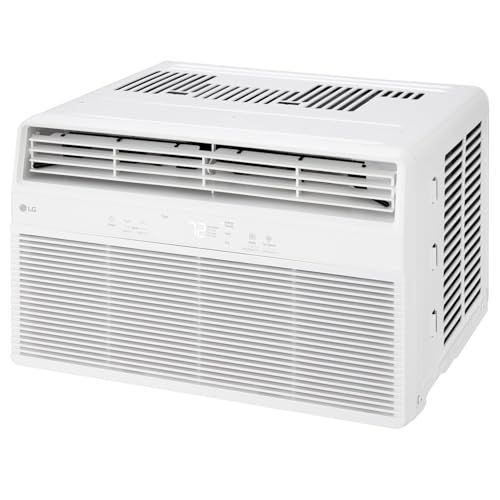
12,000 BTU 115V Window Air Conditioner: The Complete Buyer's Guide
A 12,000 BTU 115V window air conditioner is one of the most practical cooling solutions for larger bedrooms, open-plan living areas, and home offices. This guide explains sizing, efficiency, installation, and how to choose the right model for your space.
START WITH SIZINGWhy this capacity matters: A 12,000 BTU window AC sits in the sweet spot between compact single-room units and whole-home systems. Combined with a 115V power requirement, it offers strong cooling output while remaining compatible with standard household electrical setups in many homes. Understanding both numbers—cooling capacity and voltage—is essential before you buy.
What Is a 12,000 BTU 115V Window Air Conditioner?
A 12,000 BTU window air conditioner is a self-contained cooling unit designed to be installed in a double-hung or sliding window frame. The "12,000 BTU" figure describes its cooling capacity—British Thermal Units per hour—while "115V" refers to the voltage required to operate the unit, which aligns with standard North American household outlets.
These units are popular because they balance three factors: meaningful cooling power for medium-to-large rooms, relatively straightforward installation, and compatibility with common residential electrical circuits. Compared with smaller 5,000–8,000 BTU units, a 12,000 BTU model can handle more square footage and recover faster after doors open or the room heats up.
If you are still deciding between window, portable, and ductless options, the broader U-shaped window air conditioner format is also worth exploring for its quieter operation and flexible window fit.
What Room Size Does a 12,000 BTU AC Cool?
As a general rule, a 12,000 BTU air conditioner is recommended for rooms of approximately 450 to 550 square feet. However, this is a starting point, not a hard rule. The actual cooling performance depends on several environmental factors that can shift the effective coverage area up or down.
| Room Condition | Effect on Effective Coverage | Recommendation |
|---|---|---|
| Standard ceiling (8 ft), average insulation | Baseline coverage around 450–550 sq ft | 12,000 BTU is appropriate |
| High ceiling or vaulted ceiling | Reduces effective coverage; more air volume to cool | Consider a higher capacity or a ceiling fan to circulate air |
| Poor insulation or older windows | Reduces efficiency; cool air escapes faster | Improve sealing or step up capacity slightly |
| Direct sun exposure for most of the day | Adds heat load; may need more capacity | Use shading or choose a model with strong airflow |
| Kitchen or room with heat-generating appliances | Adds internal heat load | Size up within the 12,000 BTU range or add ventilation |
| Multiple occupants or frequent door openings | Increases cooling demand | Ensure the unit has adequate airflow and consider a slightly larger capacity |
For a more detailed breakdown of how capacity maps to square footage, see the guide on 12,000 BTU air conditioner room size. If your room is larger than about 550 square feet, you may want to explore higher-capacity options or consider a 12,000 BTU through-the-wall air conditioner for a more permanent installation.
Understanding the 115V Requirement
The 115V designation means the unit is designed to operate on a standard 115-volt household circuit. This is a significant advantage for renters and homeowners who do not want to install a dedicated 230V line. However, "standard voltage" does not mean "plug it into any outlet."
A 12,000 BTU 115V window air conditioner typically draws between 9 and 12 amps during normal operation, with a higher surge at startup. Most manufacturers recommend a dedicated 15-amp or 20-amp circuit. Sharing a circuit with other appliances can cause tripped breakers, flickering lights, or unsafe wiring conditions.
Circuit Capacity
Confirm the breaker amperage and whether the outlet is on a dedicated circuit. A 15-amp circuit is the minimum for many 12,000 BTU 115V models, while some require 20 amps.
Plug Type
Most 115V window ACs use a 5-15P or 5-20P plug. Verify that your outlet matches the plug type before purchase; adapters are not recommended for high-draw appliances.
Extension Cords
Avoid extension cords. If one is unavoidable, use a heavy-duty, short cord rated for the unit's amperage—but a direct outlet connection is always safer.
If you are comparing voltage options more broadly, the guide on 110V vs 240V air conditioner explains how voltage affects installation complexity and performance. For related formats, you may also find the 110 volt window air conditioner with heat overview useful if you want year-round functionality.
Energy Efficiency: What to Look For
Efficiency is one of the most important factors when choosing a 12,000 BTU 115V window air conditioner. The two ratings you will encounter most often are CEER (Combined Energy Efficiency Ratio) and EER (Energy Efficiency Ratio). Higher ratings indicate more cooling output per unit of electricity consumed.
Modern inverter-driven window units can significantly reduce energy use compared with older single-stage compressors because they modulate compressor speed instead of cycling on and off at full power. If quiet operation and efficiency are priorities, a 12,000 BTU inverter window air conditioner is worth considering.
| Tier | Typical Efficiency Characteristics | Best For |
|---|---|---|
| Entry-level tier | Basic single-stage compressor, standard efficiency rating | Occasional use, guest rooms, or short cooling seasons |
| Mid-range tier | Improved CEER, better airflow design, often with remote and timer | Daily use in bedrooms and living areas |
| High-end tier | Inverter compressor, higher CEER, quieter operation, smart features | Long cooling seasons, noise-sensitive spaces, energy-conscious households |
Key Features to Evaluate
Beyond BTU and voltage, the feature set determines how comfortable and convenient the unit is in daily use. The following features are most relevant for a 12,000 BTU 115V window air conditioner.
- Cooling modes and fan speeds: Multiple fan speeds allow you to balance airflow and noise. A "fan-only" mode is useful for circulating air without cooling.
- Dehumidification: Window ACs naturally remove moisture, but a dedicated dry mode can help in humid climates. Some models pair cooling and dehumidification more effectively.
- Thermostat and timer: A programmable timer and adjustable thermostat improve comfort and efficiency by matching operation to your schedule.
- Remote control and smart connectivity: Wi-Fi or app control is increasingly common and lets you adjust settings without crossing the room.
- Air filter accessibility: A washable, easily removable filter makes routine maintenance simpler and helps maintain airflow.
- Noise level: Check decibel ratings if the unit will be in a bedroom or home office. Inverter models are generally quieter.
- Window compatibility: Confirm the unit fits your window type and width; some models include window mounting kits and side panels.
- Heating function: If you need year-round comfort, a heat-capable model may be preferable. See the 12,000 BTU heat cool window air conditioner guide for details.
Installation Considerations
Installing a 12,000 BTU window air conditioner is generally a two-person job because these units are heavier than smaller window models. Proper installation affects safety, cooling performance, and energy efficiency.
Installation Advantages
- No ductwork required
- Compatible with standard 115V circuits in many homes
- Lower installation complexity than central or mini-split systems
- Can be removed seasonally if needed
Installation Challenges
- Requires a suitable window and secure mounting
- Heavier unit; two-person lift recommended
- May require a dedicated circuit or electrical check
- Window space is occupied while installed
Key installation steps include verifying the window frame strength, using the included mounting bracket or support, sealing gaps with insulation or side panels, and ensuring a slight outward tilt for condensate drainage. If you are comparing installation approaches, the HVAC installation resource and the window AC installation overview provide additional context.
For homes where window installation is not ideal, alternatives such as a 115 volt through-the-wall air conditioner or a space-saving air conditioner may be more suitable.
Maintenance Tips for Long-Term Performance
Routine maintenance keeps a 12,000 BTU window AC running efficiently and extends its service life. Most tasks are simple and require no special tools.
- Clean or replace the air filter every two to four weeks during peak cooling season, or more often in dusty environments.
- Inspect and clean the outdoor coils at the start of the season to remove debris and maintain heat exchange efficiency.
- Check the condensate drain for blockages; a tilted installation helps water drain properly.
- Seal window gaps with foam insulation or side panels to prevent cool air loss.
- Schedule professional service periodically for deeper cleaning and refrigerant checks. See HVAC cleaning and service for guidance.
Pros and Cons of a 12,000 BTU 115V Window AC
Advantages
- Strong cooling capacity for medium-to-large rooms
- Works with standard 115V household voltage
- No ductwork or major renovation required
- Lower upfront complexity than central systems
- Widely available in inverter and smart-enabled configurations
Limitations
- Requires a compatible window and secure mounting
- Can be heavy and awkward to install alone
- May need a dedicated circuit
- Blocks part of the window view
- Cooling is limited to the room where it is installed
Who Should Choose a 12,000 BTU 115V Window AC?
Flexible Cooling Without Renovation
Window units can be installed and removed without permanent modifications, making them a practical choice for rental properties.
Supplemental or Room-Specific Cooling
Ideal for bedrooms, living rooms, and home offices where central air does not reach or where zone cooling is preferred.
Focused Comfort for Work Spaces
A 12,000 BTU unit can keep a dedicated office comfortable during long workdays, especially in rooms with heat-generating equipment.
Targeted Cooling During Hot Months
If you only need cooling in one or two rooms during summer, a window AC avoids the complexity of a whole-house system.
Common Mistakes to Avoid
- Oversizing or undersizing: A unit that is too small will struggle to cool the room; one that is too large may cycle too quickly and leave humidity behind. Match capacity to the room's actual conditions.
- Ignoring the circuit: Plugging a 12,000 BTU unit into a shared circuit can cause repeated breaker trips. Verify the amperage and outlet type first.
- Poor window sealing: Gaps around the unit let hot air in and cool air out, reducing efficiency and comfort.
- Skipping filter maintenance: A clogged filter restricts airflow and forces the compressor to work harder.
- Improper tilt: Without a slight outward tilt, condensate may drip indoors or pool inside the unit.
- Using the wrong extension cord: High-draw appliances should be plugged directly into a compatible outlet whenever possible.
Related Guides and Resources
- 12,000 BTU Air Conditioner Room Size
- 12,000 BTU Inverter Window Air Conditioner
- 12,000 BTU Heat Cool Window AC
- 12,000 BTU Casement Window AC
- 12,000 BTU Through-the-Wall AC
- 115 Volt Window AC with Heat
- 110V vs 240V Air Conditioner
- U-Shaped Window Air Conditioner
- Window AC Installation Overview
- HVAC Installation Guide
- HVAC Cleaning and Service
- Space-Saving Air Conditioner
- 115 Volt Through-the-Wall AC
Ready to Compare 12,000 BTU 115V Window AC Models?
Explore feature-rich options from entry-level to high-end tiers. Check availability and compare cooling capacities, efficiency ratings, and installation requirements.
VIEW RECOMMENDED MODELSFrequently Asked Questions
What size room can a 12,000 BTU window air conditioner cool?
A 12,000 BTU window air conditioner is typically suited for rooms between approximately 450 and 550 square feet. Factors such as ceiling height, insulation, sun exposure, and the number of occupants can shift this range. Rooms with high ceilings, poor insulation, or heavy sun exposure may need more capacity, while well-insulated and shaded rooms may be adequately cooled within the lower end of that range.
Can a 12,000 BTU 115V window AC run on a standard household outlet?
Yes, many 12,000 BTU window ACs are designed for 115V operation and use a standard household plug type. However, they generally require a dedicated 15-amp or 20-amp circuit. Always verify the unit's electrical specifications and consult a qualified electrician if you are unsure about your home's wiring capacity.
How many amps does a 12,000 BTU 115V window AC draw?
Most 12,000 BTU 115V window air conditioners draw roughly 9 to 12 amps during normal operation, with a brief higher surge at startup. The exact amperage depends on the model's efficiency and compressor type. Check the product label or manual for the rated current and ensure the circuit is rated for the load.
Is an inverter 12,000 BTU window AC better than a non-inverter model?
Inverter models can modulate compressor speed, which often results in quieter operation, more stable temperatures, and better energy efficiency over long cooling periods. Non-inverter models typically cycle on and off at full power. The better choice depends on your priorities: inverter models are generally preferred for daily use in bedrooms and living areas, while non-inverter models may be sufficient for occasional use. See the inverter vs non-inverter comparison for a detailed breakdown.
Does a 12,000 BTU window AC need a dedicated circuit?
Most manufacturers recommend a dedicated circuit for a 12,000 BTU window air conditioner because of the amperage draw. Sharing a circuit with other high-draw devices can cause breaker trips and may pose a safety risk. If a dedicated circuit is not available, consult a licensed electrician to evaluate your setup.
Can I install a 12,000 BTU 115V window AC in a sliding window?
Many window air conditioners are designed for double-hung windows, but some models support sliding windows or casement windows with appropriate mounting kits. Always check the manufacturer's window compatibility specifications. For casement windows, a 12,000 BTU casement window air conditioner may be the correct format.