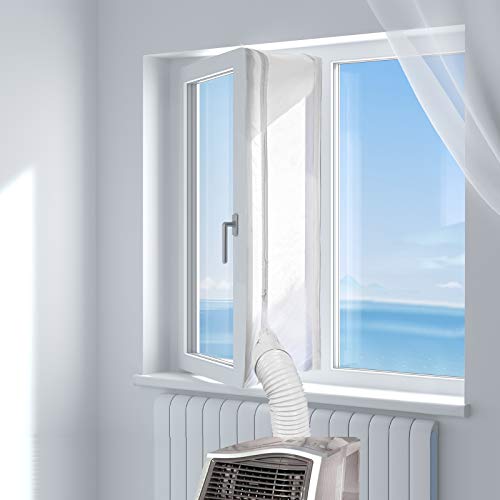
14 Inch Wide Casement Window Air Conditioner: The Complete Guide
Everything you need to know about choosing, sizing, and installing a casement window AC for narrow vertical windows — so you can cool your space efficiently and confidently.
What Is a 14 Inch Wide Casement Window Air Conditioner?
A 14 inch wide casement window air conditioner is a specialized cooling unit designed to fit into casement windows — those tall, narrow windows that crank open outward. Unlike traditional window ACs that sit horizontally in double-hung windows, casement units are built vertically to match the shape of these openings. Their compact width, typically around 14 inches, makes them one of the few cooling options for homes with casement-style windows.
If you have ever tried to install a standard window unit in a casement window, you already know the challenge. The horizontal frame, the crank mechanism, and the narrow opening simply do not accommodate a conventional AC. That is exactly why casement-specific units exist. They are engineered to sit vertically, often with a slim profile that slides into the window track or mounts through a specialized frame.
Key takeaway: A casement window AC is not simply a smaller version of a regular window unit. It is a purpose-built appliance with a vertical orientation, different mounting hardware, and often a different airflow design to match the narrow window opening.
Why Choose a Casement Window AC?
Casement windows are common in older homes, modern apartments, and certain architectural styles. They offer excellent ventilation and a clean look, but they present a real problem when it comes to air conditioning. Here is why a dedicated casement unit is often the best solution:
Perfect Fit for Narrow Openings
Designed specifically for vertical windows, these units slide into the narrow frame without blocking the crank mechanism or requiring permanent modifications.
No Window Replacement Needed
Instead of replacing your casement window with a double-hung model, a casement AC lets you keep the architectural character of your home intact.
Space-Saving Vertical Design
The vertical orientation means the unit does not protrude as far into the room, preserving floor space and keeping your layout clean.
Targeted Room Cooling
Most casement units are sized for single rooms — bedrooms, home offices, or small living areas — making them efficient for zone cooling.
For a broader look at space-saving cooling options, see our guide to space-saving air conditioners. If you are weighing different window styles, the U-shaped window air conditioner is another option worth exploring, though it is designed for double-hung windows rather than casement frames.
How to Size a Casement Window AC for Your Room
Getting the right cooling capacity is the single most important decision you will make. An undersized unit will run constantly and never fully cool the room. An oversized unit will cool too quickly, cycle on and off repeatedly, and leave the room feeling clammy because it does not run long enough to remove humidity. Both scenarios waste energy and shorten the unit's lifespan.
Quick BTU Reference by Room Size
| Room Size (sq ft) | Recommended BTU | Typical Use Case |
|---|---|---|
| Up to 150 | 5,000 – 6,000 | Small bedroom, nursery, studio corner |
| 150 – 250 | 8,000 – 10,000 | Standard bedroom, home office |
| 250 – 400 | 12,000 – 14,000 | Large bedroom, small living room |
| 400 – 550 | 14,000 – 18,000 | Open-plan living area, master suite |
These figures assume a standard ceiling height of about 8 feet, average insulation, and a moderate climate. You will need to adjust upward for rooms with high ceilings, large windows, direct sun exposure, or poor insulation. Kitchens generate extra heat, so add roughly 4,000 BTU for a kitchen setting. If you want a more detailed breakdown, our guide on 10,000 BTU air conditioner room size walks through the calculation step by step.
Pro tip: Casement units are most commonly available in the 8,000–12,000 BTU range. If your room requires more than 14,000 BTU, you may need to consider a different cooling solution, such as a single-zone ductless mini-split system, which offers higher capacity without window restrictions.
Key Features to Look For in a Casement Window AC
Beyond capacity, several features separate an entry-level casement unit from a high-end tier model. Understanding these differences will help you match the product to your priorities — whether that is quiet operation, energy efficiency, or smart-home integration.
1. Energy Efficiency (EER and CEER Ratings)
Window air conditioners use the EER (Energy Efficiency Ratio) or CEER (Combined Energy Efficiency Ratio) rating. A higher number means the unit converts more electricity into cooling. Entry-level models typically sit in the lower range, while premium units achieve significantly higher efficiency. If you plan to run the unit daily during summer, investing in a more efficient model pays off over time. Look for units that carry the ENERGY STAR label if efficiency is your top priority. Our 10,000 BTU air conditioner ENERGY STAR guide explains what the certification actually means in practice.
2. Noise Level
Casement units are often installed in bedrooms and home offices, so noise matters. Measured in decibels (dB), a quiet model runs around 50–55 dB on low, while a louder unit can exceed 60 dB. Mid-range and high-end tier models usually include sound-dampening insulation and variable fan speeds that let you drop to a quieter setting at night. If quiet operation is essential, look for models that advertise a low-noise compressor or a sleep mode.
3. Inverter vs. Non-Inverter Compressor
Inverter compressors adjust their speed continuously rather than switching fully on and off. This results in more stable temperatures, lower energy consumption, and quieter operation. Non-inverter units are simpler and typically sit at the entry-level tier. For a deep comparison, read our article on inverter AC vs non-inverter. Casement units with inverter technology are becoming more common, though they still represent a smaller share of the market than conventional window units.
4. Installation Kit and Window Compatibility
Not all casement windows are the same. Some units include a mounting frame that fits standard casement tracks, while others require a through-wall installation. Before buying, measure your window opening precisely — width, height, and depth — and compare it to the unit's specifications. A 14-inch wide unit is designed for openings that are roughly 14–15 inches wide, but the height and depth requirements vary by model. If your window is unusually shallow, a through-the-wall AC might be a better fit.
5. Additional Features
- Remote control and programmable timer: Convenient for setting cooling schedules.
- Wi-Fi and smart-home compatibility: Lets you control the unit from your phone or voice assistant.
- Dehumidification mode: Useful in humid climates, even when cooling demand is low.
- Auto-restart: Restores settings after a power outage.
- Washable filter: Easier maintenance and better long-term air quality.
Pros and Cons of Casement Window Air Conditioners
✅ Advantages
- Fits windows that cannot accommodate standard horizontal units
- Preserves the look and function of casement windows
- Vertical design saves interior floor space
- No major renovation or window replacement required
- Installation is typically straightforward for a qualified technician
- Ideal for renters who cannot modify the property
❌ Limitations
- Fewer models available compared to standard window units
- Higher entry-level tier compared to equivalent-capacity horizontal units
- Limited capacity range — most max out around 12,000–14,000 BTU
- Some models block part of the window opening, reducing natural light
- Installation can be tricky if the window frame is irregular
- Fewer smart-home and inverter options than mainstream window ACs
The limited selection is the biggest practical hurdle. Because casement ACs are a niche product, you will not find the same variety of brands and feature sets as you would with standard window units. That said, the models that do exist are purpose-built and generally reliable within their tier. If you are comparing against other window styles, our guide to the U-shaped window air conditioner shows what is available for double-hung frames.
Installation: What to Expect
Installing a casement window AC is not the same as sliding a standard unit into a double-hung window. The process typically involves:
- Measuring the window opening: Width, height, and depth are all critical. The unit's mounting frame must fit securely without gaps that let hot air in.
- Preparing the window: In some cases, the crank mechanism or a portion of the window sash needs to be removed or modified. This is why professional installation is often recommended.
- Mounting the unit: The AC is secured in the frame, often with support brackets that transfer weight to the window sill or wall.
- Sealing and insulating: Foam or weatherstripping fills gaps around the unit to prevent air leaks and water intrusion.
- Testing: The unit is powered on, airflow is checked, and drainage is verified.
For a professional installation, expect to contact a local HVAC contractor. Our guide to local heating and air conditioning companies explains how to vet a contractor before hiring. If you are handy and your window frame is standard, a DIY installation is possible, but it is not recommended for irregular openings or upper-floor windows. For a comparison of installation considerations across unit types, see our window AC installation guide.
Safety note: Casement units are heavy and can fall if not properly secured. Always use the manufacturer's mounting kit and follow the installation manual. If you are unsure about the structural integrity of your window frame, consult a professional.
Maintenance Tips for Long-Term Performance
A casement window AC will last longer and cool more effectively if you keep up with basic maintenance. Here is a simple routine:
- Clean or replace the filter every 2–4 weeks during peak season. A clogged filter restricts airflow and forces the compressor to work harder.
- Inspect the exterior for debris. Leaves, pollen, and dust can block the condenser coils, reducing efficiency.
- Check the seal around the unit. Weatherstripping degrades over time; replace it if you notice drafts or water leaks.
- Schedule a professional service annually. A technician can clean the coils, check refrigerant levels, and verify electrical connections. Our HVAC cleaning and service guide covers what a typical tune-up includes.
- Store the unit properly during the off-season. If you remove the AC in winter, clean it thoroughly and store it in a dry place.
If your unit is running but not blowing cold air, do not assume it is broken. Our troubleshooting guide on my air conditioner is running but not blowing air walks through the most common causes and fixes.
Casement AC vs. Other Cooling Options
If you have casement windows, a dedicated casement unit is usually the most practical choice. But it is worth understanding how it compares to alternatives:
| Option | Best For | Key Consideration |
|---|---|---|
| Casement Window AC | Narrow vertical windows | Purpose-built fit; limited model selection |
| Portable AC | Renters, rooms without window access | Requires venting through a window or wall; less efficient than window units |
| Ductless Mini-Split | Whole-room or multi-zone cooling | Higher upfront investment; requires professional installation |
| Through-the-Wall AC | Permanent installations | Requires wall modification; not suitable for renters |
For small rooms where a casement unit is too large or too complex to install, a mini air conditioner for room might be a better fit. If you are considering a mini-split but do not need heating, our guide to the mini-split air conditioner without heat pump explains the cooling-only options.
Buying Checklist: What to Confirm Before You Purchase
Before you commit to a specific model, run through this checklist:
- Measure your window opening — width, height, and depth. Compare to the unit's minimum and maximum dimensions.
- Calculate the required BTU for your room size, ceiling height, and sun exposure.
- Check the electrical requirements — most casement units run on 115V, but larger models may need a dedicated circuit. Our guide on 110V vs 240V air conditioner explains the difference.
- Decide on efficiency tier — entry-level, mid-range, or premium — based on how often you plan to use the unit.
- Confirm the mounting kit is included or available separately for your window type.
- Read the warranty terms — compressor coverage varies significantly between tiers.
- Check noise ratings if the unit will be in a bedroom or office.
Frequently Asked Questions
Will a 14 inch wide casement AC fit my window?
Not necessarily. A 14-inch width is a common specification, but you must also check the height and depth requirements. Measure your window opening carefully and compare it to the unit's installation guide. Some models require a minimum height of 20–21 inches and a minimum depth of 3–4 inches.
Can I install a casement window AC myself?
If your window frame is standard and you are comfortable with basic tools, a DIY installation is possible. However, many casement windows require modification to the crank mechanism or sash, and improper installation can lead to air leaks, water damage, or the unit falling. Professional installation is strongly recommended for irregular frames or upper-floor windows.
What is the highest BTU casement window AC available?
Most casement units top out around 12,000–14,000 BTU, which is enough for a room up to roughly 400–550 square feet. If you need more cooling capacity, a ductless mini-split or central system is a better option. Our guide to 12,000 BTU casement window air conditioner covers the upper end of the casement range.
Do casement ACs use more energy than regular window units?
Not inherently. Energy consumption depends on the unit's EER/CEER rating and how well it is sized for the room. A well-sized, efficient casement unit can be just as economical to run as a comparable horizontal window AC. The key is to match capacity to your room and choose the highest efficiency tier your usage justifies.
Can I use a casement AC in a sliding window?
No. Casement units are designed for vertical crank-open windows. Sliding windows require a different mounting approach, typically a standard horizontal window unit or a specialized slider kit. Using a casement unit in a sliding window will not provide a secure or weather-tight fit.
How do I know if my casement AC is the right size?
If the unit runs constantly on the hottest days and never reaches the set temperature, it is likely undersized. If it cools the room quickly but shuts off before removing humidity, leaving the room feeling damp, it is likely oversized. A properly sized unit runs in long, steady cycles and maintains comfortable humidity levels. Use our BTU table above as a starting point.
Ready to Choose the Right Casement AC?
You now have the sizing framework, feature checklist, and installation knowledge to make a confident decision. Browse our recommended casement window air conditioners below and compare the models that fit your window and your room.
View Recommended Models