10,000 BTU Air Conditioner Room Size: The Complete Guide
A 10,000 BTU air conditioner is one of the most popular capacities for single-room cooling. Learn exactly how much space it covers, which room types suit it best, and how to confirm it is the right match before you buy.
Find Your Room SizeQuick answer: A 10,000 BTU air conditioner typically cools a room of 250 to 400 square feet. That covers a large bedroom, a master suite, a small living room, or a medium home office. Rooms that are heavily sunlit, have high ceilings, or sit above a garage often need a higher-capacity unit.
What Room Size Does a 10,000 BTU Air Conditioner Cool?
The 10,000 BTU class sits in the middle of the portable and window AC market. It is large enough to handle an open bedroom or a compact living area, but small enough to plug into a standard household circuit in most cases. Manufacturers generally rate this capacity for a cooling area of roughly 250 to 400 square feet.
| Capacity Class | Typical Cooling Area | Best For |
|---|---|---|
| 5,000 – 6,000 BTU | Up to 150 sq ft | Small bedrooms, dorm rooms |
| 8,000 – 9,000 BTU | 150 – 250 sq ft | Standard bedrooms, home offices |
| 10,000 BTU | 250 – 400 sq ft | Master bedrooms, small living rooms, medium offices |
| 12,000 – 14,000 BTU | 400 – 600 sq ft | Large living rooms, open studios |
| 18,000 – 24,000 BTU | 600 – 1,000 sq ft | Open floor plans, multi-room zones |
The square footage number is a starting point, not a strict rule. Two rooms with the same dimensions can behave very differently. A north-facing bedroom with shaded windows may cool comfortably with a mid-range unit, while an identical room with west-facing glass and a flat roof may struggle. That is why the sizing tables used by HVAC professionals factor in more than floor area alone. If you want a deeper walkthrough of the calculation, see our guide on how to size an air conditioner.
Which Rooms Suit a 10,000 BTU Unit?
This capacity is versatile, but it performs best in enclosed, single-zone spaces. Here is how it lines up against common rooms:
Master Bedroom
A 300 to 400 square foot master bedroom is a near-perfect match. The unit runs long enough to dehumidify properly without short-cycling, which keeps the room comfortable through the night.
Small Living Room
A compact living room in the 250 to 350 square foot range cools well if it has a normal ceiling height and limited open doorways to other rooms.
Home Office
Medium home offices with heat-producing equipment benefit from this capacity, especially if you want faster cool-down after a meeting or a hot afternoon.
Studio Apartment
A studio under 400 square feet can be handled by one unit, though open layouts often push effective coverage toward the lower end of the range.
When to Size Up or Size Down
The 250 to 400 square foot estimate assumes average conditions. Adjust your target capacity using these factors:
- Ceiling height: Rooms with ceilings above 8 feet hold more air volume and may need a step up in capacity.
- Sun exposure: West-facing windows and unshaded glass add significant heat load. Shade with curtains or consider the next capacity class.
- Kitchen adjacency: An open kitchen adds cooking heat. If the room connects directly to a kitchen, size toward the upper end of the range.
- Occupancy: Two or more people in a room regularly adds body heat. A higher-capacity unit handles this better.
- Top floor or attic: Heat rises, so upper-floor rooms and attic conversions run hotter and need more capacity.
- Insulation and windows: Poor insulation, single-pane glass, and unsealed doors increase load. If you plan to improve these, a mid-range unit may be enough.
Oversizing has its own downside. A unit that is too large cools the air quickly but shuts off before removing humidity, leaving the room feeling cold and clammy. Undersizing runs constantly, wears faster, and never quite reaches the set temperature. The right capacity runs in longer, steadier cycles. Our article on what happens if an AC is too big or too small explains the trade-offs in more detail.
Types of 10,000 BTU Air Conditioners
Capacity is only half the decision. The form factor determines installation, portability, and how well the unit fits your room.
Window AC
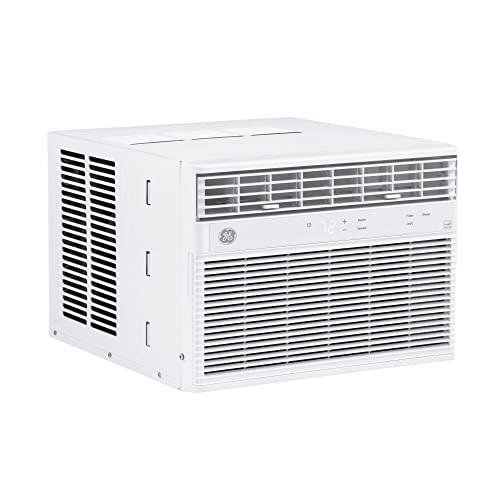
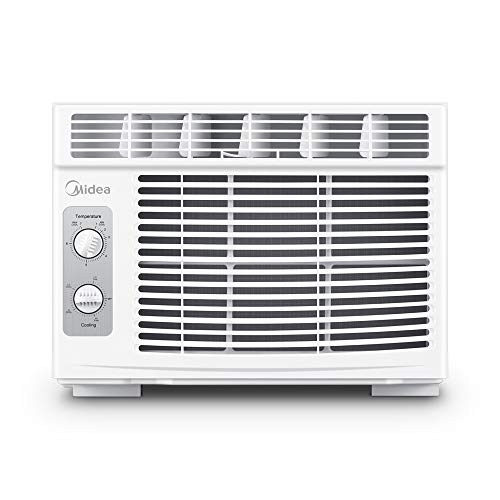
Installed in a window frame. Window units in this class are efficient at moving heat outdoors and are straightforward to mount. They suit rooms with a standard double-hung window and a dedicated outlet. See our guides on the 10,000 BTU window air conditioner and the 10,000 BTU AC for small windows for fit details.
Portable AC
Rolls between rooms and vents through a window kit. Portable units are flexible but typically less efficient than window models. Dual-hose designs perform better in larger spaces. Our overview of the 10,000 BTU portable air conditioner covers venting and placement.
Mini-Split
A permanent wall-mounted indoor unit paired with an outdoor condenser. Mini-splits are the quietest and most efficient option, and inverter models modulate output for steadier comfort. If you want fixed installation and long-term efficiency, see mini-split air conditioner without heat pump.
Through-the-Wall AC
Fits a sleeve in an exterior wall. This is a good option for rooms without a suitable window, or where a window unit would block the view. Our guide to the 10,000 BTU through-the-wall air conditioner explains sleeve sizing.
Energy Efficiency and Running Comfort
Two units with the same 10,000 BTU rating can behave very differently on the wall. Efficiency ratings such as SEER2 and CEER estimate how much cooling you get per unit of electricity. A higher rating means the compressor and fan run more economically over a season. Inverter compressors go further: instead of switching fully on and off, they ramp up and down to hold the set temperature. That usually means quieter operation, steadier humidity control, and better comfort in rooms that see a lot of use.
Our comparison of inverter vs non-inverter AC explains where each design fits best. If you want to understand the technical side, the guide on variable speed air conditioner covers how modulation works in practice.
Placement tip: Keep the air path clear. A unit that blows directly into furniture or a curtain loses cooling efficiency. Position the unit to circulate air across the room, and if using a window or portable unit, check that the exhaust or outdoor side is unobstructed.
Electrical and Installation Considerations
Most 10,000 BTU window and portable units run on 115 volts and draw around 8 to 10 amps. That means they usually work on a standard household outlet, but a dedicated circuit is safer for continuous operation. Shared circuits with other appliances can trip breakers. Before installation, confirm the outlet is grounded and the breaker rating matches the unit's requirements.
Mini-splits and larger through-the-wall units may require 240 volts and a dedicated circuit, which typically calls for a licensed electrician. Our comparison of 110V vs 240V air conditioner explains which installations need what. For window installations, the guide on window AC installation walks through support brackets and safe mounting.
What to Check Before Buying a 10,000 BTU AC
By this point you likely know the capacity range fits your room. The remaining checks are about fit, features, and long-term usability:
- Measure the room accurately: Length times width gives square footage. Include adjacent open areas only if they share the same air space.
- Confirm window or wall dimensions: Window and through-the-wall units have minimum and maximum opening sizes. Measure before ordering.
- Check the outlet and breaker: Match voltage and amperage to your home's wiring.
- Decide on features: Remote control, programmable timers, Wi-Fi control, and dehumidifier modes add convenience. A unit with a washable filter is easier to maintain.
- Consider noise level: Bedroom installations benefit from models rated at lower decibels. Inverter units are generally quieter at partial load.
- Plan maintenance: Filter cleaning every two to four weeks keeps performance steady. Seasonal coil cleaning prevents buildup. See HVAC cleaning and service for a schedule.
If you are weighing fixed versus portable options, the guide on space-saving air conditioner covers layouts where floor space is limited. For rooms with an existing window that cannot take a standard unit, a casement-compatible model may be the answer; see the 10,000 BTU casement window air conditioner overview.
Who Is a 10,000 BTU Unit Best For?
This capacity suits households that want to cool one room well rather than condition an entire home. It is a strong fit for renters who cannot modify ductwork, homeowners cooling a master suite or home office, and anyone who wants a straightforward installation with a standard outlet. It is less suitable for open-plan living areas above 400 square feet, rooms with extreme sun load, or spaces where quiet operation is the top priority. In those cases, a higher-capacity inverter mini-split or a two-zone setup is the better route.
If you are still comparing capacities across the lineup, our 10 thousand BTU air conditioner hub collects the related buying guides in one place. For a broader look at how room-by-room systems compare with whole-home options, see whole house AC system.
Frequently Asked Questions
What room size does a 10,000 BTU air conditioner cool?
A 10,000 BTU air conditioner typically cools a room between 250 and 400 square feet. The exact usable coverage depends on ceiling height, sun exposure, insulation quality, and the number of windows and doors in the room.
Is a 10,000 BTU AC good for a bedroom?
Yes. A 10,000 BTU unit is a solid match for a large bedroom or a master suite in the 300 to 400 square foot range. For smaller bedrooms under 250 square feet, a lower-capacity unit in the 8,000 BTU class is usually the better fit.
How many square feet will a 10,000 BTU window AC cool?
A 10,000 BTU window air conditioner generally cools 250 to 400 square feet. Window units in this class usually run on 115 volt power, so verify the outlet and circuit before installation.
Can a 10,000 BTU AC cool a living room?
It can cool a small to medium living room in the 250 to 350 square foot range. Open floor plans, high ceilings, and heavy sun exposure reduce effective coverage, in which case a higher-capacity or inverter model is a better choice.
The Bottom Line
A 10,000 BTU air conditioner is the right choice for a room of roughly 250 to 400 square feet under normal conditions. Measure the room, account for sun, ceiling height, and occupancy, then choose the form factor that fits your window, wall, or portability needs. If you size it correctly, this capacity class delivers reliable single-room comfort without the short cycling that comes from an oversized unit.