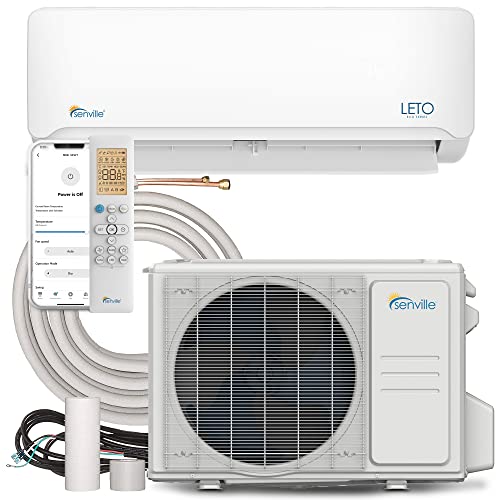
Mini Split Air Conditioner Without Heat Pump
A cooling-only ductless system can be the smartest choice when your climate never demands heating. This complete guide explains how these systems work, how to size one correctly, what to expect during installation, and which features truly matter for long-term comfort.
Start the GuideWhat Is a Mini Split Air Conditioner Without a Heat Pump?
A mini split air conditioner without a heat pump is a ductless cooling system designed to do exactly one job: remove heat and humidity from a room. It consists of an outdoor condenser unit and one or more indoor air-handling heads connected by a refrigerant line set. Unlike a heat pump mini split, which can reverse the refrigerant cycle to provide warmth in winter, a cooling-only model runs the refrigeration cycle in a single direction.
These systems are often described as "cooling-only ductless" or "AC-only mini splits." They are engineered around summer performance and tend to carry a simpler internal design. Because there is no reversing valve, defrost cycle, or heating-specific control logic, the component count is lower. That simplicity is one reason many homeowners find them an excellent match for hot, dry, or humid climates where a furnace or another heat source already handles the colder months.
If you are exploring the broader category first, our overview of a single-zone ductless mini split air conditioning system is a useful companion read. It explains how one outdoor unit pairs with one indoor head and why that configuration remains the most common entry point into ductless cooling.
It is important to distinguish these units from window or portable air conditioners. A cooling-only mini split is permanently mounted, uses a split-system architecture, and distributes air far more quietly and evenly than a window unit. It also avoids the security and aesthetic trade-offs of leaving a window partially open. For rooms where long-term comfort matters, that difference is significant.
Why Choose a Cooling-Only Mini Split?
The decision to skip a heat pump is usually driven by climate, existing infrastructure, or a desire for simplicity. In regions where winters are mild or where a separate heating system is already in place, paying for heating capability you will rarely use adds complexity without adding daily value. A cooling-only unit focuses its engineering budget on the part of the system you actually rely on.
Simpler Internal Design
No reversing valve or defrost controls means fewer components that can fail. The refrigeration cycle stays in cooling mode year-round.
Focused Cooling Performance
Because the system is tuned for one mode, indoor coils and airflow paths are optimized for heat removal and dehumidification.
Ideal for Warm Climates
In hot and humid regions, cooling and moisture control matter most. A dedicated AC-only unit excels at both without heating overhead.
Pairs With Existing Heat
If your home already has a furnace, boiler, or baseboard heat, a cooling-only mini split fills the summer gap without duplicating heating hardware.
Cleaner Installation Footprint
Fewer electrical and control requirements in some cases, and a more straightforward commissioning process compared with dual-mode systems.
Attractive for Additions
Garages, sunrooms, and converted attics often need cooling only. A ductless AC-only head solves that without extending ductwork.
Another practical consideration is longevity. A system that runs in a single mode experiences less mechanical cycling of reversing components. While modern heat pumps are highly reliable, the cooling-only architecture removes an entire subsystem from the reliability equation. For homeowners who value a long-term investment with minimal service drama, that matters.
It is also worth noting that cooling-only units are frequently chosen for server closets, home offices, and small commercial rooms where the primary concern is heat gain from equipment rather than seasonal temperature swings. In those spaces, the goal is steady heat removal, and a dedicated cooling system is the most direct tool for the job.
How a Cooling-Only Mini Split Works
The system relies on the same vapor-compression cycle used by every air conditioner. Refrigerant leaves the outdoor compressor as a high-pressure gas, releases heat to the outside air through the condenser coil, and condenses into a liquid. It then travels through the line set to the indoor unit, passes through an expansion device, and evaporates inside the evaporator coil. That phase change absorbs heat and moisture from the room air. A blower then pushes the cooled, dehumidified air back into the space.
In a heat pump, a reversing valve can flip the direction of refrigerant flow so the indoor coil becomes the condenser and delivers heat. A cooling-only mini split omits that valve entirely. The indoor coil always acts as the evaporator, and the outdoor coil always acts as the condenser. The control board, thermostat logic, and defrost routines are therefore simpler and dedicated to cooling performance.
Because the indoor and outdoor sections are separated, the noisiest components, the compressor and condenser fan, sit outside the living space. The indoor head contains only the evaporator coil and a quiet blower, which is why ductless systems are prized for near-silent operation. This split architecture also allows each indoor head to be controlled independently in multi-zone setups, though single-zone configurations remain the most common for cooling-only applications.
For readers who want a deeper look at how the technology compares, our guide on inverter vs. non-inverter AC systems explains why compressor modulation has become the default in modern ductless equipment and how it affects comfort and energy use.
Sizing a Cooling-Only Mini Split
Correct sizing is the single most important decision in any air conditioning project. An undersized system runs continuously and never fully satisfies the load. An oversized system cools the air quickly but leaves humidity high, cycles on and off frequently, and wears out components faster. For a ductless cooling-only head, the goal is to match the unit's capacity to the room's actual heat gain.
Capacity is measured in British thermal units, or BTU. A common rule of thumb is roughly 20 BTU per square foot for average residential spaces, but that shortcut ignores ceiling height, window area, insulation quality, sun exposure, and occupant load. A west-facing room with large single-pane windows can need substantially more capacity than an interior room of the same size. Treat any rule of thumb as a starting point, not a final answer.
Quick Reference by Room Size
| Room Area | Typical Cooling Capacity | Common Use Case | System Tier Often Selected |
|---|---|---|---|
| Up to 150 sq ft | 5,000 – 6,000 BTU | Bedroom, small office, nursery | Entry-level |
| 150 – 250 sq ft | 8,000 – 10,000 BTU | Primary bedroom, small studio | Entry-level to mid-range |
| 250 – 400 sq ft | 12,000 – 14,000 BTU | Living room, open-plan kitchen | Mid-range |
| 400 – 600 sq ft | 18,000 – 24,000 BTU | Large living area, small addition | Mid-range to premium |
| 600 – 900 sq ft | 24,000 – 30,000 BTU | Open-concept great room, garage | Premium |
Planning note: A professional load calculation is always recommended before finalizing capacity. If you are working through sizing for a smaller space, our guide on mini air conditioners for a room walks through the variables that most often shift a recommendation up or down.
Ceiling height deserves special attention. Standard calculations assume roughly eight-foot ceilings. If your space has cathedral ceilings or a lofted design, the air volume is larger than the floor area suggests, and capacity should increase accordingly. Similarly, kitchens generate cooking heat and moisture, while home gyms produce occupant heat. Both should be factored into the final selection.
For very small loads, such as a converted closet office or a compact bedroom, a 1-ton mini split is often more capacity than necessary, and a smaller head may be the better fit. The key is not to default to the smallest available unit, but to match capacity to the calculated load with a modest safety margin.
Features That Matter in a Cooling-Only Unit
Once capacity is settled, the feature set determines day-to-day satisfaction. Cooling-only systems share the same fundamental hardware, but manufacturers differentiate on control quality, airflow design, filtration, and connectivity. The following features are the ones most likely to affect how the system feels in real use.
Inverter Compressor
An inverter-driven compressor varies its speed instead of cycling between full on and full off. In cooling-only systems, this translates to steadier room temperature, better humidity control, and quieter operation. Inverter technology has become the standard in mid-range and premium ductless equipment. Our comparison of inverter and non-inverter systems explains the trade-offs in more detail.
Variable-Speed Air Handler
The indoor blower also benefits from variable speed. At low demand, the fan runs slowly and quietly, which improves dehumidification and reduces drafts. A variable-speed air conditioner generally feels more refined than a fixed-speed unit, especially in bedrooms and home offices.
Filtration and Air Quality
Most indoor heads include washable mesh filters and may accept optional high-efficiency media. If allergies are a concern, look for models with multi-stage filtration or an ionizer option. Keep in mind that filtration adds resistance to airflow, so filter maintenance becomes even more important over time.
Smart Controls and Thermostats
Wi-Fi capability allows scheduling and remote adjustment, which is useful for rooms used on a predictable schedule. Some systems support third-party thermostats, while others rely on proprietary remotes or apps. If integration with a smart home platform matters, verify compatibility before purchase. Our thermostat guide covers the control options that pair well with ductless heads.
Quiet Operation
Manufacturers publish indoor and outdoor sound levels. For bedrooms, an indoor rating in the low 20s decibel range is preferable. Outdoor sound matters if the condenser sits near a patio or a neighbor's window. A premium-tier unit often invests more in fan blade design and compressor isolation, which shows up directly in these numbers.
Physical Footprint and Aesthetics
Indoor heads vary in width and depth. In tight rooms, a narrower head may be the deciding factor. Outdoor condensers also differ in size, which matters for balconies and side yards. If space is constrained, our article on space-saving air conditioners offers additional perspective on compact configurations.
Drainage Options
Condensate must go somewhere. Gravity drains are simplest when the indoor head can be mounted high enough to slope toward an exterior wall. Where gravity is not possible, a condensate pump is used. Confirm the drain strategy during the site survey, because it influences both placement and long-term reliability.
Installation and Electrical Considerations
A mini split installation is not a weekend DIY project in most jurisdictions. It requires refrigerant handling, vacuuming the line set, torqueing flare connections to specification, and verifying charge. Many regions also require a permit and a licensed technician. The quality of the installation has a larger effect on system lifespan than the brand name on the box.
Electrical Requirements
Most residential cooling-only mini splits run on dedicated 208/230-volt circuits, though small single-zone units may operate on 115 volts. The circuit must be sized to the unit's rated amperage, and a disconnect is typically required near the outdoor unit. Before committing to a model, confirm the electrical panel has available capacity. Our guide comparing 110V and 240V air conditioners explains why voltage choice matters for both performance and installation logistics.
Indoor and Outdoor Placement
The indoor head should be positioned to throw air across the room rather than directly at occupants. High-wall mounting is standard, but ceiling cassettes and floor consoles exist for rooms where wall space is limited. The outdoor unit needs clearance for airflow, a stable base, and a location that minimizes line-set length and elevation change. Longer line runs reduce capacity and require additional refrigerant, so shorter is better when practical.
Line Set and Drain Routing
The line set carries refrigerant between the two sections. It should be routed with gentle bends, secured to the wall, and protected from UV where exposed. The condensate drain must slope continuously and terminate where water will not cause damage. In cold climates, an outdoor drain line can freeze, which is another reason cooling-only systems are most comfortable in warm-weather applications.
Commissioning and Testing
After evacuation and charge verification, the installer should measure supply and return air temperatures, confirm the system reaches its target in a reasonable time, and check for leaks at flare connections. A thorough commissioning report is a sign of professional work. If you are comparing quotes, our overview of HVAC installation outlines what a complete installation should include.
If you plan to hire a local company, it helps to understand how to evaluate them. Our guide on local heating and air conditioning companies covers licensing checks, insurance verification, and the questions that reveal whether a contractor is set up for ductless work.
Maintenance and Longevity
Cooling-only mini splits are relatively low-maintenance, but they are not maintenance-free. The indoor filter is the most frequent service item. Depending on dust levels and runtime, it should be rinsed every two to four weeks during heavy-use seasons. A clogged filter reduces airflow, forces the blower to work harder, and can cause the evaporator coil to ice over.
The indoor coil and blower wheel should be cleaned periodically by a technician. In humid climates, the drain pan and drain line need attention to prevent mold growth and clogs. The outdoor condenser coil should be kept free of leaves, pollen, and debris. A simple rinse with a garden hose, with power disconnected, is often sufficient between professional visits.
Annual or biannual professional service extends equipment life and preserves efficiency. A technician will check refrigerant charge, electrical connections, capacitor health, and condensate drainage. Our article on HVAC cleaning and service explains what a thorough visit includes and how to tell whether a service plan is appropriate for your situation.
Long-term reliability also depends on proper sizing and installation. A system that is correctly matched to the load, mounted on a stable surface, and commissioned with the correct charge will generally outlast one that was rushed into place. If you are evaluating brands, our overview of the most reliable mini split brands discusses the factors that separate durable equipment from the rest.
Cooling-Only vs. Heat Pump Mini Split
The most common question buyers ask is whether they should choose a cooling-only system or a heat pump. The answer depends almost entirely on climate and existing heating infrastructure. The table below summarizes the practical differences.
| Consideration | Cooling-Only Mini Split | Heat Pump Mini Split |
|---|---|---|
| Primary function | Cooling and dehumidification only | Heating and cooling, reversible |
| Internal complexity | Simpler; no reversing valve | More components; reversing valve and defrost logic |
| Best climate | Hot, humid, or mild-winter regions | Mixed climates with meaningful heating demand |
| Existing heat source | Assumes furnace, boiler, or baseboard already present | Can replace or supplement existing heating |
| Installation scope | Slightly simpler electrical and control setup | Similar mechanical scope with added mode controls |
| Maintenance focus | Cooling-side components and drainage | Cooling plus heating-mode checks and defrost performance |
| Ideal use case | Additions, garages, sunrooms, warm-climate homes | Year-round comfort in one system |
If you already have a wall-mounted heater or baseboard system and your winters are short, a cooling-only unit is a logical fit. If you are looking for a single system to handle both seasons, a heat pump is the more flexible choice. Neither is inherently superior; they solve different problems.
For a broader look at whole-home options, our guide on whole house AC systems explains how ductless and ducted approaches compare at the household level. If you are also considering a wall unit with heating capability, the article on wall air conditioners with heat covers that alternative in detail.
Frequently Asked Questions
In most cases, no. The outdoor unit on a cooling-only system lacks a reversing valve and the associated control logic, and the indoor coil is not configured for heating duty. Converting would require replacing major components, which is rarely practical. If there is any chance you will need heating in the future, choose a heat pump model from the start.
Efficiency ratings are generally comparable between well-matched cooling-only and heat pump models in cooling mode. The heat pump carries additional hardware that is inactive during cooling, but modern designs manage that overhead well. The bigger efficiency factors are correct sizing, inverter technology, and installation quality.
Yes. Any air conditioner removes moisture as a byproduct of cooling, and ductless systems with variable-speed blowers are particularly good at maintaining low fan speeds that maximize moisture removal. If humidity control is a priority, look for a model with a dedicated dry mode and avoid oversized capacity.
A straightforward single-zone installation typically takes a few hours to a full day, depending on line-set routing, electrical work, and whether a permit inspection is involved. Multi-zone systems and difficult wall penetrations take longer. A professional site survey will give you a more precise estimate.
Refrigerant handling is regulated in many jurisdictions, and improper installation can void the manufacturer's warranty. While some homeowners handle site preparation and finish work, the refrigerant circuit should be commissioned by a licensed technician. The installation quality directly affects efficiency, comfort, and equipment lifespan.
They are often an excellent fit, provided the space is reasonably insulated and has access for line-set routing. Garages and sunrooms frequently need cooling without heating, and a dedicated ductless head delivers comfort without extending ductwork. A load calculation that accounts for solar gain and equipment heat is essential in these spaces.
Most residential units in this category use a dedicated 208/230-volt circuit, while smaller single-zone systems may run on 115 volts. The exact requirement is model-specific and should be verified against the installation manual before any electrical work begins.
Yes, multi-zone cooling-only systems exist and allow several indoor heads to share one outdoor condenser. This is useful for cooling several rooms with a single installation. However, multi-zone systems require careful load balancing and should be designed by a professional to ensure each zone receives adequate capacity.
Final Verdict
A mini split air conditioner without a heat pump is a focused, dependable solution for spaces that only need cooling. It removes the complexity of a reversing valve and heating controls while delivering the quiet, efficient, duct-free comfort that ductless systems are known for. In warm climates, in add-on rooms, and in homes that already have a dedicated heat source, the cooling-only architecture is a natural fit.
The decision comes down to two questions: do you need heating from this system, and how well does the space match the capacity you are considering? If the answer to the first is no and the second is handled with a proper load calculation, a cooling-only mini split is a solid long-term investment. If there is any realistic chance you will want heating later, choose a heat pump model instead. Both are good systems; the right choice is the one that matches the actual demand.
Before finalizing any purchase, confirm the electrical requirements, plan the indoor and outdoor placement, and verify that a licensed installer will commission the system correctly. Those steps matter more than any single feature on a specification sheet.