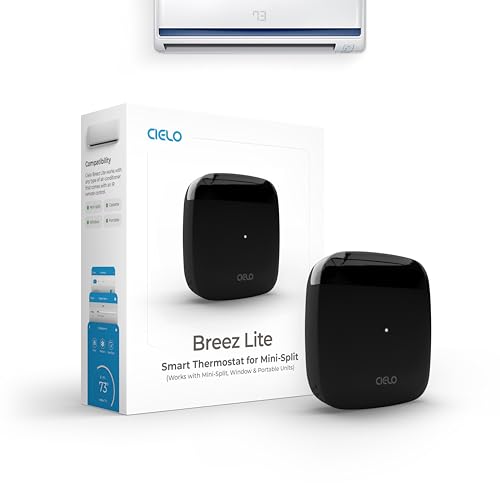
Wireless Air Conditioner Thermostat: Smart Cooling Control
Discover how wireless AC thermostats give you precise, convenient control over your cooling system—and learn what to check before you upgrade your home's thermostat.
START LEARNINGAC Units Guide Philosophy: A thermostat is the command center of your cooling system. Understanding wireless control technology helps you make an informed decision, avoid compatibility pitfalls, and get the most comfort from every cooling cycle.
What Is a Wireless Air Conditioner Thermostat?
A wireless air conditioner thermostat is a control device that manages your AC system without relying on a continuous physical low-voltage wire run between the thermostat and the indoor air handler. Instead, it uses Wi-Fi, radio frequency, or a proprietary wireless protocol to transmit cooling commands and receive temperature readings. This makes installation more flexible, especially in homes where running new thermostat wiring through finished walls is impractical.
Modern wireless thermostats have evolved far beyond simple remote temperature sensors. Many now include app-based control, scheduling, geofencing, humidity monitoring, and integration with voice assistants and smart home platforms. For homeowners researching a wireless HVAC thermostat, the key decision is matching the device's communication method and feature set to the specific AC system in the home.
It is important to distinguish between a thermostat that is "wireless" in the sense of communicating with the equipment, and one that is "smart" in the sense of learning and automating. Many current models are both. If you are exploring broader options for wireless air conditioner control, start by confirming your system's control voltage and thermostat protocol before selecting a device.
Key Features of Wireless AC Thermostats
Wireless Communication
Connects to the AC system or a wireless receiver using Wi-Fi, RF, or proprietary signals, reducing the need for dedicated thermostat wiring runs.
App & Remote Control
Adjust temperature, modes, and schedules from a smartphone or tablet, whether you are in another room or away from home.
Programmable Scheduling
Set cooling periods aligned with household routines to reduce unnecessary runtime and improve energy efficiency.
Geofencing
Automatically switch to an efficient setpoint when everyone leaves and resume comfort settings when someone returns.
Remote Sensors
Some systems support additional wireless temperature sensors placed in different rooms for more representative readings.
System Compatibility Checks
Quality wireless thermostats include compatibility guidance for conventional, heat pump, and multi-stage systems.
Benefits of Upgrading to Wireless Control
- Flexible placement: Install the thermostat where temperature readings are most representative, even if existing wiring is limited.
- Convenient adjustments: Change settings from your phone instead of walking to a wall-mounted unit.
- Better scheduling discipline: Automated setbacks reduce cooling during unoccupied periods.
- Clearer system feedback: Many wireless thermostats display runtime, filter reminders, and maintenance alerts.
- Integration potential: Works with voice assistants and smart home routines for hands-free control.
Key takeaway: Wireless control is most valuable when it solves a real installation or usability problem. If your current thermostat location is poor or wiring is difficult to extend, a wireless model can be a practical improvement rather than just a feature upgrade.
Wireless Thermostat Tiers Compared
Wireless thermostats vary widely in capability. The table below groups typical models by market tier so you can match features to your needs without relying on numeric comparisons.
| Tier | Best For | Typical Capabilities |
|---|---|---|
| Essential Tier | Basic wireless control and straightforward scheduling | Wireless receiver, app control, 7-day scheduling, simple display, limited smart home integration |
| Balanced Tier | Households wanting convenience and efficiency features | Geofencing, remote sensors support, humidity display, voice assistant compatibility, detailed runtime reports |
| Premium Tier | Multi-zone homes and advanced automation | Multiple sensor support, advanced scheduling logic, HVAC system diagnostics, broader smart platform integration |
| Flagship Tier | Whole-home comfort optimization and complex systems | Learning algorithms, occupancy prediction, detailed energy reporting, compatibility with variable-speed and zoned equipment |
When comparing tiers, remember that higher-tier models often add value through better automation and diagnostics rather than simply more screen features. For homes with zoned HVAC system layouts, premium or flagship wireless thermostats may be necessary to manage multiple zones effectively. For simpler single-zone setups, an essential or balanced tier device often covers the essentials well.
What to Check Before You Choose
System Compatibility
Confirm voltage, control board type, and supported thermostat protocols. Heat pump systems and multi-stage equipment may require specific model support. If your AC is not responding correctly, review thermostat set to cool but AC not turning on before assuming the thermostat is the problem.
Power Source
Some wireless thermostats need a C-wire or power adapter. Check whether your existing wiring includes a common wire or whether the chosen model offers a power kit. This is especially relevant in older homes.
Wireless Protocol
Wi-Fi is common and integrates with smart home systems. RF and proprietary protocols may offer stronger reliability in specific installations but can limit third-party integration. Match the protocol to your home network and automation goals.
Sensor Placement
Wireless thermostats work best when placed away from direct sunlight, supply registers, and exterior doors. Remote sensor support can help balance readings in larger or multi-room spaces.
Zoning Integration
If your home uses zoned air conditioning, verify that the thermostat supports zone controller communication. A standard wireless thermostat may not manage damper-based zoning without additional hardware.
Warranty and Support
Check manufacturer support resources and warranty terms. Installing a thermostat that is not compatible with your system can affect equipment warranty coverage. When in doubt, consult a qualified HVAC technician.
Installation and Setup Guidance
Many wireless thermostats are designed for straightforward replacement of an existing low-voltage thermostat. The typical process involves turning off power at the air handler, labeling existing wires, mounting the new base, connecting wires, and completing a configuration wizard. For models that rely on a wireless receiver installed near the air handler, the receiver must be wired into the control board, which may require professional assistance.
If your system uses a 24V AC thermostat interface, most standard wireless thermostats are compatible. However, line-voltage systems, mini-splits with proprietary controllers, and some packaged units may need manufacturer-specific solutions. Always verify the control voltage before purchasing. For broader context on how thermostats interact with the rest of the system, see the AC controller overview.
Frequently Asked Questions
A wireless air conditioner thermostat is a control device that communicates with your AC system without physical low-voltage wiring between the thermostat and the air handler. It typically uses Wi-Fi, radio frequency, or a proprietary wireless protocol to send cooling commands and receive temperature data.
Many wireless thermostats are designed for straightforward DIY installation when replacing an existing low-voltage thermostat. However, if your system requires new wiring, a C-wire adapter, or integration with a zoned HVAC setup, professional installation is recommended to ensure proper operation and warranty compliance.
Compatibility depends on the AC system voltage, control board, and thermostat protocol. Most modern central AC systems and mini-splits work with standard 24V wireless thermostats. Ductless systems sometimes require manufacturer-specific wireless controllers. Always verify compatibility with your system before purchasing.
Wireless thermostats enable scheduling, geofencing, remote control, and adaptive temperature management. These features reduce unnecessary runtime by aligning cooling with occupancy patterns and household routines, which lowers energy consumption over time.
A wireless thermostat uses a wireless connection to communicate with the HVAC equipment. A smart thermostat is a broader category that includes wireless communication plus app control, learning algorithms, geofencing, and integration with smart home platforms. Many modern wireless thermostats are also smart thermostats.
Ready to Choose the Right Wireless Thermostat?
Compare top-rated wireless AC thermostats and find the model that fits your system, your routine, and your comfort goals.
View Recommended ModelsContinue Your Research
If you are still mapping out your overall cooling setup, these related topics can help you connect thermostat choices to the rest of your system. Learn about AC dampers if you are considering zone control, or review wireless air conditioner thermostat options alongside your broader zoned cooling with mini-split planning. For homes with humidity concerns, the article on what is a good humidity level for a home provides useful context for thermostat humidity features.