
14000 BTU Portable Air Conditioner Room Size: Complete Coverage Guide
Learn exactly how much space a 14000 BTU portable air conditioner can cool, which factors affect real-world performance, and how to choose the right unit for your room.
EXPLORE COVERAGEQuick Answer: A 14000 BTU portable air conditioner is generally designed for rooms between 500 and 700 square feet. However, real-world performance depends on ceiling height, insulation, window exposure, occupant count, and the number of heat-generating appliances in the space. This guide breaks down every factor so you can make a confident decision.
Understanding 14000 BTU and Its Room Coverage
BTU (British Thermal Unit) measures cooling capacity. A 14000 BTU portable air conditioner sits in the upper-mid-range of portable cooling, making it a strong candidate for large bedrooms, open-plan living areas, and small commercial spaces. To understand how BTU translates to square footage, it helps to start with the standard baseline.
The Standard BTU-to-Square-Foot Rule
The widely used baseline is approximately 20 BTU per square foot for a room with standard 8-foot ceilings, average insulation, and moderate sun exposure. Applying that formula:
- 14000 BTU ÷ 20 BTU/sq ft = 700 sq ft as the upper boundary under ideal conditions.
- A more conservative estimate of 25 BTU per square foot yields 560 sq ft, which accounts for typical real-world inefficiencies.
In practice, most manufacturers rate 14000 BTU portable units for 500 to 700 square feet. If your room falls within that range, a 14000 BTU unit is likely a solid match. If it falls below 500 sq ft, you may be oversizing; if it exceeds 700 sq ft, you will need to adjust expectations or consider a second unit.
Important: Portable air conditioners are single-zone cooling devices. Unlike a central system, they cannot push cooled air through ducts into adjacent rooms. A 14000 BTU portable AC cools the room it sits in — not the whole house.
Room Size Coverage at a Glance
The table below provides a practical reference for how a 14000 BTU portable air conditioner performs across different room sizes and conditions.
| Room Size (sq ft) | Cooling Performance | Recommended Tier | Best For |
|---|---|---|---|
| 300 – 450 sq ft | Rapid, powerful cooling | Mid-range to high-end | Large bedrooms, studios |
| 450 – 550 sq ft | Very effective with proper placement | Balanced tier | Open living rooms, home offices |
| 550 – 700 sq ft | Adequate under standard conditions | Balanced to top-tier | Open-plan apartments, lofts |
| 700 – 850 sq ft | Marginal; may struggle in heat waves | Top-tier only | Well-insulated, shaded spaces |
| 850+ sq ft | Insufficient as a sole cooling source | Not recommended alone | Use with a second unit or central system |
Notice that the "recommended tier" column uses quality descriptors rather than numeric ratings. A balanced-tier 14000 BTU unit from a reputable brand will typically outperform an entry-level unit with the same nominal BTU rating, because build quality, compressor efficiency, and airflow design all influence real-world cooling.
7 Factors That Change Real-World Coverage
Square footage alone is an incomplete measure. The following factors can shift effective coverage by 20–40% in either direction. Before finalizing a 14000 BTU portable air conditioner for your room size, evaluate each one honestly.
1. Ceiling Height
The 20 BTU/sq ft rule assumes 8-foot ceilings. If your ceiling is 10 feet, the room volume is 25% larger, and you should treat the space as though it were 25% bigger in square footage. A 600 sq ft room with a 10-foot ceiling effectively behaves like 750 sq ft — pushing beyond the comfortable range of a single 14000 BTU portable unit.
2. Insulation Quality
Well-insulated walls, energy-efficient windows, and sealed doors keep cooled air inside and hot air outside. Older homes with minimal insulation or single-pane windows will lose cooling efficiency rapidly, reducing effective coverage. If your space is poorly insulated, size down your expectations or consider space-saving air conditioner solutions that complement a portable unit.
3. Sun Exposure and Window Area
West- and south-facing rooms with large, unshaded windows absorb significant solar heat. A 600 sq ft room with floor-to-ceiling west-facing glass can overwhelm a 14000 BTU unit during peak afternoon hours. Blackout curtains, exterior shading, and window film can recover much of that lost capacity.
4. Occupant Count
Each person contributes roughly 400–600 BTU of sensible heat. A room rated for four people that regularly holds eight will feel under-cooled. Add approximately 600 BTU per additional occupant beyond the standard two-person assumption when calculating your needs.
5. Heat-Generating Appliances
Kitchens, home offices with multiple monitors, and entertainment rooms with large TVs all add heat load. A kitchen with an active oven can add several thousand BTU to the cooling demand. If your 14000 BTU portable AC shares space with heat-generating equipment, effective coverage shrinks accordingly.
6. Ceiling Fans and Air Circulation
Portable air conditioners cool the air in their immediate vicinity first. Without air circulation, cool air pools near the unit while the far side of the room stays warm. Ceiling fans, floor fans, or the unit's own oscillating louvers help distribute cooled air. A room with good circulation feels effectively larger for the same BTU output.
7. Climate and Outdoor Temperature
Portable ACs perform best when the outdoor temperature is 85–95°F. During extreme heat waves above 100°F, the unit's compressor works harder and delivers less net cooling. In consistently hot climates, a mini-split air conditioner without heat pump may offer more stable performance for large spaces.
How to Calculate Your Room's Actual Cooling Need
Rather than relying on a single square-footage number, use this step-by-step method to determine whether a 14000 BTU portable air conditioner is right for your space.
Step 1: Measure the Room Volume
Multiply length × width × ceiling height to get cubic feet. For example, a 25 ft × 24 ft room with a 9-foot ceiling is 5,400 cubic feet.
Step 2: Apply the Base BTU Formula
Multiply cubic feet by a base factor of 2 to 3 BTU per cubic foot. Using 2.5 as a middle estimate: 5,400 × 2.5 = 13,500 BTU. This places the room right at the edge of 14000 BTU capability.
Step 3: Add Heat Load Adjustments
- Sunny windows: add 10–20% of base BTU per unshaded, sun-facing window.
- Each additional occupant beyond two: add 600 BTU.
- Kitchen area: add 4,000 BTU if a stove or oven is used regularly.
- Poor insulation: add 15–25% of base BTU.
- High ceiling (above 9 ft): add 10% per additional foot.
Step 4: Compare and Decide
If your adjusted total lands between 12,000 and 15,000 BTU, a 14000 BTU portable AC is a well-matched choice. If your adjusted total exceeds 16,000 BTU, you should either reduce the heat load through shading and insulation improvements, or explore a 12000 BTU portable air conditioner room size guide for a second unit, or consider a single-zone ductless mini-split air conditioning system for superior large-room performance.
Pro Tip: When in doubt, slightly oversizing a portable AC is better than undersizing it. A 14000 BTU unit in a 550 sq ft room will cycle less aggressively and maintain temperature more evenly than a smaller unit working at maximum capacity.
Portable AC vs Other Cooling Options for Large Rooms
A 14000 BTU portable air conditioner is one option among several for cooling a large room. Understanding the trade-offs helps you choose the best fit for your situation.
14000 BTU Portable AC
- Best for: renters, rooms without ductwork, flexible placement across rooms.
- Advantages: no permanent installation, moves between rooms, relatively simple setup with a window kit.
- Limitations: requires exhaust venting through a window, single-room cooling only, produces some noise, needs a dedicated circuit for continuous operation.
Window Air Conditioner
- Best for: permanent cooling in rooms with compatible windows.
- Advantages: more energy-efficient than portable units, stable installation, often more cooling per BTU.
- Limitations: window-specific fit, blocks part of the window, harder to move. See our U-shaped window air conditioner guide for a modern alternative that preserves window function.
Mini-Split System
- Best for: permanent whole-room or multi-room cooling with maximum efficiency.
- Advantages: quiet operation, superior efficiency, better air distribution, no window blockage.
- Limitations: professional installation required, higher upfront investment. If you are comparing reliability, our guide to the most reliable mini-split brand can help.
Central Air Conditioning
- Best for: whole-home cooling with existing ductwork.
- Advantages: consistent whole-house comfort, out of sight, adds resale value.
- Limitations: requires ducts, professional installation, higher initial outlay. Learn more about HVAC installation considerations before committing.
Choosing the Right 14000 BTU Portable AC Tier
Not all 14000 BTU portable air conditioners are built to the same standard. The tier system below helps you align your expectations with the quality level of the unit you choose.
Entry-Level
Basic cooling functions, single-hose exhaust, manual controls or simple remote. Best for occasional use in moderately sized rooms with good insulation.
Mid-Range
Dual-hose or optimized single-hose design, programmable thermostat, sleep mode, improved airflow. A solid choice for daily use in primary living spaces.
Premium
High-efficiency compressor, advanced humidity control, smart-home integration, quieter operation, and durable construction. Well-specified for demanding large-room cooling.
When evaluating options, focus on hose configuration (dual-hose units cool more efficiently), noise ratings, dehumidification capacity, and whether the unit offers programmable scheduling. A balanced-tier model is often the sweet spot for large-room residential use, while top-tier units make sense for spaces where quiet operation and advanced control matter.
For buyers comparing inverter-driven options, our guide on inverter AC vs non-inverter explains how compressor technology affects energy use and temperature stability in portable and fixed systems alike.
Placement Tips for Maximum Cooling in Large Rooms
Even a well-matched 14000 BTU portable air conditioner underperforms if placed poorly. Follow these guidelines to maximize cooling distribution.
Position Near the Hottest Zone
Place the unit near the area that receives the most sun or generates the most heat. Cooling the hottest air first creates a more balanced room temperature overall.
Keep the Exhaust Hose Short and Straight
Long, kinked, or winding exhaust hoses reduce cooling efficiency. Position the unit as close to the exhaust window as practical, and use the shortest hose configuration the manufacturer allows.
Do Not Block Airflow
Maintain at least 2 feet of clearance around the intake and output vents. Curtains, furniture, and walls that block airflow force the unit to work harder and reduce effective coverage.
Use Fans to Distribute Cooled Air
A ceiling fan or oscillating floor fan helps push cooled air across a large room. This is especially important in rooms above 500 sq ft, where a single cooling source struggles to reach every corner.
Seal the Window Kit
Gaps around the window exhaust kit let hot outdoor air back in. Seal any remaining gaps with foam insulation or weatherstripping. If your home has broader air-sealing needs, the same principles apply as in HVAC cleaning and service best practices for duct and envelope integrity.
Consider Sun Exposure Throughout the Day
If your room's sun exposure shifts from morning to afternoon, you may need to adjust fan direction or reposition the unit. In extreme cases, a second smaller unit for the sunniest hours is more effective than running one unit at maximum output continuously.
Ready to Choose Your 14000 BTU Portable AC?
Review our curated selections below to find a unit that matches your room size, climate, and feature preferences.
VIEW RECOMMENDATIONSCommon Mistakes to Avoid
- Oversizing for a small room: A 14000 BTU unit in a 250 sq ft room will short-cycle, cooling too quickly without removing adequate humidity. This leaves the room feeling clammy. For smaller spaces, review the 10,000 BTU portable air conditioner room size guide.
- Ignoring the exhaust requirement: Portable ACs must vent hot air outside. A unit without a proper window kit will not cool effectively and may exhaust heat back into the room.
- Assuming "portable" means effortless: While portable units move on casters, they still require window access for exhaust and a dedicated electrical circuit. Check your outlet capacity before buying.
- Placing the unit in a corner: Corners trap air and reduce circulation. Central or semi-central placement along a wall works best.
- Neglecting maintenance: Clogged filters reduce airflow and cooling capacity. Regular filter cleaning is essential, especially in dusty environments or homes with pets.
Frequently Asked Questions
What room size is a 14000 BTU portable air conditioner best for?
A 14000 BTU portable AC is best suited for rooms between 500 and 700 square feet under standard conditions (8-foot ceilings, average insulation, moderate sun exposure). Rooms in the 450–550 sq ft range will experience rapid, powerful cooling, while rooms closer to 700 sq ft will cool adequately but may need supplementary airflow support.
Can a 14000 BTU portable AC cool a 1000 square foot room?
No, not effectively as a sole cooling source. A 1000 sq ft room exceeds the practical capacity of a single 14000 BTU portable unit, especially during peak summer heat. You would need either two units or a more powerful central or mini-split system. For context on how larger spaces are cooled, see our whole house AC system guide.
Is 14000 BTU too much for a bedroom?
For a standard bedroom of 200–350 sq ft, 14000 BTU is likely overpowered. Oversized units short-cycle, which reduces dehumidification and can make the room feel cold and damp. For bedrooms in that size range, a 10,000–12,000 BTU unit is usually better matched.
How many amps does a 14000 BTU portable AC use?
Most 14000 BTU portable air conditioners draw between 10 and 12 amps at 115 volts. This means they typically require a dedicated 15-amp circuit. Running the unit on a circuit shared with other high-draw appliances may trip the breaker. Always check the unit's electrical rating before purchase.
Does a 14000 BTU portable AC dehumidify?
Yes. All portable air conditioners remove moisture as part of the cooling process. A 14000 BTU unit typically removes 3–5 pints of moisture per hour, depending on the model and ambient humidity. Some units offer a dedicated dehumidify mode for use in muggy conditions without active cooling.
How loud is a 14000 BTU portable air conditioner?
Noise levels vary by model and fan speed, typically ranging from 50 to 58 decibels at low speed and 55 to 65 decibels at high speed. Top-tier models with improved compressor insulation and fan design tend to operate at the quieter end of that range. For bedroom use, prioritize units with low-speed noise ratings below 55 dB.
Should I choose a single-hose or dual-hose 14000 BTU portable AC?
Dual-hose units are generally more efficient for large rooms because they separate intake and exhaust air paths, avoiding negative pressure that pulls hot outdoor air in through gaps. Single-hose units are simpler to set up but can be less efficient in tightly sealed rooms. For rooms at the upper end of 14000 BTU coverage, a dual-hose model is the better choice.
Can I use a 14000 BTU portable AC in a garage or attic?
Portable ACs can be used in garages and attics, but these spaces often have poor insulation and extreme heat loads. A 14000 BTU unit may only provide spot cooling rather than full-room comfort in such environments. If you are cooling a specialized space, explore our PTAC units guide for packed terminal alternatives designed for challenging installations.
Final Thoughts
A 14000 BTU portable air conditioner is a versatile cooling solution for rooms in the 500–700 square foot range. It offers flexibility that fixed systems cannot match, making it ideal for renters, rooms without ductwork, and spaces where permanent installation is impractical. The key to satisfaction is honest assessment of your room's heat load — square footage is the starting point, but insulation, sun exposure, ceiling height, and occupant habits all shape the final result.
If your room falls comfortably within the coverage range and you select a balanced-tier or top-tier unit with proper placement, a 14000 BTU portable AC can deliver dependable comfort through the cooling season. For rooms that push beyond that range, consider a multi-unit approach or explore the efficiency advantages of a variable speed air conditioner or a professionally installed mini-split system.
For related sizing guidance across other portable AC capacities, the 12,000 BTU portable air conditioner room size guide offers a useful comparison point.
Best 14000 BTU Portable Air Conditioners for Large Rooms
⚠️ AFFILIATE DISCLOSURE: This website contains affiliate links. As an Amazon Associate, we earn from qualifying purchases. If you make a purchase through these links, we may receive a small commission at no additional cost to you. Read our full affiliate policy.
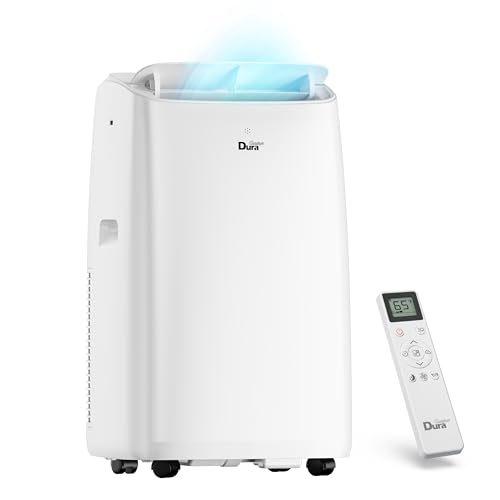
DuraComfort 14,000 BTU Portable Air Conditioner for Rooms up to 700 Sq.Ft, 3-in-1 Portable AC Unit with Cooling, Fan & Dehumidifier, Remote Control and Window Installation Kit
Check price on Amazon
14000 BTU Portable Air Conditioner | Cools Rooms up to 750 Sq. Ft., with Remote Control & Window Kit, for Home, Bedroom, Office Use
Check price on Amazon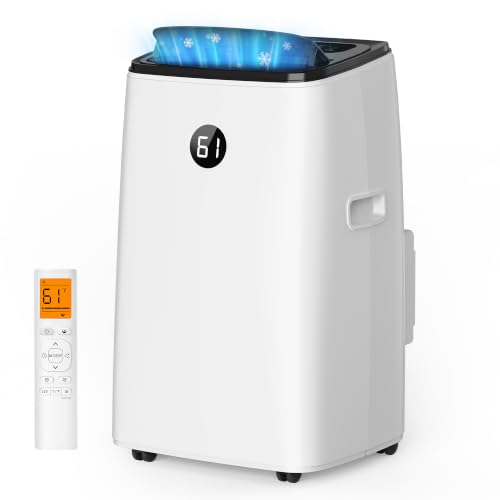
AGTANA 14000 BTU Portable Air Conditioner for Large Room up to 700 Sq. Ft, 3-in-1 Self-Evaporating AC with Fan & Dehumidifier, Floor Standing Portable AC Unit with Remote Control, Auto Swing, White
Check price on Amazon
14,000 BTU Portable Air Conditioner Cools up to 750 Sq.Ft, 3-in-1 Quiet Portable AC Unit with Remote Control & Installation Kits for Large Room, 3 Speed, Auto Swing, 24H Timer
Check price on Amazon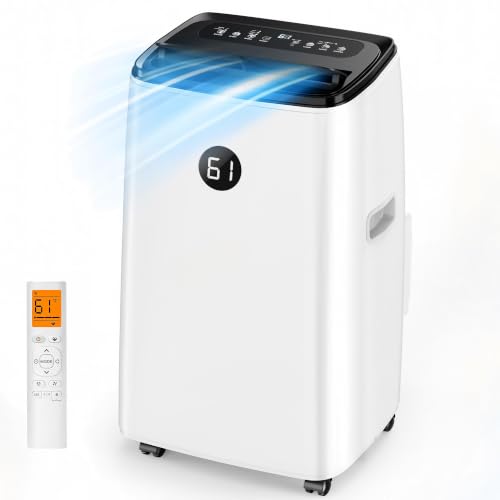
14000 BTU Portable Air Conditioners, 3-in-1 Floor Stand Up Portable AC Unit | Cools Up to 700 Sq.Ft, with Dehumidifier, Fan, Self-Evaporating, Quiet Sleep Mode, Auto Swing, for Large Rooms Bedrooms
Check price on Amazon
14,000 BTU Portable Air Conditioner Cools Up to 700 Sq.Ft, 3-IN-1 Energy Efficient Portable AC Unit with Remote Control & Installation Kits for Large Room, Office, Temporary Space
Check price on Amazon
GarveeTech 14000 BTU Portable Air Conditioner, 3-in-1 AC Unit with Dehumidifier & Fan for Rooms up to 700 Sq.Ft, Quiet Cooling Conditioner with Remote Control for Bedroom/Home/Office
Check price on Amazon