
14000 BTU Through the Wall Air Conditioner with Heat
Everything you need to know before choosing a through the wall AC with heating capability — sizing, heat pump vs. electric heat, efficiency, installation, and the features that matter most.
Who this guide is for: You have already narrowed your search to a 14000 BTU through the wall air conditioner with heat. You want year-round comfort from a single permanent unit, and you need to understand whether this capacity, this form factor, and the heat function will actually work in your space before you commit.
This guide walks through room coverage, the difference between heat pump and electric resistance heat, electrical requirements, sleeve compatibility, efficiency ratings, and the tier descriptors that help you compare models without relying on fleeting market figures. By the end, you will know exactly what to verify before selecting a unit.
What a 14000 BTU Through the Wall AC with Heat Actually Delivers
Through the wall air conditioners are installed permanently into an exterior wall, usually through a metal sleeve that isolates the chassis from the building structure. Unlike window units, they do not occupy a window, they do not block natural light, and they are far more difficult to remove — which makes them a better fit for security-sensitive rooms, rental properties where window mounting is restricted, and commercial spaces that need a fixed cooling appliance.
A 14000 BTU through the wall air conditioner with heat combines three functions in one chassis: cooling at 14000 BTU per hour, dehumidification, and heating. The heating side is the part that most buyers underestimate. Two distinct technologies appear in this category:
Heat Pump Models
A heat pump reverses the refrigerant cycle so the unit extracts heat from outdoor air and moves it indoors. Because it moves heat rather than generating it, a heat pump produces roughly two to three units of heat for every unit of electricity consumed, which makes it the more efficient heating option. The trade-off is cold-weather performance: as outdoor temperatures fall toward freezing, capacity and efficiency decline, and most through the wall heat pumps include a defrost cycle that temporarily pauses heating.
Electric Resistance Heat Models
Electric heat models use a heating element, similar in principle to a space heater, built into the chassis. They continue producing full-rated heat regardless of outdoor temperature and cost less to manufacture, which places many of them in the entry-level and mid-tier of the category. The compromise is efficiency: resistance heat converts electricity to heat at roughly a one-to-one ratio, so heating operation draws more power than a heat pump of the same rated output.
Practical takeaway: If the unit is your primary heat source in a climate with mild winters, a heat pump model is the more efficient long-term investment. If winters are harsh and you need reliable heat below freezing, electric resistance heat delivers consistent output but should be treated as supplemental rather than whole-home heating. For a deeper comparison of capacity variants, see the broader 14000 BTU through the wall air conditioner overview.
How Much Space Does 14000 BTU Cover?
Capacity guidance is always approximate because real cooling load depends on insulation, ceiling height, window area, sun exposure, occupancy, and appliance heat gain. As a working baseline, a 14000 BTU unit is sized for an open area of roughly 500 to 700 square feet.
| Room Scenario | Typical Coverage | Sizing Consideration |
|---|---|---|
| Open living or family room | 500–650 sq ft | Standard ceiling height, average insulation |
| Large bedroom or studio | 550–700 sq ft | Well-insulated, limited direct sun |
| Sun-exposed room | 450–550 sq ft | West or south-facing glass, poor shading |
| High-ceiling or vaulted space | 400–500 sq ft | Extra air volume raises load |
| Kitchen-adjacent open plan | 450–600 sq ft | Cooking appliances add heat gain |
Oversizing is a common mistake. A unit that is too large cools the air quickly, satisfies the thermostat, and shuts off before it has removed enough humidity. The result is a room that feels cold and clammy. Undersizing is equally problematic: the compressor runs continuously, never reaches the set point on hot afternoons, and wears faster. If your room sits between two capacity tiers, favor the smaller unit for a well-sealed space and the larger unit for a room with significant glass area or heat-generating equipment. For a broader walkthrough of the sizing process, the AC sizing guide explains the load factors in detail.
Electrical Requirements and Wall Sleeve Compatibility
Two physical constraints dominate the buying decision for through the wall units: the electrical circuit and the sleeve opening. Get either wrong and the unit will not operate or will not fit.
Voltage and Breaker
Most 14000 BTU through the wall air conditioners with heat require a 230/208-volt dedicated circuit, typically protected by a 20-amp breaker, and often use a 6-15P or 6-20P plug configuration. A minority of models are engineered for 115-volt circuits, but at this capacity they are uncommon and usually draw close to the circuit limit. Before ordering, confirm three details: the voltage rating on the specification label, the plug type, and the existing breaker size. If the room currently has only a 115-volt outlet, an electrician will need to run a new circuit, which changes the installation scope and should be planned before the unit arrives.
Sleeve Dimensions
Through the wall units are built around standard sleeve sizes. Replacing an existing unit is easiest when the new chassis matches the old sleeve category. If the sleeve is a different size, you may need a new sleeve, trim kit, or wall modification. Measure the interior clear opening, the wall depth, and the exterior grille dimensions, then compare those figures against the manufacturer's chassis specifications. Some brands publish a fit chart that maps chassis models to sleeve part numbers — use it rather than estimating.
Installation note: Through the wall installation involves cutting or modifying an exterior wall, sealing the opening against moisture intrusion, and supporting the chassis so it does not sag. Unless you are replacing a unit in an existing sleeve, this is work for a licensed HVAC contractor. If the installation is part of a larger renovation, review the through the wall installation considerations for guidance on placement, drainage, and exterior clearances.
Efficiency Ratings: What to Compare
Through the wall air conditioners are rated primarily on EER (Energy Efficiency Ratio) and, increasingly, CEER (Combined Energy Efficiency Ratio). Some listings also reference a SEER-equivalent figure. Because the unit is permanently installed and may run for many hours per day during peak season, the efficiency figure has a compounding effect on long-term energy use.
Baseline compliance for this category generally sits around 11 EER, with premium models reaching the high teens in SEER-equivalent terms. When comparing two units of the same capacity, a higher efficiency figure means the compressor and fan are moving the same amount of heat with less electrical input. The gap is most visible during prolonged heat waves, when the unit operates near its maximum for extended periods.
Two features commonly accompany higher-efficiency designs: inverter compressors that modulate speed instead of cycling on and off, and multi-speed fans that run longer at lower speed to improve humidity control and reduce noise. Inverter-driven through the wall units are still a smaller share of the category than they are among mini-splits, but they are available and worth seeking out if quiet operation and steady humidity are priorities. The inverter AC explainer covers how variable-speed modulation differs from fixed-speed cycling.
Features That Separate Model Tiers
Through the wall units cluster into recognizable tiers based on construction and control quality rather than marketing language. The descriptors below are relative positions within the category, not absolute judgments, and they remain stable as the market evolves.
Essential Tier
Mechanical or basic digital controls, single-speed compressor, straightforward heat function, and standard grille construction. A solid choice where the unit is used seasonally and simplicity is valued over refinement.
Balanced Tier
Digital thermostat, programmable timer, remote control, improved fan speeds, and better insulation around the chassis. Noticeably quieter than entry-level models and more precise at holding a set temperature.
High-End Tier
Inverter compressor options, higher EER, multi-speed fans, smart connectivity, and reinforced weather-resistant exterior finishes. Feature-rich for its class and intended for continuous or year-round use.
Other features that influence tier position include the type of air filter and whether it is washable, the presence of a self-evaporative condensate system that reduces draining, sleep modes, and the quality of the exterior louver design. A heat pump heat function generally places a model above an otherwise similar electric-heat unit because the heating side is more efficient.
Maintenance and Long-Term Reliability
A through the wall unit is exposed to weather on one side and interior dust on the other, so maintenance directly affects how long it lasts and how well it performs. The recurring tasks are straightforward:
- Clean or replace the air filter every two to four weeks during heavy use. A clogged filter restricts airflow, forces the compressor to work harder, and can lead to coil icing.
- Inspect and clean the exterior coil at the start of each cooling season. Debris, pollen, and cottonwood accumulate on the outdoor coil and degrade heat transfer.
- Check the condensate path for blockage. Most units either drain through the sleeve or use a slinger ring to evaporate condensate; a blocked path leads to water intrusion.
- Seal the sleeve perimeter annually. Gaps around the sleeve let humid outdoor air in and conditioned air out, undermining efficiency.
- Test the heat function before the heating season begins, particularly on heat pump models, so any reversing-valve or defrost issue is caught early.
For a full seasonal checklist, see the AC maintenance guide. If the unit stops cooling or begins leaking, the troubleshooting guide walks through the most common causes before you call a technician.
How a 14000 BTU Through the Wall Unit Compares to Alternatives
Buyers researching this capacity often compare it against adjacent options. The choice usually comes down to installation constraints and how much of the year the unit will run.
| Option | Best For | Trade-Off |
|---|---|---|
| 14000 BTU through the wall with heat | Permanent installation, year-round use, rooms without usable windows | Requires wall modification and dedicated circuit |
| 14000 BTU window AC with heat | Renters and rooms where wall modification is not permitted | Blocks part of the window and is easier to remove |
| 14000 BTU portable AC with heat and remote | Spaces where no permanent installation is possible | Lower efficiency and a vent hose that must exhaust outdoors |
| 14000 BTU portable AC | Supplemental cooling in open or temporary spaces | Cooling only, no heating function |
| 14000 BTU through the wall (115V) | Rooms with an existing 115-volt circuit | Fewer models available; circuit must be verified |
If the room has an existing sleeve from a previous unit, replacing it with a matching 14000 BTU heat model is usually the most economical path — the wall work is already done. If there is no sleeve, the installation effort should be weighed against the long-term benefit of a fixed unit that does not consume window space.
What to Verify Before You Choose a Model
Before finalizing a selection, confirm the following checklist. Each item eliminates a common source of post-purchase friction.
- Room load matches capacity. Recalculate using the actual square footage, ceiling height, and window exposure. A 14000 BTU unit is a poor fit for a 300-square-foot room, just as it is for a 900-square-foot open plan.
- Heat type is appropriate. Heat pump for efficiency in mild climates; electric resistance for dependable output in cold snaps.
- Electrical circuit is confirmed. Voltage, plug type, and breaker size all match the unit's requirements, or an electrician has quoted the circuit work.
- Sleeve dimensions match. The chassis fits the existing opening or a compatible sleeve is available.
- Efficiency figure is competitive. Compare EER/CEER against other models of the same capacity rather than against unrelated product categories.
- Noise level is acceptable. Look for published sound ratings and favor multi-speed fans or inverter compressors if the room is a bedroom or home office.
- Warranty and service network are clear. Sealed-system coverage and local service availability matter more for a permanently installed unit than for a plug-in appliance.
Frequently Asked Questions
What size room does a 14000 BTU through the wall air conditioner with heat cool?
Does a 14000 BTU through the wall AC with heat work as a full heater?
What voltage does a 14000 BTU through the wall air conditioner require?
Can I replace an older through the wall unit with a new 14000 BTU model?
What SEER rating should I look for in a through the wall AC with heat?
Bottom Line
A 14000 BTU through the wall air conditioner with heat is a permanent, space-saving solution for rooms of roughly 500 to 700 square feet that need both cooling and supplemental warmth. The two decisions that matter most are the heat type — heat pump for efficiency, electric resistance for cold-weather dependability — and the electrical and sleeve compatibility. Get those right, confirm the efficiency figure against peers of the same capacity, and the unit will deliver steady comfort for years without the seasonal installation ritual of a window unit.
If you are still deciding between form factors, compare this category against the 115-volt through the wall variant and the window AC with heat alternative before committing. And if your room falls outside the 500–700 square foot band, the adjacent 15000 BTU through the wall guide may be a closer fit.
Top 14000 BTU Through the Wall Air Conditioners with Heat
⚠️ AFFILIATE DISCLOSURE: This website contains affiliate links. As an Amazon Associate, we earn from qualifying purchases. If you make a purchase through these links, we may receive a small commission at no additional cost to you. Read our full affiliate policy.

OLMO 14,000 BTU 230V Through-the-Wall AC & Heater, Built-In Smart Kit | Cooling & Heating, R-32 Eco-Friendly Refrigerant, Remote Included, 1.17 Ton
Check price on Amazon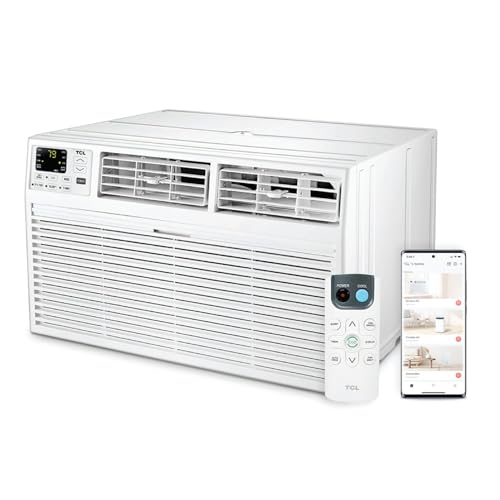
TCL 14,000 BTU Smart Through-the-Wall Air Conditioner with Heater,230V WiFi | 230V, Wall Mounted, Heater, Dehumidifier, Remote Control, Works with Alexa and Google Assistant, Rooms up to 700 Sq.Ft.
Check price on Amazon
OLMO 14,000 BTU 230V Through-the-Wall AC, Cooling Only, Built-In Smart Kit | Air Conditioner, R-32 Eco-Friendly Refrigerant, Remote Included, 1.17 Ton
Check price on Amazon
OLMO 14,000 BTU 230V Through-the-Wall AC & Heater, with Wall Sleeve | Cooling & Heating, Built-In Smart Kit, R-32 Eco-Friendly Refrigerant, Remote Included, 1.17 Ton
Check price on Amazon
ROVSUN Smart 12000 BTU Through the Wall Air Conditioner with Heat, Wall AC Unit & Heater Combo with Remote, APP & Voice Control & Timer Function, Compatible with Alexa/Google Assistant, 230V/60Hz
Check price on Amazon
OLMO 12,000 BTU 230V Through-the-Wall AC & Heater, Built-In Smart Kit | Cooling & Heating, R-32 Eco-Friendly Refrigerant, Remote Included, 1 Ton
Check price on Amazon
ROVSUN Smart 10000 BTU Through the Wall Air Conditioner with Heat, Wall AC Unit & Heater Combo with Remote, APP & Voice Control & Timer Function, Compatible with Alexa/Google Assistant, 230V/60Hz
Check price on Amazon