
14000 BTU Window Air Conditioner with Heat: The Complete Guide
Everything you need to know before buying a 14000 BTU window unit with heating — room sizing, how the heat function works, efficiency ratings, installation requirements, and how to match the right unit to your space.
START WITH SIZINGWho this guide is for: If you have narrowed your search to a 14000 BTU window air conditioner with heat, you are likely cooling and heating a single large room or an open-plan space. This guide covers every decision point — capacity, heating method, efficiency, installation, and maintenance — so you can compare listings with confidence and choose the unit that fits your room and climate.
What Is a 14000 BTU Window Air Conditioner with Heat?
A 14000 BTU window air conditioner with heat is a self-contained unit that installs in a window frame and provides both cooling and heating from a single chassis. The 14000 BTU figure describes the cooling capacity, which is sized for larger rooms and open-plan spaces. The heating function is added through one of two methods: a heat pump cycle that reverses the refrigerant flow, or an electric resistance heating element inside the unit.
This format combines the simplicity of a window mounted air conditioning unit with the year-round usefulness of a heater. That makes it a practical choice for rooms that need cooling in summer and supplemental warmth in shoulder seasons — a bedroom, a home office, a sunroom, or an addition that a central system does not reach well.
Compared with a standalone space heater, a window unit with heat is generally safer because there is no exposed heating element in the living space and no cord running across the floor. Compared with a mini split, a window unit is simpler to install and does not require refrigerant line work, though it is less efficient and blocks part of the window.
Why Buyers Choose a 14000 BTU Unit with Heat
This capacity and feature combination sits in a specific niche. Understanding the trade-offs helps you decide whether it is the right fit for your room.
- One unit for two seasons. Cooling in summer and supplemental heating in shoulder seasons, without buying and storing two separate appliances.
- Larger room coverage. 14000 BTU is sized for rooms around 250–400 square feet, which covers most living rooms and large master bedrooms.
- Simple installation. Installs in a standard double-hung window with a bracket and side panels. No refrigerant lines, no wall penetration, no professional line-set work.
- Room-level control. Conditions only the room it serves, which avoids heating or cooling an entire house for one occupied space.
- Immediate availability. Units ship quickly and install the same day, which is useful when a central system fails or a room is added to the home.
The trade-offs are that the unit blocks part of the window, the heating output is typically supplemental rather than whole-home, and the electrical requirement is higher than a small window unit. For a larger room that needs both cooling and a bit of warmth, though, this format is hard to beat on simplicity.
How to Size a 14000 BTU Window Unit
14000 BTU is a specific capacity, and it fits a specific range of rooms. Sizing correctly matters because an undersized unit runs continuously and never reaches the setpoint, while an oversized unit cools too quickly, cycles off before removing humidity, and leaves the room feeling cold and clammy.
The table below shows where 14000 BTU sits relative to the full range of window unit capacities, so you can confirm whether your room belongs in this tier.
| Room Area | Recommended Capacity | Typical Room | Tier Context |
|---|---|---|---|
| Up to 150 sq ft | 5,000 – 6,000 BTU | Small bedroom, studio nook | entry-level |
| 150 – 250 sq ft | 8,000 – 10,000 BTU | Standard bedroom, home office | essential tier |
| 250 – 400 sq ft | 12,000 – 14,000 BTU | Living room, large master bedroom | mid-tier |
| 400 – 600 sq ft | 18,000 – 24,000 BTU | Open-plan living area, large studio | high-end tier |
| 600+ sq ft | 24,000 BTU+ or multiple units | Whole-floor cooling | top-tier |
A 14000 BTU unit sits at the top of the mid-tier band, which means it is well-suited to rooms around 250–400 square feet. After the baseline, adjust for these real-world factors:
- Sun exposure: West- and south-facing rooms with large unshaded windows can need 10–20% more capacity. A 14000 BTU unit in a very sunny 400 sq ft room is a good match; in a shaded 400 sq ft room it may cycle a little more than ideal.
- Ceiling height: Rooms above 8 feet hold more air volume; add roughly 10% capacity per additional foot of height.
- Insulation and window quality: Single-pane windows and poor insulation increase the load. Older homes often step up one tier.
- Occupancy and appliances: Rooms regularly used by a family, or adjacent to a kitchen, need more capacity than a solo office.
- Heating demand: If you intend to use the heat function as primary warmth, confirm that the unit's heating output matches the room's heat loss, not just its cooling load.
If your room sits closer to 150–250 square feet, a smaller capacity is likely a better match — the guide to the 8000 BTU air conditioning unit covers that range. For very small rooms, see the 6000 BTU air conditioner window unit.
How the Heat Function Works
Window units with heat use one of two approaches, and the difference matters for both efficiency and cold-weather performance.
- Heat pump cycle: The unit reverses the refrigerant flow so that the outdoor coil absorbs heat from the outside air and releases it indoors. This is the more efficient method, because it moves heat rather than generating it. Heat pump window units work best in mild to moderate climates and lose capacity as outdoor temperatures drop.
- Electric resistance heat: A heating element inside the unit warms the air directly. This method is simpler and works in colder outdoor temperatures, but it uses more electricity for the same heat output than a heat pump.
Most 14000 BTU window units with heat use the heat pump approach, sometimes with a resistance backup for very cold days. When comparing listings, look for the heating capacity in BTU and the heating efficiency metric, and confirm the unit's rated operating range. If you need heat in freezing weather, a resistance model or a unit with a low-temperature heat pump is the safer choice.
For a broader look at how window units with heaters compare, see the guide to window units with heaters.
Heating Output vs Cooling Capacity
A 14000 BTU cooling unit does not necessarily produce 14000 BTU of heat. Heating capacity is often lower, and heat pump output drops further as outdoor temperatures fall. Always check the heating BTU on the rating plate rather than assuming it matches the cooling figure.
Understanding Efficiency Ratings
Window units are rated using CEER (Combined Energy Efficiency Ratio) for cooling, which replaced the older EER metric for this product category. CEER accounts for standby power and seasonal operation, giving a more realistic picture of annual energy use. A higher CEER means more cooling per unit of electricity.
Modern window units generally range from 10 to 15 CEER. Units in the upper range of that band are the most efficient available for the format and are typically ENERGY STAR certified. For a 14000 BTU unit, which runs at a higher power draw than smaller capacities, the efficiency difference between a 10 CEER and a 14 CEER unit is meaningful over a multi-year cooling season.
For heating, efficiency is expressed differently depending on the method. Heat pump models are rated by their coefficient of performance (COP), where higher is better; resistance models are effectively fixed-efficiency. For a deeper explanation of how cooling efficiency ratings compare across formats, see the guide to window air conditioner energy efficiency ratings.
Efficiency Tiers at a Glance
Essential tier: 10–11 CEER, suitable for occasional use in mild climates. Balanced tier: 11–12 CEER, a solid middle ground for regular seasonal use. High-efficiency tier: 12–14 CEER, ENERGY STAR certified, best for hot climates and daily operation. Top-tier: 14+ CEER, the most efficient window units available, often with inverter compressors and advanced fan control.
Installation Requirements and Best Practices
A 14000 BTU window unit is heavy and cantilevered outside the building envelope. Proper support is not optional — it protects the unit, the window frame, and anything below. Installation also involves a higher electrical load than smaller units, which changes the requirements.
- Use a support bracket. Units of this capacity generally require an exterior bracket. The bracket transfers load to the exterior wall rather than the window sill alone.
- Confirm the electrical circuit. 14000 BTU units typically require a dedicated 230V circuit and often a special plug type. Check the rating plate and confirm your outlet and breaker match before installation. The guide to 220 air conditioners explains when a higher-voltage circuit is necessary.
- Maintain a slight downward tilt. The unit should tilt slightly toward the outside so condensate drains away from the room. Most brackets are designed to set this angle automatically.
- Seal the gap. Side panels and weather stripping close the space between the unit and the window frame. A poor seal lets hot air in and undermines efficiency, especially in heating mode.
- Secure the sash. Use the included sash lock or a bracket to prevent the window from opening above the unit, which is both a cooling loss and a safety issue.
Installation is within reach for a confident DIYer, but the higher electrical load and the weight of a 14000 BTU unit make professional installation a reasonable choice. If the window frame is deteriorated or the opening is non-standard, address that before installation rather than after.
Window Compatibility Before You Buy
Not every window accepts every unit. Before shortlisting models, confirm that your window opening matches the unit's minimum and maximum width and height specifications.
- Double-hung windows: The standard fit. Most window units ship with side panels and a sash lock that secures the lower sash against the unit.
- Sliding windows: Horizontal sliders require a specific window kit and, often, a support bracket. See the guide to window air conditioners for sliding windows for the correct mounting approach.
- Sideways or casement windows: These open outward on a hinge and generally cannot accept a standard window unit without a specialized bracket. The guide to window air conditioners for sideways windows covers the limited options.
- Sliding glass doors: A dedicated door kit and a floor-standing bracket are needed; standard window units are not designed for this opening. See window air conditioners for sliding glass doors.
Also verify the outdoor clearance. A 14000 BTU unit needs unobstructed airflow on the exterior side, and a bracket that can bear the unit's weight. If the window is on an upper floor, confirm local codes allow exterior brackets before installation.
Features Worth Prioritizing When Comparing Listings
Window units have converged on a core feature set, but the details separate a good fit from a great one, especially when heating is part of the purchase.
- Inverter compressor: Varies speed continuously instead of cycling on and off. Quieter, more efficient, and better at holding a steady temperature. Inverter models sit in the upper efficiency tiers.
- Heat pump vs resistance heat: Heat pump models are more efficient; resistance models work in colder outdoor temperatures. Choose based on your climate and how much heating you expect to use.
- Programmable or smart thermostat: Scheduling reduces runtime when the room is empty. Wi-Fi control lets you pre-cool or pre-warm before arriving home.
- Sleep mode and fan-only mode: Sleep mode raises or lowers the setpoint gradually overnight; fan-only circulates air without conditioning.
- Washable filter: A removable, washable filter is easier to maintain than a disposable one and keeps airflow strong.
- Noise level: Measured in decibels, noise varies widely. Bedroom installations benefit from units rated in the lower 50s dB on low fan speed.
Maintenance That Extends Unit Life
A window unit is exposed to weather, pollen, and dust on both sides, and a unit with heat runs in more seasons than a cooling-only unit. Routine maintenance pays off faster.
- Clean the filter every two to four weeks during peak season. A clogged filter restricts airflow, reduces cooling and heating output, and forces the compressor to work harder.
- Clean the condenser coils annually. Outdoor coils collect debris and reduce heat rejection in summer and heat absorption in winter. A soft brush and coil cleaner restore performance.
- Check the drain path. The condensate drain can clog with algae or debris, causing water to back up into the room. Flush it at the start of each season.
- Inspect the seal and bracket each spring. Re-caulk gaps and confirm the bracket is secure and rust-free.
- Remove and store the unit in climates with freezing winters, or cover it with a fitted weather cover if it stays installed year-round. For units used for heating, leaving it installed through winter is common but requires a weather cover and a clear outdoor coil.
For a season-by-season checklist that applies across cooling formats, see the AC maintenance guide. If the unit stops cooling or heating despite clean filters, the troubleshooting steps in things to check when AC is not cooling cover the common causes before you call a technician.
How a 14000 BTU Unit Compares With Alternatives
A window unit with heat is one option among several. Knowing where it fits helps you decide whether to buy in this category at all.
- vs cooling-only window unit: A cooling-only unit is simpler and usually more efficient in cooling mode, but it cannot warm the room in shoulder seasons. If you only need summer cooling, a cooling-only unit is the better fit.
- vs portable unit with heat: Portable units sit on the floor and vent through a window hose. They are simpler than window units but less efficient and take up floor space.
- vs mini split with heat pump: A mini split air conditioning unit is quieter, more efficient, and does not block a window, but it requires professional installation and a wall penetration. For a single room where simplicity matters, a window unit is often the practical choice.
- vs central system: Central systems distribute heating and cooling through ductwork and serve the whole home. A window unit serves one room, which is the right scope for an addition, a converted garage, or a room a central system does not reach well.
- vs a larger window unit: If your room is closer to 400–600 square feet, a 18000–24000 BTU unit is the better match. A 14000 BTU unit in a much larger room will run continuously and underperform. For a larger connected space, see the 15000 BTU connected window mounted room air conditioner for how a step up in capacity changes performance.
How to Compare Listings Before You Buy
With capacity settled at 14000 BTU, the remaining comparison comes down to heating method, efficiency, and window fit. Use this sequence to narrow the field:
- Confirm the room size fits the 250–400 sq ft band. If not, step to the next capacity tier.
- Choose the heating method. Heat pump for efficiency in mild climates; resistance or low-temp heat pump if winters are cold.
- Verify the heating output. Check the heating BTU on the rating plate and confirm it matches your room's heat loss.
- Set an efficiency floor. In hot climates, target the high-efficiency tier (12 CEER and above). In mild climates, the balanced tier is a reasonable target.
- Confirm the window fit. Check the unit's minimum and maximum window width and height against your opening.
- Check the electrical requirement. Match the unit's voltage and amperage to an available dedicated circuit, usually 230V.
- Read the noise and reliability notes. Owner reviews and professional reviews reveal real-world noise and durability that specifications alone do not.
The recommended models below are organized by tier so you can see how each option positions itself in the market relative to the others, rather than by any single attribute.
Recommended 14000 BTU Window Air Conditioners with Heat
⚠️ AFFILIATE DISCLOSURE: This website contains affiliate links. As an Amazon Associate, we earn from qualifying purchases. If you make a purchase through these links, we may receive a small commission at no additional cost to you. Read our full affiliate policy.
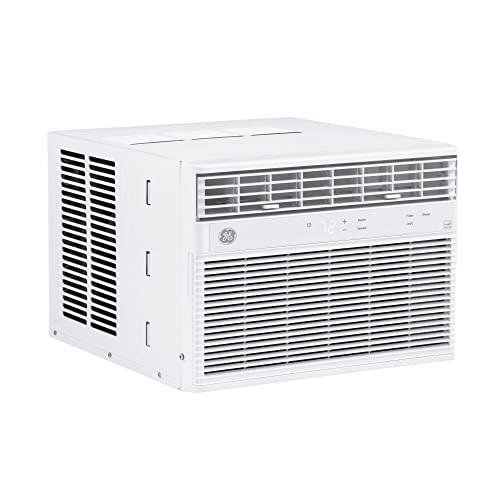
GE Window Air Conditioner 14000 BTU, Wi-Fi Enabled, Energy-Efficient Cooling for Large Rooms, 14K BTU Window AC Unit with Easy Install Kit, Control Using Remote or Smartphone App
Check price on Amazon
LG 14,000 Window Air Conditioner, 115V, 700 Sq.Ft., Auto Restart, White | 115V, Remote Control, 3 Cooling and Fan Speeds, Auto-Restart, Electronic Controls, Quiet Operation, Rooms up to 800 Sq.Ft.
Check price on Amazon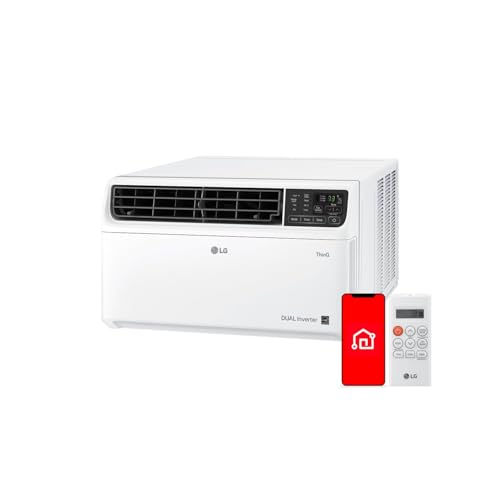
LG 14,000 BTU DUAL Inverter Smart Window Air Conditioner, 115V, Cools 800 Sq. Ft. for Bedroom, Living Room, Apartment, Quiet Operation, ENERGY STAR®, works with LG ThinQ, Amazon Alexa and Hey Google
Check price on Amazon
Midea 14,000 BTU Smart Inverter 115V Window Air Conditioner, with Remote Control, 700 Sq Ft
Check price on Amazon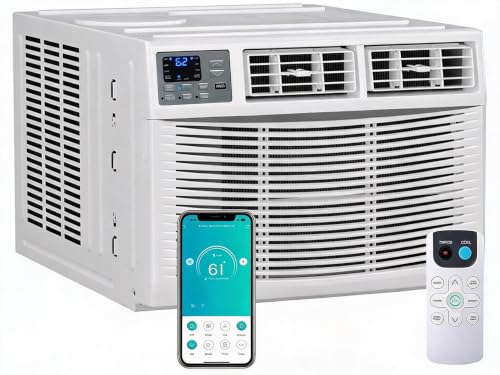
18000 BTU Window Air Conditioner & Heater Combo – APP & Remote Control | Dehumidifier, Fan Efficient Cooling & Heating for Rooms up to 1000 Sq Ft – Ideal for Apartment, Living Room, Bedroom
Check price on Amazon
Midea 14,000 BTU Window Air Conditioner with Remote Control | 14,000 BTU window air conditioner for powerful room cooling with convenient temperature control and everyday comfort.
Check price on Amazon
DELLA 14000 BTU Energy Saving Window Air Conditioner,Cools Up to 700 Sq. Ft | WIFI Smart Controls, GEO Location, Work with Alexa, Easy Install,Reusable Filter,Remote, Dehumidifier, Fan
Check price on AmazonFrequently Asked Questions
What size room does a 14000 BTU window air conditioner cool?
A 14000 BTU window unit is typically sized for rooms between 250 and 400 square feet, depending on sun exposure, ceiling height, insulation, and occupancy. Rooms with strong sun or poor insulation may need the upper end of that range, while shaded rooms can sit lower.
How does the heating function work on a window AC with heat?
Most window units with heat use a heat pump cycle that reverses the refrigerant flow to warm the room, while some use an electric resistance heating element. Heat pump models are more efficient; resistance models are simpler and work in colder outdoor temperatures. Check the heating BTU and operating range before buying.
Does a 14000 BTU window unit need a dedicated circuit?
Yes. Units of this capacity typically require a dedicated 230V circuit, and many use a special plug type. Check the unit's rating plate and confirm your panel and outlet match before installation. Sharing a circuit with other loads can trip the breaker under continuous load.
Can a window AC with heat replace a space heater?
For supplemental heating in a single room, a window unit with heat can replace a space heater and is often safer because there is no exposed heating element in the living space. For whole-home heating, a dedicated heating system is still the appropriate solution.
How efficient is a 14000 BTU window air conditioner with heat?
Window units are rated on CEER for cooling and, where applicable, COP or HSPF-style metrics for heating. Higher CEER means better cooling efficiency. Heat pump models are generally more efficient in heating mode than electric resistance models. Look for ENERGY STAR certification for the best efficiency in its class.
Can I install a 14000 BTU window unit myself?
Installation is within reach for a confident DIYer, but the higher electrical load and the weight of a 14000 BTU unit make professional installation a reasonable choice. A support bracket is generally required, and the unit must be plugged into a dedicated circuit. If the window frame is deteriorated or the opening is non-standard, address that before installation.
Ready to Compare 14000 BTU Units with Heat?
Review the recommended models above by tier, then confirm your room size, heating method, window fit, and electrical circuit before you order.
VIEW RECOMMENDED UNITS