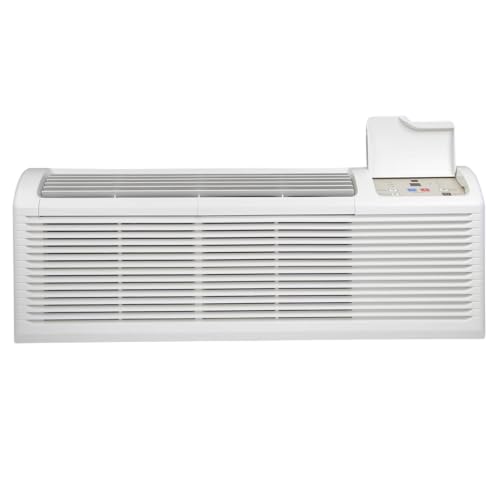
15000 BTU Through-the-Wall Air Conditioner: The Complete Buyer's Guide
Everything you need to know about capacity, installation, efficiency, and choosing the right through-the-wall unit for rooms around 500 to 700 square feet.
Independent research guide · No brand biasWho this guide is for: If you have already decided that a through-the-wall air conditioner is the right format for your home and you are now comparing 15000 BTU models, this page will help you understand what actually matters. We cover room sizing, wall sleeve compatibility, electrical requirements, efficiency tiers, and the practical trade-offs between entry-level and top-tier units — so you can make a confident, well-informed purchase decision.
What Is a 15000 BTU Through-the-Wall Air Conditioner?
A 15000 BTU through-the-wall air conditioner is a permanently installed cooling unit that sits inside a sleeve built into an exterior wall. Unlike a window air conditioner, it does not block a window or rely on the window frame for support. Instead, the unit is mounted through the wall itself, which frees up window space, improves security, and often produces a cleaner exterior appearance.
The 15000 BTU capacity places these units in the mid-to-large residential range. They are a popular choice for living rooms, master bedrooms, large home offices, and converted spaces such as finished basements or garages where a ducted central system is impractical or unavailable. If you are still deciding between formats, our guide to the broader category of 15000 BTU air conditioners compares through-the-wall, window, and portable options side by side.
Through-the-wall units are also common in apartments, condominiums, and older homes where retrofitting ductwork would require major renovation. Because the unit is installed permanently, it is generally more secure and less obtrusive than a portable or window alternative.
How Much Room Does 15000 BTU Cool?
As a general rule, a 15000 BTU through-the-wall air conditioner is appropriate for rooms between 500 and 700 square feet. That covers a typical large living room, an open-plan kitchen and dining area, a spacious master bedroom, or a generously sized home office.
However, square footage alone is not a complete sizing method. Several factors can push the required capacity up or down:
- Ceiling height: Rooms with ceilings above 8 feet have more air volume to cool, so a 15000 BTU unit may be undersized for a 650 square foot room with 10-foot ceilings.
- Insulation quality: Poorly insulated walls and attics allow heat to enter faster, increasing the cooling load.
- Window exposure: West- and south-facing windows with direct sun exposure add significant heat gain. Rooms with large unshaded glass may need the upper end of the range or a larger unit.
- Occupancy and appliances: Kitchens, home offices with multiple computers, and rooms that regularly host many people generate additional heat.
- Climate: In hot, humid climates, the unit works harder to remove moisture as well as heat.
If your room falls near the boundary between two capacity classes, it is usually better to size slightly up rather than down. An undersized unit runs continuously, struggles to reach the set temperature, and consumes more energy over time. For a deeper explanation of the sizing formula, see our guide on how to size an air conditioner and the BTU calculator by room size.
If your space is closer to 400 to 500 square feet, a 14000 BTU through-the-wall air conditioner may be a better match. Conversely, if your room exceeds roughly 700 square feet, consider a 18000 BTU through-the-wall air conditioner or a 20000 BTU through-the-wall unit.
Room Size
Approximately 500–700 sq ft under standard conditions.
Typical Voltage
Most models run on 230/240V and require a dedicated circuit.
Installation
Fits into a wall sleeve; measure existing sleeve dimensions first.
Efficiency Range
Varies by tier; higher SEER models reduce long-term energy use.
Common Features
Remote control, programmable timer, sleep mode, auto-restart.
Best For
Living rooms, master bedrooms, large offices, converted spaces.
Why Choose a Through-the-Wall Unit Instead of a Window AC?
Both window and through-the-wall air conditioners serve similar cooling needs, but the wall-mounted format offers distinct advantages for certain homes:
- Frees up windows: You keep full use of your window for light, ventilation, and view. This matters in small rooms where a window unit would block a significant portion of the opening.
- Better security: A permanently installed wall unit is far more difficult to remove from outside than a window unit, reducing a common security concern.
- Cleaner appearance: The installation is flush with the wall, with only the front grille visible inside and the condenser grille visible outside.
- No window-frame stress: The unit is supported by the wall structure rather than the window sill, which is safer for older or fragile window frames.
- Year-round installation: Many through-the-wall units can remain installed through winter, and some include a heat function for supplemental heating.
The main trade-off is that installation requires cutting or using an existing sleeve in an exterior wall, which is a more permanent modification than sliding a window unit into place. If you rent or cannot modify the wall, a 15000 BTU portable air conditioner or a 15000 BTU window air conditioner may be the more practical route.
Wall Sleeve Compatibility: The Most Common Installation Pitfall
Through-the-wall air conditioners are designed to fit into a sleeve — a metal or plastic frame built into the wall that holds the unit and provides structural support. If your home already has a sleeve from a previous unit, the single most important step before buying is to measure it accurately.
Measure the interior width, height, and depth of the sleeve, then compare those numbers to the product specifications of the unit you are considering. Dimensions are not standardized across brands. A unit that is close but not exact may require an adapter kit, or it may not fit safely at all.
Common sleeve sizes vary, and some manufacturers offer specific sleeve models that pair with their units. If you are installing a new sleeve, the product manual will specify the required rough opening and the recommended sleeve depth. Our guide to 26-inch wall sleeves for through-the-wall air conditioners explains how sleeve sizing works in more detail.
For units that are slightly smaller or larger in capacity, related sleeve dimensions apply. For example, if you are replacing a smaller unit, check the 16000 BTU through-the-wall air conditioner specifications, or if you are upsizing, review the 18000 BTU through-the-wall air conditioner with heat for dimensional details.
Electrical Requirements and Circuit Planning
Most 15000 BTU through-the-wall air conditioners operate on 230/240-volt power and draw enough current to require a dedicated circuit. A dedicated circuit means the air conditioner is the only device on that breaker — sharing it with other appliances can cause nuisance tripping or, worse, create a fire hazard.
Typical circuit ratings for this capacity class are 20 to 30 amps, but the exact requirement depends on the model. Before purchasing, check the product manual for:
- The required voltage (usually 230/240V, though some models are available in 115V configurations).
- The recommended breaker size and wire gauge.
- The plug type and receptacle configuration — these vary and may not match an existing outlet.
If your home does not already have a suitable circuit near the installation location, a licensed electrician will need to install one. This is a common additional consideration for older homes. Our guides on 230-volt through-the-wall air conditioners and 220 electrical outlets explain the wiring side in more detail. For a lower-voltage alternative, a 14000 BTU through-the-wall air conditioner 115V may be worth considering if your electrical panel cannot support a new 240V circuit.
Understanding Efficiency Ratings for Through-the-Wall Units
Efficiency is one of the most consequential factors in the long-term performance of a through-the-wall air conditioner. Because these units are often left running for hours at a time during summer, a more efficient model can meaningfully reduce electricity consumption over its service life.
Two ratings are most relevant:
- SEER (Seasonal Energy Efficiency Ratio): Measures cooling efficiency across an entire cooling season. Higher is better. For through-the-wall units, SEER ratings are generally lower than for central systems, but they still vary meaningfully between models. See our explainer on what a SEER rating is for the full breakdown.
- EER (Energy Efficiency Ratio): Measures efficiency at a single test condition (usually 95°F outside). It is a useful point-in-time comparison, especially in hot climates where the unit operates near peak load. Learn more in our guide to the EER rating.
Newer units are rated under SEER2, the updated DOE test standard. If you are comparing a new model against an older one, be aware that SEER and SEER2 numbers are not directly interchangeable. Our article on SEER vs SEER2 DOE standards explains the differences.
Models carrying ENERGY STAR certification meet stricter efficiency thresholds and are generally a solid choice for buyers who expect to use the unit heavily. See our guide to ENERGY STAR certified AC units.
Features Worth Paying Attention To
Beyond capacity and efficiency, the feature set separates a basic unit from a well-specified one. The features that matter most in practice for a through-the-wall air conditioner are:
- Remote control and programmable timer: Lets you schedule cooling around your daily routine and adjust settings without reaching behind furniture.
- Sleep mode: Gradually raises the set temperature overnight, which is both more comfortable and more efficient.
- Auto-restart: Restores the previous settings after a power outage — useful in areas with unreliable power.
- Dehumidification mode: Runs the fan and compressor to remove moisture without over-cooling, which is valuable in humid climates.
- Fan-only mode: Circulates air without cooling, useful in mild weather.
- Washable filter with filter indicator: A clean filter is essential for efficiency; an indicator light reminds you when maintenance is due.
- Heat function (on some models): Provides supplemental heating in cooler months. See our guide to the 15000 BTU through-the-wall air conditioner for models with heat.
- Wi-Fi and smart control: Less common in this category but increasingly available; allows control from a phone. See our guide to AC with Wi-Fi and smart control.
Quiet operation is another factor often overlooked in showrooms but very noticeable at home, especially in bedrooms. Check the decibel rating in the specifications if noise is a priority. Our guide to quiet air conditioners covers this in more depth.
Comparing Tiers: What You Get at Each Level
Through-the-wall air conditioners in the 15000 BTU class fall into roughly three market tiers. The table below summarizes what typically distinguishes each tier. Use it to align your expectations with the model you are considering.
| Tier | Typical Characteristics | Best For |
|---|---|---|
| Entry-Level | Basic mechanical or simple digital controls, standard efficiency, fewer convenience features, functional build. | Buyers who need dependable cooling with minimal frills and will use the unit seasonally. |
| Mid-Range | Digital controls with remote, programmable timer, sleep mode, better efficiency ratings, quieter operation, improved filter access. | Most households — the balanced choice for daily use in living rooms and bedrooms. |
| Top-Tier | Highest efficiency in the category, premium materials and finish, advanced features such as smart control or heat pump function, lowest noise levels. | Heavy daily use, bedrooms where quiet matters, and buyers prioritizing long-term efficiency. |
Across all tiers, the core cooling function is similar. The difference is in refinement: smoother controls, better insulation and sound damping, higher-grade components, and more thoughtful design. A mid-range model usually offers the best balance of features and durability for most households, while top-tier models make sense when the unit will run for long hours or when quiet operation is essential.
Installation Overview: What the Process Involves
Installing a through-the-wall air conditioner is more involved than installing a window unit, but it is a well-understood process for HVAC professionals. The general steps are:
- Assess the wall: Confirm the wall is an exterior wall with adequate structural support and no obstructions such as wiring, plumbing, or studs in the way of the sleeve opening.
- Measure and prepare the opening: If a sleeve already exists, verify dimensions. If not, cut the rough opening to the manufacturer's specification and frame it.
- Install or verify the sleeve: The sleeve provides structural support and a weather-tight seal. Some units ship with a sleeve; others require a separate purchase.
- Set the unit: Slide the unit into the sleeve, ensuring it is level and that the exterior is properly sealed against weather.
- Electrical connection: Connect to the dedicated circuit. This step should be performed or verified by a licensed electrician.
- Seal and finish: Seal gaps around the sleeve with appropriate weatherproofing and finish the interior trim.
Because the installation involves cutting into an exterior wall and connecting high-voltage power, this is generally not a do-it-yourself project for most homeowners. Our guide on AC installation cost estimates explains what to expect from the professional process, and our article on how to choose an HVAC contractor helps you vet installers.
If you already have an existing sleeve and are simply replacing a unit of the same size, the process is much simpler and can sometimes be done without cutting new openings. In that case, confirm the electrical requirements match and that the new unit's dimensions fit the sleeve.
Maintenance Habits That Extend the Life of Your Unit
A through-the-wall air conditioner is a long-term installation, so routine maintenance directly affects how well it performs over the years. The essential habits are straightforward:
- Clean or replace the filter regularly: A clogged filter restricts airflow and forces the unit to work harder. Check it monthly during heavy-use season. See our guide on how to clean an AC filter and when to replace an AC filter.
- Inspect and clean the exterior coil: The outdoor-facing condenser coil accumulates dust, pollen, and debris. Gently rinse it at the start of each cooling season. Our article on cleaning condenser coils walks through the process.
- Check the seal around the sleeve: A worn or cracked seal lets hot air in and cooled air out, wasting energy. Inspect it annually and reseal as needed.
- Schedule a professional check: An annual inspection catches refrigerant issues, electrical wear, and mechanical problems before they become failures. Our seasonal AC checklist covers what to check and when.
If you notice the unit not cooling properly, making unusual noises, or leaking water, consult our troubleshooting guides for AC not cooling, AC leaking water, and AC making noise before assuming the worst.
Ready to Compare 15000 BTU Through-the-Wall Models?
Our recommended list below highlights a range of through-the-wall air conditioners in this capacity class, from entry-level to top-tier, so you can compare features that matter to your space.
View Recommended ModelsFrequently Asked Questions
What size room does a 15000 BTU through-the-wall air conditioner cool?
A 15000 BTU through-the-wall air conditioner is designed to cool rooms between roughly 500 and 700 square feet, depending on ceiling height, insulation quality, window exposure, and occupancy. Rooms with heavy sun exposure or poor insulation may need the upper end of that range or a slightly larger unit.
Does a 15000 BTU through-the-wall AC require a dedicated circuit?
Yes. Most units in this capacity class operate on 230/240-volt power and draw enough current to require a dedicated circuit, typically rated at 20 to 30 amps. Sharing the circuit with other appliances can trip breakers or create a safety hazard. Always verify the electrical requirements in the product manual and consult a licensed electrician if your home lacks a suitable circuit.
Can a 15000 BTU through-the-wall air conditioner be installed in an existing wall sleeve?
Many through-the-wall units are designed to fit standard wall sleeves, but dimensions vary between brands and models. Before purchasing, measure the interior and exterior dimensions of your existing sleeve, including depth, width, and height, then compare them to the product specifications. An adapter kit may be available if the fit is close but not exact.
What SEER rating should I look for in a 15000 BTU through-the-wall AC?
For through-the-wall units, higher SEER ratings generally indicate better energy efficiency. While central systems often reach SEER2 ratings in the high teens or twenties, through-the-wall models typically range lower. Choose the highest efficiency tier your situation allows, and look for ENERGY STAR certification where available, since efficient models reduce long-term electricity use.
Is a 15000 BTU through-the-wall AC suitable for a home office or converted garage?
It can be suitable, but the decision depends on room volume and heat load. A 15000 BTU unit works well for a room of roughly 500 to 700 square feet under normal conditions. Converted garages or home offices with equipment, poor insulation, or west-facing windows may have higher heat gain and could need a larger capacity or supplemental cooling.
Related Reading on AC Units Guide
If you are still narrowing down your options, these related guides may help:
- 15000 BTU air conditioner overview — compares through-the-wall, window, portable, and mini-split formats at this capacity.
- 15000 BTU window air conditioner with heat — if a window installation is possible and you want supplemental heating.
- 15000 BTU portable air conditioner — if you rent or cannot modify the wall.
- 16000 BTU through-the-wall air conditioner — if your room is slightly larger or has a higher heat load.
- 230-volt through-the-wall air conditioners — for a deeper look at electrical requirements.