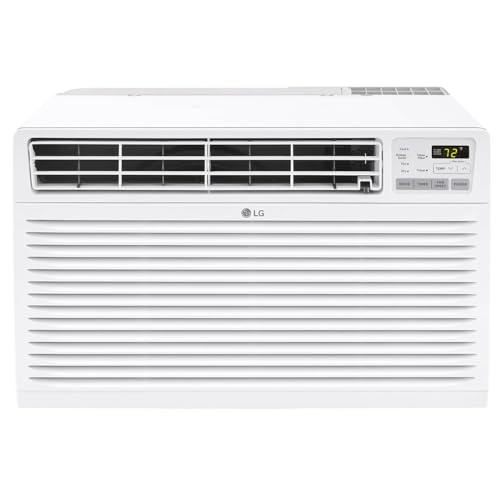
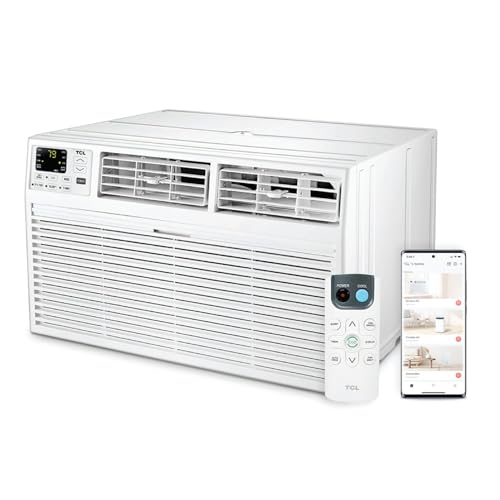
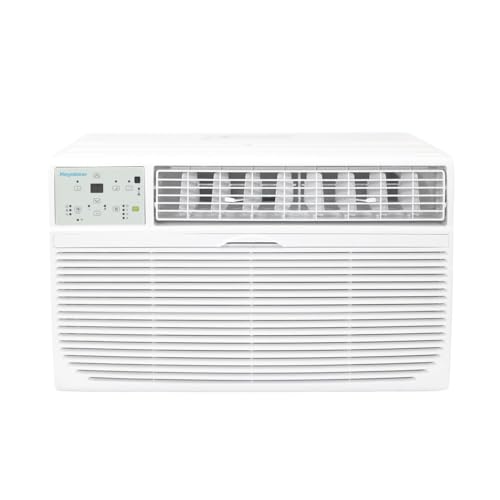
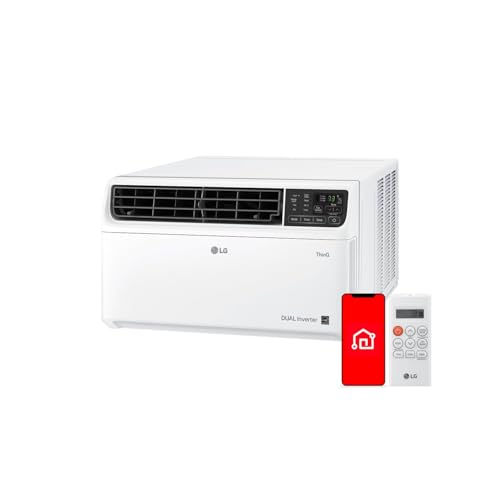
14000 BTU Through the Wall Air Conditioner: The Complete Buyer's Guide
Everything you need to know about sizing, installation, energy efficiency, and choosing the right 14000 BTU through the wall unit for your home or office.
VIEW RECOMMENDED MODELSA 14000 BTU through the wall air conditioner is a permanent cooling solution designed for rooms roughly between 550 and 700 square feet. Unlike window units, it sits inside a wall sleeve, freeing your window and providing a cleaner, more secure installation. This guide walks you through capacity matching, electrical requirements, installation considerations, efficiency ratings, and the features that separate entry-level units from premium models — so you can make an informed decision before you buy.
What's Covered in This Guide
Is 14000 BTU the Right Capacity for Your Room?
Capacity is the single most important factor in comfort and efficiency. A 14000 BTU through the wall air conditioner is generally suited for medium-to-large rooms. Use this quick reference to check whether this capacity aligns with your space:
| Room Size (sq ft) | Recommended Capacity | Match with 14000 BTU |
|---|---|---|
| Up to 150 | 5,000 – 6,000 BTU | Too powerful |
| 150 – 250 | 8,000 – 10,000 BTU | Too powerful |
| 250 – 400 | 12,000 – 14,000 BTU | Good match (upper end) |
| 550 – 700 | 14,000 BTU | Ideal match |
| 700 – 1,000 | 18,000 – 24,000 BTU | Underpowered |
These ranges are starting points. Factors such as ceiling height, insulation quality, window area, sun exposure, and local climate shift the ideal capacity. For a more precise calculation, use our step-by-step AC sizing guide or the BTU calculator by room size. If you are weighing whether a larger capacity is better, read what happens if your AC is too big or too small.
Quick tip: If your room is around 600 sq ft with standard 8-foot ceilings and average insulation, a 14000 BTU through the wall unit is a well-balanced choice. Rooms with heavy sun exposure or poor insulation may need a slightly higher capacity, while very well-insulated spaces may perform well with a 12000 BTU model.
How a Through the Wall Air Conditioner Works
A through the wall air conditioner functions on the same refrigeration cycle as a window unit, but its chassis is mounted inside a metal sleeve embedded in an exterior wall. The evaporator coil absorbs heat from indoor air, the compressor circulates refrigerant, and the condenser coil releases heat outdoors. Because the unit is fixed in place, it offers several advantages:
- Window space preserved: No window is blocked, so natural light and views remain intact.
- Security: The unit is fixed in the wall, making it harder to remove from outside than a window unit.
- Cleaner appearance: The interior face is flush with the wall, and the exterior grille is low-profile.
- Year-round installation: Once the sleeve is in place, the chassis can be removed for service or seasonal storage in cooler climates.
If you are comparing form factors, our guide on window air conditioners and the overview of through the wall AC units can help you weigh the trade-offs. For homes without ductwork, a ductless mini-split system is another permanent option worth considering.
Electrical Requirements for 14000 BTU Units
Most 14000 BTU through the wall air conditioners are available in 115V or 230V configurations. Because of the higher cooling capacity, many models draw enough current to require a dedicated circuit. Before purchasing, confirm the following:
- Voltage: Match the unit to your available outlet. A 110V vs 240V comparison explains the differences.
- Amperage and breaker size: Check the nameplate rating and ensure your breaker and wiring can handle the load. Our guide on amps and breaker size for AC units walks through the calculation.
- Dedicated circuit: Many 14000 BTU models should not share a circuit with other high-draw appliances.
- Plug type: Confirm the plug configuration matches your outlet, or plan for an electrician to install the correct receptacle.
If you are unsure about your panel capacity, read how to check your home electrical panel and whether you need an electrician for AC installation. For related configurations, see the 14000 BTU through the wall AC 115V guide.
Efficiency Ratings: SEER, EER, and ENERGY STAR
Efficiency directly affects long-term operating performance and comfort. When comparing 14000 BTU through the wall models, pay attention to these ratings:
- SEER / SEER2: Seasonal efficiency across the cooling season. Higher ratings indicate better efficiency. Learn the details in what is a SEER rating and SEER vs SEER2 DOE standards.
- EER: Efficiency at a specific test condition. Useful for comparing units in hot climates where peak demand matters. See what is an EER rating.
- ENERGY STAR: Certified models meet stricter efficiency thresholds. Our ENERGY STAR certified AC guide explains the criteria and most energy efficient AC overview highlights top performers.
Inverter-driven compressors can further improve efficiency by modulating speed instead of cycling on and off. If you are considering that technology, read how inverter AC works and inverter vs non-inverter AC.
Efficiency note: A higher-efficiency 14000 BTU unit often delivers better comfort and lower long-term energy use than an entry-level model with the same capacity. Compare SEER2 and EER values side by side, and factor in the climate where the unit will operate.
Installation and Wall Sleeve Considerations
Through the wall installation is more involved than a window unit. The process typically includes:
- Selecting the wall location: Choose an exterior wall with proper clearance and structural support. Avoid areas with plumbing or wiring inside the cavity.
- Framing the opening: The rough opening must match the sleeve dimensions and be properly framed and sealed.
- Installing the wall sleeve: The sleeve provides a secure, weather-tight housing. Some units include a sleeve; others require a separate purchase. See the 26-inch wall sleeve guide for sizing details.
- Electrical work: A dedicated circuit and correct receptacle are often required. Confirm with a licensed electrician.
- Sealing and drainage: Proper flashing, insulation, and condensate drainage prevent water intrusion and efficiency loss.
- Permits: Some jurisdictions require a permit for wall modifications. Check how to get an AC permit and do I need a permit for AC.
Professional installation is strongly recommended to protect the wall structure and ensure code compliance. If you plan to hire a contractor, read how to choose an HVAC contractor and questions to ask your installer. For wall opening dimensions, the 26 x 16 through the wall AC guide is a useful reference.
Key Features to Compare Across 14000 BTU Models
Two units with the same capacity can differ significantly in daily usability. Focus on these features:
- Cooling only vs heat function: A 14000 BTU through the wall AC with heat adds supplemental heating for shoulder seasons. For a broader look, see the through the wall AC overview.
- Control options: Remote control, programmable timers, and Wi-Fi or smart-home integration improve convenience. Our AC with Wi-Fi and smart control guide covers connected features.
- Noise level: Check decibel ratings, especially for bedrooms. The quiet AC guide explains what to look for.
- Air filtration: Washable filters and multi-stage filtration improve indoor air quality. See AC with air purifier features.
- Self-cleaning and moisture control: Useful in humid climates. Read AC with self-cleaning for details.
- Dehumidification: A dry mode helps manage humidity without over-cooling.
- Sleep mode and scheduling: Helpful for bedrooms and home offices.
Quality Tiers: What to Expect at Each Level
Instead of focusing on numerical figures, think in terms of relative positioning within the category. The table below uses universal tier descriptors to help you compare models consistently.
| Tier | Typical Characteristics | Best For |
|---|---|---|
| Entry-level | Core cooling, basic mechanical or digital controls, standard filtration, simpler chassis | Occasional use, rental units, secondary rooms |
| Mid-range | Improved efficiency, remote control, programmable timer, better airflow, quieter operation | Daily use in living rooms and bedrooms |
| Premium | Higher SEER2/EER, heat function, smart controls, enhanced filtration, self-cleaning, smoother compressor modulation | Primary living spaces, homes with high comfort expectations |
| High-end tier | Top-of-category efficiency, advanced connectivity, premium materials, refined airflow and noise control | Long-term installations, energy-conscious households |
As a general rule, mid-range and premium models typically offer smoother temperature control and better long-term efficiency than entry-level units. The difference is most noticeable in rooms used for many hours per day.
Maintenance Tips for Long-Term Performance
Regular maintenance keeps a 14000 BTU through the wall unit running efficiently and extends its service life:
- Clean or replace the air filter every 2–4 weeks during peak season. See how to clean an AC filter and when to replace your AC filter.
- Clean the condenser and evaporator coils annually. Guides: clean condenser coils and clean evaporator coils.
- Check the condensate drain for clogs. If water leaks indoors, see AC leaking water solutions.
- Inspect the exterior grille and sleeve for debris, nests, or corrosion.
- Schedule a seasonal checkup using a seasonal AC checklist.
If the unit stops cooling, blows warm air, or makes unusual noises, consult the troubleshooting guides for AC not cooling, AC blowing warm air, and AC making noise. For issues beyond DIY scope, read when to call an HVAC technician.
Ready to compare models? Browse our curated selection of 14000 BTU through the wall air conditioners below.
EXPLORE RECOMMENDED MODELSFrequently Asked Questions
What room size does a 14000 BTU through the wall air conditioner cool?
A 14000 BTU through the wall air conditioner typically cools a room between 550 and 700 square feet, depending on insulation, ceiling height, sun exposure, and climate. Use our BTU calculator to fine-tune the right capacity for your space.
Does a 14000 BTU through the wall AC require a special electrical circuit?
Most 14000 BTU through the wall units run on 115V or 230V and often require a dedicated circuit. Check the unit's amperage and breaker requirements, and consult a licensed electrician before installation.
Can I install a 14000 BTU through the wall air conditioner myself?
Installing a through the wall unit involves cutting a wall opening, framing, and securing a wall sleeve. While some experienced DIYers handle it, professional installation is recommended to ensure structural integrity, proper drainage, and code compliance.
What is the difference between a through the wall AC and a window AC?
A through the wall AC is installed permanently through an exterior wall, freeing up window space and offering a cleaner look. A window AC sits in a window frame and is easier to move but blocks the window. Through the wall units are often more secure and less obtrusive.
Does a 14000 BTU through the wall air conditioner with heat work in winter?
Models with heat function provide supplemental heating, not full winter coverage. They work well in mild climates or as a secondary heat source. For colder regions, a dedicated heating system is recommended.
Related Guides and Alternatives
Exploring other form factors? These pages may help: