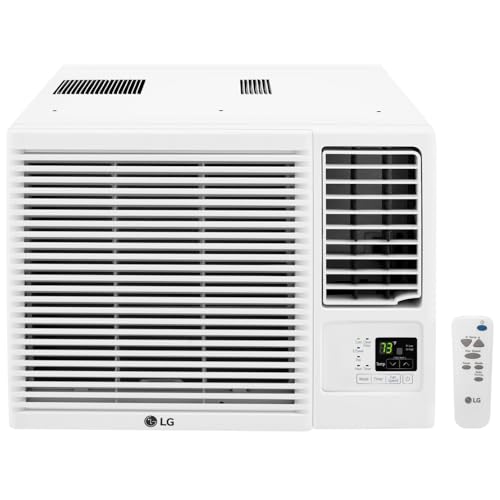
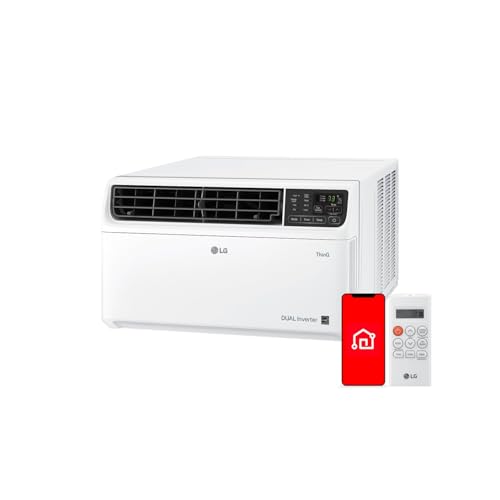
18,000 BTU Casement Window Air Conditioner: The Complete Guide
Everything you need to know about vertical window cooling — sizing, electrical needs, installation, efficiency, and which tier fits your space. Built for shoppers who already know what they want and need clarity before deciding.
START WITH SIZINGA casement window opens vertically or swings outward on a side hinge, which makes it impossible to fit a conventional horizontal window air conditioner. That is exactly where an 18,000 BTU casement window air conditioner earns its place. Its tall, narrow chassis is engineered for vertical window frames, and its cooling capacity is large enough to handle open living spaces, oversized bedrooms, and small apartments that struggle with heat gain.
This guide is written for buyers in the research stage. You already know you need serious cooling from a vertical window opening. What you likely still need is a clear picture of room sizing, voltage requirements, installation reality, and how the tiers of casement units differ in quality and features. Read through, compare the trade-offs honestly, and you will be able to choose with confidence.
Quick orientation: 18,000 BTU is a meaningful step up from the common 8,000–12,000 BTU window units. It sits in the upper-mid to high range for window cooling and is usually the largest sensible choice before you should seriously consider a ductless mini-split or central system instead.
What Exactly Is a Casement Window Air Conditioner?
A casement air conditioner is a window unit built for frames that are taller than they are wide. Instead of resting on a horizontal sill with the bulk of the unit spanning left to right, the casement design slides into the narrow vertical opening and is typically secured with a top and bottom bracket system. Some models are designed for crank-out casement windows; others fit sliding vertical windows.
The key physical difference is proportion. A standard 18,000 BTU window unit is wide and relatively short. An 18,000 BTU casement unit is narrow and tall, which allows it to occupy a vertical frame without leaving awkward gaps or requiring a custom filler panel.
If your window is the more common double-hung style, a casement unit is not the right fit. In that case, a standard 18000 BTU window air conditioner is the appropriate category to research. Understanding the frame type first saves a great deal of time later.
Casement vs. standard window unit: the practical differences
| Feature | Casement Window AC | Standard Window AC |
|---|---|---|
| Window compatibility | Vertical or side-hinged casement windows | Double-hung and sliding horizontal windows |
| Chassis shape | Tall and narrow | Wide and short |
| Typical capacity range | Often 8,000–18,000 BTU | 5,000–25,000 BTU |
| Selection breadth | Narrower market, fewer brands | Very broad, many brands and tiers |
| Installation complexity | Moderate; bracket and sealing are critical | Generally simpler |
| Best for | Homes with casement or vertical windows | Homes with standard double-hung windows |
Because the casement category is smaller, the number of available 18,000 BTU models is limited compared with horizontal units. That makes careful comparison more important, not less. You are choosing from a narrower field, so each specification carries more weight.
How Much Room Does 18,000 BTU Cool?
The textbook figure for 18,000 BTU is roughly 700 to 1,000 square feet, but that number is only a starting point. Real cooling demand depends on ceiling height, insulation quality, window area, sun exposure, and how many people and heat-producing appliances occupy the space. A well-insulated, shaded 950-square-foot room may cool comfortably, while a sun-baked 700-square-foot room with single-pane glass and a west-facing wall may still feel strained.
Use the table below as an orientation tool, not a guarantee. For a more precise figure based on your specific room, a dedicated 18000 BTU cooling area reference walks through the variables in more detail.
Approximate sizing reference
| Room Type | Approximate Floor Area | 18,000 BTU Suitability |
|---|---|---|
| Large master bedroom | 350–500 sq ft | Comfortable, often with headroom |
| Open living room | 500–750 sq ft | Well matched |
| Open-plan living and dining | 750–1,000 sq ft | Appropriate if insulation is reasonable |
| Studio apartment | 500–800 sq ft | Strong choice, especially in hot climates |
| Sunroom or loft | 500–800 sq ft | May be undersized if glazing is extensive |
Factors that change the calculation
- Ceiling height: Rooms above eight feet hold more air volume and need more capacity.
- Sun exposure: West- and south-facing rooms with large windows absorb significantly more heat.
- Insulation and sealing: Leaky windows and doors force the unit to work harder for the same result.
- Occupancy: Each person adds a small but measurable heat load.
- Kitchen proximity: An open kitchen with a running oven or stovetop raises demand noticeably.
- Climate: In a humid region, part of the unit's work goes into moisture removal, not just temperature drop.
One caution worth stating plainly: bigger is not automatically better. An oversized unit cools the air quickly and then cycles off before it has time to remove humidity, leaving the room cold and clammy. If your space is clearly under 600 square feet, a smaller capacity may actually deliver better comfort. If you are unsure whether 18,000 BTU is the right rung on the ladder, comparing it against an 18000 BTU ENERGY STAR model can help you see how efficiency ratings shift the picture at this capacity.
Electrical Requirements: The Detail Buyers Underestimate
An 18,000 BTU air conditioner is not a plug-and-forget appliance. Units at this capacity commonly operate on 230/208 volts rather than the standard 115-volt household circuit. Some models are available in 115-volt configurations, but they draw high current and place real demand on the circuit.
Before ordering anything, confirm three things: the voltage listed in the product specifications, the amperage draw, and whether your home has a compatible outlet on a dedicated circuit. Running a high-draw unit on shared wiring is a genuine safety concern, not a minor inconvenience.
What to verify before purchase
- Voltage requirement (115V vs. 230/208V) printed on the unit's spec sheet
- Amperage rating and whether a dedicated breaker is required
- Plug type and whether a matching outlet already exists in the room
- Circuit capacity and whether other devices share the line
- Local electrical code requirements for window-mounted cooling equipment
If your panel is full, the outlet does not match, or you are uncertain about the wiring, involve a licensed electrician. This is one area where guessing is not worth the risk. If you are also weighing a different installation approach, it is worth understanding how an 18000 BTU through-the-wall air conditioner handles power and placement, since wall-sleeve units sometimes simplify the electrical layout.
Installation Realities for a Vertical Window Frame
Casement installation is more involved than dropping a horizontal unit onto a sill. The unit is heavy, the frame must support it securely, and the seal around the opening determines how much cooling you actually keep inside the room.
Most casement units use a bracket system that supports the unit from the frame and sill, with the window itself often closing against the unit's top panel. The exact method varies by model, so the manufacturer's instructions are not optional reading — they are the procedure.
Step-by-step overview
- Measure the window opening precisely, including height, width, and sill depth. Compare against the unit's minimum and maximum dimensions.
- Check the window mechanism. Crank-out casement windows may need the sash removed or the opening locked in position, depending on the unit design.
- Install the support bracket according to the manual, ensuring it is anchored into solid framing rather than just trim.
- Lift the unit into place with a second person. An 18,000 BTU casement unit is not a one-person lift for most people.
- Seal the perimeter with the supplied insulation panels and weather stripping to prevent air leaks and insect entry.
- Verify drainage. Confirm the unit tilts very slightly outward so condensate drains away from the room.
- Test operation on each mode and fan speed before finalizing the seal.
If your window cannot accommodate a casement unit or the frame is unsuitable, do not force it. Alternative paths include a 18000 BTU mini-split for ductless cooling without window obstruction, or a wall-sleeve approach. Choosing the wrong installation method creates noise, leaks, and premature wear.
Efficiency Ratings and What They Mean at This Capacity
At 18,000 BTU, efficiency differences translate into meaningful comfort and energy-use differences over a full season. The two ratings that matter most for a cooling-only window unit are CEER and, where applicable, the newer SEER2 framework used for central and split systems. Window units are typically rated with CEER, which factors in standby and cycling losses more realistically than the older EER figure alone.
Higher efficiency generally means a more advanced compressor, better coil design, and more careful airflow engineering. In practical terms, a high-end tier casement unit will usually run more smoothly, cycle less abruptly, and hold a steadier temperature than an entry-level model of the same capacity.
Features that correlate with better tiers
| Tier | Typical Characteristics | Best For |
|---|---|---|
| Entry-level | Basic mechanical or simple electronic controls, single or dual fan speeds, standard efficiency | Occasional use, guest rooms, short cooling seasons |
| Mid-range | Digital controls, remote, multiple fan speeds, sleep mode, improved efficiency | Daily use in living areas and master bedrooms |
| Premium | Higher efficiency compressor, quieter operation, advanced timers, better filtration | Long cooling seasons, bedrooms, open living spaces |
| Top-tier / high-end | Best-in-class efficiency, refined airflow, smart or programmable features, durable construction | Primary living spaces, hot climates, buyers prioritizing long-term performance |
If efficiency is a priority for you, it is worth reading a broader explanation of what a SEER rating means before comparing spec sheets, because the terminology across window and split systems can be confusing. The short version: higher ratings cost more upfront and return value through lower energy use over years of operation.
Noise, Airflow, and Day-to-Day Comfort
An 18,000 BTU unit moves a substantial volume of air, and that movement produces sound. Two units with identical capacity can differ noticeably in perceived noise because of fan blade design, compressor isolation, and cabinet insulation. Published decibel figures help, but the difference between a well-engineered mid-range unit and a bare entry-level model is often felt more than measured.
For bedrooms, prioritize models with a genuine low fan speed and a sleep mode that gradually adjusts temperature. For living areas, airflow direction control matters more than raw quietness, since you want the cooled air distributed across the room rather than blasted into one spot.
Comfort features worth prioritizing
- Multiple fan speeds — at least three, with a genuinely quiet low setting
- Adjustable louvers — horizontal and vertical direction control
- Sleep mode — gradual temperature adjustment overnight
- 24-hour timer — useful for pre-cooling before you arrive home
- Washable filter — easy access matters more than filter sophistication
- Dry mode — helpful in humid climates even when temperature is moderate
Maintenance That Protects Performance
A casement unit works hard in a confined installation, and neglect shows up quickly as reduced cooling and higher energy use. The good news is that the maintenance routine is simple and does not require special tools.
Seasonal maintenance checklist
- Clean or rinse the air filter every two to four weeks during heavy use
- Inspect and gently clean the outdoor-side condenser coils at the start of each season
- Check the window seal and insulation panels for gaps or deterioration
- Confirm the unit still tilts slightly outward for drainage
- Clear any debris from the exterior grille and drain path
- Test the remote, timer, and mode functions before the first hot week
- Remove and store the unit, or cover it securely, during the off-season
If cooling performance drops despite clean filters, the cause may be refrigerant-related or mechanical. That is a technician's job, not a DIY project. A broader AC maintenance guide covers the diagnostic signs worth watching for.
Is an 18,000 BTU Casement Unit the Right Choice for You?
This is the decision point most shoppers actually need. An 18,000 BTU casement air conditioner is the right answer for a specific combination of circumstances, and the wrong answer for several others.
Strong fit when:
- Your window is genuinely a casement or vertical sliding style
- The room is roughly 700–1,000 square feet with average heat gain
- You want cooling without ductwork or major structural work
- You have or can install a suitable dedicated circuit
- You prefer a single-unit solution over a multi-component system
Consider alternatives when:
- The room is under 600 square feet — a smaller unit will dehumidify better
- Your window is double-hung — a standard horizontal unit is the correct category
- You want the quietest possible operation — a ductless system generally wins
- Electrical upgrades are impractical — a lower-capacity or 115V option may be safer
- You are cooling multiple rooms — a multi-zone approach is more sensible
For buyers comparing ductless options at the same capacity, a 18000 BTU mini-split air conditioner with heat pump offers year-round capability and quieter operation, at the trade-off of professional installation and a higher position in the market. Neither option is universally better; they solve different problems.
Final Pre-Purchase Checklist
Before you commit to any specific model, run through this list. Each item corresponds to a mistake buyers commonly make with high-capacity casement units.
- Window opening measured and matched to the unit's stated dimensions
- Window style confirmed as casement or vertical sliding
- Voltage and amperage verified against your home's electrical setup
- Outlet type and circuit capacity confirmed
- Room size and heat gain factors reviewed honestly
- Efficiency rating compared within the same capacity class
- Noise level and fan speed range checked against your tolerance
- Warranty terms and service network reviewed
- Installation bracket and sealing kit included or sourced
- Plan for seasonal removal or covering in place
One last thought on tiers: at 18,000 BTU, the gap between an entry-level unit and a premium unit is usually most visible in noise, temperature stability, and long-term durability rather than in raw cooling power. If this unit will run daily through a long cooling season, the higher tier is generally the more sensible long-term investment. If it will run occasionally, an entry-level or mid-range model covers the need without excess.
Frequently Asked Questions
What size room can an 18,000 BTU casement window air conditioner cool?
Typically around 700 to 1,000 square feet, but the real figure depends on ceiling height, insulation, window area, sun exposure, and climate. A shaded, well-insulated room at the upper end of that range may cool comfortably, while a sun-baked room with single-pane glass may need more capacity or better sealing.
Is a casement window air conditioner different from a standard window unit?
Yes. Casement units are built for vertical or side-hinged windows, so the chassis is tall and narrow rather than wide and short. They generally will not fit double-hung windows, and standard horizontal units will not fit casement frames. The two categories are not interchangeable.
Do I need a dedicated electrical circuit for an 18,000 BTU casement AC?
Strongly recommended. Units at this capacity commonly operate on 230/208 volts and draw enough current that a dedicated circuit is the safe approach. Verify the voltage and amperage in the manual and consult a licensed electrician if your panel or wiring is uncertain.
Can an 18,000 BTU casement air conditioner be used in a bedroom?
It can, but the capacity is usually larger than a typical bedroom requires. For sleeping areas, prioritize multiple fan speeds, a quiet low setting, and a sleep mode. If the bedroom is under 500 square feet, a smaller unit will typically provide better humidity control and more comfortable cycling.
How often should the filter be cleaned?
Every two to four weeks during periods of heavy use. A clogged filter reduces airflow, forces the compressor to work harder, and can cause the evaporator coil to ice over. Cleaning is quick and requires no tools on most models.
Will a casement unit fit any vertical window?
No. It must match the opening's height, width, and sill depth within the manufacturer's specified range, and the frame must be able to support the unit's weight. Crank-out casement windows sometimes require the sash to be removed or fixed open, depending on the model's design.
Ready to Compare Casement Units?
Browse recommended 18,000 BTU casement window air conditioners below, with affiliate links to check availability and current specifications.
VIEW RECOMMENDED MODELS