18000 BTU Air Conditioner Energy Star: The Complete Buyer's Guide
Everything you need to know about 18,000 BTU ENERGY STAR certified air conditioners — coverage area, efficiency ratings, electrical requirements, and how to choose the right model for your space.
Explore Top PicksWhat an 18000 BTU ENERGY STAR Air Conditioner Actually Delivers
An 18,000 BTU air conditioner sits in the upper-middle band of residential cooling capacity. In practical terms, 18,000 BTU is roughly equivalent to a 1.5-ton system — enough muscle to cool a large living room, an open-plan kitchen and dining area, or a pair of connected bedrooms. When that capacity is paired with ENERGY STAR certification, you get a unit that meets the U.S. Environmental Protection Agency's efficiency guidelines rather than merely clearing the federal minimum standard.
The ENERGY STAR label is not decoration. Certified units are independently verified to consume less electricity per unit of cooling than comparable non-certified models. For an 18,000 BTU unit that may run six to ten hours a day through summer, that difference compounds into meaningfully lower energy consumption across the season. If you are still deciding whether the certification justifies the higher tier, the short answer is that it does for any unit used regularly — the long-term investment logic holds up.
Quick orientation: 18,000 BTU is the sweet spot between single-room window units and whole-home central systems. It is the capacity most often chosen for a large primary living space, a finished basement, a garage conversion, or a small open-plan floor. If your target room is around 700–900 square feet, this is likely the right capacity band.
Room Coverage: How Much Space Does 18000 BTU Cool?
The commonly cited rule of thumb places 18,000 BTU in the 700 to 900 square foot range. That figure, however, is a starting point, not a guarantee. Several variables shift the effective coverage of any unit:
- Ceiling height: Standard 8-foot ceilings are assumed in the 700–900 sq ft estimate. A room with 10-foot ceilings holds roughly 25 percent more air volume and may need to be treated as larger.
- Insulation quality: A well-insulated modern room cools more easily than an older room with single-pane windows and unsealed gaps. Poorly insulated spaces push the effective capacity toward the lower end of the range.
- Sun exposure and window area: West-facing rooms with large glazing gain considerable heat load in the afternoon. Shade trees, exterior blinds, and low-e glass reduce that burden.
- Occupancy and appliance load: A home office with multiple monitors and a gaming setup generates more internal heat than a bedroom used only for sleeping.
- Climate zone: A unit in a hot, humid region works harder than the same unit in a mild coastal climate. Humidity adds latent load that sensible-capacity estimates ignore.
For a more precise figure, use a proper load calculation rather than a simple square-footage multiplier. The Manual J load calculation method accounts for insulation, windows, orientation, and climate zone. For a faster estimate, the BTU calculator by room size provides a reasonable starting point, and the general guide to sizing an air conditioner walks through the full process.
One common sizing mistake deserves emphasis: installing a unit that is too large for the space. An oversized unit short-cycles — it blasts cold air, hits the thermostat setpoint quickly, and shuts off before it has removed adequate humidity. The result is a room that feels cold and clammy. The consequences of an oversized or undersized AC are worth understanding before committing to a capacity. For a closer look at the specific coverage figures, the 18000 BTU cooling area breakdown gives room-by-room context.
ENERGY STAR and SEER: What the Ratings Mean in Practice
ENERGY STAR certification is tied to SEER2 (Seasonal Energy Efficiency Ratio, second edition) under current Department of Energy standards. For ductless mini-split systems, the certification threshold sits at a SEER2 rating that varies by region but generally starts around 15 in the northern tier and rises for southern zones. Many 18,000 BTU inverter models comfortably exceed the threshold, reaching SEER2 values in the high teens to low twenties.
What does that mean for your daily experience? A higher SEER2 rating indicates the unit converts a greater share of the electricity it draws into actual cooling. Inverter-driven compressors achieve this by modulating speed rather than cycling fully on and off. The practical outcome is steadier temperature, lower humidity swings, and reduced energy consumption during long cooling sessions.
If the acronyms are unfamiliar, the explainer on what a SEER rating is covers the fundamentals. The comparison of SEER vs SEER2 under DOE standards clarifies why older SEER figures are not directly comparable to current labels. And the overview of ENERGY STAR certified AC units explains exactly what the label requires. For the broader efficiency picture, EER and HSPF ratings round out the picture, particularly if the unit also provides heating.
| Efficiency Tier | Typical SEER2 Range | Best For |
|---|---|---|
| Standard (meets federal minimum) | Around 14–15 | Occasional use, mild climates, secondary rooms |
| ENERGY STAR certified | 15 and above | Daily cooling, primary living spaces, warm climates |
| High-efficiency inverter | High teens to low twenties | All-day operation, humidity control, multi-zone setups |
Unit Types at 18000 BTU: Window, Mini-Split, Through-the-Wall, and Portable
The 18,000 BTU capacity is available across several form factors, and the right choice depends on your installation constraints and how much you value quiet operation.
Ductless Mini-Split
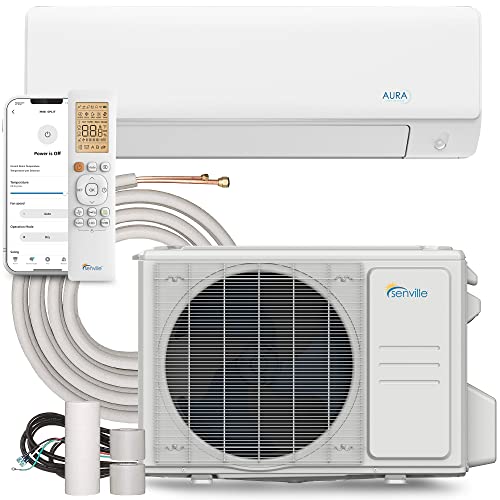
Mini-splits are the most common 18,000 BTU ENERGY STAR configuration. The compressor sits outdoors, the air handler mounts on a wall indoors, and only a small refrigerant line set passes through the wall. The result is quiet indoor operation and high efficiency. A 18000 BTU mini-split is an excellent fit for a living room or open-plan area where noise matters. If heating is also required, the 18000 BTU mini-split heat pump version adds cold-climate capability, and the 17 SEER mini-split with heater combines efficiency with year-round function. The main trade-off is that mini-splits require professional refrigerant handling and a licensed installer.
Window Unit
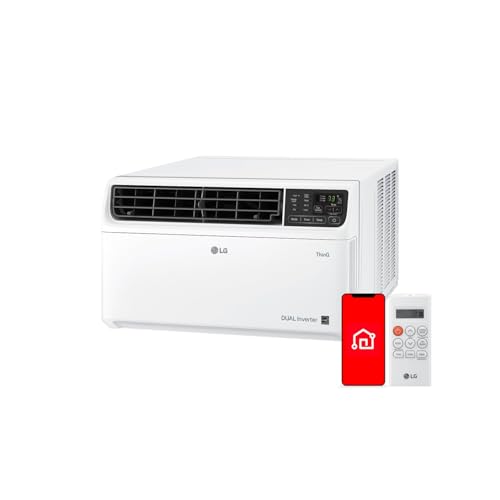
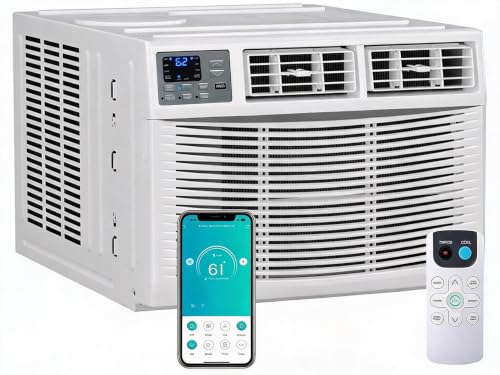
A window unit at 18,000 BTU is a heavy, bulky machine that needs a sturdy window frame and often a support bracket. These units are typically 230V and can cool a large room effectively, but they are noisier than a mini-split and less efficient. The 18000 BTU window unit overview covers what to expect. A related option is the casement window 18000 BTU model, designed for vertical-sliding window styles. For units that pair cooling with heating, the 18000 BTU window AC with heat pump is worth a look.
Through-the-Wall
Through-the-wall units mount in a sleeve cut into an exterior wall. They are common in hotels, apartments, and older homes built with wall sleeves. At 18,000 BTU, these units are sturdy and unobtrusive compared with a window-mounted machine, though installation requires wall modification. The 18000 BTU through-the-wall guide explains the sleeve and installation requirements, and the through-the-wall model with heat covers the heating variant.
Portable
Portable units at 18,000 BTU exist but are less common because the single-hose or dual-hose exhaust design becomes cumbersome at that capacity. They are best reserved for rooms where window or wall installation is impossible. If portability is the priority, compare the general trade-offs of portable air conditioners before settling on capacity.
Installation reality check: Mini-splits and through-the-wall units generally require a licensed HVAC technician. Window units can be DIY-installed but need proper support at 18,000 BTU. Portable units need only a window for the exhaust hose but are the least efficient option at this capacity.
Electrical Requirements: What an 18000 BTU Unit Draws
At 18,000 BTU, most units run on 230V or 240V, not a standard 115V household outlet. The compressor load at this capacity is typically too high for a 15-amp 115V circuit. A dedicated circuit is usually required, and the breaker size varies by model — commonly 20 amps, sometimes 25 or 30 amps.
During normal operation, an 18,000 BTU unit on a 230V circuit typically draws between 7 and 10 amps. Startup draw is higher for a brief moment when the compressor engages. Inverter models soften that startup, which is one reason they pair well with standard residential wiring. For a deeper explanation, the overview of amps and breaker size for an AC walks through the calculation. The comparison of 110V vs 240V air conditioners clarifies why 18,000 BTU units almost universally land on the 240V side.
Before purchasing, confirm three things: the circuit voltage available where the unit will install, the breaker amperage, and whether a dedicated outlet exists. If the answer to any of those is uncertain, the guide on whether you need an electrician for an AC installation is a useful next step. For through-the-wall and window units, the required plug type is also worth verifying — the explainer on the 240-volt AC plug covers the common configurations, and the 30-amp AC plug explainer covers the higher-amperage variant.
Features That Matter at This Capacity
An 18,000 BTU ENERGY STAR unit is a significant appliance, and the feature set should match the level of investment. The following features tend to matter most in daily use:
- Inverter compressor: Modulates speed for steadier temperature and better humidity control. The explainer on how an inverter AC works covers the mechanism, and the comparison of inverter vs non-inverter weighs the trade-offs.
- Programmable or smart thermostat: Scheduling reduces runtime during unoccupied hours. The guide to using a programmable thermostat covers setup basics, and AC with Wi-Fi and smart control covers app-connected options.
- Quiet operation: At 18,000 BTU, fan noise becomes noticeable. The guide to quiet air conditioners explains what decibel ratings to expect.
- Self-cleaning or filter reminders: Helpful for maintaining efficiency over time. The self-cleaning feature overview explains the mechanism.
- Air purification: Some models include washable or replaceable filters with antimicrobial treatment. The AC with air purifier guide covers the options.
- Heating capability: A heat pump variant extends use into shoulder seasons. The AC with heat pump overview explains the difference from a cooling-only unit.
Market Tiers: Entry-Level, Mid-Range, and High-End at 18000 BTU
Rather than anchoring on numerical figures, it helps to understand where an 18,000 BTU ENERGY STAR unit sits in the broader market. Three broad tiers are useful for orientation:
Essential Cooling
Meets ENERGY STAR requirements, typically single-zone, with a basic remote and a standard filter. Solid for a secondary room or a renter's space where installation simplicity matters. Build quality is adequate but not heavy-duty.
Balanced Performance
Adds an inverter compressor, quieter operation, a programmable thermostat, and often a better filter system. This tier is the most common choice for a primary living space used daily. Good value for its class without over-specifying.
Flagship Efficiency
Highest SEER2 ratings, premium build quality, advanced filtration, smart-home integration, and the quietest operation. Suited to all-day cooling in a warm climate or a multi-zone setup where the compressor runs frequently. A long-term investment.
The middle tier is typically the strongest match for most households. Moving up to the high-end tier makes the most sense when the unit will run many hours per day or when noise sensitivity is high. The entry-level tier is fine for a bedroom or a space used intermittently, but it leaves efficiency and quietness on the table.
Advantages and Trade-offs of 18000 BTU ENERGY STAR Units
Advantages
- Certified efficiency reduces electricity consumption over a full season
- Capacity suits large living rooms and open-plan spaces without oversizing
- Inverter models offer steady temperature and better humidity control
- Available across multiple form factors for different installation constraints
- Heat pump variants extend use into cooler months
- Quieter than smaller window units when configured as a mini-split
Trade-offs
- Requires a 230V/240V circuit in most cases, not a standard 115V outlet
- Mini-split installation involves professional refrigerant handling
- Window units at this capacity are heavy and need sturdy support
- Oversizing is a risk in poorly insulated rooms — sizing must be checked carefully
- Higher tier than entry-level units, though efficiency offsets the gap over time
- Portable configurations at this capacity are cumbersome and less efficient
Buyer's Checklist Before You Commit
Verify these points before ordering:
- Confirm the target room's square footage and ceiling height against the 700–900 sq ft guideline
- Check whether the electrical circuit is 230V/240V and confirm breaker amperage
- Confirm the plug type matches the outlet where the unit will install
- Verify the unit carries the ENERGY STAR label and note the SEER2 rating
- For mini-splits, confirm a licensed installer and confirm line-set length requirements
- For window units, measure the window opening and confirm support bracket availability
- For through-the-wall units, confirm the existing sleeve dimensions match the new unit
- Review the filter type and replacement availability for long-term maintenance
- Check the warranty terms for both parts and the compressor
For a fuller picture of costs and process, the installation estimate overview and the installation breakdown guide cover what professional installation involves. If you are comparing replacement against repair for an existing unit, the replace vs repair analysis is a useful read.
Frequently Asked Questions
What room size does an 18000 BTU air conditioner cool?
An 18000 BTU air conditioner typically cools a room between 700 and 900 square feet, depending on ceiling height, insulation, window area, and local climate. Rooms with heavy sun exposure or poor insulation should be sized at the lower end of that range. A room with high ceilings or large west-facing windows may need a careful load calculation rather than a simple square-footage estimate.
Is an 18000 BTU air conditioner with ENERGY STAR certification worth it?
Yes. ENERGY STAR certified units meet strict efficiency guidelines set by the EPA, and an 18000 BTU model uses noticeably less electricity than a comparable non-certified unit over a full cooling season. The higher initial tier is offset by lower operating consumption, especially for units running many hours per day. The efficiency gap matters most in warm climates and for units used daily.
What SEER rating should an 18000 BTU ENERGY STAR AC have?
For ductless mini-splits, ENERGY STAR certification generally requires a SEER2 rating of 15 or higher in most regions. Many 18000 BTU inverter models reach SEER2 values in the high teens to low twenties, which places them in the high-efficiency tier. The exact threshold varies by region and system type, so confirm the rating on the specific model's label.
Can an 18000 BTU air conditioner run on a standard 115V outlet?
Most 18000 BTU units require a 230V or 240V circuit, because the compressor load at that capacity is too high for a standard 115V household outlet. A few window models exist in 115V configurations, but they are the exception rather than the rule. Always confirm the electrical requirement before purchase, and check whether a dedicated circuit is needed.
How many amps does an 18000 BTU air conditioner draw?
An 18000 BTU unit on a 230V circuit typically draws between 7 and 10 amps during normal operation, with a higher momentary draw at compressor startup. A dedicated 20-amp breaker is common, though some models specify a 25-amp or 30-amp circuit. The nameplate rating on the specific unit is the definitive figure; do not size a breaker from a general rule alone.
Is a mini-split or a window unit better for 18000 BTU cooling?
Mini-splits are quieter, more efficient, and better suited to cooling multiple zones or rooms without ductwork. Window units at this capacity are heavier, noisier, and less efficient, but they install without professional refrigerant work. For a single room where noise matters, a mini-split is the stronger choice; for a quick retrofit where installation simplicity is the priority, a window unit may suffice. The trade-off is essentially between installation convenience and long-term quiet efficiency.
Making the Final Decision
An 18000 BTU ENERGY STAR air conditioner is a substantial purchase, and the right choice depends on your room, your electrical setup, and how often the unit will run. The certification is a meaningful efficiency signal, not a marketing tag — it indicates verified performance against a third-party standard. Pair that with a correctly sized unit for your space, a confirmed electrical circuit, and a form factor that fits your installation constraints, and you have the foundation for a comfortable, efficient cooling setup.
If you are still narrowing down the capacity, the 18000 BTU cooling area guide and the full sizing guide are the most direct next steps. For a broader look at how an 18,000 BTU unit compares with the next capacity bands, the 16000 BTU overview and the 18000 BTU window unit guide provide useful context. And for the efficiency side, the ENERGY STAR certified AC overview explains exactly what the label requires.