18,000 BTU Window Air Conditioner: Complete Buyer's Guide
Learn how this capacity class works, which rooms it suits, what electrical setup it needs, and how to choose a reliable unit for large-space cooling.
EXPLORE BUYING FACTORSWhy this guide matters: An 18,000 BTU window air conditioner sits in a specific niche — powerful enough for large rooms, but still a single-room solution. Understanding its real-world limits helps you avoid oversizing, electrical problems, and disappointing cooling performance. This page walks you through sizing, installation, efficiency, and maintenance so you can make an informed decision.
What an 18,000 BTU Window Air Conditioner Really Is
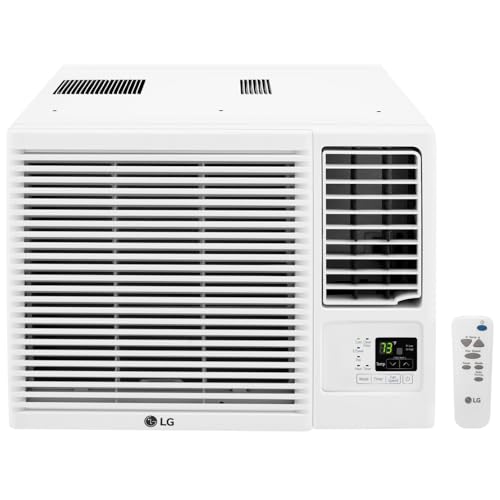
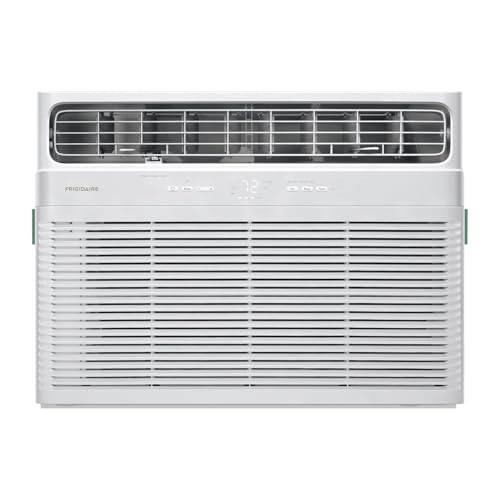
BTU, or British Thermal Unit, measures cooling capacity. An 18,000 BTU window air conditioner is a high-capacity single-room unit designed to remove a substantial amount of heat from a large space. Unlike central systems, it is a self-contained package: the compressor, condenser, evaporator, and controls all sit inside one chassis that mounts in a window opening.
This capacity class is often confused with small mini-splits or portable units. The key difference is installation. A window unit relies on a stable window frame and typically requires a dedicated electrical circuit. If you are still comparing form factors, our overview of window air conditioners explains how they differ from portable air conditioners and ductless mini-split systems.
Room Sizing: How Much Space Can 18,000 BTU Cool?
As a general rule, an 18,000 BTU window unit is appropriate for rooms in the range of roughly 700 to 1,000 square feet. That range is not absolute. Real-world performance depends on several factors:
- Ceiling height: Standard 8-foot ceilings are assumed. Higher ceilings increase the volume of air to cool.
- Insulation quality: Poorly insulated walls and attics let heat infiltrate faster, reducing effective cooling.
- Sun exposure: West- and south-facing rooms with large windows gain more heat and may need the upper end of the range or a step up in capacity.
- Occupancy and appliances: Kitchens, home offices with multiple devices, and rooms with many occupants generate additional heat.
- Climate: In hot, humid regions, the unit works harder to remove both heat and moisture.
If your room is closer to 1,000 square feet or has challenging conditions, review our guide to 18,000 BTU cooling area for a more detailed breakdown. For rooms that fall slightly below this range, a 15,000 BTU air conditioner may be a better match. For rooms that exceed it, consider a 24,000 BTU cooling area or a different system type entirely.
Oversizing warning: Installing a unit that is too powerful for the room causes short cycling — the compressor turns on and off rapidly. This wastes energy, wears out components faster, and leaves the room feeling clammy because moisture is not removed properly. Match capacity to the room, not to a guess.
Electrical Requirements: Voltage, Amps, and Circuit Setup
This is the most common point of confusion for buyers. Most 18,000 BTU window air conditioners require a 230V or 240V dedicated circuit. They are not plug-and-play devices for a standard 115V wall outlet. Before purchasing, confirm three things:
- Voltage: The product specification should clearly state 230V or 240V. A small number of models at this capacity are designed for 115V, but they are uncommon.
- Amperage: Most units in this class draw roughly 7 to 9 amps on a 230V circuit, but always check the nameplate rating. The circuit breaker is typically 20 amps, dedicated to the unit.
- Plug type: High-capacity window units often use a specific plug configuration, such as a 6-20P or similar. Verify that your outlet matches before installation.
If your home does not have a suitable circuit near the window, an electrician will need to install one. This is a significant consideration that affects total project planning. For a broader discussion of voltage options, see our comparison of 110V vs 240V air conditioners and our guide to amps and breaker size for AC units.
Features That Matter in This Capacity Class
At 18,000 BTU, the differences between entry-level and premium models become more pronounced. Here is what to prioritize:
Compressor Technology: Inverter vs Non-Inverter
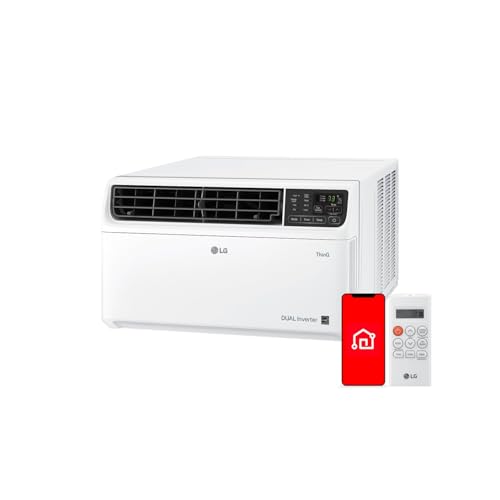
Inverter-driven compressors modulate speed continuously rather than cycling on and off at full power. The result is more stable room temperature, quieter operation, and better energy efficiency in the long run. Non-inverter units are simpler and often found in entry-level models, but they are less efficient under partial load. Our guide to inverter AC technology explains the trade-offs in detail.
Efficiency Rating
Efficiency is expressed through ratings such as SEER, EER, and the newer SEER2 standard. Higher ratings mean less energy consumed per unit of cooling. For a unit that may run for many hours during summer, efficiency differences compound over time. Look for models that are competitive within their class, and consider ENERGY STAR certified AC units as a baseline for efficiency.
Noise Level
Window units are inherently noisier than mini-splits because the compressor and fan are in the same chassis as the indoor air path. Look for models with published decibel ratings and features like quiet-mode fan settings. If noise is a primary concern, compare with quiet air conditioner options across categories.
Smart Controls and Scheduling
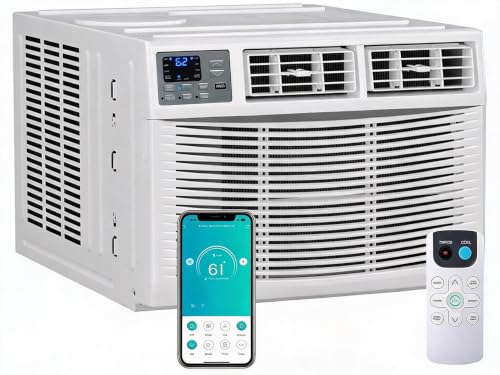
Wi-Fi connectivity, programmable timers, and remote control via smartphone app are increasingly common. These features help you avoid cooling an empty room. See our guide to AC units with Wi-Fi and smart control for what to expect.
Heating Function
Some models include a heat pump or electric heating element, making them useful in shoulder seasons. If you need year-round comfort from a single unit, explore 18,000 BTU window AC options and our page on the 18,000 BTU window air conditioner with heat pump.
Installation: What to Expect
Installing an 18,000 BTU window unit is more involved than hanging a small 5,000 BTU unit. The chassis is heavier, and the electrical requirements are stricter. Key steps include:
- Window assessment: Confirm the window type, width, and height match the unit's requirements. Double-hung windows are the most common fit; casement and slider windows may need special brackets or a different unit type, such as an 18,000 BTU casement window air conditioner.
- Support bracket: Larger units typically require an exterior support bracket to bear the weight safely. Do not rely on the window frame alone.
- Sealing: Use the included insulation panels and foam to seal gaps around the unit. Poor sealing lets hot air in and undermines performance.
- Slight tilt: The unit should tilt slightly toward the outside so condensate drains properly. Check the manufacturer's instructions for the exact angle.
- Electrical verification: Confirm the circuit is dedicated and matches the unit's plug type before powering on.
If you are unsure about the electrical work, consult a licensed electrician. Our guide on whether you need an electrician for AC installation covers the scenarios where professional help is essential.
Efficiency and Long-Term Running Characteristics
An 18,000 BTU unit is a substantial appliance. Its energy use is proportional to how hard it works. Several factors influence long-term efficiency:
- Correct sizing: An appropriately sized unit runs efficiently and removes humidity properly. An oversized unit short cycles and wastes energy.
- Filter maintenance: A clogged filter restricts airflow and forces the compressor to work harder. Clean or replace the filter regularly.
- Window sealing: Gaps around the installation let conditioned air escape and hot air enter.
- Thermostat strategy: Setting the temperature a few degrees higher while sleeping or away reduces runtime without sacrificing comfort.
For a deeper look at efficiency ratings, see our explanations of what a SEER rating is and SEER vs SEER2 under DOE standards.
Maintenance: Keeping a High-Capacity Unit Reliable
Window units in this class benefit from routine care. A few habits extend service life and maintain cooling performance:
- Clean the filter every two to four weeks during heavy use. Most filters are washable; let them dry fully before reinstalling.
- Inspect the outdoor side for debris, leaves, and dirt buildup on the condenser coils. A gentle rinse with a garden hose, with the unit unplugged, helps maintain heat transfer.
- Check the drain path to ensure condensate flows out rather than pooling inside the chassis.
- Schedule a professional check every few years if the unit runs heavily. Our guide on when to call an HVAC technician explains the signs that warrant professional attention.
If you notice reduced cooling, unusual noises, or water leakage, our troubleshooting guides on AC not cooling and AC leaking water cover common causes and fixes.
Buying Factors: A Practical Checklist
Before choosing a specific model, work through this checklist:
- Measure the room and assess insulation, sun exposure, and occupancy. Confirm that 18,000 BTU is the right capacity.
- Inspect the window for type, dimensions, and structural suitability. Determine whether a support bracket is needed.
- Verify the electrical setup. Confirm voltage, amperage, plug type, and whether a dedicated circuit exists or must be added.
- Decide on features that matter to you: inverter compressor, heating function, smart controls, noise level, or a self-cleaning function.
- Compare efficiency ratings within the class. Higher efficiency is a long-term investment.
- Check warranty terms for the sealed system and compressor, which are the most critical components.
If your home has no suitable window or you prefer a less intrusive installation, alternatives such as an 18,000 BTU mini-split or an 18,000 BTU through-the-wall air conditioner may be worth considering.
Feature Tiers at a Glance
The table below uses neutral tier descriptors to help you frame your options. It does not include pricing and is intended as a relative comparison.
| Tier | Typical Characteristics | Best For |
|---|---|---|
| Entry-level | Non-inverter compressor, basic mechanical or simple electronic controls, standard efficiency | Buyers who need straightforward cooling for a large room and prioritize simplicity |
| Mid-range | Improved efficiency, quieter fan settings, remote control, programmable timer, better build quality | Most households seeking a balance of performance, comfort, and long-term efficiency |
| High-end tier | Inverter compressor, higher SEER/EER, smart connectivity, heating function, premium noise reduction | Buyers who want maximum comfort, efficiency, and feature richness for a primary living space |
Frequently Asked Questions
What size room does an 18,000 BTU window air conditioner cool?
An 18,000 BTU window air conditioner is typically designed for rooms between roughly 700 and 1,000 square feet, depending on ceiling height, insulation, sun exposure, and the number of occupants. Rooms with poor insulation or large sun-facing windows may need a higher capacity.
Does an 18,000 BTU window AC run on 115V or 240V?
Most 18,000 BTU window air conditioners require a 230V or 240V dedicated circuit because of the higher amperage draw. A small number of high-efficiency models may be designed for 115V, but these are uncommon at this capacity. Always confirm the electrical requirement before purchasing.
How many amps does an 18,000 BTU window AC use?
An 18,000 BTU window unit typically draws around 7 to 9 amps on a 230V circuit, though this varies by model and efficiency rating. The circuit breaker should be sized according to the manufacturer's specification, commonly a 20-amp dedicated circuit.
Is an 18,000 BTU window AC better than a mini-split?
It depends on the application. A window unit is simpler to install and works well when a suitable window and dedicated circuit are available. A mini-split offers quieter operation and more flexible indoor placement but requires professional installation and refrigerant line routing. For single-room cooling where a window is available, an 18,000 BTU window unit is a practical choice.
What SEER rating should I look for in an 18,000 BTU window AC?
Higher SEER ratings indicate greater energy efficiency. For window units at this capacity, look for models with competitive efficiency for their class. ENERGY STAR certified models meet stricter efficiency requirements and are generally a solid long-term investment.