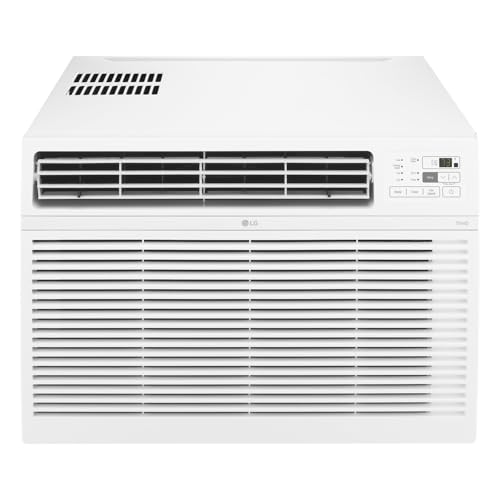
24000 BTU Air Conditioner: The Complete Guide for Large Spaces
A 24000 BTU air conditioner sits in the high-capacity segment of residential cooling. This guide explains what it can cool, which system types use this capacity, how efficiency ratings affect operation, and what to check before you commit to a purchase.
Explore the Buying GuideQuick answer: A 24000 BTU air conditioner is generally the right capacity for spaces between 1,000 and 1,500 square feet. It is roughly equivalent to a 2-ton cooling system and is commonly found in large living rooms, open-plan layouts, finished basements, and small commercial rooms. Room conditions matter as much as square footage, so use this figure as a starting point, not a final answer.
What Does 24000 BTU Actually Mean?
BTU, or British Thermal Unit, measures how much heat an air conditioner can remove from a space in one hour. A 24000 BTU unit removes 24,000 BTUs of heat per hour, which translates to roughly 2 tons of cooling capacity. Tonnage in HVAC is a capacity term, not a weight, and one ton equals 12,000 BTU.
This capacity class is a meaningful step up from the common 12000–14000 BTU range. Where a 12,000 BTU unit suits a bedroom or a single large room, a 24000 BTU system is designed for larger, more demanding spaces or for cooling several connected areas through a ducted or multi-zone setup.
Capacity alone does not guarantee comfort. An oversized unit short-cycles, switching on and off frequently, which leaves humidity poorly controlled and adds wear to the compressor. An undersized unit runs continuously without reaching the set temperature. Matching capacity to the actual load is the single most important decision in this category.
How Much Space Can a 24000 BTU Unit Cool?
The widely used rule of thumb is 20 BTU per square foot of floor area. That places a 24000 BTU unit at roughly 1,200 square feet, with a practical working range of 1,000 to 1,500 square feet depending on conditions.
| Space Type | Typical Area | Suitability for 24000 BTU |
|---|---|---|
| Large living room | 600–900 sq ft | Strong match, often with reserve capacity |
| Open-plan living and kitchen | 900–1,300 sq ft | Good match if airflow is well distributed |
| Finished basement | 1,000–1,400 sq ft | Good match, often aided by cooler ground temperatures |
| Small commercial room or studio | 800–1,200 sq ft | Good match, confirm occupancy heat gains |
| Whole small home | Up to 1,200 sq ft | Possible with a ducted or multi-zone system |
Several factors push the required capacity up or down. Southern and western exposures, large unshaded windows, vaulted ceilings, poor insulation, and kitchens with appliances all add load. Shaded rooms, mild climates, and well-sealed construction reduce it. For a precise figure, a room-by-room load calculation is the reliable method rather than a square-foot estimate.
Which System Types Offer 24000 BTU Capacity?
This capacity is available across several formats, and each suits a different installation scenario. Understanding the trade-offs helps narrow the field before comparing individual models.
Window Unit
A single self-contained package that mounts in a window opening. Straightforward to install where the opening and electrical service allow, but heavier and louder than split systems.
Mid-range installation complexityMini-Split System
An indoor air handler paired with an outdoor condenser connected by refrigerant lines. Quiet, efficient, and flexible in placement. Requires professional installation.
Premium comfort tierThrough-the-Wall Unit
A sleeve-mounted unit that frees the window and can be permanently installed. Common in older buildings with existing wall sleeves.
Mid-range installation complexityPortable Unit
Freestanding with a hose vented through a window. Flexible for renters, though generally less efficient at this capacity and noisier under load.
Entry-level installation complexityThe 24000 BTU window unit is a common entry point for homeowners who want high capacity without a split-system installation. The 24000 BTU mini-split air conditioner with heat pump adds year-round heating and typically delivers the quietest, most efficient operation in this class. A 24000 BTU window unit with heat is an option where a single unit must handle both seasons.
Window Unit vs Mini-Split at 24000 BTU
These are the two most practical formats for residential buyers at this capacity, and the choice usually comes down to installation tolerance, noise expectations, and efficiency priorities.
24000 BTU Window Unit
- Self-contained and relatively simple to install
- No refrigerant line work required
- Cooling is concentrated in one room
- Higher operating noise at the indoor face
- Window opening and support bracket required
24000 BTU Mini-Split
- Indoor unit operates very quietly
- Inverter compressors deliver smoother, more efficient output
- Heat pump variants provide heating as well
- Professional installation and line routing required
- Long-term investment with a strong efficiency profile
If the goal is a single large room and installation simplicity matters, a window unit is the pragmatic choice. If quiet operation, efficiency, and multi-season use are priorities, a mini-split is the stronger fit. For buyers comparing broader capacity options, the 18000–24000 BTU category covers the adjacent range, and the 30000–36000 BTU category begins the next step up.
Efficiency Ratings That Matter at This Capacity
A 24000 BTU unit consumes noticeably more energy than smaller units, so efficiency deserves careful attention. Three ratings are relevant:
- SEER2 measures seasonal cooling efficiency. Higher values indicate better performance across a cooling season. Current DOE minimums vary by region, and premium inverter models exceed them comfortably.
- EER2 measures efficiency at a specific peak test condition. It is useful for hot-climate buyers where the unit runs near maximum output for long periods.
- HSPF2 applies to heat pump models and measures heating efficiency. It matters if the unit will be used through winter.
Inverter compressor technology is the main differentiator in this class. A variable-speed inverter modulates output to match the load instead of cycling on and off, which improves comfort, reduces humidity swings, and lowers standby losses. The guide to SEER, EER, and HSPF ratings explains how each metric is calculated and which one best reflects real-world use.
An ENERGY STAR certified model is a useful filter when browsing, though certification thresholds evolve. Confirm the certified rating on the current product listing rather than assuming a certification mark reflects the latest standard.
Electrical and Installation Requirements
A 24000 BTU air conditioner draws substantial current. Most models in this class require a dedicated 240-volt circuit, and some window units are hardwired or use a specific plug type. Before purchasing, check three things:
- Voltage and amperage. Confirm the required circuit rating in the manufacturer's specifications. A dedicated circuit is standard at this capacity.
- Breaker and wiring. Verify that your panel has capacity for the circuit and that the wire gauge matches the manufacturer's requirement. A licensed electrician should make this assessment.
- Mounting support. A 24000 BTU window unit is heavy. Proper brackets and secure framing are essential, and some installations benefit from a professional assessment of the window structure.
Mini-split installation is a professional task. It involves refrigerant line routing, vacuuming the system, and electrical connections. The installation quality has a direct effect on efficiency and lifespan, so selecting an experienced contractor is part of the decision. For a broader overview of the process, the introduction to air conditioning systems covers the fundamentals.
Noise, Airflow, and Placement
At 24000 BTU, noise becomes a practical consideration. Window and portable units produce noticeable sound levels on the indoor side, especially at higher fan speeds. Mini-split indoor units are substantially quieter because the compressor sits outdoors. For bedrooms, open-plan living areas, and home offices, this difference is often decisive.
Airflow distribution matters as much as raw capacity. A single indoor head in a large open space may leave far corners warmer. Careful placement, and in some cases a multi-zone setup, distributes cooling more evenly. Buyers who prioritize low noise should compare models against the criteria in the quiet air conditioner guide.
Smart controls and thermostats add convenience and can improve real-world efficiency by aligning operation with occupancy. The guide to AC units with Wi-Fi and smart control explains what to look for, and the thermostat overview is useful for heat pump setups.
Who Should Choose 24000 BTU?
This capacity suits a specific set of situations. It is a strong fit for:
- Large living rooms and open-plan layouts in the 900–1,300 square foot range
- Finished basements used as living or entertainment space
- Small commercial rooms such as studios, treatment rooms, or small offices
- Homeowners replacing an older 2-ton system who want a straightforward high-capacity solution
- Buyers adding heating capability through a heat pump model
It is usually the wrong fit for a single bedroom, a small apartment, or a space under 600 square feet, where a smaller unit such as those in the 8000–10000 BTU range or the 12000–14000 BTU range will control humidity better and cycle less. If a whole home is the goal, a central or multi-zone approach is generally more appropriate than one large single-zone unit.
Common Mistakes to Avoid
- Buying by square footage alone. Insulation, sun exposure, ceiling height, and occupancy change the load significantly.
- Oversizing for safety margin. Extra capacity does not improve comfort; it shortens run cycles and leaves humidity high.
- Ignoring the electrical panel. A dedicated circuit is a requirement, not an optional upgrade, and discovering this after purchase creates avoidable delay.
- Skipping installation quality. For mini-splits, a poor installation can erase the efficiency advantages of a premium unit.
- Overlooking maintenance access. Filter cleaning and coil access should be practical in the chosen location.
How to Compare 24000 BTU Models
Once capacity and system type are settled, compare candidates on a consistent set of criteria:
| Criterion | What to Look For | Why It Matters |
|---|---|---|
| Efficiency tier | SEER2 above regional minimum, inverter compressor | Lower running energy over the season |
| Noise level | Published indoor sound ratings in decibels | Comfort in living and sleeping areas |
| Electrical requirement | Voltage, amperage, plug or hardwire | Confirms compatibility with your panel |
| Control options | Remote, programmable schedule, smart app | Convenience and occupancy-based operation |
| Build and finish | Durable construction, accessible filters | Longevity and ease of maintenance |
| Warranty coverage | Compressor and parts terms | Protection for a long-term investment |
Use the market-position descriptors below as a neutral way to orient yourself across listings. They describe relative positioning, not absolute figures.
Essential Tier
Single-stage window and portable units with basic controls. Straightforward cooling for buyers who prioritize simplicity.
Entry-levelBalanced Tier
Mid-range window units and inverter window models with improved efficiency and quieter operation.
Mid-rangeTop-Tier
High-efficiency mini-splits with heat pump capability, smart controls, and premium build quality.
PremiumFor buyers who want to see how this capacity compares across the wider catalog, the full 18000–24000 BTU overview provides context on adjacent capacities, and the AC units with air purifier page is relevant if indoor air quality is part of the goal.
Frequently Asked Questions
How many square feet does a 24000 BTU air conditioner cool?
Typically 1,000 to 1,500 square feet, with about 1,200 square feet as a central estimate. Ceiling height, insulation, window exposure, and climate shift the figure, so a professional load calculation is the reliable approach for a precise result.
Is 24000 BTU the same as 2 tons?
Yes. One ton of cooling equals 12,000 BTU per hour, so 24000 BTU corresponds to 2 tons of capacity.
Does a 24000 BTU unit need a dedicated circuit?
In most cases, yes. This capacity draws substantial current and generally requires a dedicated 240-volt circuit. Confirm the manufacturer's electrical specification and have a licensed electrician verify your panel before installation.
Window unit or mini-split for 24000 BTU?
A window unit is simpler to install and self-contained. A mini-split is quieter, more efficient, and available with heat pump capability, but requires professional installation. The right choice depends on installation tolerance and comfort priorities.
Will a 24000 BTU unit cool multiple rooms?
A single-zone unit cools the space it serves. Cooling multiple rooms requires a ducted system, a multi-zone mini-split, or separate units. For whole-home cooling, a central system is generally more appropriate.