
24000 BTU Mini Split Air Conditioner Heat Pump: The Complete Guide
Understand sizing, efficiency, installation, and the key differences between market tiers before you choose a ductless heat pump for your space.
START THE BUYER'S GUIDEWhy this guide matters: A 24000 BTU mini split heat pump is a significant long-term investment for a home or workspace. Buyers who understand load calculation, inverter technology, and efficiency ratings consistently make better decisions than those who choose by square footage alone. This guide walks you through each factor in plain language.
What Is a 24000 BTU Mini Split Heat Pump?
A 24000 BTU mini split air conditioner heat pump is a ductless system that delivers both cooling and heating from a single outdoor unit connected to one or more indoor air handlers. Instead of forcing conditioned air through ductwork, a mini split distributes air directly into the room through a wall-mounted or ceiling-mounted head.
The "24000 BTU" rating describes nominal cooling capacity, roughly equivalent to a 2-ton system. In heating mode the same unit reverses the refrigerant cycle and extracts heat from outdoor air, which makes it far more efficient than electric resistance heating in most climates.
Because no ductwork is required, mini splits are especially useful for additions, converted garages, older homes without ducts, and open-plan living areas. If you are still comparing form factors, our overview of how air conditioning works and our 18,000–24,000 BTU capacity range guide provide useful context.
How Much Space Does 24000 BTU Cover?
As a rule of thumb, a 24000 BTU mini split suits roughly 1,000 to 1,500 square feet, but that range is only a starting point. Real-world performance depends on several variables:
- Ceiling height: vaulted ceilings increase the volume of air that must be conditioned.
- Insulation quality: a well-sealed envelope can let you size on the lower end of the range.
- Window area and orientation: large south- or west-facing glass loads the space heavily.
- Occupancy and appliances: kitchens, home offices, and server closets add internal heat gain.
- Climate zone: hot-humid climates demand more capacity than mild coastal zones.
A professional Manual J load calculation remains the most reliable method. For a deeper explanation, see our guide on how to size an air conditioner. Oversizing is a common mistake: a unit that is too large short-cycles, struggles to dehumidify, and wears out faster. If you are unsure whether a smaller unit would suffice, our 12,000–14,000 BTU overview shows how capacity scales with room size.
Cooling and Heating Performance
In cooling mode, a 24000 BTU heat pump handles the heat load of a large living area or several connected rooms. In heating mode, modern inverter-driven models continue to produce useful heat even when outdoor temperatures fall to around 5°F (−15°C), and premium cold-climate models operate below that threshold.
The efficiency of the heating side is expressed through HSPF (or HSPF2 under current DOE standards), while cooling efficiency is expressed through SEER (or SEER2). Our explainer on SEER, EER, and HSPF ratings breaks down what each metric means in practice.
For households that already have a furnace, a mini split heat pump can function as a high-efficiency supplement during shoulder seasons. Our article on how HVAC systems work together explains how the components interact.
Inverter vs. Non-Inverter: What Changes at 24000 BTU
At this capacity, inverter technology matters more than it does on small window units. An inverter compressor modulates its speed continuously instead of switching on and off at full power. The practical benefits are:
- More stable room temperature with fewer swings.
- Lower energy use during partial-load conditions, which is most of the time.
- Quieter operation, especially at night.
- Longer compressor life because of fewer start-stop cycles.
Non-inverter models are simpler and less electronically complex, but they are increasingly rare in the 24000 BTU segment. If quiet operation is a priority, our guide to quiet air conditioners covers the acoustic details that matter most.
Efficiency Ratings Explained
Efficiency is where the market tiers of 24000 BTU mini splits diverge most sharply. The table below summarizes how the three broad tiers compare on the metrics that matter to buyers.
| Tier | Typical Efficiency Profile | Best For |
|---|---|---|
| Entry-level | Meets minimum regional standards; fixed or basic inverter compressor | Seasonal use, garages, workshops, budget-conscious projects |
| Mid-range | Higher SEER2 and HSPF2; variable-speed inverter; better filtration | Primary living spaces, home offices, bedrooms in multi-zone setups |
| Premium | Top-tier seasonal efficiency; cold-climate heating; smart controls; quiet operation | Whole-home primary systems, extreme climates, long-term ownership |
Premium models are more efficient in the long run and typically offer better warranty coverage. Mid-range units are competitive within their class and represent a solid choice for most residential applications. Entry-level units are well-specified for the category but may struggle in extreme heat or cold.
If you want to go deeper on the standards, our article on efficiency ratings and our breakdown of what makes an air conditioner efficient are both worth reading.
Installation Requirements and Considerations
Installing a 24000 BTU mini split is not a weekend DIY project. The process involves mounting the indoor and outdoor units, running refrigerant lines, brazing connections, vacuuming the system, and commissioning the electrical work. Key requirements include:
- Dedicated electrical circuit: most 24000 BTU units run on 240V and require a dedicated breaker sized to the manufacturer's specifications.
- Refrigerant line routing: line length and elevation limits vary by manufacturer and affect performance.
- Condensate drainage: gravity drain or condensate pump depending on indoor unit placement.
- Permits: many jurisdictions require an electrical and/or mechanical permit.
Professional installation protects the warranty and ensures the system is properly charged. Our guide on HVAC system components helps you understand what the installer is doing and why. If you are weighing a ductless system against a ducted one, our comparison of mini splits with thermostats and our heat-and-cool thermostat guide add useful context.
Multi-Zone vs. Single-Zone
A single-zone 24000 BTU mini split serves one large area. A multi-zone system connects one outdoor unit to several indoor heads, each with independent temperature control. Multi-zone setups are ideal when you need to condition several rooms with different occupancy patterns.
The trade-off is complexity and installation scope. Multi-zone systems require more refrigerant lines and careful balancing. Our guide to dual-head mini split systems and our overview of larger mini split capacities help you evaluate whether a single 24000 BTU unit or a multi-zone layout is the better fit.
Key Features Worth Prioritizing
- Smart controls: Wi-Fi and app control make scheduling and remote management easier. See our guide to AC with Wi-Fi and smart control.
- Air filtration: multi-stage filters improve indoor air quality. Our article on AC with air purifier features covers what to look for.
- Quiet operation: indoor sound levels vary widely between tiers. Our quiet AC guide explains the decibel ranges.
- Cold-climate heating: if winter temperatures are severe, confirm the unit's rated heating range rather than assuming.
- Warranty coverage: compressor and parts warranties differ substantially between tiers.
Brand and Reliability Considerations
Reliability at the 24000 BTU tier depends more on installation quality than on brand alone. Still, brand reputation matters for parts availability and service networks. Our overviews of air conditioning brands, air conditioner companies, and HVAC manufacturers help you compare the major players. If you are also considering a central system, our guide to the most reliable central AC systems provides a useful reference point.
Maintenance for Long-Term Performance
A 24000 BTU heat pump is a long-term investment, and routine maintenance protects that investment. The essentials:
- Clean or replace indoor filters every one to three months depending on use.
- Keep the outdoor unit clear of debris, leaves, and snow.
- Schedule professional coil cleaning and refrigerant checks annually.
- Inspect condensate drainage lines before each cooling season.
Our guide to coil cleaning services explains what a professional service includes and why it matters for efficiency.
Common Questions Buyers Ask
Can a 24000 BTU mini split heat pump replace my furnace?
In many climates it can serve as the primary heating and cooling system, but cold-climate performance varies. Confirm the unit's rated heating range and consider a backup heat source in severe climates.
How long does installation take?
A single-zone installation typically takes one day with a licensed technician. Multi-zone systems and complex line routing can extend to two days or more.
Do mini splits dehumidify effectively?
Yes. Inverter-driven mini splits with dry mode or dedicated dehumidification settings perform well, especially when correctly sized. Oversized units dehumidify poorly because they short-cycle.
What maintenance does the outdoor unit need?
Keep the area clear, rinse the coil gently with a garden hose once per season, and have a technician check refrigerant pressures and electrical connections annually.
How to Choose Between Tiers
Essential Tier
Best for workshops, garages, and secondary spaces where basic cooling is the priority and usage is intermittent.
Balanced Tier
Best for primary living areas, home offices, and bedrooms. Good value for its tier with strong efficiency and quieter operation.
Top-Tier
Best for whole-home primary systems in demanding climates. Highest seasonal efficiency, cold-climate heating, and premium build quality.
Whichever tier you choose, confirm the unit's rated capacity against a load calculation, verify the warranty terms, and insist on professional installation. Those three steps matter more than any single specification.
Recommended 24000 BTU Mini Split Air Conditioner Heat Pumps
⚠️ AFFILIATE DISCLOSURE: This website contains affiliate links. As an Amazon Associate, we earn from qualifying purchases. If you make a purchase through these links, we may receive a small commission at no additional cost to you. Read our full affiliate policy.
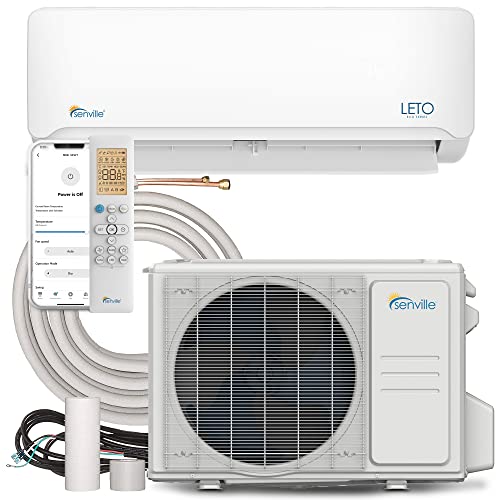
Senville LETO Mini Split Air Conditioner, Heat Pump, White, 24000 BTU | Ductless, Wall Mounted, Works with Alexa, Quiet Operation, 2 Ton, 208/230V, Energy Efficient Inverter
Check price on Amazon
Temprium 24000 BTU Mini Split Air Conditioner, 230V 19 SEER2 AC & Heat Pump | Quiet ductless system for up to 1500 Sq.Ft. Features R32 refrigerant, WiFi smart control & complete installation kit.
Check price on Amazon
24000 BTU Mini Split Air Conditioner Heat Pump 21 SEER2 230V | WiFi Enabled Ductless Inverter System with Voice Control, 7 Modes, Self-Cleaning, 24H Timer, Sleep Mode and Auto-Defros
Check price on Amazon
MRCOOL DIY Select 24K BTU Mini Split Heat Pump and Air Conditioner, White | Ductless Wall Mounted Unit, Heater for Bedroom, Garage or Shop, Pre-Charged Line Set, 230V Inverter, Heating System, AC Unit
Check price on Amazon
Garvee 2 Ton / 24000 BTU Mini Split Air Conditioner and Heat Pump, 21 SEER2 208 / 230V,Ductless Inverter System,Smart Wifi Mini Split Compatible with Alexa,Cools & Heats Rooms up to 1500 Sq.Ft
Check price on Amazon
COSTWAY 24000BTU Mini Split Air Conditioner& Heater | 18.5 SEER2 208-230V Wall-Mounted Ductless AC Cools up to 1500 Sq. Ft, Energy Efficient Inverter AC w/Heat Pump
Check price on Amazon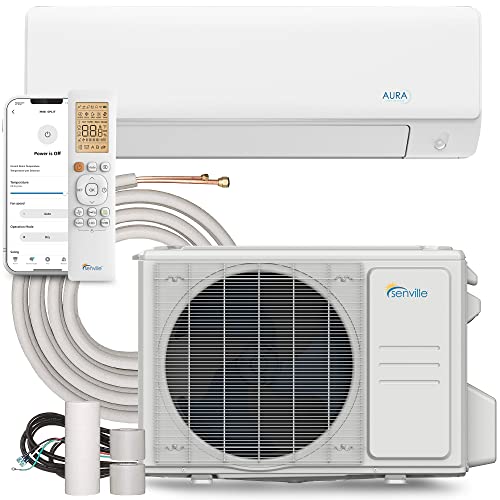
Senville AURA Mini Split Air Conditioner, Heat Pump, White, 24000 BTU | Energy Star Certified, Works with Alexa, Ductless, Wall Mounted, AHRI Certified, 208-230V Inverter
Check price on Amazon