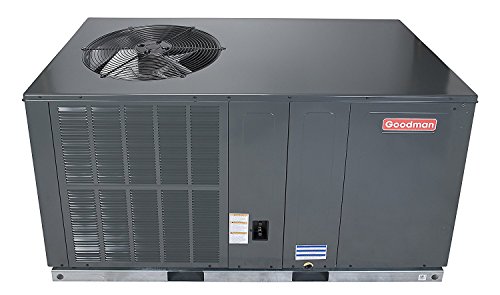
3 Ton AC Unit Square Feet: How Much Space Does It Really Cool?
A 3 ton air conditioner is one of the most common choices for mid-sized homes. Learn exactly how many square feet it covers, what factors influence coverage, and how to confirm it is the right match for your property.
EXPLORE COVERAGE GUIDEQuick answer: A 3 ton AC unit typically cools 1,400 to 1,800 square feet in moderate climates. In hot, humid regions, the practical coverage drops to around 1,200 to 1,500 square feet. In mild climates with excellent insulation, it can stretch toward 2,000 square feet.
Understanding 3 Ton AC Capacity in Square Feet
A 3 ton air conditioner delivers 36,000 BTU per hour of cooling output. Tonnage in HVAC is not about weight; it refers to cooling capacity. One ton equals 12,000 BTU, so three tons equals 36,000 BTU. That figure is the foundation for translating capacity into practical square footage coverage.
The widely used rule of thumb is that you need about 20 BTU per square foot of living space. Dividing 36,000 BTU by 20 gives you roughly 1,800 square feet. However, this baseline assumes an average home with standard insulation, eight-foot ceilings, and a moderate climate. Real-world conditions shift that number significantly.
For a broader perspective on how tonnage translates across different unit types, you can review the full 3 ton AC unit air conditioners overview, which covers central, mini-split, and packaged configurations.
Square Foot Coverage by Climate Zone
Climate is the single biggest variable affecting how far a 3 ton unit can stretch. The table below summarizes realistic coverage ranges based on typical climate conditions.
| Climate Zone | Typical Coverage | Notes |
|---|---|---|
| Hot & humid (e.g., Gulf Coast, Southeast) | 1,200 – 1,500 sq ft | High latent load from humidity reduces sensible cooling capacity. |
| Hot & dry (e.g., Southwest desert) | 1,400 – 1,700 sq ft | Large temperature differentials demand more capacity per square foot. |
| Moderate (e.g., Mid-Atlantic, Midwest) | 1,500 – 1,800 sq ft | Balanced humidity and temperature profiles allow standard coverage. |
| Mild (e.g., Pacific Northwest, coastal) | 1,700 – 2,000 sq ft | Shorter cooling seasons and lower humidity extend practical coverage. |
Factors That Change Real-World Coverage
Square footage alone is never enough to size an AC correctly. Several structural and environmental factors can shift the effective coverage of a 3 ton unit by several hundred square feet in either direction.
- Insulation quality: A well-insulated home with modern windows can retain cool air far better than an older home with drafty single-pane windows. The difference can be 300 to 500 square feet of effective coverage.
- Ceiling height: Standard eight-foot ceilings are the baseline. Vaulted or cathedral ceilings increase the cubic volume, meaning a 3 ton unit may cover less square footage than expected.
- Window area and orientation: Large south- or west-facing windows add significant solar heat gain, reducing effective coverage. Energy-efficient glazing helps offset this.
- Occupant load: More people in the home generate more body heat. A home office with multiple occupants may feel warmer than the square footage suggests.
- Ductwork condition: Leaky or poorly designed ducts can lose 20 to 30 percent of cooling output before air reaches the rooms, effectively shrinking the unit's reach.
- Appliance heat gain: Kitchens with heavy cooking appliances and rooms with electronics add internal heat loads that the AC must counteract.
For homes where ductwork is not an option, a 3 ton mini split system offers zone-based cooling that can be more efficient than forcing air through a poorly performing duct system.
Is a 3 Ton AC Unit Right for Your Home?
A 3 ton unit fits well in homes between roughly 1,400 and 1,800 square feet under average conditions. If your home falls near the edges of that range, the decision becomes more nuanced. An undersized unit will run continuously on hot days and fail to reach the set temperature. An oversized unit will cool too quickly, cycle on and off, and leave humidity unchecked, which feels clammy and uncomfortable.
For larger properties, stepping up to a 4 ton AC unit for a 2000 sq ft house is often the better match. Conversely, a 2 ton air conditioner is a more appropriate fit for homes under 1,200 square feet.
Professional insight: The only reliable way to size an AC unit is a Manual J load calculation. This method accounts for insulation, window type, climate data, duct loss, and occupancy to produce an exact BTU requirement. Square footage rules of thumb are useful for early research, but they are not a substitute for a proper calculation.
Ductwork and Installation Considerations
A 3 ton central air conditioner typically requires a duct system capable of handling 1,200 to 1,400 CFM of airflow. That usually translates to a main trunk duct around 18 to 20 inches wide, with properly sized branch ducts feeding each room. Undersized ducts create high static pressure, reduce airflow, and can cause the evaporator coil to freeze.
Electrical requirements matter as well. A 3 ton central unit usually runs on a 240-volt circuit with a dedicated breaker sized between 25 and 40 amps, depending on the specific model's efficiency rating and startup current. If you are comparing configurations, a 3 ton condensing unit paired with a matching indoor coil is the most common setup for split systems.
If you are also adding heating capability, a 3 ton AC unit with heat pump configuration provides year-round comfort from a single system and avoids the need for a separate furnace.
Energy Efficiency and Long-Term Operation
A 3 ton unit running at a higher SEER2 rating will consume noticeably less electricity over a cooling season than an entry-level model. Modern high-efficiency units often use variable-speed compressors that modulate output instead of cycling on and off at full capacity. This improves humidity control and keeps room temperatures more stable.
When comparing models, look beyond the headline efficiency number. A unit that is slightly oversized or undersized will never deliver its rated efficiency because it will either short-cycle or run continuously. Matching the unit to a proper load calculation is the most effective efficiency measure you can take.
Frequently Asked Questions
How many square feet does a 3 ton AC unit cool?
A 3 ton AC unit typically cools between 1,400 and 1,800 square feet in moderate climates. The exact coverage depends on insulation, window quality, ceiling height, and local climate conditions.
Is a 3 ton AC unit suitable for a 2,000 square foot home?
A 3 ton unit may be slightly undersized for a 2,000 square foot home in hot climates. In moderate climates with good insulation, it can work, but a professional load calculation is always recommended before committing to a size.
What is the difference between 3 ton and 4 ton AC units?
A 4 ton AC unit provides 25 percent more cooling capacity than a 3 ton unit, covering roughly 1,800 to 2,200 square feet depending on conditions. The right choice depends on your home size, insulation, and climate zone.
Can a 3 ton AC unit cool a two-story home?
It can, but only if the total conditioned area falls within the 1,400 to 1,800 square foot range and the duct system is properly zoned. Two-story homes often benefit from a zoned system or two separate units to balance temperatures between floors.
Ready to Compare 3 Ton AC Options?
Explore top-rated 3 ton air conditioners and find the right match for your home's square footage and climate.
VIEW RECOMMENDED UNITS