
3 Ton Central Air Conditioning Units: Prices, Specs & Buying Guide
A complete research guide to understanding 3 ton central AC systems — capacity, efficiency ratings, model tiers, installation considerations, and how to choose the right unit for your home.
Research Summary: A 3 ton central air conditioner delivers approximately 36,000 BTU of cooling per hour and is one of the most common capacities for mid-sized homes. This guide explains what a 3 ton unit is, who it suits, what separates entry-level from premium models, and the key factors that shape the overall investment — so you can move from research to a confident purchase decision.
What Is a 3 Ton Central Air Conditioner?
In residential HVAC terminology, "ton" refers to cooling capacity, not weight. One ton of cooling equals 12,000 BTU per hour — the amount of heat needed to melt one ton of ice in 24 hours. A 3 ton central air conditioner therefore produces roughly 36,000 BTU per hour, making it one of the most widely specified capacities for single-family homes in the United States.
A central AC system consists of an outdoor condenser unit, an indoor evaporator coil (typically mounted on the furnace or air handler), and a ductwork network that distributes conditioned air throughout the home. The 3 ton capacity sits in the "sweet spot" for many mid-sized houses, which is why it is a common choice for homeowners replacing an older system or specifying cooling for a new build. If you are still comparing system architectures, our guide to different types of air conditioning systems provides a helpful overview.
Who Is a 3 Ton AC Unit Best Suited For?
A 3 ton central air conditioner is generally appropriate for homes in the 1,200 to 2,000 square feet range, but square footage alone is never the full story. The right capacity depends on a combination of factors:
- Climate: Homes in hot, humid regions typically need more capacity per square foot than homes in mild coastal climates.
- Insulation and air sealing: A well-insulated home with sealed ducts retains cooling more effectively, allowing a smaller unit to do the same job.
- Window area and orientation: Large south- or west-facing windows increase solar heat gain and may require a larger capacity.
- Ceiling height: Vaulted ceilings increase the volume of air to be conditioned, not just the floor area.
- Occupancy and appliances: Kitchens, home offices with electronics, and high-occupancy rooms add internal heat load.
For a more precise determination, a professional load calculation (often called a Manual J calculation) is the gold standard. For a broader discussion of capacity options, see our guide to AC types and compare against a central air conditioner for a 1,600 sq ft home, which often sits within 3 ton territory.
Key Specifications of a 3 Ton Central AC
The table below summarizes the core technical specifications you will encounter when comparing 3 ton central air conditioning units. Exact values vary by model, but these ranges reflect typical residential equipment.
| Specification | Typical Value / Range | What It Means |
|---|---|---|
| Cooling Capacity | 36,000 BTU/hr (3 tons) | The amount of heat removed from the home per hour. |
| SEER2 Rating | 14.3 (minimum) to 23+ (premium) | Seasonal energy efficiency; higher is more efficient. |
| EER2 Rating | 11.7 to 15+ | Efficiency at peak (95°F) conditions. |
| Refrigerant | R-410A or R-32 / R-454B | Newer units use lower-GWP refrigerants per current regulations. |
| Electrical Service | 208/230V, 1-phase, 25–40A breaker | Requires a dedicated circuit; confirm panel capacity. |
| Compressor Type | Single-stage, two-stage, or variable-speed | Affects comfort, humidity control, and efficiency. |
| Line Set Size | 3/8" liquid, 3/4" or 7/8" suction | Refrigerant piping size; must match the outdoor unit. |
| Sound Level | 68–76 dB (outdoor unit) | Lower dB is quieter; premium models are notably quieter. |
| Expected Lifespan | 15–20 years | With proper installation and annual maintenance. |
3 Ton Central AC Model Tiers: Entry-Level to Top-Tier
Rather than framing 3 ton units by numeric figures, it is more useful to think in terms of market tiers. Each tier represents a different balance of efficiency, comfort features, and build quality. The descriptors below are consistent throughout this guide.
Entry-Level 3 Ton Units
These are the baseline models that meet current minimum efficiency standards. They use single-stage compressors and focus on reliable, straightforward cooling.
- Single-stage compressor
- SEER2 around 14.3–15
- Basic single-speed blower
- Standard 1-year parts warranty (often extended to 5–10 years on registration)
Mid-Range 3 Ton Units
Mid-range models add comfort features and better efficiency. Two-stage compressors and variable-speed blowers are common here, improving humidity control and reducing temperature swings.
- Two-stage compressor
- SEER2 around 15–17
- Variable-speed or multi-speed blower
- Better sound insulation
- Enhanced warranty terms
Premium & High-End 3 Ton Units
Premium units use fully variable-speed inverter compressors for the most precise comfort and highest efficiency. They are the quietest and most feature-rich option in the category.
- Variable-speed inverter compressor
- SEER2 around 18–23+
- Communicating controls and smart thermostat compatibility
- Very quiet operation
- Longest warranty coverage
Side-by-Side Tier Comparison
The comparison below highlights how the three tiers differ across the features that matter most during the research phase. Use it to match your priorities — efficiency, comfort, or simplicity — to the right tier.
| Feature | Entry-Level | Mid-Range | Top-Tier |
|---|---|---|---|
| Compressor | Single-stage | Two-stage | Variable-speed inverter |
| SEER2 Range | ~14.3–15 | ~15–17 | ~18–23+ |
| Temperature Control | Basic on/off cycling | Improved, two levels | Precise, continuous modulation |
| Humidity Control | Moderate | Good | Excellent |
| Sound Level | Standard | Quieter | Quietest |
| Smart Thermostat Support | Basic compatibility | Common | Full communicating support |
| Best For | Straightforward replacements, mild climates | Most homeowners seeking balance | Maximum comfort and efficiency |
| Warranty | Standard | Enhanced | Longest / premium |
Pros and Cons of a 3 Ton Central AC
No capacity is universally right or wrong. Understanding the trade-offs helps you judge whether a 3 ton system aligns with your home and your goals.
Advantages
- Well-matched to many mid-sized single-family homes
- Widest selection of models across all tiers
- Balanced comfort and efficiency potential
- Compatible with standard residential ductwork
- Parts and service widely available
Considerations
- Oversizing can cause short cycling and poor humidity control
- Undersizing leaves the home uncomfortable on peak days
- Requires a professional load calculation for accuracy
- Ductwork condition significantly affects real-world performance
- Installation quality matters as much as the equipment itself
What Shapes the Overall Investment in a 3 Ton Central AC
When researching a 3 ton central air conditioning system, it helps to understand the variables that influence the total project scope. Rather than focusing on a single figure, consider the following dimensions that determine what homeowners actually pay for the equipment and the installed system:
- Efficiency tier: Entry-level units sit at the lower end of the investment spectrum, while top-tier variable-speed systems sit at the highest. The difference reflects compressor technology, controls, and build quality.
- Brand positioning: Premium brands often carry a higher baseline than value-oriented brands for comparable specifications. Comparing air conditioning unit brands helps contextualize this.
- Installation scope: Replacing an existing unit is generally more straightforward than a new installation that requires new line sets, electrical work, or duct modifications. Our AC installation estimate guide explains the variables in more detail.
- Ductwork condition: Leaky or undersized ducts can undermine even a premium unit. Sealing and balancing may be recommended. See air duct sealing for why this matters.
- Regional labor variation: Installation labor varies by market, which is why two identical systems can have different project totals in different regions.
- Ancillary components: Thermostats, filters, permits, and disposal of old equipment all contribute to the full scope.
For a broader view of the replacement context, our article on replacing a 3 ton air conditioner discusses the decision factors in more depth. And if you are weighing repair against replacement, see how much does a 3 ton air conditioner cost for a complementary perspective.
Buying Checklist for a 3 Ton Central AC
Before committing to a specific model, walk through this checklist to ensure you have covered the essentials. It is designed to help you ask the right questions and compare offers on equal terms.
- Load calculation completed: Confirm that the contractor performed a room-by-room Manual J calculation, not just a square-footage estimate.
- Duct inspection included: Ask for a duct assessment — leakage, insulation, and sizing all affect performance.
- Electrical capacity verified: Ensure your electrical panel can support the new unit's requirements.
- Efficiency rating appropriate: Decide whether entry-level or higher-tier efficiency aligns with your long-term goals. Higher SEER2 generally means greater efficiency over the equipment's life.
- Warranty comparison: Compare parts and labor warranty terms, including registration requirements.
- Contractor credentials: Verify licensing, insurance, and references. Our guide on heating and cooling contractors offers a framework.
- Thermostat compatibility: If you plan to add a smart AC thermostat, confirm the unit supports it.
Maintenance for Longevity and Performance
A 3 ton central AC is a long-term investment. Simple maintenance habits significantly extend its service life and preserve efficiency:
- Replace filters regularly: Every 1–3 months depending on usage and filter type. A clogged filter stresses the blower and reduces airflow.
- Schedule annual tune-ups: A spring check-up helps catch issues early. See annual service scope for what a typical visit includes.
- Keep the outdoor unit clear: Remove debris, leaves, and vegetation around the condenser for proper airflow.
- Clean coils periodically: Learn how to clean the coils of an air conditioner to maintain heat transfer efficiency.
- Monitor for unusual behavior: Strange noises, reduced cooling, or water leaks should be addressed promptly. See central air repair for when to call a professional.
If your current system is showing signs of failure, our resources on central air not blowing cold air and AC not cooling the house can help you diagnose common issues before deciding on repair versus replacement.
Recommended 3 Ton Central Air Conditioner Units
⚠️ AFFILIATE DISCLOSURE: This website contains affiliate links. As an Amazon Associate, we earn from qualifying purchases. If you make a purchase through these links, we may receive a small commission at no additional cost to you. Read our full affiliate policy.

Senville Central Air Conditioning System, Heat Pump, 3 Ton, 20kW Aux | 36000 BTU Air Handler and Condenser Included, 208/230V, Whole House Air Conditioner
Check price on Amazon
Senville Central Air Conditioning System, Heat Pump, Inverter, 3 Ton | 36000 BTU Air Handler and Condenser Included, 208/230V, Whole House Air Conditioner
Check price on Amazon
ACiQ 2.5 Ton 14.3 SEER2 Central Air Conditioner Unit - R32 AC Condenser | 230V Single Stage, Energy Efficient Air Conditioning, Outdoor Central HVAC Unit for Ducted AC Split Systems
Check price on Amazon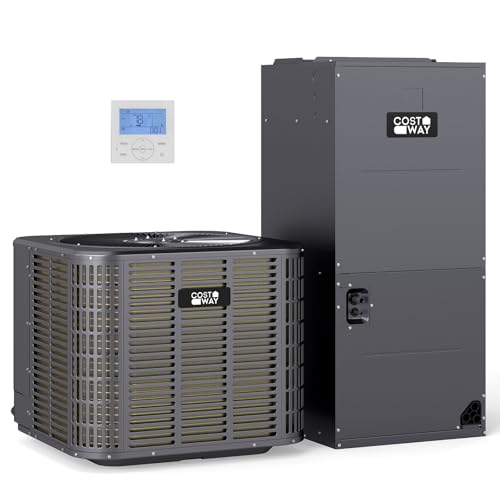
COSTWAY 3 Ton Ducted Central Air Conditioner Heat Pump System, 36000 BTU Inverter Split AC with Multi-Position Air Handler Unit, 208/230V, 19 SEER2, Work in 5℉-125℉ (36000BTU, 208-230V, 19 SEER2)
Check price on Amazon
ACiQ 3 Ton 14.3 SEER2 Central Air Conditioner Heat Pump Condenser - R32 | 230V Single Stage, Energy Efficient AC/Heating, Outdoor Central HVAC Unit for Ducted Split Systems (AQ-GLZS4BA3610)
Check price on Amazon
ACiQ 3 Ton Heat Pump Condenser | 14.3 SEER2 Outdoor Central AC Unit - R32 | Heat Pump HVAC Unit for Ducted Central Air Conditioning Systems, Efficient Single Stage Whole House Air Conditioner Condenser
Check price on Amazon
Goodman 3 Ton 14.3 SEER2 Value Series Air Conditioner Condenser GLXS4BA3610- Free Thermostat Included
Check price on Amazon
ACiQ 3.5 Ton 14.3 SEER2 Central Air Conditioner Unit - R32 AC Condenser | 230V Single Stage, Energy Efficient Air Conditioning, Outdoor Central HVAC Unit for Ducted AC Split Systems
Check price on AmazonFrequently Asked Questions
What size home does a 3 ton central air conditioner cool?
A 3 ton central air conditioner is generally suited for homes between 1,200 and 2,000 square feet, depending on climate, insulation, window area, and ceiling height. In hot, humid climates or poorly insulated homes, it may be better suited to the lower end of that range. A professional load calculation is always recommended for an accurate determination.
How many BTUs does a 3 ton AC unit produce?
A 3 ton air conditioner produces approximately 36,000 BTU per hour. One ton of cooling capacity equals 12,000 BTU per hour, so three tons equals 36,000 BTU per hour. This is the amount of heat the system can remove from your home under rated conditions.
What SEER rating should I look for in a 3 ton central AC?
Modern minimum efficiency standards require SEER2 ratings of around 14.3 for split systems in most regions. Mid-range models typically deliver SEER2 ratings in the 15 to 17 range, while premium and top-tier models can reach 18 to 23 or higher. Higher ratings generally mean better energy efficiency over the life of the unit, but the right choice depends on your climate, usage patterns, and how long you plan to stay in the home.
How long does a 3 ton central air conditioner last?
With proper installation and regular maintenance, a 3 ton central air conditioner typically lasts 15 to 20 years. Factors such as climate, usage patterns, filter replacement habits, and professional tune-ups significantly influence longevity. Units that are regularly serviced tend to reach or exceed the upper end of that range.
Should I repair or replace a 3 ton central AC unit?
The decision depends on the unit's age, repair history, and efficiency. If the system is over 12 years old, requires frequent repairs, or uses older refrigerant, replacement is often more practical. For newer units with isolated issues, repair is usually the better choice. A professional evaluation helps confirm the right path. You can also explore central air repair resources for guidance on common problems.
Can a 3 ton AC unit be installed in an older home?
Yes, but older homes may require additional considerations such as ductwork upgrades, electrical panel updates, or modified line set routing. Homes without existing ductwork may be better served by a ductless system — see our ductless mini-split guide for alternatives. A contractor site visit is essential to identify what modifications may be needed.
Ready to Choose Your 3 Ton Central AC?
A 3 ton central air conditioner is a substantial, long-term investment in home comfort. Now that you understand capacity, efficiency tiers, installation factors, and maintenance expectations, you are equipped to compare offers with confidence. Explore the recommended models above, verify the load calculation with your chosen contractor, and prioritize installation quality alongside equipment specifications. For broader context on central systems, our best central air conditioner brands guide and 1,600 sq ft sizing reference are useful next reads.