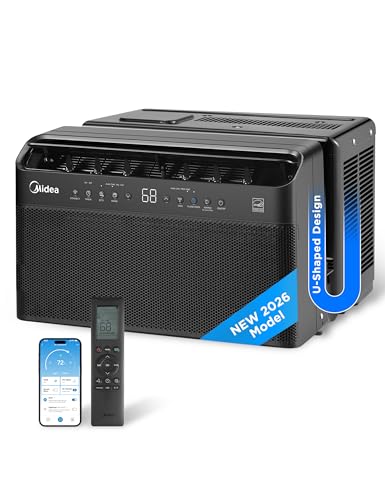
6000 BTU Air Conditioner with Remote: The Complete Guide
Everything you need to know about choosing, installing, and maintaining a 6000 BTU air conditioner with remote control for small rooms and compact spaces
Explore Recommended ModelsWhy a 6000 BTU Air Conditioner with Remote? If you are cooling a small bedroom, a home office, or a compact living area, a 6000 BTU unit is often the ideal capacity. Adding remote control to the equation means you can adjust temperature, fan speed, and operating modes without leaving your seat. This guide walks you through everything you need to know before making a purchase decision — from room sizing and installation types to the features that actually matter.
📋 What This Guide Covers
Room Sizing: What a 6000 BTU Unit Can Cool
A 6000 BTU air conditioner is generally designed for rooms ranging from approximately 150 to 250 square feet, depending on ceiling height, insulation quality, sun exposure, and how many people occupy the space. To put that into perspective, a standard bedroom or a small studio apartment falls squarely into this range.
However, the square footage guideline is only a starting point. Several factors can push the effective cooling capacity up or down:
- Ceiling height: Rooms with ceilings above 8 feet may require slightly more capacity.
- Sun exposure: South- or west-facing rooms with large windows can heat up faster and may need additional capacity.
- Occupancy: Each person adds roughly 600 BTU of heat load. A room that regularly hosts two or three people may benefit from a slightly higher-capacity unit.
- Kitchen areas: Appliances generate heat, so a 6000 BTU unit in a kitchen-adjacent space may struggle during cooking hours.
- Insulation quality: Poorly insulated rooms lose cool air quickly, making the AC work harder to maintain the set temperature.
If you are unsure whether 6000 BTU is the right fit, you can explore related sizing guides such as the 6000 BTU window air conditioner room size guide or the portable AC room size reference. For even smaller spaces, the 5000 BTU window unit guide covers compact options.
Types of 6000 BTU AC Units with Remote
When shopping for a 6000 BTU air conditioner with remote, you will encounter several form factors. Each has distinct advantages and installation requirements. Here is a breakdown of the most common options:
Window AC with Remote
Best for: Standard double-hung windows in bedrooms and small living rooms.
A 6000 BTU window air conditioner with remote is a self-contained unit that installs directly into a window frame. It is straightforward to set up, requires no permanent modifications, and is easy to remove for seasonal storage.
Remote features: Most mid-range and high-end tier window units include full-function remotes with temperature adjustment, mode switching (cool, fan, dry, auto), timer settings, and sometimes sleep mode presets.
Portable AC with Remote
Best for: Rooms where window installation is not possible or where the unit needs to move between spaces.
A 6000 BTU portable air conditioner sits on the floor and exhausts hot air through a window using a hose kit. It is less efficient than a window unit of the same capacity because some heat is lost during the exhaust process.
Remote features: Portable units often include remotes with the same functions as window models, plus the benefit of being able to control a unit that may be tucked into a corner.
Mini-Split with Remote
Best for: Homeowners who want quiet operation and permanent installation without ductwork.
A 6000 BTU mini-split system consists of an indoor wall-mounted air handler and an outdoor compressor unit. It operates far more quietly than window or portable units and does not block a window.
Remote features: Mini-split remotes are typically the most feature-rich, often including precise temperature control (down to 1°F increments), programmable timers, eco modes, and sometimes Wi-Fi integration for smartphone control.
For those considering a through-the-wall configuration, the 6000 BTU through-the-wall air conditioner guide provides additional installation context. If you need heating as well as cooling, explore the 6000 BTU window unit with heat option.
Remote Control Features That Matter
Not all remotes are created equal. The remote control is the primary interface for most users, so it is worth understanding which features add genuine convenience and which are simply marketing extras.
| Feature | What It Does | How Useful Is It? |
|---|---|---|
| Temperature adjustment | Sets the target room temperature in 1°F or 2°F increments. | Essential — every remote includes this. |
| Mode switching | Toggles between cool, fan-only, dry (dehumidify), and auto modes. | Very useful in humid climates where dry mode helps comfort. |
| Fan speed control | Adjusts airflow between low, medium, high, and auto. | Useful for balancing noise levels and cooling speed. |
| Timer / sleep mode | Programs the unit to turn off after a set number of hours or adjusts temperature gradually during sleep. | Great for overnight use and energy-conscious users. |
| Louver / swing control | Directs airflow up or down, or oscillates the louvers for even distribution. | Helpful in rooms with furniture arrangement challenges. |
| Follow Me / sensing | The remote itself contains a temperature sensor and transmits readings back to the unit. | Useful in larger rooms where the unit's internal sensor may not reflect conditions near the user. |
| Wi-Fi / smart app | Allows control via smartphone app and sometimes voice assistants. | Convenient for scheduling and remote access, but adds complexity. |
When evaluating a 6000 BTU air conditioner with remote, prioritize units that include a full-function remote rather than a simplified version. Some entry-level models include remotes that only adjust temperature and fan speed, leaving mode and timer functions accessible only on the unit itself. Mid-range and high-end tier models typically offer the complete feature set.
Window vs Portable vs Mini-Split: Which Fits You?
Choosing between these three formats depends on your installation constraints, your long-term plans, and how much you value quiet operation. Here is a practical comparison:
- Window AC: The most straightforward option for renters and homeowners alike. It installs in a standard window, requires no permanent modification, and delivers reliable cooling efficiency for its capacity. It does block part of the window view and may not fit unusual window styles.
- Portable AC: The most flexible option for rooms without suitable windows or for users who need to move the unit between spaces. It is less efficient than a window unit and takes up floor space, but it requires no installation hardware beyond the window exhaust kit.
- Mini-Split: The most permanent and quietest option. It requires professional installation and a hole in the wall for refrigerant lines, but it delivers superior efficiency, quiet operation, and does not obstruct windows. It is a long-term investment suited to homeowners planning to stay in their property.
Installation Considerations
The installation requirements vary significantly by unit type. Here is what to expect:
Window units require a window that opens sufficiently to accommodate the unit's chassis. Most 6000 BTU window models are designed for double-hung windows with a minimum opening width of 23 to 25 inches. Many units include a window mounting kit with support brackets and insulation panels. Installation typically takes 30 to 60 minutes for two people and requires no special tools beyond a screwdriver and a drill for the support bracket.
Portable units need a window or sliding door for the exhaust hose. The hose kit usually includes a window slider panel that fits most standard window openings. Setup involves connecting the hose to the unit and routing it through the window panel. No drilling or permanent modification is required, though some users choose to seal gaps with weatherstripping for better efficiency.
Mini-split systems require professional installation. The installer will mount the indoor air handler on a wall, position the outdoor compressor on a bracket or ground pad, run refrigerant lines through a small hole in the wall, and perform vacuum and charging procedures. This is not a do-it-yourself task and requires EPA-certified handling of refrigerant.
For electrical considerations, most 6000 BTU window and portable units run on standard 115-volt household circuits and draw between 5 and 7 amps. Mini-splits may require a dedicated circuit depending on the model. Always check the unit's electrical requirements before purchase and consult a licensed electrician if you are unsure about your home's wiring capacity.
Maintenance for Long-Term Performance
A 6000 BTU air conditioner with remote control is a relatively low-maintenance appliance, but consistent care extends its lifespan and preserves cooling efficiency. Here is a practical maintenance schedule:
- Every two weeks during cooling season: Clean or rinse the air filter. Most window and portable units have a removable mesh filter that can be washed with warm water and mild detergent. A clogged filter restricts airflow and reduces cooling performance while increasing energy consumption.
- Monthly: Check the outdoor portion of the unit (for window models) or the exhaust hose (for portable models) for debris, insect nests, or blockages. Ensure the condenser coils are free of dust and lint.
- Seasonally: Before the cooling season begins, inspect the coils and fins. Bent fins can be straightened with a fin comb. Clean the condensate drain path to prevent water backup.
- Annually: For window units, consider removing the unit and cleaning the coils more thoroughly with a coil cleaner. For mini-splits, schedule a professional maintenance visit to check refrigerant levels, clean the indoor coil, and inspect electrical connections.
Proper maintenance not only keeps the unit running efficiently but also helps prevent common issues such as water leaks, unusual noises, and reduced cooling output. If you notice the unit is not cooling as well as it used to, a dirty filter or coil is often the first thing to check.
Pros and Cons Summary
✅ Advantages
- Right-sized capacity for bedrooms, offices, and small living areas
- Remote control adds convenience for temperature and mode adjustments
- Lower energy draw compared to larger capacity units
- Window and portable options require no permanent installation
- Widely available in multiple formats and feature tiers
- Easy to maintain with regular filter cleaning
⚠️ Limitations
- Not suitable for rooms larger than approximately 250 square feet
- Window units block part of the window view and may not fit all window styles
- Portable units are less efficient than window or mini-split models
- Mini-split installation requires professional service and wall modification
- Entry-level remotes may lack advanced features like timers or follow-me sensing
Ready to Compare 6000 BTU Models with Remote?
Browse our curated selection of recommended units below. Each model has been evaluated for cooling performance, remote functionality, and build quality within its tier.
View Recommended Models