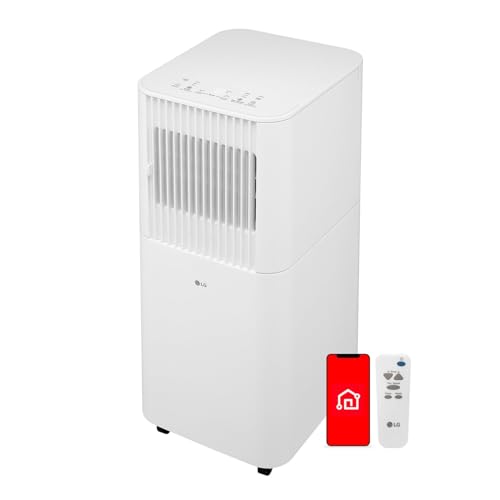
6000 BTU Portable Air Conditioner: The Complete Buyer's Guide
Everything you need to know about 6000 BTU portable AC units — room coverage, efficiency, installation, features, and how to choose the right tier for your space.
Why 6000 BTU? A 6000 BTU portable air conditioner is the sweet spot for small spaces. It delivers focused cooling without wasting energy on a room it cannot reach. If you have a bedroom, home office, studio, or dorm, this capacity class is likely your ideal match.
What Is a 6000 BTU Portable Air Conditioner?
A 6000 BTU portable air conditioner is a freestanding cooling unit that delivers 6,000 British Thermal Units of cooling capacity per hour. It sits on the floor, rolls on casters, and expels hot exhaust air through a flexible hose routed out a window or wall vent. Unlike window units, it does not require permanent installation or structural modification — making it a practical choice for renters, apartments, and rooms where drilling into a wall is not an option.
At 6,000 BTU, these units are classified as entry-level capacity in the portable AC category. That does not mean they are basic — many modern models include dehumidification, fan-only modes, programmable timers, remote controls, and even smart-home connectivity. The key is matching capacity to your room so the compressor runs efficiently rather than constantly cycling.
Portable air conditioners in this class typically use a single-hose exhaust system, though some upgraded models feature dual-hose designs for better pressure balance. If you are comparing exhaust hose options, understanding the difference between a 6-inch exhaust hose and standard setups can help you plan your venting strategy.
Room Size Coverage: How Much Space Can 6000 BTU Cool?
The most common question about this capacity class is simple: how large a room can it handle? The short answer is up to approximately 250 square feet under standard conditions. But "standard conditions" matters more than the headline number.
Here is the practical breakdown based on real-world usage:
| Room Type | Typical Size | Cooling Fit | Notes |
|---|---|---|---|
| Bedroom (standard) | 100–200 sq ft | Excellent | Close the door; keep sun exposure moderate |
| Home office | 100–180 sq ft | Excellent | Heat from electronics adds load; consider mid-tier |
| Studio apartment | 200–250 sq ft | Good | Best in open layout with clear airflow |
| Dorm room | 100–150 sq ft | Excellent | Window venting usually straightforward |
| Living room (open plan) | 300+ sq ft | Not ideal | Consider 8,000 BTU or higher for open spaces |
| Kitchen (cooking area) | 150–200 sq ft | Fair | Heat gain from appliances reduces effectiveness |
For a deeper calculation tailored to your exact room dimensions, see the detailed guide on 6000 BTU portable air conditioner room size. Factors that reduce effective coverage include high ceilings (above 8 feet), west-facing windows with direct afternoon sun, poor insulation, and multiple occupants or heat-generating appliances.
If your room is consistently above 250 square feet, you will likely get better results from an 8000 BTU portable air conditioner or a dual-hose 8000 BTU model. Undersizing a portable AC forces it to run continuously, which increases wear and reduces comfort.
Key Features to Evaluate Before Buying
Not all 6000 BTU portable air conditioners are built the same. The feature set determines daily usability, long-term durability, and how well the unit performs under real conditions. Here are the features that matter most:
Cooling Efficiency: CEER and SACC Ratings
Portable air conditioners are rated using CEER (Combined Energy Efficiency Ratio) and SACC (Seasonal Adjusted Cooling Capacity). A higher CEER means more cooling output per unit of electricity consumed. Look for models with CEER above 6.5 for this capacity class. ENERGY STAR certified units meet stricter efficiency thresholds and are a solid long-term investment for daily use.
Compressor Technology: Single-Speed vs Inverter
Entry-level 6000 BTU portable units typically use a single-speed compressor that cycles on and off to maintain temperature. Mid-range and premium models increasingly feature inverter compressors that modulate speed continuously. Inverter units are quieter, maintain temperature more evenly, and consume less energy in the long run — especially in rooms where the unit runs for several hours per day.
Dehumidification and Fan Modes
Portable ACs naturally remove moisture from the air as part of the cooling process. Many models also include a dedicated dehumidify mode that runs the compressor without cooling, plus a fan-only mode for air circulation. For humid climates, dehumidification performance is a meaningful secondary benefit.
Venting and Installation Requirements
All portable air conditioners require exhaust venting. The standard approach is a window kit that seals around the exhaust hose. For sliding doors or casement windows, specialized kits may be needed. Some users prefer a permanent 6-inch wall vent for portable air conditioner installation, which provides a cleaner look and better seal. If you are planning flexible duct routing, a 6-inch flexible ductwork solution can simplify the layout.
Noise Level and Sleep Mode
Portable ACs are inherently louder than mini-splits or central systems because the compressor and fan share the same indoor chassis. For bedrooms, look for models rated at or below 53 dB on low fan speed, and prioritize units with a dedicated sleep mode that gradually raises the set temperature and dims display lights.
Smart Controls and Programmability
Wi-Fi connectivity, app control, and voice assistant compatibility are now common in mid-range and premium portable ACs. Even without smart features, a 24-hour programmable timer and a remote control dramatically improve day-to-day convenience.
6000 BTU Portable AC vs Other Cooling Options
Understanding where this capacity class fits relative to alternatives helps you make a confident decision:
| Option | Best For | Installation | Notes |
|---|---|---|---|
| 6000 BTU Portable AC | Small rooms, renters, temporary cooling | Minimal — window vent kit | Movable between rooms; no permanent modification |
| 6000 BTU Window AC | Small rooms with suitable window | Window-mounted | Typically more efficient and quieter than portable |
| 6000 BTU Mini-Split | Permanent small-room cooling | Professional installation | Quietest option; highest upfront investment tier |
| 6000 BTU Through-the-Wall AC | Rooms with existing wall sleeve | Wall sleeve required | Permanent; good for rentals with existing sleeves |
| 7000 BTU Portable AC | Slightly larger rooms (up to ~300 sq ft) | Minimal — window vent kit | Step-up capacity for borderline room sizes |
If you have a compatible window, a 6000 BTU window air conditioner with remote often delivers better efficiency and lower noise than a portable unit at the same capacity. Portable ACs win when portability, rental-friendly installation, or unusual window configurations are priorities.
How to Choose the Right Tier for Your Needs
Rather than focusing on arbitrary labels, think about how you will use the unit and what features matter most. The tiers below describe relative market positioning and typical capability, not absolute specifications:
Essential Cooling for Occasional Use
Entry-level 6000 BTU portable ACs cover the fundamentals: single-speed compressor, mechanical or basic digital controls, two fan speeds, and a standard window vent kit. They are well-suited for guest rooms, temporary setups, or spaces where the unit runs only a few hours per day.
Best for: Budget-conscious buyers who need reliable cooling without extra features. Keep expectations realistic: noise and temperature swings will be more noticeable than with higher tiers.
Balanced Performance and Convenience
Mid-range models add digital thermostats, programmable timers, remote controls, sleep modes, and improved airflow design. Many include self-evaporation systems that reduce how often you need to drain the unit. Compressor and fan quality is generally better, resulting in lower noise and more consistent cooling.
Best for: Bedrooms and home offices used daily. This tier represents a solid balance of features, durability, and efficiency for most households.
Quiet Operation, Smart Features, and Efficiency
Premium-tier 6000 BTU portable ACs feature inverter compressors, Wi-Fi and app control, voice assistant compatibility, advanced air filtration, and refined sound dampening. They maintain temperature more precisely, run quieter, and consume less energy over long cooling sessions.
Best for: Users who prioritize quiet operation and smart-home integration, or who run the unit for extended hours and want the most efficient long-term investment in this capacity class.
Maximum Pressure Balance and Cooling Stability
A small number of 6000 BTU-class units use dual-hose venting, which separates intake and exhaust air to reduce negative pressure in the room. This design improves cooling consistency in tightly sealed spaces and is often found in high-end tier models.
Best for: Rooms with limited ventilation or where single-hose units struggle to maintain temperature. Note that dual-hose designs are less common at 6,000 BTU and more typical at 8,000 BTU and above.
Installation and Setup: What to Expect
Setting up a 6000 BTU portable air conditioner is straightforward, but doing it correctly makes a significant difference in performance:
- Choose the right location. Place the unit near a window or vent with at least 12–18 inches of clearance around the air intake and exhaust.
- Seal the window kit properly. Gaps around the exhaust hose allow hot outdoor air back in, undermining cooling. Use the included foam seals and consider weather stripping for older windows.
- Keep the exhaust hose short and straight. Minimize bends and avoid extending the hose beyond the manufacturer's recommended length. Long, winding hoses trap heat and reduce efficiency.
- Level the unit. Most portable ACs require a level surface for proper drainage and compressor operation.
- Plan for drainage. In humid conditions, the unit may fill its internal tank. Set up continuous gravity drainage if the model supports it, or be prepared to empty the tank regularly.
- Check the electrical circuit. Most 6000 BTU portable ACs run on a standard 115V household outlet, but confirm the amperage draw and avoid sharing the circuit with high-load appliances.
If you are installing in a room with a sliding door or unusual window, an AC airlock universal window seal can provide a cleaner, more effective venting solution than a basic kit.
Maintenance Tips to Maximize Lifespan and Performance
Regular maintenance keeps your unit running efficiently and extends its service life:
- Clean or replace the air filter every two weeks during peak season. A clogged filter reduces airflow, forces the compressor to work harder, and degrades air quality.
- Empty the drain tank promptly. Standing water can develop odors and mold. If your unit supports continuous drainage, use it.
- Inspect the exhaust hose and window seal seasonally. Cracks or gaps reduce cooling efficiency and let hot air infiltrate.
- Clean the exterior and intake grilles. Dust buildup on the evaporator coil reduces heat exchange. A soft brush or vacuum attachment works well.
- Store properly during off-season. Drain all water, clean the filter, coil the hose carefully, and cover the unit to prevent dust accumulation.
- Listen for changes in sound or performance. Grinding, rattling, or a sudden drop in cooling output are signs that professional service may be needed.
For general troubleshooting guidance on cooling problems, see the guide on AC not cooling solutions. Many issues with portable units — weak airflow, insufficient cooling, or unusual odors — trace back to filter neglect or improper venting rather than mechanical failure.
Common Mistakes to Avoid
Buyers often encounter the same pitfalls with this capacity class. Avoiding them leads to better satisfaction:
- Oversizing the room. A 6000 BTU unit cannot effectively cool a 400-square-foot open living area. Match capacity to your actual room size, not your ideal.
- Ignoring heat gain. West-facing windows, poor insulation, and kitchen appliances add load that reduces effective cooling capacity.
- Improper venting. Leaving gaps around the window kit or using excessively long hoses undermines performance more than any other single factor.
- Expecting central-AC silence. Portable units are louder by design. Choose a premium-tier model with inverter technology if noise is a primary concern.
- Skipping the filter. Filter maintenance is the single easiest way to preserve cooling performance and air quality.
- Not planning for drainage. In humid climates, internal tanks fill quickly. Continuous drainage is a significant convenience feature.
Frequently Asked Questions
What size room does a 6000 BTU portable air conditioner cool?
A 6000 BTU portable air conditioner is generally designed for rooms up to approximately 250 square feet, such as bedrooms, home offices, small studios, and dorm rooms. Actual coverage depends on ceiling height, insulation quality, sun exposure, and occupancy. For rooms above 250 square feet, consider an 7000 BTU portable AC room size guide or step up to an 8,000 BTU model.
Is a 6000 BTU portable air conditioner energy efficient?
Yes, 6000 BTU portable units consume less power than larger capacity models because they cool a smaller area. Look for units with a high CEER or SACC rating, inverter compressors, and ENERGY STAR certification to maximize efficiency. Premium-tier models with inverter technology are the most efficient option in this class over long cooling sessions.
Does a 6000 BTU portable air conditioner need to be vented out a window?
Yes, portable air conditioners expel hot exhaust air through a hose that must be routed out a window, wall vent, or sliding door. Proper venting is essential for the unit to cool effectively and to prevent hot air from recirculating indoors. If you are planning a permanent vent, a 6-inch wall vent is a clean solution.
Can a 6000 BTU portable air conditioner cool more than one room?
A 6000 BTU portable unit is best suited for a single enclosed room. Cooling multiple rooms is not realistic because the capacity is matched to a small area and portable units cannot distribute air through ductwork. If you need to cool two adjacent small rooms, consider two separate units or a 6000 BTU mini-split with multiple indoor heads.
How loud is a 6000 BTU portable air conditioner?
Noise levels typically range from 50 to 55 dB on low fan speed, similar to a quiet conversation. Premium-tier models with inverter compressors and sound-dampening features operate at the quieter end of this range, making them a better fit for bedrooms and home offices.
Can I use a 6000 BTU portable AC in a room without a window?
You cannot vent a portable AC in a fully enclosed room without some form of exhaust path. Options include routing the hose through a wall vent, a sliding door kit, or a drop ceiling if the space above allows. Without proper exhaust, the unit will recirculate hot air and fail to cool effectively.
How often should I drain a 6000 BTU portable air conditioner?
In moderate humidity, the internal tank may need emptying every 8–12 hours of operation. In very humid conditions, it may fill faster. Many mid-range and premium units include self-evaporation features that use condensate to cool the condenser coil, reducing how often you need to drain the tank manually. Continuous gravity drainage is the most convenient option where available.
Ready to find the right 6000 BTU portable air conditioner for your space? Browse our curated recommendations below to compare features and find a model that matches your room size and usage needs.
Explore Options