
8000 BTU Through-the-Wall Air Conditioner with Heat
A complete, research-first guide to understanding, sizing, installing, and choosing an 8000 BTU through-the-wall unit with supplemental heating — written for buyers who already know what they want and need the full picture before deciding.
Why this guide exists: If you have landed on this page, you likely already know that an 8000 BTU through-the-wall air conditioner with heat is a strong candidate for your space. What you probably still need is a clear, trustworthy breakdown of how these units actually perform, what capacity really means in practice, which features matter, and how to avoid common buying and installation mistakes. This guide covers all of that in detail.
What an 8000 BTU Through-the-Wall AC with Heat Really Is
A through-the-wall air conditioner is a self-contained cooling system that is installed into a rectangular opening cut into an exterior wall. Unlike a window unit, it does not occupy a window, and it is supported by a metal sleeve that is mounted permanently into the wall. The 8000 BTU rating refers to the unit’s cooling capacity, which is roughly equivalent to a mid-range room air conditioner. The “with heat” designation means the unit also includes a heating function — usually a reverse-cycle heat pump, and in some models an electric resistance heater — so it can provide warmth during cooler months.
This category sits in a practical sweet spot. It is powerful enough for a living room, a large bedroom, a home office, or a small studio, but it remains compact enough to fit standard wall sleeves. Buyers considering smaller options often begin their research with the 6000 BTU through-the-wall AC, then step up when the room is larger or the climate is more demanding. If you are already comparing a window-mounted alternative, the 8000 BTU window AC with heat is the closest sibling product and shares much of the same internal technology.
Quick positioning: An 8000 BTU through-the-wall unit with heat is best understood as a mid-capacity, permanent-install solution for a single room. It replaces the need for a window unit and adds year-round usability in mild to moderate climates.
Room Sizing: How Far Does 8000 BTU Go?
As a starting rule of thumb, 8000 BTU is generally matched to rooms in the range of roughly 300 to 350 square feet under average conditions. “Average” means a standard ceiling height of about eight feet, reasonable insulation, a moderate climate, and typical occupancy. That baseline is a helpful anchor, but it is not a substitute for a proper assessment.
Several factors push the required capacity up or down:
- Sun exposure: A west- or south-facing room with large unshaded windows can need noticeably more capacity than the square footage suggests.
- Ceiling height: Rooms with vaulted or high ceilings enclose more air volume, so the same floor area requires more cooling.
- Insulation and air sealing: Older homes with drafts and poor insulation often need an oversized unit relative to the room’s measured area.
- Occupancy and appliances: Kitchens, home gyms, and rooms with multiple occupants or heat-generating electronics demand more capacity.
- Climate: Hotter, more humid regions require more cooling headroom than mild coastal areas.
For a deeper calculation methodology, our guide on 8000 BTU air conditioner room size walks through the practical math. If your room is smaller and you are weighing a window install, the 8000 BTU window AC room size guide applies the same logic to the window-mounted format.
The Heat Function: What to Expect
The heating capability is one of the main reasons buyers choose a through-the-wall unit with heat instead of a cooling-only model. It is important to set realistic expectations. In most 8000 BTU through-the-wall units, the heat mode is designed for supplemental warmth, not for replacing a central furnace in a cold-winter climate.
There are two common heating technologies in this category:
- Reverse-cycle heat pump: The unit reverses its refrigeration cycle to move heat from the outdoor air into the room. This is the more energy-efficient option in mild climates and is the dominant technology in quality through-the-wall units with heat.
- Electric resistance heater: A heating element warms the air directly. It works at lower outdoor temperatures but consumes more electricity, so it is typically found in entry-level or budget-focused models.
A heat pump model is generally the better long-term investment if your winters are mild and you want efficient shoulder-season heating. If you only occasionally need warmth during cool nights, either technology can serve the purpose.
Efficiency Ratings That Actually Matter
Efficiency is where the long-term value of a through-the-wall unit is decided. Two ratings deserve your attention:
- CEER / EER: The cooling efficiency ratio. Higher numbers mean more cooling per unit of electricity. For this capacity class, look for models that are competitive within their tier rather than chasing the highest headline number.
- COP or HSPF-equivalent for heating: Heat pump models are rated for heating efficiency as well. A higher heating efficiency rating means the unit delivers more warmth per unit of electricity during the heating season.
Units carrying the ENERGY STAR certification for 8000 BTU have been independently verified to meet stricter efficiency thresholds. For buyers who plan to run the unit heavily through summer and shoulder seasons, prioritizing efficiency is usually the wisest choice within the category.
Key Features to Evaluate Before You Buy
Beyond capacity and efficiency, the feature set determines day-to-day satisfaction. The following checklist covers the features that matter most in this product class:
- Wall sleeve compatibility: Most through-the-wall units require a sleeve. Confirm whether the sleeve is included or sold separately, and verify the sleeve dimensions match the unit.
- Thermostat and remote control: A programmable thermostat and remote make it far easier to manage comfort and energy use. Some units also support smart-home integration.
- Fan speeds and modes: Multiple fan speeds, a dedicated dehumidify mode, and an auto mode improve comfort and flexibility.
- Noise level: Through-the-wall units are inherently a little louder than mini-splits. Read the rated decibel figures and prioritize models with a quiet mode if the room is a bedroom or office.
- Filtration: Washable and replaceable filters with decent particulate capture improve indoor air quality and reduce maintenance friction.
- Drainage: Confirm whether the unit uses gravity drain or a condensate pump, and plan the drainage route before installation.
- Voltage: 8000 BTU units typically run on 115V, but verify the electrical requirement and confirm your circuit can support it.
Installation: What the Process Involves
A through-the-wall installation is more involved than a window unit. The process generally includes cutting or adapting a wall opening, installing a properly sized sleeve, ensuring a weather-tight seal, supporting the unit, and connecting it to a dedicated electrical circuit. If a sleeve and opening already exist, the job becomes much simpler and some homeowners can handle the swap themselves.
The most common installation mistakes are worth knowing in advance:
- Using a sleeve that does not match the unit’s dimensions, leading to poor sealing and vibration.
- Failing to slope the unit slightly toward the exterior for proper drainage.
- Neglecting weather sealing around the sleeve, which lets in drafts and moisture.
- Plugging into an undersized circuit, which risks tripping breakers or damaging the unit.
If you are comparing installation formats, our overview of the through-the-wall AC category explains how these units differ from window and portable options. Buyers who want a permanent, ductless room solution but prefer a wall-mounted indoor head may also want to compare against a portable 8000 BTU air conditioner as a temporary or renter-friendly alternative.
Advantages and Trade-Offs
Strengths
- Frees up the window and provides a permanent, secure installation.
- Year-round usability thanks to the heat function.
- Typically better sealed and more stable than a window unit.
- Strong cooling capacity for a single room in the 300–350 sq ft range.
- No ductwork required, unlike central systems.
Trade-offs
- Requires a wall opening and a compatible sleeve.
- Less portable than a window or portable unit.
- Heat mode is supplemental, not a full furnace replacement.
- Noise levels are higher than ductless mini-splits.
- Professional installation is often recommended.
How to Choose Between Models
Once capacity and efficiency are settled, the decision usually comes down to tier and feature set. The table below summarizes how models in this category generally differ by market position. Descriptors are relative and not tied to any currency.
| Tier | Best For | Typical Characteristics |
|---|---|---|
| Entry-level | Occasional use, rental units, secondary rooms | Electric resistance heat, basic mechanical controls, fewer fan speeds, simpler filtration |
| Mid-range | Primary bedrooms, home offices, everyday use | Heat pump heating, digital thermostat, remote control, multiple fan speeds, quieter operation |
| High-end tier | Living rooms, long-term primary installations | Higher efficiency ratings, smart controls, advanced filtration, low-noise modes, premium build quality |
Within each tier, look for solid build quality, a well-sealed sleeve interface, and a filtration system you can actually maintain. A mid-range model with a heat pump and a programmable thermostat is usually the best-balanced choice for most households, while a high-end unit makes sense when the installation is intended to serve a primary living space for many years.
Maintenance and Longevity
A through-the-wall unit with heat is a long-term investment, and its lifespan depends heavily on routine care. The essential maintenance tasks are straightforward:
- Clean or replace the air filter every few weeks during heavy use.
- Inspect and clean the outdoor coil at least once per season.
- Check the condensate drainage path to prevent water backup.
- Inspect the sleeve seal annually and re-seal any gaps.
- Schedule a professional service check every one to two years to verify refrigerant charge and electrical connections.
Following a seasonal routine helps the unit retain efficiency and reduces the chance of mid-summer breakdowns. If you are comparing a permanent through-the-wall installation against a smaller window solution, our guide to the 6000 BTU window AC with heat shows how maintenance and feature expectations differ across formats.
Frequently Asked Questions
What room size is an 8000 BTU through-the-wall air conditioner with heat suitable for?
It is generally matched to rooms of roughly 300 to 350 square feet under average conditions. Sun exposure, ceiling height, insulation, and occupancy can shift the ideal capacity, so treat the square-foot figure as a starting point rather than a strict rule.
Does a through-the-wall AC with heat replace a furnace?
No. The heat mode is designed as supplemental heating for a single room during mild weather. It is not intended to replace a whole-home furnace in cold climates.
What is a wall sleeve and do I need one?
A wall sleeve is a metal frame installed through the wall that holds the air conditioner and provides a secure, weather-tight opening. Most through-the-wall units require a sleeve, and many are sold separately, so confirm compatibility before ordering.
Can I install a through-the-wall AC with heat myself?
If a suitable wall opening and sleeve already exist, some homeowners can handle the swap. Cutting a new opening, running a dedicated circuit, or handling structural framing is best left to a qualified professional.
How does the heat mode work on these units?
Most models use a reverse-cycle heat pump that moves heat from outdoor air into the room, while some use electric resistance coils. Heat pump models are more efficient in mild climates, while resistance heat works at lower outdoor temperatures but uses more electricity.
Next step: Use the product recommendations below to compare the specific models in this category. Each listing is curated for the 8000 BTU through-the-wall with heat format, and the affiliate disclosure applies to all links.
Recommended 8000 BTU Through-the-Wall Air Conditioners with Heat
⚠️ AFFILIATE DISCLOSURE: This website contains affiliate links. As an Amazon Associate, we earn from qualifying purchases. If you make a purchase through these links, we may receive a small commission at no additional cost to you. Read our full affiliate policy.

ROVSUN Smart 8000 BTU Through the Wall Air Conditioner with Heat, Wall AC Unit & Heater Combo with Remote, APP & Voice Control & Timer Function, Compatible with Alexa/Google Assistant, 115V/60Hz
Check price on Amazon
OLMO 8,000 BTU 115V Through-the-Wall AC & Heater, with Wall Sleeve | Cooling & Heating, Built-In Smart Kit, R-32 Eco-Friendly Refrigerant, Remote Included, 0.67 Ton
Check price on Amazon
Whirlpool 8,000 BTU Wall Air Conditioner, up to 350 Sq Ft., White | Supplemental Heat, Dehumidifier, Remote Control,for Apartment, Living Room and Small Rooms up to 350 Square Feet
Check price on Amazon
OLMO 8,000 BTU 115V Through-the-Wall AC, Cooling Only, Built-In Smart Kit | Air Conditioner, R-32 Eco-Friendly Refrigerant, Remote Included, 0.67 Ton
Check price on Amazon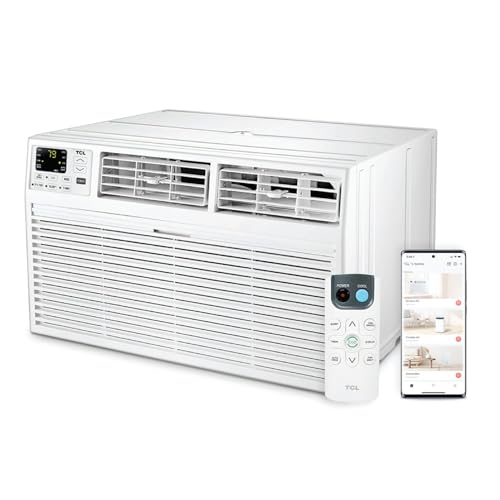
TCL 8,000 BTU Smart Through-the-Wall Air Conditioner with Heater,115V WiFi | 115V, Wall Mounted, Heater, Dehumidifier, Remote Control, Works with Alexa and Google Assistant, Rooms up to 450 Sq.Ft.
Check price on Amazon
Bonnlo 8000 BTU Through the Wall Air Conditioner with Heat, Wall AC Unit Works with Alexa/Google Assistant & Easy Install Kit & Cools up to 350 sq. ft. for Living Room, Bedroom, Kitchen, 115V/60Hz
Check price on Amazon
Frigidaire 8,000 BTU Wall Air Conditioner with Heater, Dehumidifier
Check price on Amazon
GARRISON 2477811 R-410A Through-The-Wall Heat/Cool Air Conditioner with Remote Control, 8000 BTU, White
Check price on AmazonDisclaimer
Some of the content on this site uses AI assistance. Information is provided for educational purposes only. We are not responsible for any losses resulting from the use of this information. By using this site, you waive any right to bring legal claims against us arising from your use of the information provided. If you do not agree, please do not use this site. Read the full disclaimer.