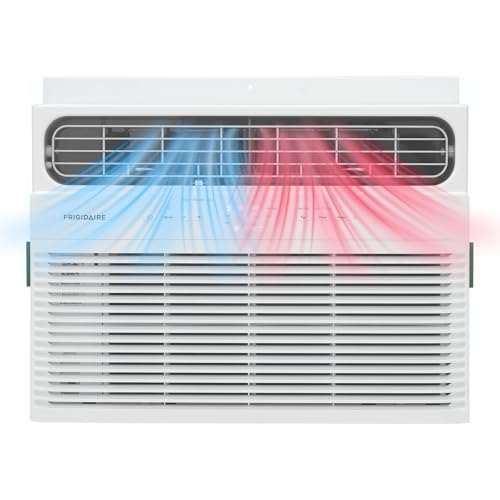
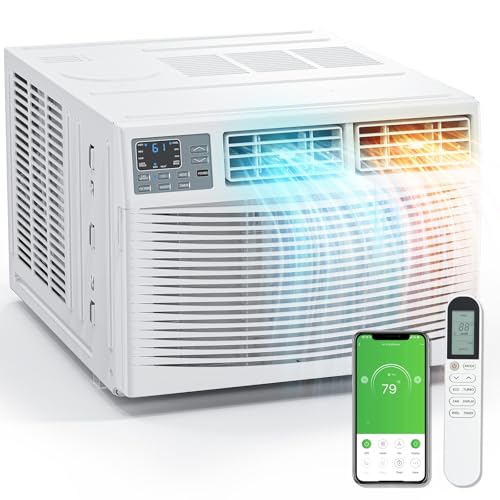
8000 BTU Window Air Conditioner with Heat: The Complete Buyer's Guide
Everything you need to know before choosing a window AC with heating capability — sizing, features, installation, and how to match the unit to your room and climate.
View Recommended ModelsWho this guide is for: You already know you want an 8000 BTU window unit with a heat function, and you are now comparing options. This page explains what that capacity actually covers, how the heat mode behaves, which specifications matter, and how to install the unit safely — so you can choose with confidence.
What Is an 8000 BTU Window Air Conditioner with Heat?
An 8000 BTU window air conditioner with heat is a dual-function appliance that mounts in a window frame and provides both cooling and supplementary heating from a single unit. The cooling side uses a standard refrigeration cycle to remove heat and humidity from the room, while the heating side typically uses electric resistance elements or a reverse-cycle mechanism to blow warm air during cooler months.
This category sits in the middle of the window AC range. It is powerful enough for a medium room — such as a living room, large bedroom, or open-plan studio — but still compact enough for most standard double-hung windows. Because it combines two functions, it is a practical choice for transitional climates where summers are hot and shoulder seasons are chilly, and for spaces that lack ductwork or central heating.
If you are still comparing capacity levels, the 8000 BTU window air conditioner room size guide explains how square footage, ceiling height, and sun exposure affect the right choice. For smaller spaces, a 6000 BTU window air conditioner with heat may be sufficient; for larger rooms, consider stepping up in capacity.
How Much Room Does 8000 BTU Cover?
As a general rule, 8000 BTU cooling capacity is appropriate for rooms between roughly 300 and 350 square feet. The exact figure depends on several environmental factors that either increase or decrease the effective load on the unit.
| Room Condition | Effect on Sizing | Practical Recommendation |
|---|---|---|
| Standard room, average insulation, shaded | Baseline 8000 BTU is appropriate | 300–350 sq ft |
| South- or west-facing with large windows | Increased solar gain | Stay near 300 sq ft or add shade |
| Kitchen or room with heat-generating appliances | Higher internal heat load | Reduce effective coverage by 10–15% |
| Top floor or attic-adjacent room | Greater heat gain through roof | Consider a higher capacity tier |
| Well-insulated, north-facing, few windows | Lower heat load | May comfortably cool up to 350 sq ft |
For the heating side, expectations should be calibrated. The heat output of a window AC is typically supplemental rather than equivalent to a dedicated heating system. It is best suited to mild climates, transitional seasons, or as a spot-heating solution for the room where the unit is installed. If you need more heating capability, a 8000 BTU through-the-wall air conditioner with heat is an alternative form factor worth comparing.
Key Features to Evaluate Before Buying
Not all 8000 BTU window units with heat are built the same. The features below have the greatest impact on daily usability, energy consumption, and long-term reliability.
Cooling and Heating Capacity
Check both the cooling BTU and the heating output. Heat mode is usually rated separately and is lower than the cooling figure. Match the heating output to the room size and your climate expectations.
Energy Efficiency (CEER / EER)
Look for the combined energy efficiency ratio on the label. Higher ratings indicate more cooling per unit of electricity. ENERGY STAR models meet stricter efficiency thresholds and are a solid long-term investment.
Electrical Requirements
Most 8000 BTU units use a 115V circuit with a 5-15P plug. Because heat mode draws additional current, verify the amperage rating and confirm the circuit can handle the combined load without nuisance tripping.
Noise Level
Measured in decibels, noise varies noticeably between tiers. Higher-tier models often use improved fan and compressor isolation. If the unit is in a bedroom, prioritize quieter operation.
Thermostat and Controls
Digital thermostats with programmable schedules improve comfort and reduce wasted runtime. Remote controls and app connectivity add convenience, especially for units mounted high in a window.
Filtration and Air Quality
Washable filters are standard, but some models add antimicrobial treatment or multi-stage filtration. Regular filter cleaning is essential regardless of the feature set.
Installation Kit and Window Fit
Confirm the included mounting hardware, window width range, and whether a support bracket is required. Proper support prevents sagging and reduces vibration noise.
Drainage and Humidity Control
Cooling mode produces condensate. Check how the unit manages drainage — some splash condensate onto the condenser coil for efficiency, while others require a drain hose in humid conditions.
Comparing Tiers: Entry-Level, Mid-Range, and High-End
Window ACs in this capacity class fall into recognizable market tiers. The table below uses universal quality descriptors rather than numerical figures, so the comparison stays relevant over time.
| Tier | Typical Characteristics | Best For |
|---|---|---|
| Entry-Level | Mechanical or basic digital controls, standard fan speeds, functional filtration, straightforward installation kit | Occasional use, guest rooms, rental units, buyers who want essential functionality |
| Mid-Range | Digital thermostat, programmable timer, remote control, improved fan design, better efficiency ratings, quieter operation | Primary bedroom or living room use, daily operation, buyers balancing features and efficiency |
| High-End Tier | Smart connectivity, advanced filtration, inverter-style compressor control on select models, premium sound isolation, top efficiency ratings | Smart-home setups, bedrooms requiring quiet operation, buyers seeking a long-term investment |
Mid-range models usually offer the most balanced combination of efficiency, control features, and build quality for everyday use. Entry-level units are a solid choice when the unit will run only part of the year, while high-end tier models justify their position through quieter operation and advanced controls. If you are comparing a window unit against a ductless solution, the 9000 BTU window air conditioner with heat guide shows how a slightly larger capacity changes the trade-offs.
Installation Considerations for Window Units with Heat
A window AC with heat is heavier than a cooling-only unit of the same capacity because of the additional heating components. That weight difference makes proper installation more important, not less.
- Window type and width: Confirm the unit fits your window's width and height range. Double-hung windows are the standard target; casement and slider windows usually require a specialized kit or a different form factor.
- Support and safety: Use the manufacturer's bracket or a rated support system. The unit should tilt slightly outward for drainage, but never rely on the window sash alone to hold the weight.
- Electrical circuit: Verify that the outlet is on a dedicated or adequately rated circuit. Heat mode increases current draw, so avoid sharing the circuit with high-load appliances.
- Sealing the gap: Use the included foam insulation and side panels to close gaps. A poor seal lets hot air in during cooling season and cold air in during heating season.
- Clearance: Keep the outdoor side free of obstructions so the condenser can reject heat efficiently in cooling mode and the unit can operate safely in heat mode.
If your window opening is non-standard, a compact form factor may be the answer. The 8000 BTU air conditioner for small windows guide covers narrow openings and alternative mounting approaches. For a permanent installation that avoids window blockage, the 6000 BTU air conditioner through the wall option shows how wall-mounted units differ in installation and performance.
Maintenance Habits That Extend Unit Life
A window AC with heat runs in two seasons, so it accumulates runtime faster than a cooling-only unit. A simple maintenance routine protects efficiency and reduces the chance of mid-season breakdowns.
- Clean or replace the filter every two to four weeks during heavy use. A clogged filter strains the fan and reduces both cooling and heating output.
- Inspect the outdoor coil at the start of each season. Dust, pollen, and debris block heat transfer and force the compressor to work harder.
- Check drainage paths before cooling season. Standing water can cause odors and, in some designs, overflow into the room.
- Test heat mode before cold weather arrives so any issue is discovered while service appointments are still easy to schedule.
- Store or cover the unit properly if you remove it seasonally. For year-round installations, use a fitted cover during long idle periods.
For a broader seasonal routine, the 8000 BTU air conditioner ENERGY STAR overview explains how certified models are tested and what efficiency claims actually mean in practice.
Who Should Choose an 8000 BTU Window AC with Heat?
This capacity and configuration fits a specific set of situations. It is a strong match if most of the following apply to you:
- You have a medium-sized room — roughly 300 to 350 square feet — that needs cooling in summer.
- You want a supplemental heat source for mild winters or transitional seasons without installing a separate heater.
- Your home lacks ductwork, or you rent and cannot modify the property permanently.
- You prefer a single appliance that handles both seasons and can be removed or covered when not needed.
- You have a standard double-hung window and access to a properly rated electrical circuit.
If your room is significantly larger, or if winter temperatures are severe, a dedicated heating system plus a cooling-only AC is usually the more practical combination. If your priority is cooling efficiency in a compact space, the 8000 BTU air conditioner room size reference helps confirm whether this capacity is the right fit before you commit.
Frequently Asked Questions
What size room does an 8000 BTU window air conditioner with heat cool?
An 8000 BTU window air conditioner typically cools rooms between 300 and 350 square feet. The heating capacity is usually lower than the cooling capacity, so it works best as a supplemental heat source in mild climates rather than a primary heating system.
Can an 8000 BTU window AC with heat replace a furnace?
No. The heat function on a window air conditioner is designed for supplemental or spot heating, not whole-home heating. It works well in mild climates or for transitional seasons but should not replace a primary heating system in cold regions.
Does an 8000 BTU window air conditioner with heat require a special outlet?
Most 8000 BTU window units run on a standard 115V household circuit and use a 5-15P plug. However, because the heat mode draws additional power, check the amperage rating and ensure the circuit can handle the load without tripping breakers.
How much does it cost to run an 8000 BTU window AC with heat?
Operating costs vary by local electricity rates, usage hours, and the unit's efficiency rating. Heat mode typically consumes more power than cooling mode. Choosing an ENERGY STAR certified model and using a programmable thermostat can help manage long-term energy use.
Is an 8000 BTU window air conditioner with heat suitable for renters?
Yes. Window air conditioners are renter-friendly because they require no permanent modification to the property. Most installations use a window bracket or support kit and can be removed at the end of the season without damaging the window frame.
Ready to Compare Your Options?
You now understand the capacity, the heat function, and the installation requirements. The next step is to review the specific models that match this profile — browse the recommended units below and compare features side by side.
Explore Recommended Models