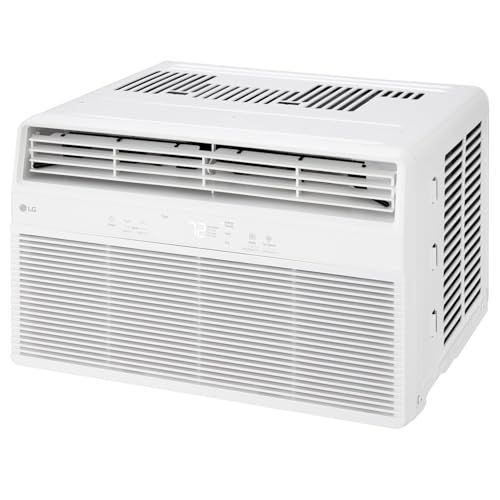
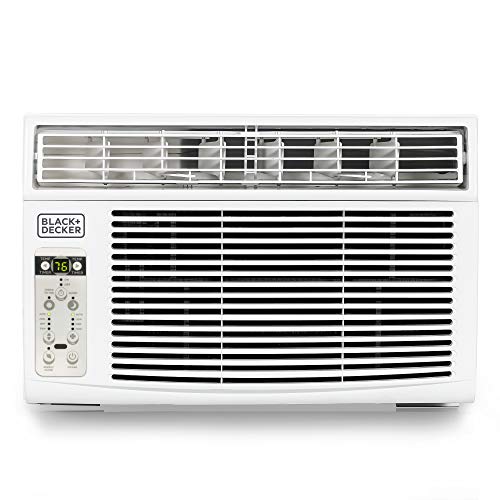
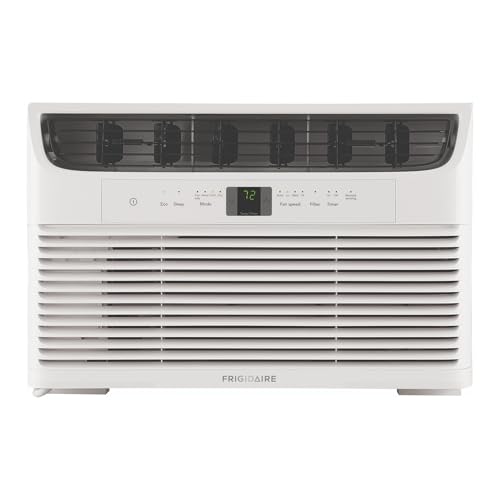
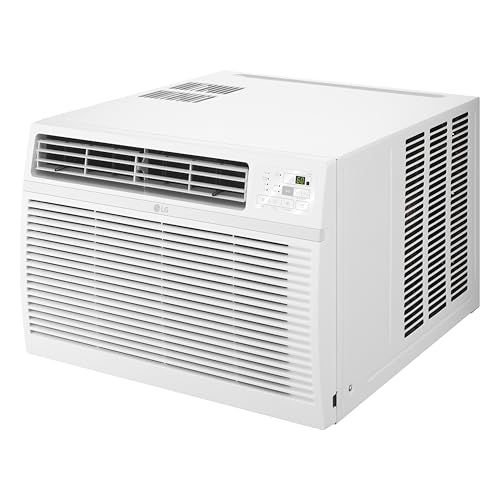
8000 BTU Air Conditioner for Small Window: The Complete Guide
Everything you need to know about choosing, installing, and maximizing an 8000 BTU window air conditioner in a small window space — from sizing and efficiency to real-world performance.
START LEARNINGWhy this matters: An 8000 BTU window air conditioner is one of the most popular cooling capacities for small to medium rooms, but small windows can present unique installation challenges. This guide helps you understand whether an 8000 BTU unit fits your window, how to size it correctly, and what features to prioritize before making a purchase.
What Is an 8000 BTU Air Conditioner?
An 8000 BTU air conditioner is a cooling unit rated to remove 8,000 British Thermal Units of heat per hour. In practical terms, this capacity is ideal for cooling rooms roughly between 300 and 350 square feet, making it a popular choice for bedrooms, small living rooms, home offices, and studio apartments. Window-mounted versions are especially common because they are self-contained, relatively straightforward to install, and do not require ductwork.
When paired with a small window, the key consideration shifts from raw cooling power to physical fit. Not all 8000 BTU units share the same chassis dimensions, and window openings vary considerably between homes. Understanding both the cooling capacity and the physical footprint is essential before you commit to a purchase.
For a broader comparison of capacity options, you can explore the 8000 BTU air conditioner room size guide, which breaks down how different room dimensions and conditions affect cooling performance.
Is 8000 BTU the Right Capacity for Your Room?
Before worrying about window fit, confirm that 8000 BTU is appropriate for your space. Oversizing an air conditioner leads to short cycling — the unit cools the room too quickly, shuts off, and fails to remove humidity properly. Undersizing leaves the room uncomfortable on hot days. The table below provides general guidance:
| Room Size (sq ft) | Recommended BTU | Typical Use Case |
|---|---|---|
| 150 – 250 | 6,000 – 8,000 | Small bedroom, home office |
| 250 – 350 | 8,000 – 10,000 | Standard bedroom, small living room |
| 350 – 450 | 10,000 – 12,000 | Larger bedroom, studio apartment |
| 450 – 550 | 12,000 – 14,000 | Large living room, open-plan space |
Several factors can shift the recommendation upward or downward:
- Ceiling height: Rooms with ceilings above 8 feet require more cooling capacity.
- Sun exposure: South- and west-facing rooms with large windows gain more heat.
- Insulation quality: Poorly insulated rooms lose cool air faster.
- Occupant load: Each additional person adds roughly 600 BTU of heat load.
- Kitchen proximity: Rooms adjacent to cooking areas may need extra capacity.
For a more detailed breakdown of how room characteristics influence sizing, see the 8000 BTU room size guide. If your room is smaller, you might also consider a 6000 BTU window air conditioner for rooms up to 250 square feet.
Will an 8000 BTU AC Fit a Small Window?
This is the central question for many buyers. The answer depends on three dimensions: window width, window height, and the unit's chassis depth. Most 8000 BTU window air conditioners are designed to fit standard double-hung windows, but "small window" can mean different things.
Typical Window Requirements
Most 8000 BTU window units require:
- Minimum window width: 23 to 26 inches
- Minimum window height: 14 to 15 inches
- Window type: Double-hung or sliding windows work best; casement windows are generally incompatible without special adapters
- Window sill support: The unit must be supported by a sturdy sill or bracket, especially for heavier models
Some compact models are specifically engineered for narrow windows, with chassis widths as low as 21 to 22 inches. If your window is narrower than 23 inches, look for units marketed as "compact" or "small window" models. You can explore a dedicated option like the 8000 BTU 115-volt window-mounted mini compact air conditioner for tighter spaces.
Measuring Your Window Correctly
Follow these steps to measure accurately:
- Measure the width of the window opening at its narrowest point (between the sash stops or frame).
- Measure the height from the sill to the bottom of the upper sash.
- Measure the sill depth to ensure the unit can rest securely.
- Check for obstructions such as window locks, screens, or storm windows that may interfere.
If your window is on the smaller side, the 8000 BTU window air conditioner with remote is another option that often comes in compact form factors with convenient controls.
Measure First
Always confirm minimum window width and height before ordering.
Support Bracket
Use an outdoor bracket for heavier units to ensure stability.
Airflow Clearance
Keep the exterior side unobstructed for efficient heat rejection.
Energy Efficiency: What to Look For
Window air conditioners are rated using the CEER (Combined Energy Efficiency Ratio), which measures cooling output relative to power consumption. Higher CEER values indicate greater efficiency. For 8000 BTU units, look for a CEER of 12 or higher; models with CEER above 14 are considered highly efficient and often carry ENERGY STAR certification.
An 8000 BTU ENERGY STAR air conditioner typically consumes less electricity over the cooling season and may qualify for utility rebates. Key efficiency-related features to consider:
- Inverter compressor: Variable-speed compressors adjust output to maintain temperature more precisely, reducing energy waste from on/off cycling.
- Eco mode: Automatically adjusts fan speed and compressor operation to balance comfort and consumption.
- Programmable timer: Allows scheduling cooling around your daily routine to avoid unnecessary operation.
- Sleep mode: Gradually raises the set temperature overnight for comfort and efficiency.
For a broader perspective on efficiency ratings, explore the SEER rating guide to understand how efficiency metrics apply across different AC types.
Key Features to Prioritize
Beyond capacity and efficiency, the feature set determines day-to-day usability. Here are the most impactful features for an 8000 BTU small-window unit:
Cooling and Comfort
- Multiple fan speeds: At least three speeds for balancing airflow and noise.
- Adjustable louvers: Direct airflow where you need it most.
- Dehumidification mode: Removes excess moisture without over-cooling — useful in humid climates.
- Auto-restart: Resumes previous settings after a power outage.
Controls and Connectivity
- Remote control: Convenient for adjusting settings from across the room. See the 8000 BTU window AC with remote for a representative example.
- Wi-Fi and smart home integration: Enables control via smartphone apps and voice assistants.
- Digital display: Clear temperature and mode readouts.
- 24-hour timer: Programmable scheduling for energy management.
Installation and Maintenance
- Washable filter: Easy-access filters reduce maintenance hassle.
- Window mounting kit: Includes side panels and insulation for a secure fit.
- Compact chassis: Lighter weight and easier to install in small windows.
If you also need heating capability, a model like the 8000 BTU window air conditioner with heat combines cooling and heating in a single unit, which can be practical for transitional seasons.
Installation Tips for Small Windows
Installing an 8000 BTU window air conditioner in a small window requires attention to safety and performance. Follow these guidelines:
- Check the electrical requirements: Most 8000 BTU units operate on 115-volt power and draw 6 to 8 amps. Verify that the circuit can handle the load, and avoid sharing it with high-draw appliances.
- Use a support bracket: For units heavier than about 60 pounds, an outdoor support bracket is strongly recommended to prevent sagging and reduce strain on the window frame.
- Seal the gaps: Use the included insulation panels and weather stripping to prevent outside air from entering around the unit.
- Maintain a slight downward tilt: Tilt the unit slightly toward the outside so condensation drains properly.
- Keep the exterior clear: Ensure at least 12 inches of clearance around the outdoor portion for proper airflow.
- Secure the window: Use the included sash lock or a window lock to prevent the window from being opened from outside.
If your installation scenario involves a through-the-wall setup instead, the 8000 BTU through-the-wall air conditioner with heat is designed for that specific application.
Entry-Level, Mid-Range, and Premium Tiers
8000 BTU window air conditioners span a range of market positions. Understanding the tier differences helps you align features with your priorities. The classification below uses universal descriptors rather than numeric figures:
| Tier | Typical Characteristics | Best For |
|---|---|---|
| Entry-Level | Mechanical controls, basic fan speeds, standard efficiency, simple installation kit | Occasional use, guest rooms, tight budgets |
| Mid-Range | Digital controls, remote included, higher CEER, multiple modes, auto-restart | Daily use in bedrooms and living spaces |
| Premium | Inverter compressor, Wi-Fi control, advanced filtration, quiet operation, top-tier efficiency | Smart homes, light sleepers, long-term energy savings |
Entry-level models focus on core cooling at a basic feature set. Mid-range units add convenience features and improved efficiency, making them a solid choice for most households. Premium models incorporate advanced compressor technology and connectivity, delivering quieter operation and finer temperature control. The right tier depends on how frequently you use the unit and which features you value most.
Maintenance for Long-Term Performance
Regular maintenance keeps your 8000 BTU unit running efficiently and extends its service life:
- Clean or replace the filter every two to four weeks during peak cooling season. A clogged filter restricts airflow and reduces efficiency.
- Inspect and clean the outdoor coils annually to remove dust and debris.
- Check the drain path for blockages that could cause water to back up indoors.
- Tighten mounting hardware at the start of each cooling season.
- Cover or remove the unit during extended periods of disuse, especially in cold weather.
For a comprehensive seasonal checklist, refer to the seasonal AC checklist and the guide to cleaning AC filters.
Ready to Choose the Right 8000 BTU Window AC?
Explore our curated selection of recommended models that fit small windows and deliver reliable cooling.
View Recommended ModelsFrequently Asked Questions
Yes, many 8000 BTU window air conditioners are designed with compact chassis that fit standard small windows, typically requiring a minimum window width of 23 to 26 inches and a minimum height of 14 to 15 inches. Always check the manufacturer's minimum window dimensions before purchasing. Some ultra-compact models are available for even narrower openings.
An 8000 BTU window air conditioner is generally suitable for rooms between 300 and 350 square feet, depending on ceiling height, insulation, sun exposure, and occupant load. For rooms with high ceilings or direct sunlight, consider a slightly higher capacity or take steps to reduce heat gain.
Yes, 8000 BTU is typically sufficient for a standard bedroom up to 350 square feet. Factors such as window orientation, insulation quality, and the number of occupants can influence cooling performance. If your bedroom is on the upper end of that range and receives strong afternoon sun, a 10,000 BTU unit may be more appropriate.
Most 8000 BTU window air conditioners run on 115-volt power and draw between 6 and 8 amps, which can usually share a standard household circuit. However, a dedicated circuit is recommended to prevent tripping breakers, especially if other appliances share the same line. Check the unit's nameplate for exact amperage and consult a licensed electrician if unsure.
Look for a CEER (Combined Energy Efficiency Ratio) of 12 or higher for window units. Higher efficiency models reduce long-term energy consumption and are often ENERGY STAR certified. Inverter-equipped models generally achieve higher efficiency than single-speed compressors.
Final Thoughts
An 8000 BTU air conditioner for a small window is a practical solution when the capacity matches the room and the chassis matches the window opening. Start by measuring your window carefully, confirm the room's square footage and heat load, then prioritize efficiency and features that align with your usage. Whether you choose an entry-level unit for occasional cooling or a premium inverter model for daily comfort, the right choice balances fit, performance, and long-term efficiency.
For related capacities and configurations, explore the 7000 BTU AC unit guide or compare with a 9000 BTU cooling area breakdown. If you're considering a portable solution instead, the 8000 BTU portable air conditioner overview covers venting and room-size considerations.